Published August 28, 2026
Table of Contents
- What the EasyCheck Actually Is
- EasyCheck vs. a DIY Mason Jar Alcohol Wash
- Step-by-Step: Using the EasyCheck
- Reading and Interpreting Your Count
- Why the Built-In Screen Matters for Accuracy
- Alcohol vs. Other Liquids in the EasyCheck
- Cleaning and Reusing the Tool
- Cost vs. a DIY Setup
- Who Should Buy One
- Getting a Clear Count: Lighting and Technique
- Recording Counts for Trend Tracking
- Returning Bees to the Hive (Sugar Roll Only)
- Connecting Your Count to an Actual Treatment Decision
- Testing Multiple Colonies Efficiently
- Best Conditions for Sampling
- Storing the Device Between Uses
- Common Mistakes
What the EasyCheck Actually Is
The Varroa EasyCheck is a purpose-built two-cup testing device designed specifically for performing an alcohol wash mite count, replacing the improvised mason-jar-and-mesh setups many beekeepers historically built themselves. It consists of a solid outer cup and a slotted inner cup that holds roughly 300 bees (a standard half-cup sample) while allowing alcohol and dislodged mites to pass through into the outer cup, separating mites from bees cleanly enough to count both accurately. Our general guide to performing an alcohol wash covers the method broadly across any suitable container; this guide is specifically about getting the most out of the purpose-built EasyCheck tool.
EasyCheck vs. a DIY Mason Jar Alcohol Wash
A DIY setup — a mason jar with a hardware-cloth insert, or two jars with holes drilled and screened — can achieve a similar result at lower upfront cost, and plenty of beekeepers get accurate counts this way. The EasyCheck’s advantages are consistency and convenience: a properly sized, pre-fitted mesh screen that doesn’t let bees escape or clog inconsistently the way a home-drilled jar sometimes does, a design that makes swirling and separating mites from bees faster and more repeatable, and a see-through cup that makes counting mites against a light background easier than peering into a mason jar. For someone testing occasionally, a DIY setup is a perfectly reasonable choice; for someone testing many colonies regularly, the EasyCheck’s speed and consistency advantages compound quickly.
Step-by-Step: Using the EasyCheck
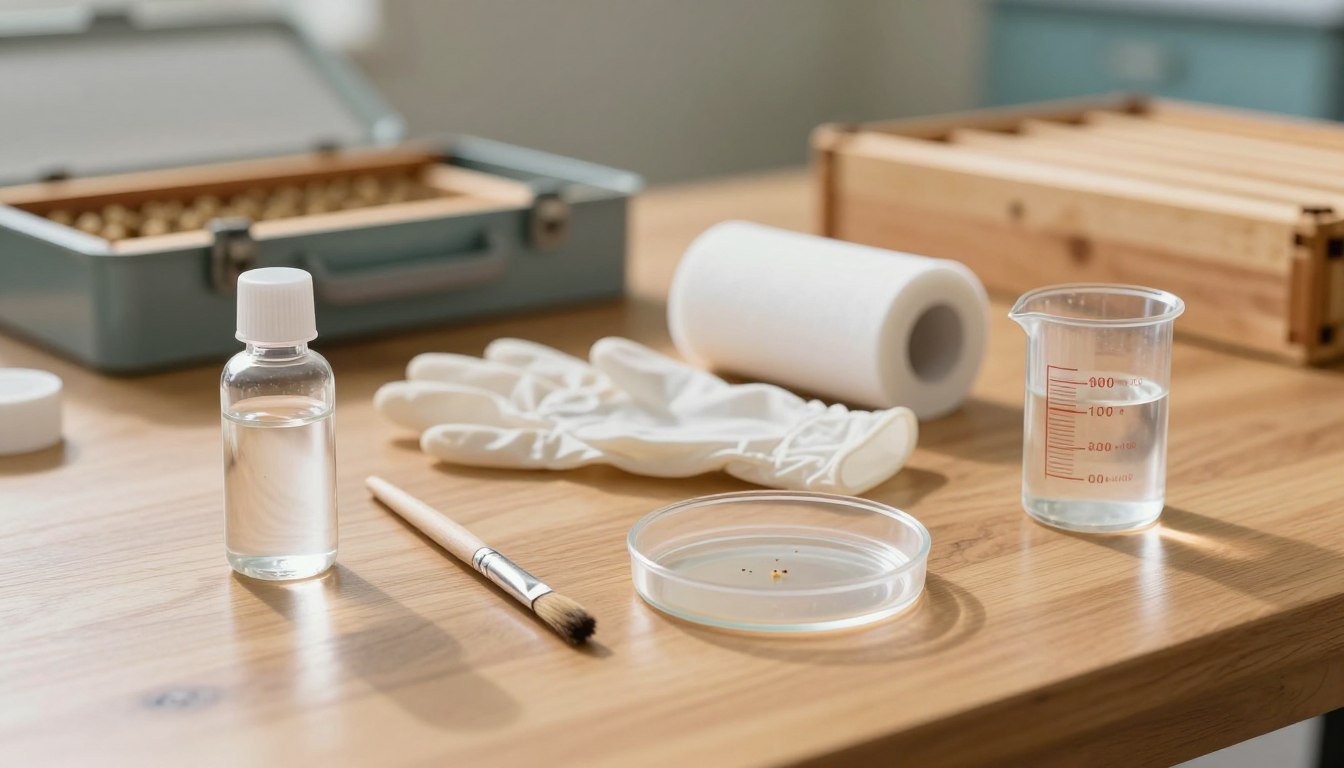
Shake roughly 300 bees (about a half-cup, scooped from a frame with open brood where nurse bees congregate, since they tend to carry a representative mite load) into the EasyCheck’s inner cup. Fill with enough alcohol or windshield washer fluid to cover the bees, then swirl vigorously for about a minute so the liquid dislodges mites from the bees’ bodies. Pour the liquid through the mesh into the outer cup, then repeat the swirl-and-pour once more to catch any mites the first pass missed, since a single pass reliably undercounts.
Reading and Interpreting Your Count
Count the mites visible in the outer cup’s liquid — they’re reddish-brown, roughly the size of a pinhead, and visible against the cup’s clear plastic without magnification in most lighting. Divide your mite count by 3 to get an approximate mites-per-100-bees figure from a 300-bee sample, then compare against your seasonal treatment threshold — guidance on interpreting counts and deciding when to treat is covered in depth in our varroa testing timing and interpretation guide.
Why the Built-In Screen Matters for Accuracy
The EasyCheck’s mesh is sized specifically to let mites pass through while retaining bees, calibrated more precisely than most improvised DIY screens, which sometimes use mesh that’s too fine (trapping some mites against the bees rather than letting them wash through) or too coarse (letting smaller bees or debris through inconsistently). This calibration is a meaningful part of why the tool produces more consistent counts between uses and between different people performing the test, which matters if you’re tracking mite trends over a season and want counts that are comparable to each other rather than varying due to technique or equipment inconsistency.
Alcohol vs. Other Liquids in the EasyCheck
Isopropyl alcohol (70% concentration is standard) is the most common choice and kills the sample, which some beekeepers are reluctant to do for a small hobby apiary. Windshield washer fluid (methanol-based, without additives) works similarly and is sometimes preferred simply because it’s cheaper to buy in bulk. A sugar-roll variant can be performed in the same device without killing the bees, though sugar rolls are generally considered somewhat less accurate than an alcohol wash at recovering the true mite count, since not every mite reliably dislodges from a sugar-coated bee the way one does from an alcohol-soaked one.
Cleaning and Reusing the Tool
Rinse both cups thoroughly with water after each use, and periodically clean with a mild soap solution to prevent residue buildup that can make future mite counts harder to see clearly against the cup walls. The device is designed for repeated reuse across a full season and multiple seasons with basic care — it’s not a single-use item, which is part of what makes its higher upfront cost compared to disposable DIY components reasonable over time.
Cost vs. a DIY Setup
The EasyCheck costs more upfront than assembling a DIY mason-jar setup from hardware-store components, but since it’s reusable across many seasons, the effective per-test cost converges over time, especially for anyone testing multiple colonies multiple times per season. For a beekeeper managing just one or two hives and testing only occasionally, the cost difference may not be worth it; for anyone testing regularly across several colonies, the tool typically pays for itself in saved time and more consistent results within a season or two.
Who Should Buy One
Beekeepers managing multiple colonies who test regularly (ideally monthly through active season, as recommended in most current extension guidance) get the clearest value from the consistency and speed advantage. Beekeepers new to alcohol washing also benefit from the more forgiving, well-calibrated design while they’re still building technique and confidence with the method. A hobbyist testing once or twice a year on a single hive can reasonably stick with a DIY setup without meaningfully sacrificing accuracy. Whatever tool you use, an accurate count is what tells you whether a treatment like oxalic acid vaporization or formic acid actually worked — testing before and roughly two weeks after treatment gives you a real before/after comparison rather than guessing at effectiveness.
Getting a Clear Count: Lighting and Technique
Perform your count in good natural light or bright indoor lighting rather than dim shed lighting, since mites can be genuinely hard to spot against liquid and bee debris in poor light, leading to undercounting. Pour the liquid into the outer cup, let any bee debris settle for a few seconds, then gently swirl the cup itself (not the liquid inside) to bring mites into clearer view against the cup’s ridged base, which is often specifically designed to help mites stand out visually. Counting against a white background or holding the cup up to direct light both help when a count looks ambiguous.
Recording Counts for Trend Tracking
A single count tells you where a colony stands right now; a series of counts across the season tells you whether mite pressure is rising, falling, or holding steady, which is far more useful for deciding when and whether to treat. Keep a simple log — date, colony ID, bee sample size, mite count, and resulting mites-per-100 — either on paper or in an app, and review it before each treatment decision rather than relying on memory of how the last count looked. This kind of record-keeping also makes year-over-year comparisons possible, letting you evaluate whether changes to your management (new genetics, a different treatment rotation) are actually reducing mite pressure over time.
Returning Bees to the Hive (Sugar Roll Only)
If you’ve used the sugar-roll variant rather than alcohol, the sampled bees survive the process and can be returned to their hive once you’ve finished counting, typically by pouring them out near the hive entrance where they’ll reorient and walk back in. Give them a few minutes on a clean surface before this, since sugar-coated bees are initially disoriented and benefit from a short recovery period rather than being dumped directly back into the hive entrance while still coated.
Connecting Your Count to an Actual Treatment Decision
A mite count only matters if it feeds into an actual decision — most current guidance sets treatment thresholds somewhere in the range of 2-3 mites per 100 bees during active season, rising in relevance as the threshold is approached rather than only mattering once you’ve already crossed it, since mite populations can grow quickly between testing intervals. Don’t treat a single count in isolation; if a count is borderline, a short-interval retest (one to two weeks later) often gives a clearer picture of whether mite pressure is climbing quickly enough to warrant immediate treatment or holding until your next scheduled check.
Testing Multiple Colonies Efficiently
For an apiary with several colonies, a single EasyCheck can be rinsed and reused between hives in the same session rather than needing one device per colony, though a quick rinse between tests helps avoid cross-contaminating counts with residue or stray mites from the previous sample. Some beekeepers managing larger apiaries keep two devices in rotation — one rinsing and drying while the other is in use — to speed up a full-apiary testing session without waiting on a single device between every hive.
Best Conditions for Sampling
Sample on a day warm enough for normal foraging activity when possible, since a colony under cold stress or heavily disrupted by recent weather may not give a fully representative bee sample from the brood-nest area. Avoid sampling immediately after a recent treatment application, disturbance, or feeding event if you can help it, since these can temporarily skew normal bee distribution within the hive and make the sample less representative of the colony’s typical condition.
Storing the Device Between Uses
Store the EasyCheck fully dry in a clean, dust-free spot between testing sessions, since residual moisture left in the cup between uses can encourage mold or residue buildup over an off-season, especially if it’s packed away for winter storage. A quick inspection at the start of each season — checking the mesh screen for damage and giving both cups a thorough clean — is worth doing before your first test of the year rather than discovering an issue mid-testing.
Common Mistakes
Sampling too few bees (well under the standard ~300) skews the resulting mites-per-100-bees calculation and is a common mistake regardless of which device is used. Doing only a single swirl-and-pour instead of two undercounts mites, since a meaningful number of mites don’t dislodge on the first pass. Sampling bees from a random spot rather than from open brood frames, where nurse bees with a more representative mite exposure congregate, can also skew results toward an artificially low count.
Sources
Device design details, sample size, and testing procedure reflect the manufacturer’s published EasyCheck instructions and general current beekeeping extension guidance on alcohol wash mite testing methodology.
FAQ
Does the alcohol wash kill the sample bees?
Yes, when using alcohol or windshield washer fluid — this is the tradeoff for the method’s accuracy; beekeepers who want to avoid killing bees can use a sugar-roll variant in the same device, though it’s generally considered somewhat less accurate.
How many bees should I sample?
Roughly 300 bees (about a half-cup), scooped from a frame with open brood where nurse bees congregate, since they carry a more representative mite load than bees sampled elsewhere in the hive.
Is the EasyCheck more accurate than a DIY mason jar setup?
Its calibrated mesh screen tends to produce more consistent results than an improvised DIY screen, which can be too fine or too coarse, but a carefully made DIY setup can achieve comparable accuracy — the EasyCheck’s main advantage is consistency and speed, not a fundamentally different method.
How often should I test with it?
Most current extension guidance recommends monthly testing through the active season, with more frequent testing during and after treatment to confirm effectiveness.
Can I use the EasyCheck for a sugar roll instead of alcohol?
Yes — the same two-cup device works for a sugar-roll test, letting you release the sampled bees back to the hive afterward instead of killing them, though sugar rolls are generally considered somewhat less accurate at recovering the true mite count than an alcohol wash.