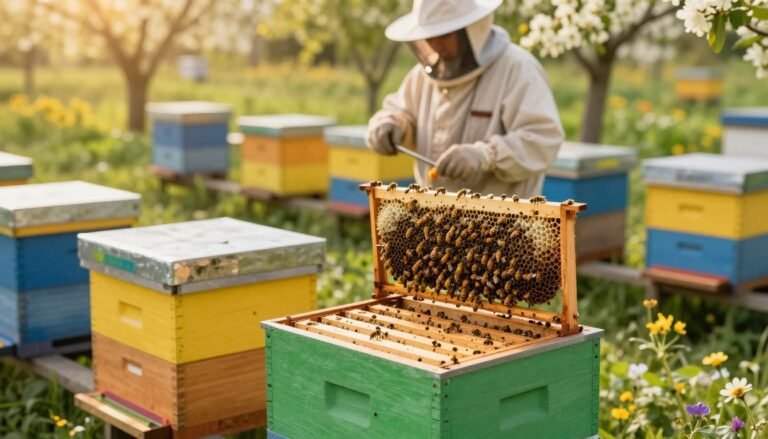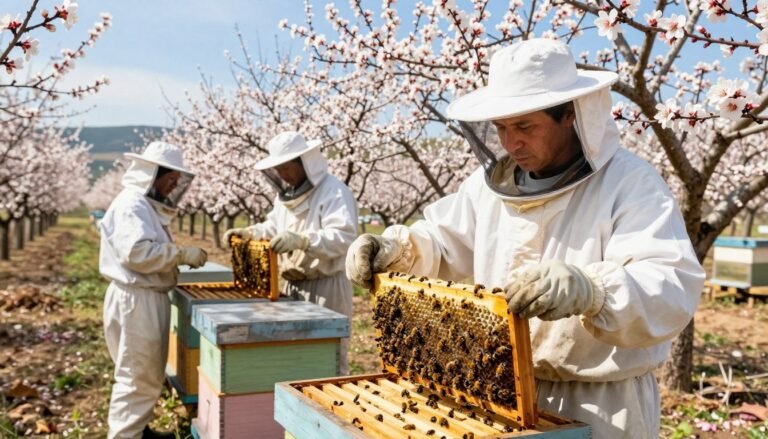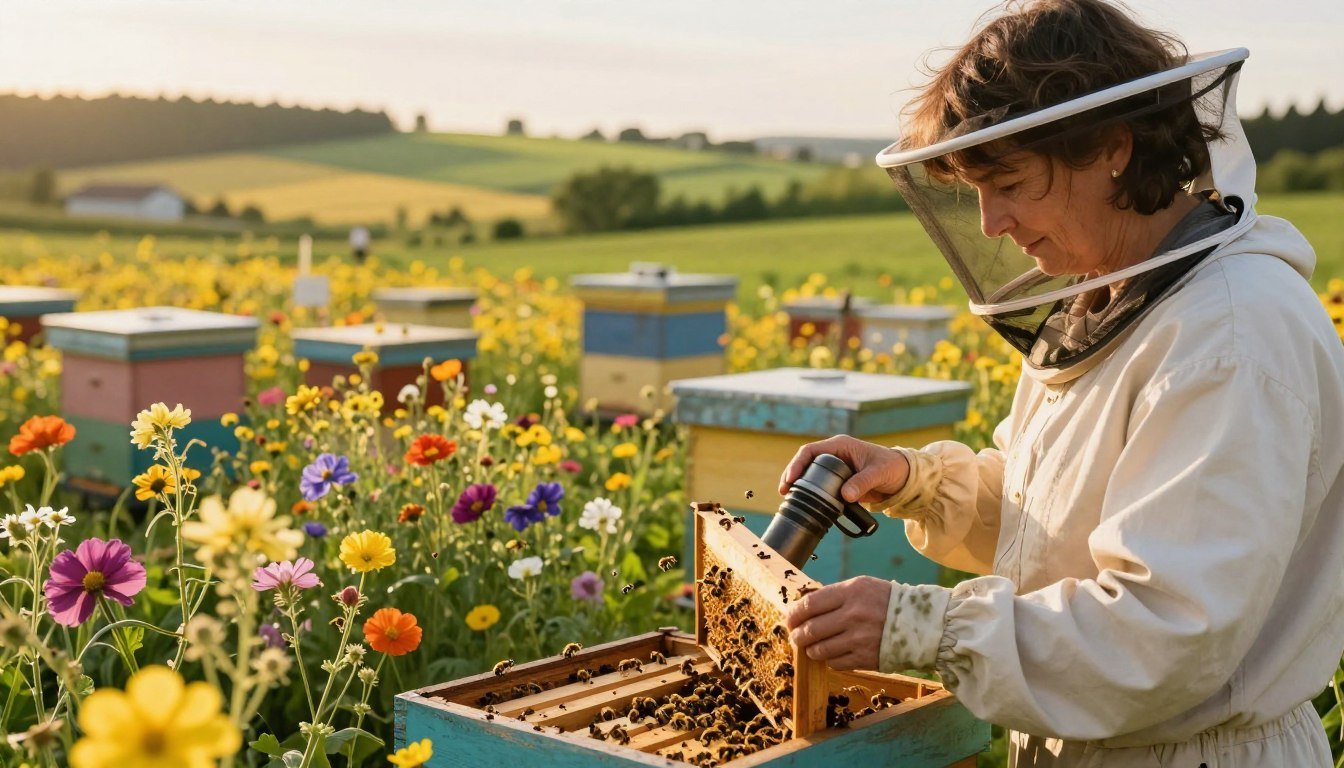
Managing risk is essential when running a commercial apiary or hobby operation. Expert guidance from agents like Lani Basberg in Louisville, KY, and Michelle Clark in Portage, MI, helps clarify gaps in standard coverage.
Many find generic policies leave holes that expose income and equipment. Specialists such as Cassidy Popp in El Campo, TX, and Eric Wheeler in Three Rivers, MI, tailor plans to local rules and farm size.
Understanding your policy is the first step to protecting hives, product, and reputation. Practical research into options, including a focused apiary policy, gives beekeepers confidence to grow without constant worry.
Learn more about tailored protections and claim examples at a trusted industry resource and an agency overview to build the right plan for your operation: apiary insurance guide and coverage considerations.
Key Takeaways
- Specialized coverage often beats generic farm policies.
- Work with experienced agents to match coverage to location and scale.
- Know policy limits for equipment, products, and potential claims.
- Proper planning reduces stress and protects long-term income.
- Consult multiple experts to find the best fit for your operation.
Understanding the Risks of Commercial Beekeeping
Running a larger-scale hive operation brings predictable risks and a few surprise losses each season. Recognizing the common hazards helps you plan defenses and limit exposure.
Third-Party Injury
Third-party injury is a frequent concern in commercial beekeeping. A swarm landing at a youth soccer match can spark major claims. Likewise, a customer falling into a booth at a craft fair may lead to expensive legal action.
Every business that places hives near public spaces should evaluate visitor paths, signage, and staffing to reduce incidents and protect reputation.
Property Damage
Property damage risks include vehicle incidents while transporting equipment and trucks damaging gates or fences at orchards. One single loss can strain cash flow and interrupt honey production.
Maintaining a solid general liability policy and appropriate commercial vehicle coverage helps manage the cost of claims and keeps beekeeping operations running after a loss.
- Assess hive placement near residences and play areas.
- Document vehicle schedules and equipment checks.
- Train staff on crowd control at public events.
Why You Need Pollination Service Liability Insurance for Beekeepers
A dispute over a delivery or hive placement can trigger costly arbitration and threaten your long-term business value.
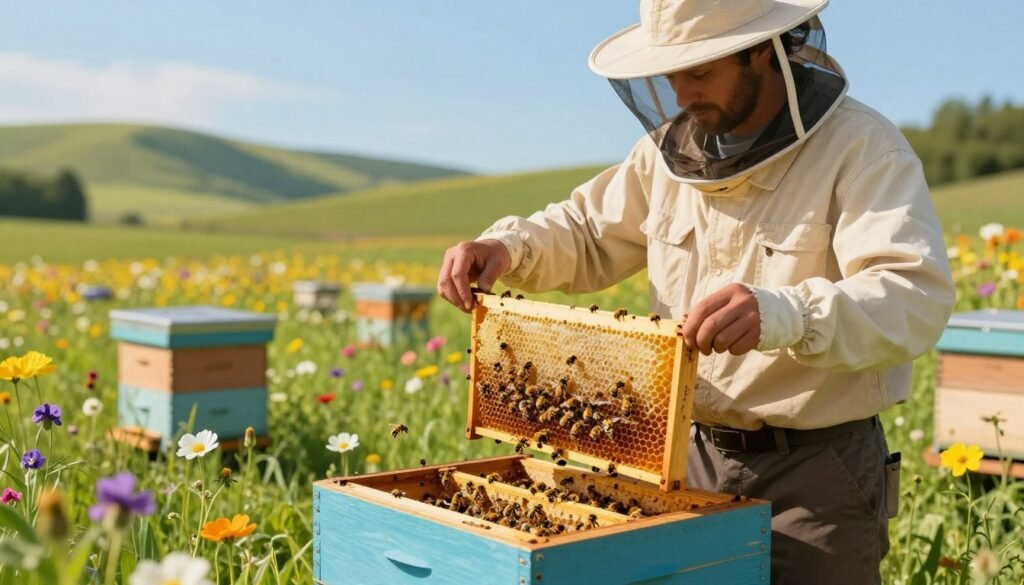
Uninsured contract beekeepers often face average losses of $15,000 to $40,000 when a major disagreement moves to formal litigation. That hit can come from a single claim or from multiple small problems that add up.
A tailored policy separates manageable setbacks from business-ending events in commercial pollination. It covers bodily injury and property damage claims that arise during daily operations.
- Legal defense and settlement costs are included so one loss event does not drain reserves.
- Specialized coverage addresses colony losses and the unique risks of moving hives and working on large farms.
- Many large agricultural contracts require proof of adequate general liability and liability coverage.
Documenting your pollination contracts and the value of your hives strengthens any claim. For guidance on policy selection and real-world examples, see the prairie beekeepers guide.
Distinguishing Between Hobbyist and Commercial Operations
Earning regular revenue from honey or splitting and selling colonies can quickly change your status from hobbyist to business owner.
Defining that line relies on IRS indicators of profit intent and how insurers view your activity. One agent’s company, for example, treats any operation with more than $2,500 in gross sales in a year as a business.
That shift matters. Once you pass revenue thresholds, homeowner protections often no longer apply. Your operations require business-grade coverage and record keeping.
IRS and Revenue Thresholds
Keep clear sales records and track honey production and hive counts each year. Consistent income, even from surplus jars, can trigger additional requirements.
- Gross sales above $2,500 often change classification to a business.
- A commercial approach means professional-level policy and cost planning.
- Maintain invoices and production logs to satisfy tax and coverage reviews.
| Metric | Hobbyist | Commercial |
|---|---|---|
| Gross sales (per year) | Under $2,500 | More than $2,500 |
| Record keeping | Basic logs | Detailed sales, expenses, production |
| Coverage needs | Homeowner or small-addendum | Business-grade policy |
| Typical focus | Hobby, local sales | Scaling production, multiple hive sales |
Plan early. If you expect growth in honey production or hive sales, consult a specialist and review a commercial option at commercial beekeeping business insurance.
Essential Coverage Types for Your Business
Choosing the right combination of policies protects income, equipment, and future contracts. A focused program helps small and commercial operations survive crashes, contamination claims, or weather losses.

General Liability
General liability covers bodily injury and property damage claims that can arise on job sites or at markets. Most commercial operations carry $1 million to $2 million limits to meet grower contract demands.
Commercial Vehicle
Commercial vehicle insurance is legally required for trucks used to haul hives. A full load on a trailer can represent $50,000 to $100,000 in asset exposure plus third-party risk.
Business Interruption
Business interruption coverage replaces lost income if fire, theft, or disaster prevents fulfilling contracts. This coverage helps cover payroll, moving costs, and lost honey production.
| Coverage | What it pays | Common limits | Why it matters |
|---|---|---|---|
| General liability | Bodily injury, property damage, defense | $1M–$2M | Meets contractor requirements; covers claims and legal fees |
| Commercial vehicle | Collision, third-party injury, cargo | Varies by state and vehicle | Protects expensive hive loads and road risks |
| Business interruption | Lost income, extra expenses | Based on revenue | Keeps payroll and contracts intact after a loss |
Review your policy limits and how each coverage works together. For detailed guidance, consult a specialist at the contract beekeeper insurance guide.
Navigating Standard Farm Policy Limitations
When hives travel between yards, typical farm coverage can quickly prove inadequate.
Standard farm policies often cover fixed buildings and planted fields. They usually exclude colony loss, hive equipment in transit, and assets at remote yards.
That gap matters. Moving frames, trailers, and boxes across state lines exposes equipment and honey to risks not listed in a home-focused policy.
- Fixed-location rules often skip equipment away from the primary property.
- Transit losses and third-party property exposure are common exclusions.
- Remote yard placement may remove protection for stacked hives and trailers.
| Common Gap | How it hurts operations | Recommended action |
|---|---|---|
| Colony loss excluded | Mass bee death can stop production | Buy a policy that covers colony value and loss |
| Transit not covered | Damaged hives during moves | Add inland marine or transit coverage |
| Remote yard limits | Equipment at third-party sites unprotected | Schedule locations or expand property limits |
Identify these gaps early and match your plan to your actual operations. For practical guidance on selecting specialized beekeeping insurance, see this detailed coverage overview.
Protecting Your Assets with Specialized Insurance
Equipment that travels between yards needs coverage that travels with it—standard property policies often do not.
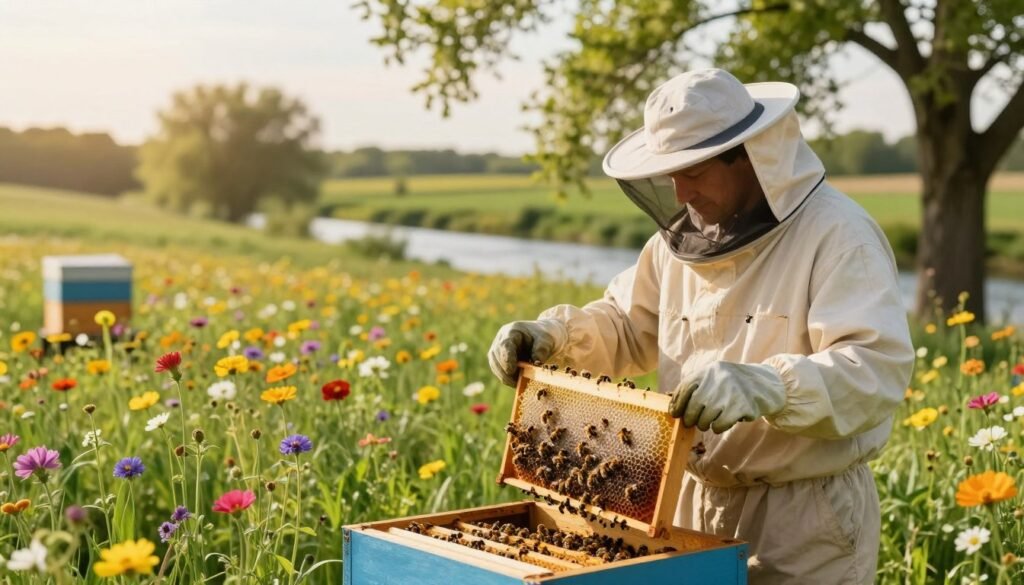
Inland marine coverage protects movable property such as hive bodies, frames, supers, and extraction gear when they leave your primary site.
Inland Marine Coverage
Why it matters: inland marine fills a clear gap. It covers equipment at remote yards and during transit so a single loss does not erase months of work.
“A 500-hive operation can face $100,000 to $150,000 in replacement exposure—plan limits to match that value.”
- Replacement cost for honey bee colonies typically runs $200–$300 per colony.
- Commercial vehicle and cargo protections are essential when moving colonies to pollination contracts.
- Ensure policy limits reflect true replacement cost of equipment and hives.
Work with an agricultural specialist to combine inland marine with general liability and commercial vehicle coverage. Document hive value and equipment to support any claim and to keep your business moving after a loss.
For practical guidance on renting and placement obligations, review this resource on renting bees: renting bees for pollination.
The Role of Documentation in Successful Claims
Clear, timestamped records make the difference between a denied claim and a paid recovery.
Start each move with a written pre-move strength assessment and a GPS delivery log. These items set the baseline that adjusters use to evaluate any loss event.
Maintain routine inspection notes, photos, and copies of pollination contracts. These documents show condition, placement, and agreed value of your hives and equipment.
- Use PollenOps to store compliance records and timestamped delivery history; it speeds factual review.
- Keep GPS-verified logs to link inspection data to exact yard locations.
- Document pesticide kill signs immediately with photos and sustained inspection notes.
Well-organized records reduce processing time and support replacement cost recovery. Insurance adjusters rely on strength assessments and delivery logs to establish causation in colony losses and other claims.
Follow clear documentation requirements and review the contract compliance documentation guide. For an operational checklist on record keeping, see this record-keeping guide.
Managing Pesticide Exposure and Liability
Clear notification windows and strong on-site documentation make the difference after a pesticide kill.

Make contracts require growers to notify your team 24–48 hours before any chemical application within the bees’ foraging area.
Include language that defines responsibility for colony losses, replacement cost, and net income loss. This reduces disputes and clarifies who bears the cost of a loss event.
Also require access for inspections and a hold-harmless clause that preserves your right to document an incident. Use practical templates such as a contract templates when drafting terms.
Evidence Collection
Act fast. When a suspected pesticide kill occurs, do not remove dead colonies until an adjuster inspects them. Premature removal can reduce recovery of replacement cost and weaken a claim.
Document damage with GPS-tagged photos, timestamped notes, and sealed samples of dead and dying bees. These items form the backbone of any successful claim and help prove causation of colony losses.
| Step | Why it matters | Best practice |
|---|---|---|
| Notification clause | Prevents unexpected applications | Require 24–48 hour notice |
| On-site documentation | Supports insurance covers and claims | GPS photos and inspection logs |
| Sample collection | Proves pesticide presence | Store in sealed containers; send to lab |
| Adjuster access | Secures full replacement cost | Do not remove dead hives before survey |
- Pesticide exposure causes over 60% of in-contract hive mortality disputes.
- Proper records protect equipment, property, and honey revenue when a claim arises.
- Combine strong contracts and robust insurance coverage with prompt evidence collection to protect operations.
For guidance on building income streams and contract language tied to crop work, review this practical side income guide.
Budgeting for Your Insurance Program

Estimating annual premiums early prevents sudden cash-flow pressure during peak production.
Start with a baseline. A base policy that provides up to $1 million in protection typically costs between $350 and $600 a year. That gives basic general liability and primary policy limits for small operations.
Large, migratory operations must plan much higher. A 1,000-hive commercial beekeeping setup can expect total annual program costs of roughly $16,500 to $44,500 depending on equipment value, replacement cost exposure, and vehicle needs.
- Balance general liability, commercial vehicle insurance, and specialized colony coverage.
- Include honey bee colonies, trailers, and extraction gear in replacement-cost estimates.
- Factor premium timing into seasonal cash flow and net income projections.
Work with an agricultural specialist to tailor requirements and find cost-effective options. Review coverage and policy limits each year to match hive count and production value.
New operators can learn practical startup budgeting at how to start beekeeping.
Conclusion
Wrapping up, a clear protection plan keeps your operation resilient through common and rare losses.
Securing the right coverage is a fundamental step in protecting your beekeeping business and its assets. Understand specific needs, set appropriate limits, and align policies to match daily operations.
Maintain tidy contracts and timestamped records. Strong documentation improves your chance of a successful claim and speeds recovery after loss.
Talk with the experts named in this guide to tailor a policy that matches your scale and goals. Taking these proactive steps today gives you peace of mind to focus on growing bees and honey production.