Choosing the right foundation is one of the first big decisions a new beekeeper must make. This choice shapes how frames sit in the hive and how combs form. It affects brood placement, honey stores, and daily hive work.
Traditional beeswax gives bees a natural template. Many keepers, including JeffH, prefer it for its familiar feel and how well bees accept it. Others favor manufactured sheets for durability and ease of use.
Cross-combing and wonky comb often appear in boxes without any guide. Using a guide helps keep combs orderly and makes inspections faster. At the same time, good hive management balances what bees want with what the keeper needs to harvest honey and maintain colony health.
Key Takeaways
- Choosing a sheet for frames is a key early decision in beekeeping.
- Beeswax offers a natural template that many beekeepers trust.
- Guides reduce cross-combing and keep combs neat in brood boxes.
- Different options impact inspections, honey harvest, and brood health.
- Good management balances bee behavior with practical needs.
Understanding the Role of Foundation in Beekeeping
How comb is started inside a box often decides whether honey and brood sit where you expect.
A guide sheet helps bees build straight comb inside wood frames. Many experienced keepers use beeswax sheets in at least half of their frames to keep combs uniform across hives.
Gerald_Nickel reports he keeps about 50–60% beeswax use in five hives to maintain consistency. He stresses that beekeeping takes patience and time and that tried methods often beat early experiments.
Using a sheet or beeswax template gives bees a natural cell pattern while keeping the frame strong. This makes inspections faster and protects brood and honey stores in boxes.
- Helps combs stay straight in wood frames
- Makes honey and brood placement predictable
- Shortens learning time for new beekeepers
| Role | Benefit | Practical Tip | Use Rate |
|---|---|---|---|
| Guide sheet | Straight comb | Install during spring build-up | 50–60% (per Gerald) |
| Beeswax template | Natural cell pattern | Pair with wood frames | Use where brood is needed |
| Foundationless way | Encourages natural building | Requires more checks | Gradual transition recommended |
“Patience and steady practice make the difference.”
Plastic Foundation vs Wax Foundation: A Comparative Overview
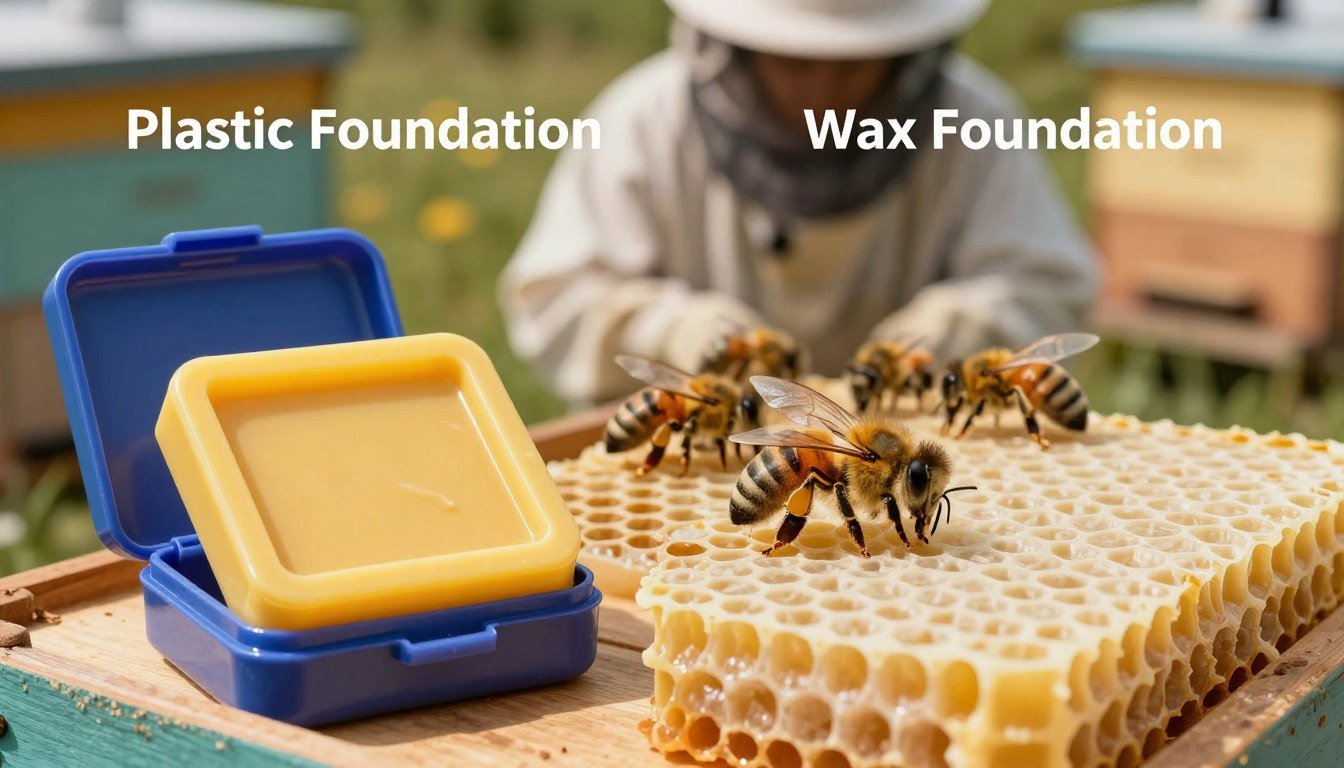
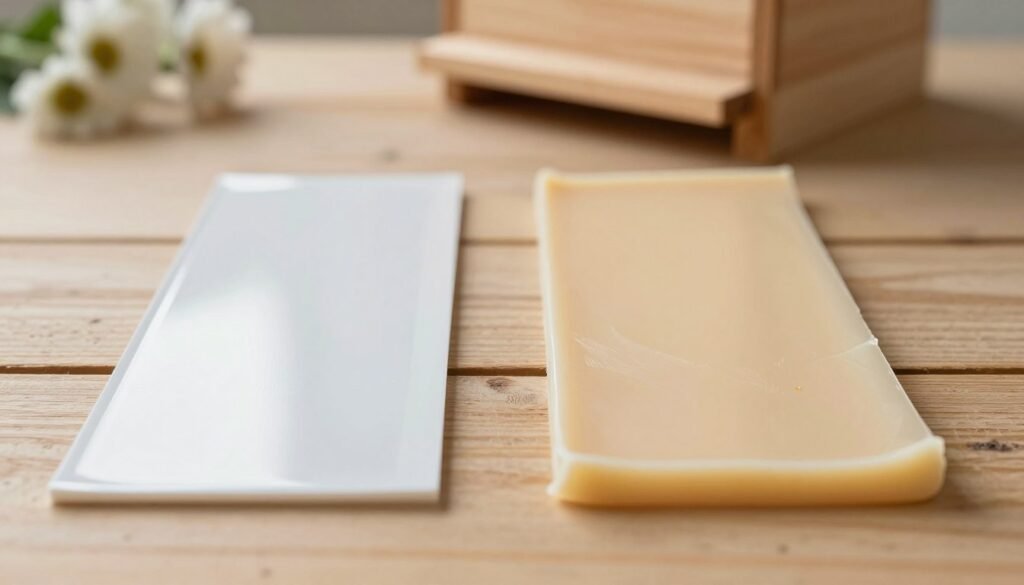
Different frame materials produce distinct comb patterns and handling needs. The main split is simple: one material is soft and malleable, the other is rigid and long-lasting. Each changes how you manage frames and how bees build comb.
The Structural Differences
Sheets made from synthetic material give a rigid grid that keeps comb from sagging in heat. Beekeepers in hot regions report fewer collapses during summer.
Adagna uses Mann Lake PF-100s plastic frames to guide size over several years. Pre-formed cells on these frames can affect the size of bees that emerge and keep combs straight in wood boxes.
Impact on Bee Behavior
Bees will draw comb on man-made sheets, but they often need a heavy wax coating to accept the material quickly. When they build on these frames, gaps or small holes sometimes appear and help with air circulation.
Traditional sheets let bees shape cells more naturally. They are easier for bees to alter, which can benefit brood placement but may lead to wonky comb without careful guidance.
- Rigid frames reduce sag and make inspections faster.
- Soft sheets allow natural cell shaping by the bee.
- Many keepers use a mix of both for balance; see a practical guide to frames here.
“Long-term users report years of reliable honey production with properly managed sheets.”
For a roundup of common options and tips on choosing the right material for honey production, check this review: best foundation for honey production.
The Case for Traditional Wax Foundation
Many keepers favor traditional beeswax sheets because they match how bees naturally build comb.
Natural acceptance: When bees work on beeswax, they often shape cells in a familiar way. This helps brood sit evenly and makes inspections predictable.
Managing old comb and replacement
Old, dark comb can hold residues and pathogens. Eva warns that some U.S. beeswax may carry coumaphos from past treatments. That risk drives regular comb rotation.
JeffH notes another benefit: the cocoons left by brood form a layer that acts as a barrier inside the comb. Still, many beekeepers replace frames and boxes over time to limit buildup.
Practical tips:
- Replace the darkest comb every few years to lower chemical load.
- Use beeswax in brood frames where bees build naturally.
- Keep some frames with guide sheets to handle small hive beetle pressure.
| Issue | Risk | Action |
|---|---|---|
| Old comb | Residues, pathogens | Rotate out every 2–4 years |
| Chemical contamination | Miticide traces (coumaphos) | Source clean beeswax or render own; monitor |
| Bees build | Natural cell shaping | Use beeswax where brood is desired |
“Replacing old comb and keeping a mix of options keeps hives healthy and manageable.”
For DIY beeswax sheets and steps to create them at home, see this short guide: make your own beeswax sheets.
Why Many Beekeepers Prefer Plastic Foundation
For those managing many colonies, manufactured sheets cut handling time and improve uniformity across hives.
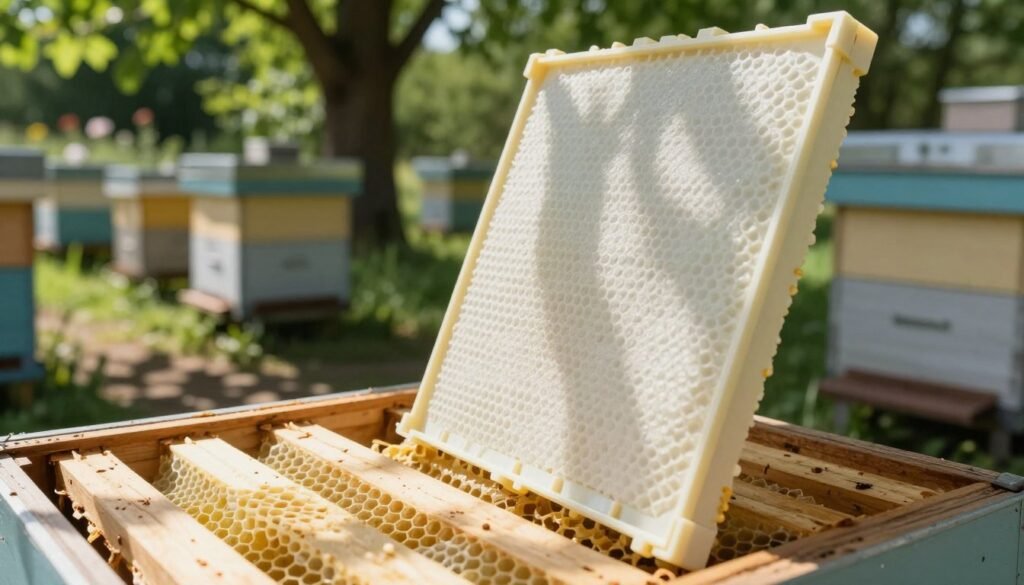
Survey data from the Texas Friendly Beekeepers group found 15 of 17 respondents prefer using plastic foundation in their operations. That preference often comes from the ease of reuse and the consistent cell pattern the sheets provide.
The Importance of Proper Wax Coating
Chris Moore, who has run 2,500 colonies since 1999, says freshly waxed plastic frames attract bees quickly. A heavy, even coat prevents rejection and helps bees draw comb without delay.
Techniques for Fresh Application
Common methods include dipping, brushing, or melting soft wax onto the surface. Many users of Mann Lake PF-100s heat the sheet slightly, then apply a thick layer so the scent and feel mimic natural comb.
Benefits of Soft Wax Aroma
Soft, fresh wax gives off an aroma that encourages bees to build during strong nectar flows. The result is faster comb draw, easier brood checks (dark frames improve visibility), and more predictable honey stores.
| Advantage | Why it matters | Practical tip |
|---|---|---|
| Reusable sheets | Lower long-term cost | Clean and dry frames after extraction |
| Consistent cell size | Uniform brood and honey combs | Use in brood and super frames as needed |
| Faster draw | Quicker buildup in flow | Apply a heavy wax coat before spring build-up |
“Fresh wax on a molded sheet makes a big difference in acceptance.”
The Importance of Proper Wax Coating for Plastic
A warm, even coat of fresh comb material can turn a stiff sheet into a surface bees trust and use fast.
Why coating matters: Proper application fills the tiny holes and gaps in molded frames, creating a natural texture. That gives bees the space they need to draw comb efficiently.
Techniques for Fresh Application
Morning application works well. Chris Moore found that rolling hot wax onto frames in the morning and putting them in hives by afternoon maximizes acceptance.
- Roll or brush hot wax to seal gaps and create an even surface.
- Use enough material to mimic fresh beeswax scent and feel.
- Train the process; technique improves draw rate and reduces wonky comb.
Benefits of Soft Wax Aroma
Fresh scent speeds build-up. Bees often prefer newly waxed frames because the soft aroma triggers comb-building behavior during nectar flows.
Maintaining a steady supply of coating material and reapplying as needed keeps reusable frames productive, especially in larger operations. For tips on common acceptance issues and troubleshooting, see this short guide on why bees won’t draw comb: why bees won’t draw comb. For a broader comparison of options, review pros and cons here: pros and cons of different sheet.
“When bees draw wax on a properly coated frame, combs stay straighter and inspections are faster.”
Addressing Concerns Regarding Chemical Contamination
Reports that coumaphos shows up in commercial beeswax have raised valid worries about residues in comb materials and what they mean for brood health.
Some research links persistent miticide traces to subtle changes in bee behavior and development. That drives questions about whether store-bought sheets are safe for long-term use in hives.
Practical response: know your source. Sourcing clean coating wax or rendering your own cuts exposure risk. Many beekeepers treat reusable molded sheets as neutral only if the wax applied is verified clean.
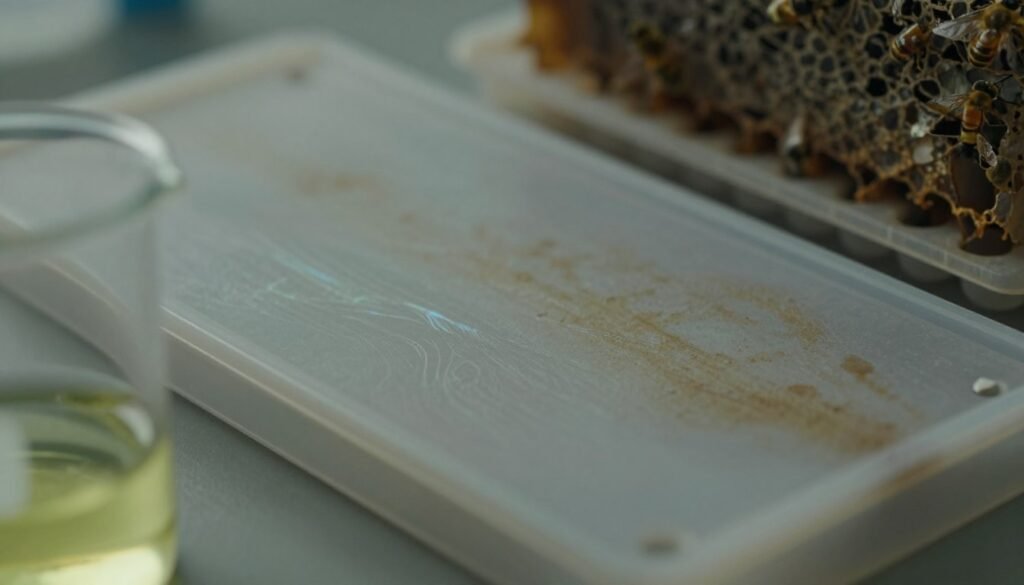
Balance risks and benefits. Using guide sheets helps hive management and comb uniformity, but it can also introduce residues if the coating comes from contaminated supplies.
“Bees are sensitive to low-level chemicals; equipment choices should factor in sourcing and rotation.”
| Concern | Action | Result |
|---|---|---|
| Miticide in commercial wax | Source certified clean wax | Lower residue load in comb |
| Unknown coating on reused frames | Strip and recoat or replace | Reduce lingering contaminants |
| Environmental pesticides | Monitor and rotate comb regularly | Protect brood development |
For practical steps on cleaning and recovering reusable sheets after losses, see a hands-on guide to cleaning molded frames here. To explore how material choice might affect honey taste and quality, review this FAQ on honey quality here.
Factors to Consider When Choosing Your Hive Setup
Deciding which materials to use in frames starts with your goals: scale, time, and bee health.
Match choices to your apiary size. If you manage many hives, durable molded options save hours on repairs and give consistent cells for brood and honey. Becky Brandt Recer tested beeswax-covered black plastic and wired wax to see what worked for her climate and time budget.
Balance efficiency and natural practices. Using a mix — checkerboarding frames or alternating sheets — helps control cross-comb while letting bees shape some comb naturally. New keepers often try different setups to learn what their bees prefer.
Practical points to weigh
- Durability: molded options reduce maintenance and replacement time.
- Natural behavior: beeswax or partial beeswax use promotes familiar cell shaping.
- Climate risks: foundationless boxes need extra checks in hot weather to prevent sagging comb.
| Goal | Recommended option | Practical tip |
|---|---|---|
| Minimize time | Durable frames | Keep spare frames ready for quick swaps |
| Natural comb | Beeswax or mixed approach | Rotate darker comb every few years |
| Hybrid strategy | Alternate frame types | Try checkerboarding to limit cross-comb |
Make a plan, then test. Research, small experiments, and attention to brood health will point you to the right choice for your hives. For a deeper look at commercial options, read about plastic foundation choices. For gentle tools that help inspections with mixed setups, see recommendations for gentle inspection tools.
“Balance your goals with what your bees can handle; a hybrid approach often wins.”
Conclusion
E. The best choice for your hives balances handling time with what helps the bees thrive.
In short: choosing a sheet is a personal decision that should match your goals, apiary size, and colony health. Durable options like molded plastic give consistency and speed, while natural sheets let colonies shape comb more freely.
Prepare and maintain your frames and frame components well. Many keepers use a mix of foundation types to balance efficiency and natural behavior. As you gain experience, your preference may change with the needs of your apiary.
Stay informed and prioritize bee health. For a range of keeper perspectives, see this community discussion on the topic.