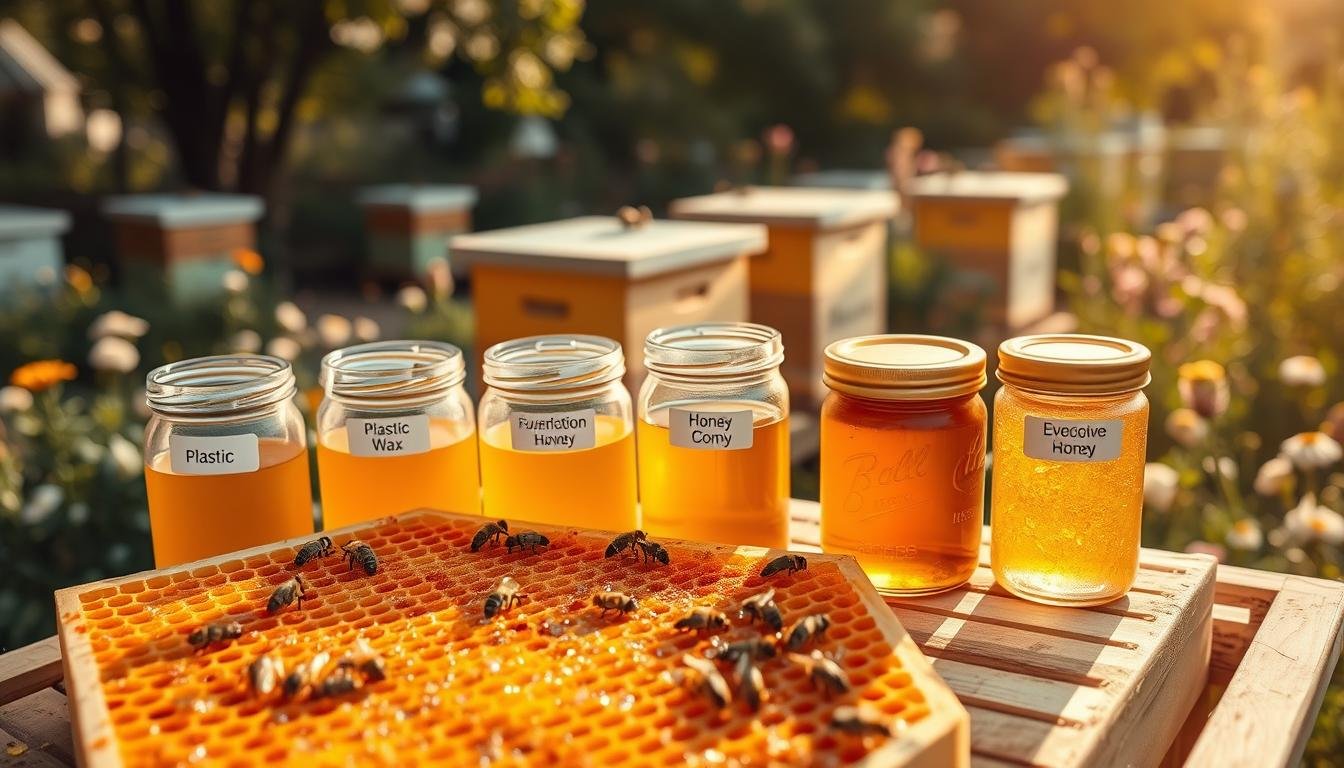
This buyer’s guide opens with the core factors that shape the right foundation choice today. It covers material, wax levels, sizes, and compatibility so U.S. beekeepers can scale operations with fewer setbacks.
Traditional beeswax and modern wax-coated plastic options each have tradeoffs. Bees accept beeswax faster, but Rite-Cell style plastic often scores high on acceptance, ease of insertion, and repeated reuse after extraction.
We also flag sourcing risks: some commercial wax coatings on plastic may carry pesticide residues that affect young comb building. That concern influences vendor selection and long-term equipment decisions.
Expect clear, practical criteria—sheet pricing, sizes (deep, medium, shallow), and vendor signals—so you can match foundation type to brood chambers, honey supers, and workflow. Explore related frame guidance at honey bee frames as you read on.
Key Takeaways
- Material and wax load shape comb acceptance and yield.
- Beeswax and waxed plastic each offer distinct durability and reuse profiles.
- Watch for pesticide residues in some commercial coatings.
- Match sizes—deep, medium, shallow—to hive roles and equipment.
- Factor per-sheet cost and vendor service into total ownership.
How foundations impact honey production, bee wellness, and your workflow
Choosing how you set comb shapes brood layout, inspection speed, and seasonal turnover. Templated sheets give consistent cell patterns and steady brood spacing. That reduces cross-comb on bars and eases inspections.
Foundationless frames let bees set natural cell sizes and comb architecture. This can improve brood health in some cases, but it adds more management and extra work during inspections.
Plastic vs. beeswax
Waxed plastic options such as Rite-Cell and Acorn offer quick acceptance, durable service life, and faster re-installation after extraction. Beeswax sheets attract bees but are fragile in hot weather and can slow re-use.
Turnaround, communication, and sourcing
Reusable plastic frames reduce downtime: scrape, clean, and return to the hive to capture the next nectar flow. Acorn’s precision cells and optional breakaway communication hole help bees move and balance brood care.
- Plastic sheets cut replacement cycles and save time.
- Foundationless builds need more trimming and frame work during inspection.
- Choose traceable waxed sheets to avoid pesticide residues that can harm brood.
For deeper guidance on equipment and training, explore specialized webinars and resources at training webinars and a curated reading list at beekeeping resources.
Key buying factors: materials, sizes, wax coatings, and frame compatibility
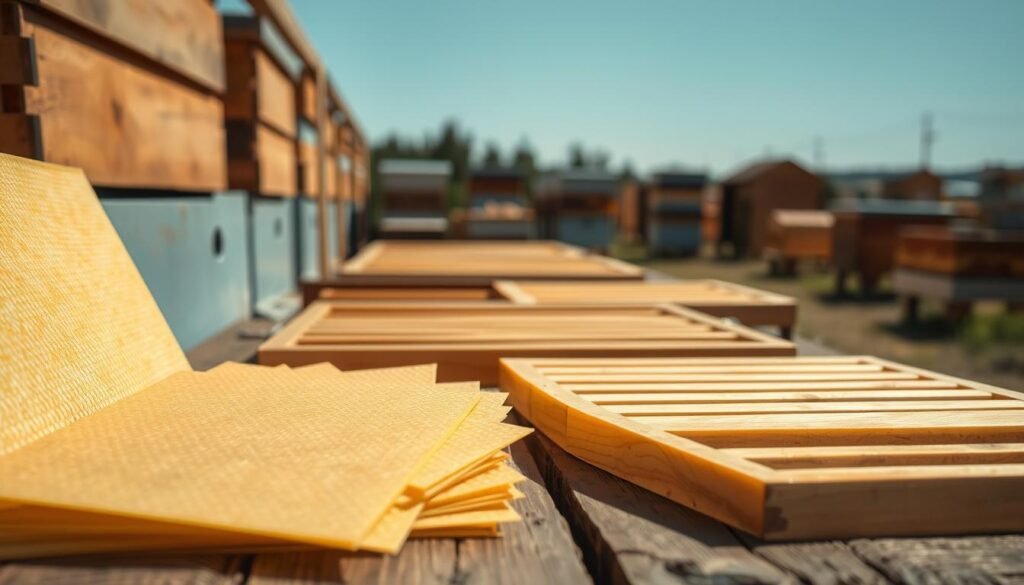
Select materials that match your inspection routine and seasonal workload. Material and cell pattern change how fast bees draw comb and how well sheets fit your boxes. Choose between molded plastic cores with precision cells and traditional beeswax sheets depending on your goals.
Material and cell structure
Plastic cores like Acorn use precision cell patterns to speed acceptance and last through multiple uses. Beeswax sheets still win early acceptance in some colonies due to scent and feel.
Size and fit
Deep 9-1/8″ and medium 6-1/4″ sheets fit standard grooved wooden frames. Shallow 4-3/4″ options serve supers where lighter weight matters.
Wax options and colors
Choose unwaxed, standard, heavy, or extra heavy wax levels to control comb draw. Use black to spot larvae and white or yellow to inspect nectar and capped cells.
Communication, assembly, and maintenance
Optional breakaway communication holes help bee movement across bars and improve regulation. Seat sheets top to bottom in grooved frames to prevent sag. Scrape top bottom gently, rinse, and keep warm-water cleaning under 200°F to avoid warping.
| Feature | Typical Options | Why it matters |
|---|---|---|
| Material | Plastic core, beeswax | Durability vs. initial acceptance |
| Sizes | 9-1/8″ deep, 6-1/4″ medium, 4-3/4″ shallow | Match to frames and supers weight |
| Wax level | Unwaxed, standard, heavy, extra heavy | Speed of comb draw |
| Extras | Colors, communication hole | Inspection visibility and bee flow |
Budgeting tip: Look for per-sheet discounts and free shipping thresholds. For shallow double-wax tiers and volume pricing, review Puracell offers and plan inventory ahead of peak flow. Also see a concise frame guide and grading standards for related equipment and quality context.
11. best foundation for honey production: curated picks and how to choose
Opt for waxed, precision-molded sheets when quick acceptance and reuse matter most to your operation.
Top-rated plastic foundations with waxed surfaces
Rite-Cell waxed plastic is easy to insert, widely accepted, and reusable after extraction. That makes it a solid choice when you need fast turnarounds between flows.
Acorn Plastic Foundations offer precision cells, come in deep (9-1/8″) and medium (6-1/4″) sizes, and include optional breakaway communication holes. Colors run black, white, and yellow with wax levels from unwaxed to extra heavy.
Deep and medium options for brood boxes and supers
Use deep 9-1/8″ frames in brood boxes; black sheets help spot eggs and larvae quickly.
Medium 6-1/4″ frames give flexibility between brood and honey duties. For shallow supers, 4-3/4″ Puracell double-wax sheets draw comb fast and reduce box weight during extraction.
- Turnaround: reusable plastic lets you scrape and return frames fast.
- Color strategy: black for brood checks, white or yellow for honey inspection.
- Budget: compare per-product pricing and volume discounts; Puracell often offers free shipping over $150.
| Product | Sizes | Key advantage |
|---|---|---|
| Rite-Cell (waxed) | Medium, Deep | Quick acceptance, reusable after extraction |
| Acorn Plastic | 9-1/8″ deep, 6-1/4″ medium | Precision cells, color & wax options, breakaway hole |
| Puracell Double-Wax | 4-3/4″ shallow | Fast draw in supers, volume discounts for large runs |
Build a mixed kit: deep frames for brood, medium for flexible boxes, and shallow sheets for supers. Track which products performed best in your post-season post notes to refine selection each year.
Conclusion
Standardizing sheet types and colors helps beekeepers spot brood and nectar faster. Choose frames and a foundation that match your hive gear. This reduces rework and saves time during inspections.
Balance beeswax appeal with reusable plastic to get early acceptance and fast turnaround. Scrape gently from top to bottom and rinse under 200°F to avoid warping.
Track post-season notes on each product and sheet performance. Plan orders ahead of flows to use volume discounts and free shipping thresholds.
Prioritize traceable sourcing so bees stay healthy and comb quality stays high. Review your beekeeping records to refine choices and keep every frame ready for the next season.
FAQ
How do different foundations affect comb draw speed and hive workflow?
Foundations with a heavy wax coating and well-defined cell imprint speed comb building by giving bees a clear starter template. Plastic foundations with wax coatings combine durability and quick acceptance, reducing rebuild time after extraction and keeping workflow steady during nectar flows.
What are the pros and cons of plastic versus beeswax sheets?
Plastic cores resist warping and last many seasons, making them cost-effective for high-volume operations. Beeswax sheets offer natural pheromones that often increase initial acceptance but wear faster and may need replacement due to residues. Choose based on longevity needs and sustainability goals.
Can I use the same foundation types in deep, medium, and shallow frames?
Yes, but match the sheet size to the frame depth—deep (9-1/8 in) for brood, medium (6-1/4 in) and shallow (4-3/4 in) for supers. Using correctly sized sheets avoids gaps, improves bee traffic, and ensures efficient honey storage and brood rearing.
How important is cell size and cell structure when selecting sheets?
Cell size influences bee size and brood health. Precision-imprinted sheets give uniform cell dimensions that help with consistent comb and honey storage. Consider cell structure if you manage for specific traits or mite control strategies.
Are unwaxed foundations useful, and when should I choose them?
Unwaxed sheets let bees build natural comb but require more time and nectar reserves. Use unwaxed options when you prioritize natural comb or when producing comb honey, but expect slower draw and more initial work from the colony.
How do color choices like black or white affect hive management?
Dark sheets help spot brood and varroa or pests more easily; lighter colors improve visibility of honey clarity and contamination. Choose colors to suit inspection priorities and seasonal lighting conditions in your apiary.
What is the role of communication holes and top-to-bottom assembly in frames?
Communication holes and correct top-to-bottom assembly improve bee movement between frames and speed brood distribution and nectar transfer. Proper assembly reduces congestion and increases hive productivity during peak flows.
How should I clean and maintain reusable frames and foundations?
Scrape excess wax and propolis, use water under 200°F for melting residue, and avoid harsh chemicals. Regular inspection and timely replacement of damaged sheets extend equipment life and reduce contamination risks.
Do pesticide residues on wax affect my choice of foundation?
Yes. Wax can harbor pesticides and contaminants that impact colony health. Source sheets from reputable suppliers or use new plastic cores with fresh wax coatings to minimize residue transfer.
What budget and volume considerations should I keep in mind when buying sheets and frames?
Buying in bulk often lowers per-sheet costs; look for volume discounts and free shipping thresholds to cut expenses. Balance initial outlay with expected reuse life—plastic cores may cost more up front but save money over multiple seasons.
Which foundation types are recommended for fast extraction cycles?
Wax-coated plastic foundations and heavy-wax sheets offer quick draw and robust comb that withstand extraction. They reduce downtime between harvests and simplify reinstallation after uncapping and centrifuging.
How do frame compatibility and grooved wooden frames influence my selection?
Ensure sheets match grooved frame rails and fit securely in top and bottom bars. Proper compatibility prevents sagging, comb collapse, and worker disruption, keeping colonies productive and reducing maintenance time.