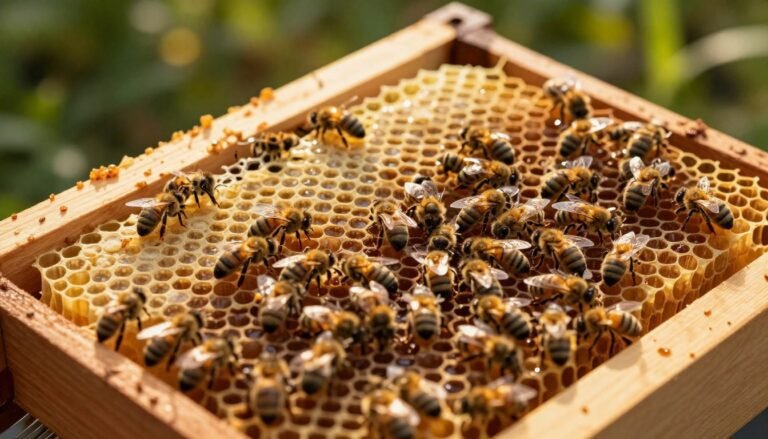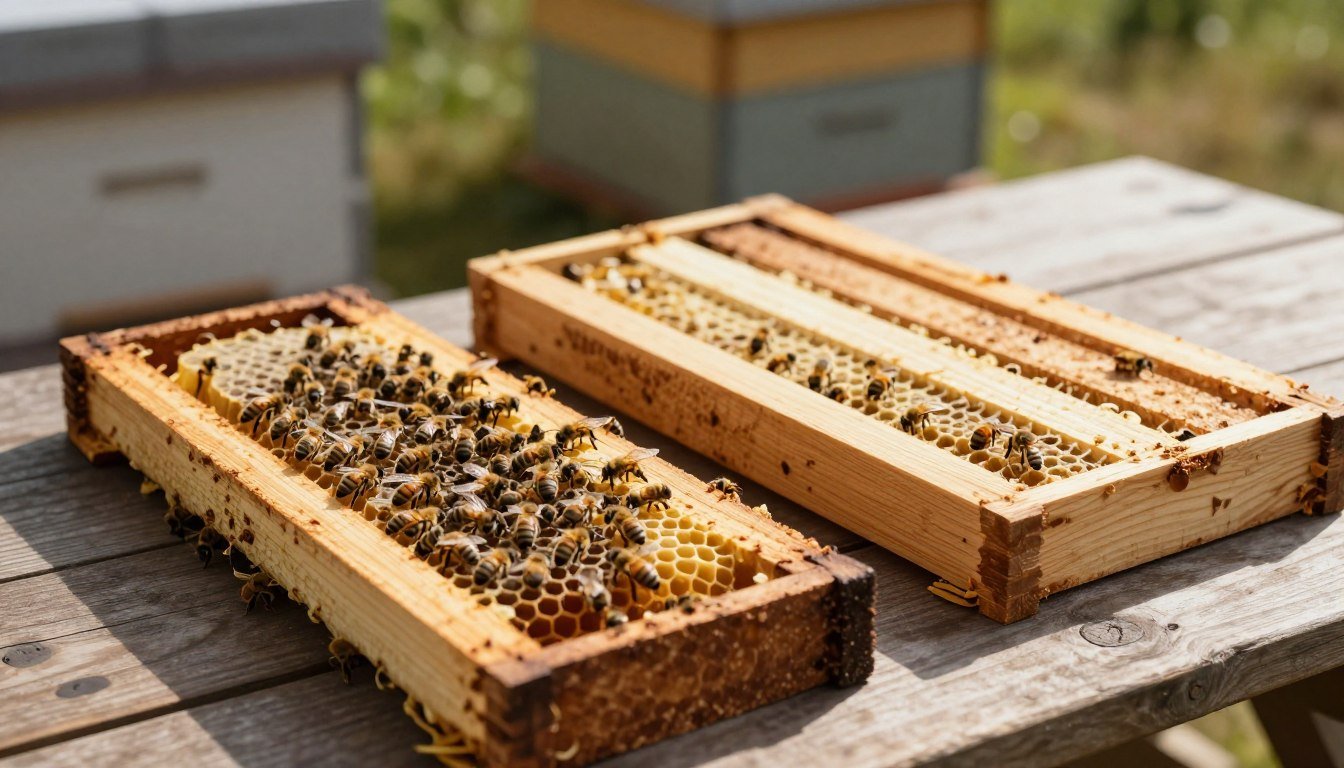
Choosing the right frame spacing is a core decision for any beekeeper setting up a hive in the United States. The choice shapes how bees build comb, how much honey storage fits in each box, and the size of the brood nest a colony maintains.
François Huber noted in 1806 that 1 1/4″ (32 mm) spacing worked well in his leaf hive. That historic observation still helps beekeepers balance comb cell size and room inside the brood box.
Many people, especially a beginner, find the options for boxes, frames, and hive parts overwhelming. Learning how bees build comb in different equipment makes it easier to manage honey supers, avoid brace comb, and choose dimensions that fit your colonies.
Whether you manage one hive or many, assembling the right equipment affects colony health, storage, and handling over the year.
For a practical guide to frame types and dimensions, see frame sizes and care, and for help choosing a hive layout review how to pick a hive.
Key Takeaways
- Frame spacing dictates comb shape and brood nest size.
- Historic measurements like 32 mm still inform modern equipment dimensions.
- Proper spacing prevents unwanted brace comb and eases management.
- Beginners should compare box and frame options before setup.
- Right parts and assembly support colony health and honey storage.
Understanding Frame Spacing Fundamentals
Understanding the exact gap between combs helps keep colonies productive and easy to manage. A clear grasp of spacing guides choices about box layout, number of frames, and how bees build comb over time.
Historical Context of Bee Space
“Natural gaps near 1 1/4 inch encouraged bees to leave open passage and avoid excess wax.”
François Huber and later observers found that certain clearances let the colony move and tend brood without filling the area with brace wax.
Defining Standard Hoffman Dimensions
Julius Hoffman set the 1 3/8″ (35 mm) frame spacing that yields about a 3/8″ (9.5 mm) bee space. That dimension is common in modern equipment and fits many brood boxes, including 14 x 12 sizes.
Hoffman spacing helps keep brood temperature stable and leaves room for honey storage in the supers. Experienced beekeepers manage the number of frames in a box to optimize storage, comb cell size, and colony health.
For compact setups and practical layout ideas, see minimalist beekeeping setups.
Comparing Narrow Frames vs Standard Frames for Brood
Small changes in spacing inside the brood box can shift how bees build comb and allocate cells. T.W. Cowan noted in the British Bee-keeper’s Guide Book that slipping supports to 1 1/4″ (32 mm) helps limit drone production.
Closer spacing lets a beekeeper fit more supports into a single box. That often increases colony population and gives the nest less room for large drone cells.
Wider spacing, such as Hoffman’s 1 3/8″ (35 mm), remains the common choice. It balances storage in honey supers with brood rearing and ease of handling.
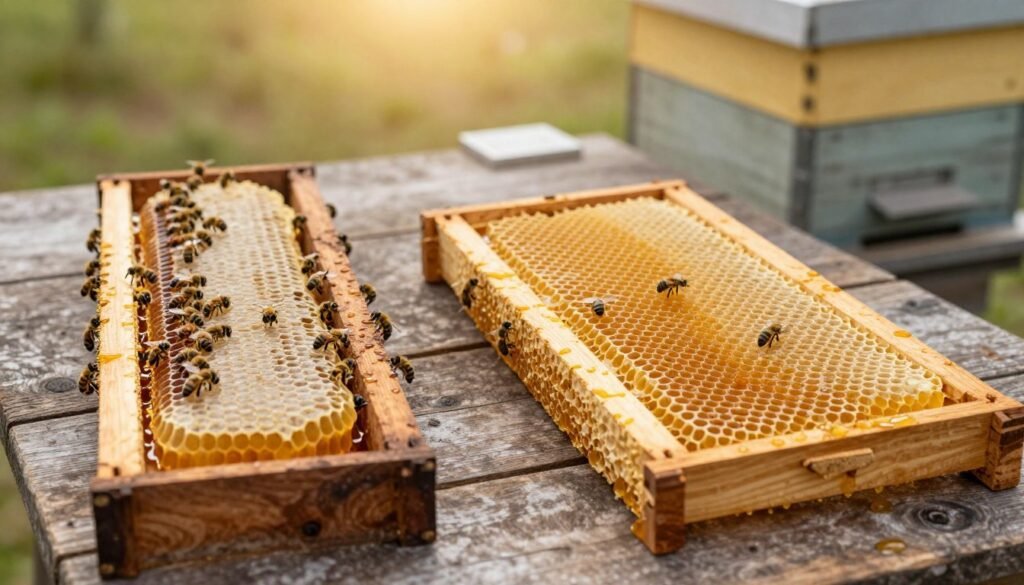
| Spacing | Supports in 10″ Brood Box | Brood Tendency | Handling Notes |
|---|---|---|---|
| 1 1/4″ (32 mm) | 10–11 | Favors worker cells; fewer drones | Use a dummy board to avoid rolling bees |
| 1 3/8″ (35 mm) | 8–9 | Balanced worker and drone mix | Common in many hives; easier comb removal |
| Intermediate sizes | Varies | Depends on side bar depth and colony needs | Adjust by adding or removing supports |
The side bar dimensions determine how much room bees have to move between combs. Many beekeepers use closer spacing to manage the nest, especially when they maintain a lot of equipment.
Practical tip: Review a frames and foundation buyer’s guide when choosing support sizes and foundation options.
Biological Impacts on the Bee Colony
The gap between supports directly affects how bees organize their nest and care for young. Small adjustments change worker distribution, comb thickness, and where honey ends up.
Brood Rearing Efficiency
Compact spacing helps colonies cluster and warm developing brood with fewer workers.
Julius Hoffman noted that about a 1/2″ (13 mm) clear space lets bees join backs and keep the brood warm. Using an extra support, as Charles Koover suggests, can let a hive hold 11 supports in a 10-frame box to boost heat retention and honey efficiency.
Managing Drone Comb Production
Closer supports reduce drone cell construction. When the colony has less room between comb, bees tend to build worker cells rather than large drone cells. This keeps drone amounts lower and helps beekeepers control colony composition.
Temperature Regulation Benefits
The side of the frame and the board boundaries act as thermal guides. A compact brood box keeps the nest concentrated, so fewer bees are needed during cool spells. Wide spacing can invite surplus honey into nesting areas and cause uneven comb thickness, which complicates extraction.
“Keep the brood nest compact to make heating and care more efficient.”
For lab-backed notes on avoiding old supports, review a short summary of scientific reasons against old equipment. To see how internal heat patterns reflect brood health, read the guide on heat mapping for brood.
| Impact | Compact Spacing | Wider Spacing |
|---|---|---|
| Brood coverage | Fewer bees needed to warm brood | Requires more workers to maintain temperature |
| Drone comb | Reduced drone cell building | More space for drone cells and irregular comb |
| Honey placement | Surplus stored in supers | Honey often appears in brood area |
| Handling | Denser nest, easier wintering | Irregular comb thickness, extraction issues |
Practical Methods for Adjusting Hive Spacing
A few careful adjustments to your equipment will let you tune how the colony uses space inside the box.
Modifying existing parts can delay replacement costs and tailor the nest to local conditions.
Modifying Existing Equipment
Charles Koover recommends assembling each frame with glue and staples, then planing end bars to 1 1/4″ (32 mm) where you want tighter spacing.
This method keeps the build strong and makes the frame durable after changes. Check top and side bar dimensions so the set still fits into the brood box.

- Use a dummy board when changing the number of frames in a box to prevent rolling bees during inspections.
- Castellated spacers in honey supers help ensure even spacing so bees draw comb properly.
- Loading 9 or 10 frames in a 10-frame honey super encourages thicker comb ideal for honey and easy extraction.
Practical care tip: glue and staples keep joints tight after planing. Measure twice before trimming. Small errors change how bees build comb and place honey.
“Proper spacing in the brood box is essential for colony health.”
For a useful tool to help with adjustments, see options for a frame spacer when setting up boxes and supers.
Common Misconceptions Regarding Frame Width
Assumptions about ideal support width can steer equipment choices more than actual colony behavior.
Michael Bush notes that European honey bees often space worker comb as small as 1 1/8″ (30 mm) in the nest core. That shows bees adapt comb building to available space.
Debunking myths helps newcomers make better choices with fewer mistakes.
- Many think 1 1/4″ spacing only suits Africanized strains; in reality European bees may use similar spacing to rear work cells.
- Beekeepers worry different support widths cannot mix in one box. You can intersperse types to guide comb and manage drone production.
- Believing width has no effect is wrong: spacing influences drone comb, honey placement, and handling in the brood box.
“Bees will adjust their comb based on the room provided.”
Learn more about practical width guidance at frame width basics and read common myths at U.S. beekeeping misconceptions.
Final Thoughts on Choosing Your Hive Configuration
Final Thoughts on Choosing Your Hive Configuration
There is no single correct setup; pick a plan that matches your goals, climate, and how your bees behave.
Consistency in the box layout and how you place frames helps inspections and improves honey yields.
Consider brood health, temperature needs, and drone control when you decide spacing and frame count in the brood box and supers.
Try small experiments with different frame counts and observe comb placement. That feedback will guide the best long-term choice for your hive.
For practical advice on specific frame types and measurements, review this guide at how to choose frames. A tidy, well-spaced setup protects colony health and makes beekeeping easier over the seasons.