Reviewed by Sofia T. · Last Updated September 24, 2026 · How we review
For a deep Langstroth brood box, the best frame feeder for spring buildup is a 1-gallon, 2-inch-wide feeder with a cap-and-ladder insert. Mann Lake’s 9-1/8″ Pro Feeder (FD505, $15.50 on 23 September 2026) is the one we’d pick first. It fits snugly with nine frames and holds about 10 pounds of 1:1 syrup, and the ladder system keeps most bees out of the syrup. For a strong colony where you want fewer refills, its 2-1/2-inch, 1.5-gallon version is the better choice. For a smaller colony or a tighter budget, Betterbee’s Deep Division Board Feeder is a simpler option. Before you buy, though, know the limit that matters most in a northern spring: a frame feeder helps only when it hangs right beside the cluster, and only once it’s warm enough for bees to take liquid syrup.
All prices and specifications below come from the sellers’ own product pages, checked on 23 September 2026. Prices change, so treat them as a guide.
Key Takeaways
- A frame feeder, also called a division board feeder, replaces one or two frames inside the brood box. It keeps syrup inside the hive, away from robbers, and close to the bees.
- Drowning protection matters more than anything else. Choose a feeder with a cap and ladder, or with textured walls plus floats.
- A 1-gallon deep feeder holds roughly 10 lb of 1:1 syrup, containing about 5 lb of sugar.
- Width decides fit. A 2-inch feeder fits with nine frames in a 10-frame box. Wider, larger-capacity feeders need you to remove two frames.
- In early spring on the northern plains, a frame feeder at the edge of the box can sit unused while the cluster starves at the other end. Placement beats capacity.
- Take honey supers off before you feed syrup, so syrup doesn’t end up in honey you’ll harvest.
Table of Contents
Frame Feeder Picks at a Glance
| Feeder | Box | Capacity | Width / fit | Drowning protection | Price (23 Sep 2026) |
|---|---|---|---|---|---|
| Mann Lake 9-1/8″ Pro Feeder, 2″ wide (FD505) | Deep | 1 gal (3.78 L) | Fits snug with 9 new frames | Removable cap and ladder; textured walls | $15.50 |
| Mann Lake 9-1/8″ Pro Feeder, 2-1/2″ wide (FD525) | Deep | 1.5 gal (5.68 L) | Fits with a 3/4″ gap using 8 new frames | Removable cap and ladder; textured walls | $15.99 |
| Betterbee Deep Division Board Feeder (DF2) | Deep | 95 oz (about 0.75 gal) | 2″ wide, 8-3/4″ tall, 19″ long | Textured walls; top with entry ladders | $12.39 |
| Mann Lake 6-1/4″ Pro Feeder, 3″ wide (FD855) | Medium | 1 gal (3.78 L) | Fits with a 3/4″ gap using 8 new frames | Textured walls; cap and ladder not included | $14.29 |
Sources: Mann Lake product pages for the 2-inch deep Pro Feeder, the 2-1/2-inch deep Pro Feeder and the 6-1/4-inch medium Pro Feeder, and Betterbee’s Deep Division Board Feeder page.
The Picks in Detail
Best overall: Mann Lake 9-1/8″ Pro Feeder, 2″ wide
This is the standard deep frame feeder for most beekeepers. Mann Lake lists it at 1 gallon, with a 2-inch “ear” (the hanging tab) and a snug fit alongside nine new frames, so a 10-frame box still holds nine frames of comb. The cap-and-ladder insert lifts out for cleaning. Mann Lake says its sealed feeding tubes keep bees confined to the feeding area, which minimizes drowning, and stop bees building burr comb in the feeder. The inside walls are textured, so you can also use it without the cap if the cap gets lost. Mann Lake states it’s made in the USA.
Good for: packages and nucs on new foundation, overwintered colonies that come out light, and anyone who wants one feeder for everything. Watch for: 1 gallon can disappear in a few days in a strong colony during warm weather, so check it often.
Best for strong colonies: Mann Lake 9-1/8″ Pro Feeder, 2-1/2″ wide
This one has the same cap-and-ladder design, holds 1.5 gallons, and costs only a little more. The trade-off is fit: Mann Lake says it fits with a 3/4-inch gap using eight new frames, so you give up two frames of comb space. That’s fine for a strong overwintered colony with frames to spare. It’s a poor choice for a package still drawing out its first box, where you want every frame of comb space.
Budget option: Betterbee Deep Division Board Feeder
This one-piece polypropylene feeder holds up to 95 ounces, about three-quarters of a gallon, with textured inner walls and a top with entry ladders. Betterbee’s product page says it goes in place of two frames. Its general feeder guide says the deep version takes the space of one frame, or two in heavily propolized boxes. Measure your own boxes. Betterbee also notes it often uses this feeder after installing packages on foundation, because many bees can reach it at once.
Good for: packages, nucs and small colonies, where smaller refills mean less syrup left to ferment. Watch for: it’s not a cap-and-ladder design, so floats help reduce drowning.
For medium brood boxes: Mann Lake 6-1/4″ Pro Feeder
If your brood nest is in mediums, a deep feeder won’t fit. Mann Lake’s medium Pro Feeder holds 1 gallon but is 3 inches wide and fits with eight new frames. Note one detail on the product page: the cap-and-ladder system is not included. Budget for floats, or buy the insert separately if your supplier sells it.
We left out feeders whose current specifications or prices we couldn’t confirm on the seller’s own page on the date above. That doesn’t mean they’re poor feeders.
What Actually Matters in a Frame Feeder
Drowning protection comes first
An open frame feeder full of syrup can drown a lot of bees. Alabama Cooperative Extension’s guide to supplemental feeding for honey bees puts it plainly:
“Care must be taken to keep the syrup inaccessible from all points except the ‘ladders’ to prevent bees from drowning.”
Allyson Shabel and William “Jack” Rowe, Alabama Cooperative Extension System, “Supplemental Feeding for Honey Bees”
Then fit, capacity and cleaning
- Width and fit. A frame feeder that forces you to leave out two frames in a package’s only box costs you comb space when the colony needs it most. Check the width against your frame count before you buy.
- Capacity. Using the density of 1:1 syrup, a 1-gallon feeder holds roughly 10 lb of syrup containing about 5 lb of sugar. That’s plenty for a package drawing comb. It’s less than a large top feeder or a 2-gallon pail, which our comparison of top, frame and pail feeders covers.
- Cleanability. Syrup ferments and molds. A removable cap and ladder, or a smooth one-piece body, makes the job easier. See cleaning feeders between colonies.
- 8-frame hives. Standard deep frame feeders hang on the same rabbets as frames, so they fit 8-frame deeps too, but they take a bigger share of a smaller box.
Is a Frame Feeder the Right Tool for Spring?
Frame feeders aren’t the best tool for every spring job. Here’s where they fit:
| Situation | Frame feeder? | Why |
|---|---|---|
| Package or nuc on new foundation | Yes | Syrup right next to the bees fuels wax making |
| Overwintered colony, light on stores, flying weather | Yes | Keeps feed inside, away from robbers |
| Early spring, nights well below freezing, small cluster | Usually no | The cluster may not move to cold syrup at the edge of the box; use fondant or sugar over the cluster |
| Strong colony needing gallons quickly | Not ideal | A top feeder or pail holds more per visit |
| Honey supers on the hive | No | Syrup can end up in the honey you harvest |
Betterbee’s feeder guide advises against feeding syrup until it’s warm enough for bees to fly regularly. It suggests winter patties before then. For the ratio itself, spring feeding is normally 1:1 by weight. Our guide to syrup ratios by season explains why.
Using a Frame Feeder in a Northern Spring
In eastern North Dakota and western Minnesota, packages usually arrive in late April or May, and overwintered colonies start rearing brood well before there’s much forage. Cold nights are common through May. Here’s how to make a frame feeder work in those conditions:
- Step 1: Hang it next to the cluster, not against the wall. Put the feeder directly beside the frames the bees are covering. A feeder against the outer wall of a box whose cluster sits at the other end can go untouched through a cold week.
- Step 2: Fill it in the hive. Betterbee recommends filling the feeder after it’s installed, so you don’t spill syrup and set off robbing.
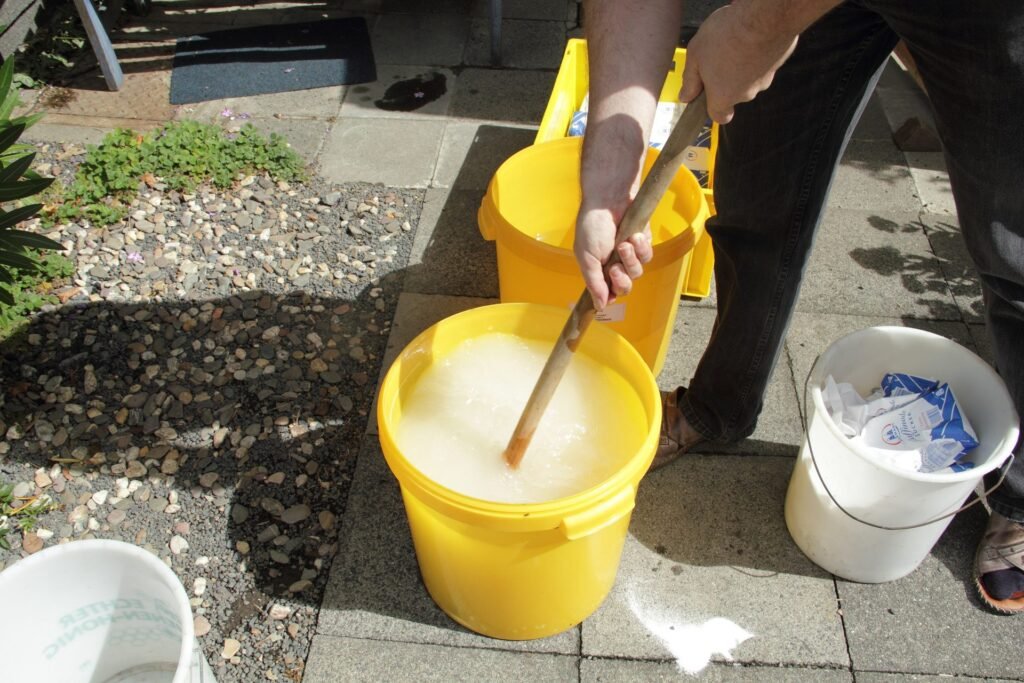
- Step 3: Use warm, fresh 1:1 syrup. Lukewarm syrup is easier for bees to take on a cool day than syrup from a cold garage. Mix only what you’ll use in a few days.
- Step 4: Check every few days. Look at the syrup level, drowned bees, and any cloudiness or sour smell. Refill before it runs dry during cold snaps, when bees can’t forage.
- Step 5: Add floats if there’s no ladder. Clean wooden sticks or a piece of plastic mesh give bees footing.
- Step 6: Stop when the flow starts. Once dandelion and fruit bloom are bringing in nectar and you’re ready to add supers, take the feeder out. Take supers off before you feed.
A package’s first weeks go better with drawn comb. See how drawn comb affects spring buildup. If you’re choosing a feeder specifically for a new package, also see feeders for newly installed packages.
Common Frame Feeder Problems
- Drowned bees. The cap is missing or damaged, or there’s no ladder or float. Replace the insert or add floats.
- Burr comb in or around the feeder. The feeder is sitting too far from its neighbors, or it’s been left in too long. Push the frames tight against it and take it out once feeding ends.
- Leaks and a wet bottom board. Cracked seams on older plastic feeders are the usual cause. Our frame feeder leak troubleshooting guide covers the fixes.
- Robbing. Frame feeders reduce robbing risk, but spilled syrup undoes that. Fill carefully, reduce the entrance, and see feeding without causing robbing.
- Moldy or fermented syrup. Empty the feeder, scrub it, and refill it with fresh syrup in smaller amounts.
Frequently Asked Questions
What is the difference between a frame feeder and a division board feeder?
Nothing, in practice. Both names describe a narrow plastic or wooden trough that hangs in the brood box like a frame. “Division board feeder” is the older name, and some sellers use the two interchangeably.
How much syrup does a frame feeder hold?
Deep frame feeders range from about 3/4 gallon to 2 gallons. The models above hold 95 ounces, 1 gallon or 1.5 gallons. A 1-gallon feeder holds roughly 10 lb of 1:1 syrup.
Where should a frame feeder go in the hive?
Directly beside the cluster, usually next to the outermost frame of brood. In cold weather, don’t put it against the far wall from where the bees are clustered.
Can I use a frame feeder in early spring when it’s still cold?
Only once bees are flying regularly and the cluster can reach it. Before that, solid feed such as fondant or sugar placed directly over the cluster is safer than syrup.
How do I stop bees drowning in a frame feeder?
Use a feeder with a cap-and-ladder insert, or add floats such as clean wooden sticks or plastic mesh. Keep the syrup level topped up. Bees drown more often when they have to climb a long way down to reach the syrup.
Is a frame feeder or a top feeder better for spring buildup?
A frame feeder is better for small colonies and packages because the syrup sits right next to the bees. A top feeder or pail is better for strong colonies that need more syrup with fewer hive openings.
The Bottom Line
For most deep brood boxes, a 1-gallon, 2-inch cap-and-ladder feeder such as Mann Lake’s 9-1/8″ Pro Feeder is the best frame feeder for spring buildup. Choose the 1.5-gallon version for strong colonies, Betterbee’s division board feeder for small colonies on a budget, and Mann Lake’s medium Pro Feeder if you run medium brood boxes. More important than the model: hang it beside the cluster, feed warm 1:1 syrup once bees are flying, and take it out when the flow starts.