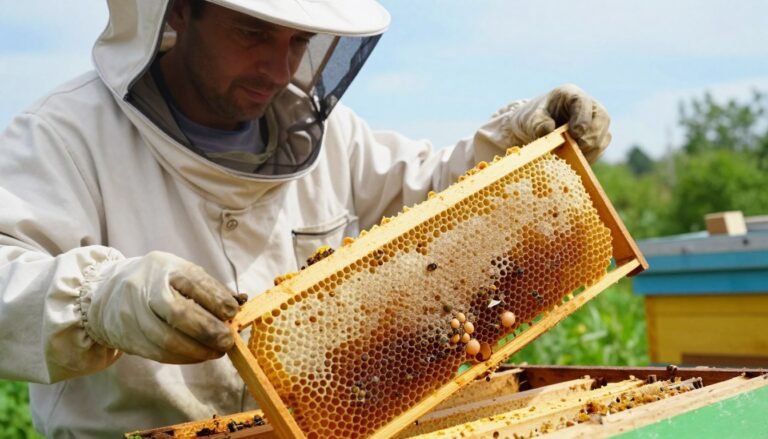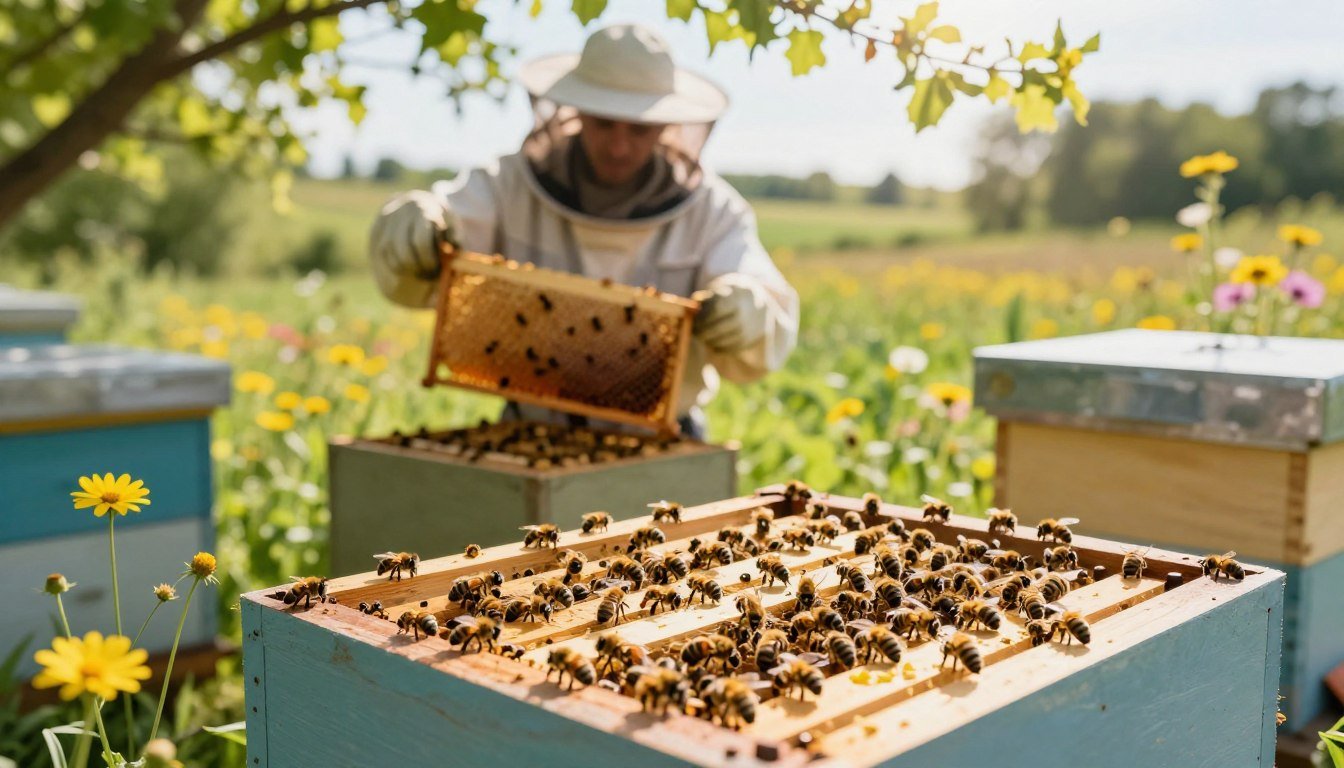
Protecting honey bee colonies starts with practical steps that keep hives resilient. Beekeepers rely on data from researchers like David R. Tarpy and resources such as NC State’s Note 2.03 to understand Varroa destructor and other threats.
Integrated pest management blends hygiene, monitoring, and precise treatments to keep adult bees and brood strong. Regular inspection of combs, pollen stores, and larvae helps spot early signs of mites or hive beetle activity.
Careful chemical application, timed with colony cycles, limits harm to honey production while targeting mites and pathogens. For commercial operations, treatment consumables form a technical layer of control that preserves biological assets and lowers overwintering loss. Learn about practical consumables and asset protection in this short guide: treatment consumables and colony protection.
Key Takeaways
- Use IPM principles for sustained hive health and mite control.
- Monitor combs, brood, and adult bees often for early signs of infection.
- Follow research-based guidance like NC State Note 2.03 for Varroa management.
- Apply treatments precisely to protect honey production and colony integrity.
- Hygiene and routine inspections reduce the risk of large-scale losses.
Understanding the Importance of Apiary Biosecurity
Strong on-site biosecurity keeps invasive pests from reaching a hive and protects each colony’s resilience.
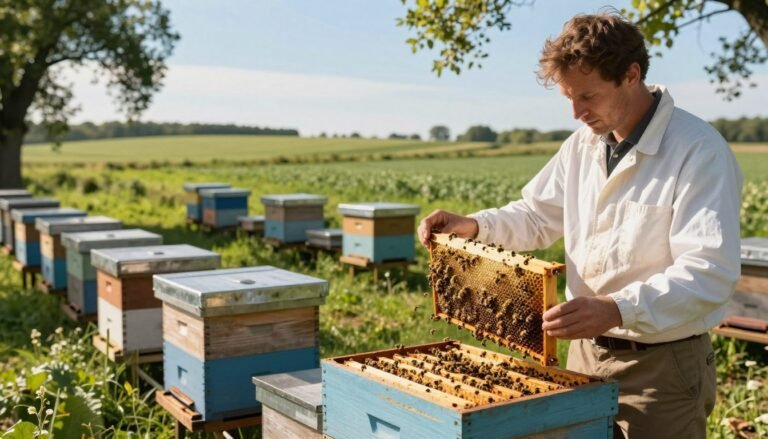
A healthy honey bee population starts with a vigorous queen and routine checks. Regular inspections reveal early warning signs in brood, stores, and adult workers. Prompt action preserves honey quality and limits long-term losses.
Clear equipment protocols lower the chance of moving contaminants between colonies. Training staff in basic sanitation and record keeping makes those rules effective.
- Early detection: frequent checks for mites, brood issues, and comb hygiene.
- Queen health: ensure replacement plans and genetic vigor for robust colonies.
- Store integrity: protect honey from contamination and persistent spores.
| Action | Benefit | Target |
|---|---|---|
| Routine inspections | Faster response, less loss | colonies |
| Equipment protocols | Lower cross-contamination | hive and frames |
| Queen monitoring | Stable brood production | colony |
| Honey handling standards | Safer harvests | honey |
For practical guidance, see keeping honey bees healthy and a concise apiary biosecurity plan.
How to Prevent Disease Spread Between Apiaries
Isolating new colonies on arrival reduces the chance that mites or spores reach established stock. Start every new addition with a formal quarantine period recommended by the North Carolina Department of Agriculture & Consumer Services. During isolation, inspect brood, check mite loads, and confirm queen performance.
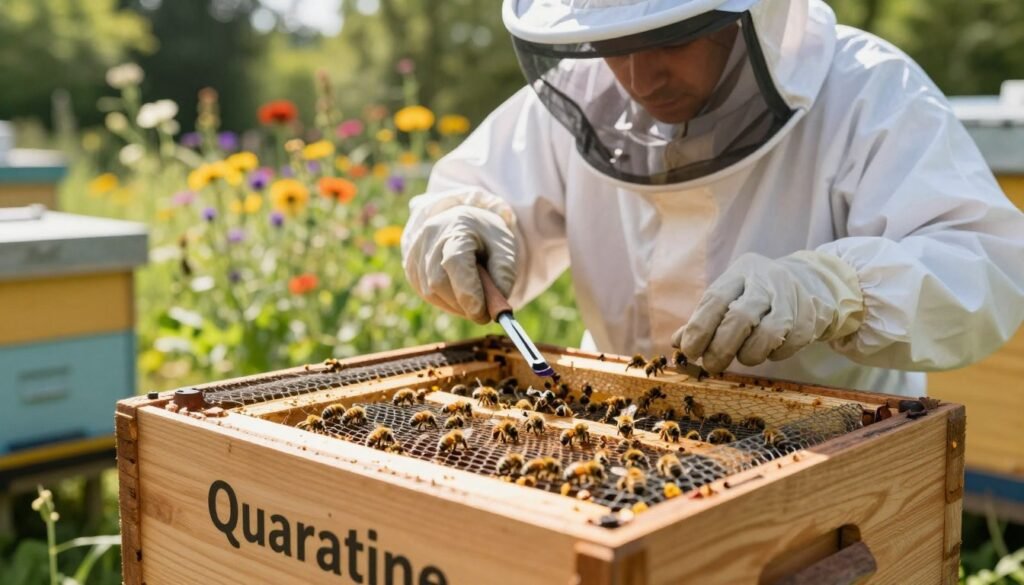
Quarantine Protocols
Set a clear timeline for observation and treatment if pests appear. Keep records for each colony and note any treatments or unusual signs. Limiting movement of live bees and nucs across regions reduces introduction of local problems.
Equipment Hygiene
Never share frames, feeders, or suits without disinfection. Clean hive tools and protective gear after each apiary visit. Proper storage of honey and wax combs in sealed, pest-proof containers prevents contamination and attraction of carriers.
- Maintain queen health: replace failing queens promptly to strengthen colony resistance.
- Educate staff: routine biosecurity training keeps beekeepers alert and consistent.
- Limit transfers: move bees only with documented health checks and permits.
| Action | Benefit | Target |
|---|---|---|
| Quarantine new hives | Lower introduction risk | colonies |
| Disinfect equipment | Fewer spores carried | hive tools |
| Store combs properly | Reduced pest attraction | honey and wax |
Recognizing Signs of Varroa Mite Infestations
Visible signs on adult bees and brood often signal a heavy Varroa destructor load. Early recognition protects colony strength and honey yields. Look for deformed wings, reduced bee vigor, and spotty brood patterns.
Detection Methods
Routine sampling gives reliable mite level data. Use alcohol washes or sugar shakes for accurate counts. Sticky boards provide trend data over several days.
Sample at least once every three weeks in autumn. Record levels and compare against economic thresholds.
Chemical Treatment Options
Chemical options like thymol or formic acid can reduce Varroa populations. Apply according to label instructions and avoid treatment while honey supers are on the hive.
Use chemicals cautiously near brood cells to limit harm to larvae and adult bees.
Mite-Tolerant Stock
Long-term control often relies on genetics. Stocks such as Russian, VSH, or Minnesota hygienic strains show better mite resistance.
Combine tolerant lines with practices like drone-brood trapping and screened bottom boards. For detailed regional guidance, consult a dedicated Varroa mite guide.
Managing Tracheal Mite Populations
Acarapis woodi attacks the breathing tubes of adult bees and can quietly reduce colony strength. Because external signs are vague, microscopic examination of the trachea is the only reliable confirmation.
Treatment becomes warranted when infestation reaches about 10% of the adult worker population, commonly assessed in late summer or autumn. Registered products include Mite-a-thol (menthol), Mite-Away II (formic acid), and Apilife VAR (thymol).
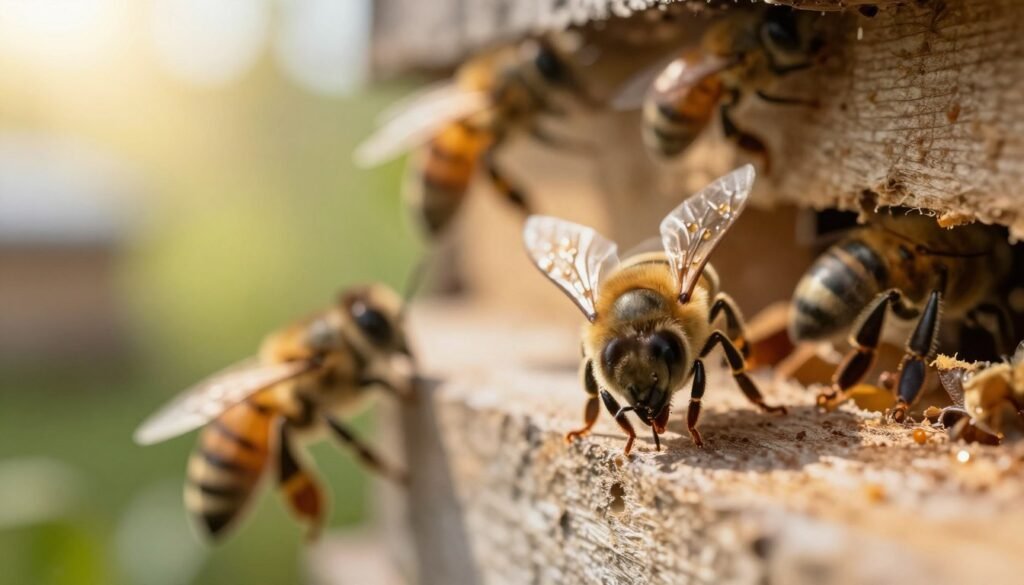
Most modern honey bee stocks show strong natural resistance, so major outbreaks are uncommon. Still, confirmed infestations can weaken honey production and make colonies more vulnerable to Varroa destructor and other stresses.
Maintain strong colony nutrition, overwintering readiness, and routine checks of adult bee health. Contact your regional NCDA&CS apiary inspector for professional verification if tracheal mites are suspected.
- Key point: microscopic diagnosis is essential.
- Treatment threshold: ~10% adult infestation.
- Options: menthol, formic acid, thymol formulations.
Addressing Nosemosis in Adult Bees
Nosemosis is driven by microsporidia such as Vairimorpha apis and, more often, V. ceranae. V. ceranae has displaced its cousin in many regions and now commonly affects honey bee performance and hive productivity.
Diagnostic Procedures
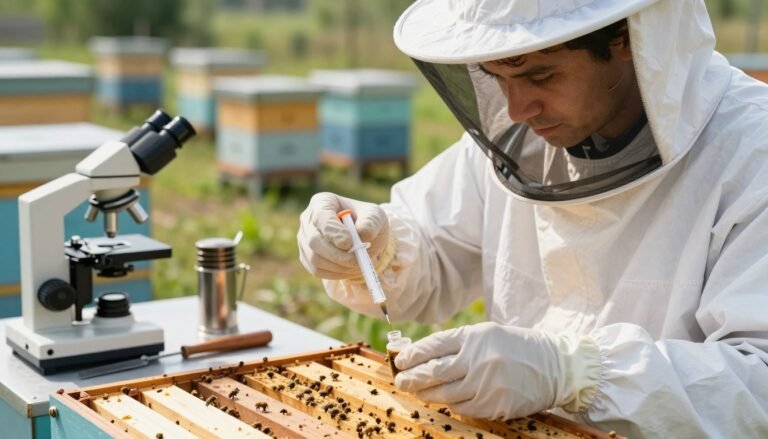
Confirm infections by dissecting the digestive tract and examining the ventriculae for swelling. Use a hemocytometer to count spores and establish infection levels precisely.
Action thresholds matter: Fumadil-B is the only registered control and is recommended when counts exceed roughly one million spores per bee in spring or autumn. Watch for dysentery, poor honey production, and reduced brood survival as practical signs in the colony.
There is no exact prevention kit. Maintaining strong nutrition, low stress, and prompt queen management gives the best control of Nosemosis. Regular monitoring, accurate counts, and timely use of registered treatment protect adult workers and overall colony health.
Identifying and Controlling American Foulbrood
Paenibacillus larvae causes American foulbrood (AFB), a highly contagious threat for honey bee colonies. Its spores resist decay and can remain active in comb for decades.
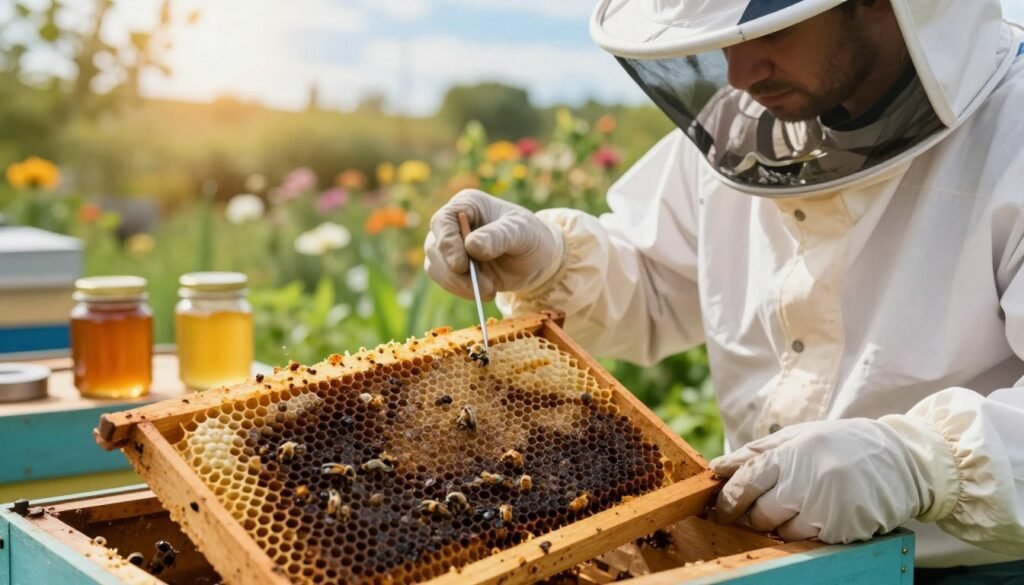
Field checks focus on sunken, discolored cappings and a foul, gym-sock-like odor in the brood area. Infected larvae often form black, brittle scales that hold billions of spores.
Beekeepers can confirm AFB with simple tests. The ropy test pulls larval remains into an elastic thread. The Holst milk test uses 1% powdered skim milk and gives results in 10–20 minutes.
Control measures are strict: confirmed colonies must be euthanized and all infected equipment burned or scorched. Prophylactic antibiotic use is discouraged because it masks signs and fosters resistance.
- Inspect combs regularly for black scales and abnormal cappings.
- Avoid moving frames between hives and keep hygienic stock.
- Report suspected cases promptly to state inspectors.
| Sign | Test | Required Action |
|---|---|---|
| Sunken, discolored cappings | Ropy test | Euthanize colony; destroy equipment |
| Black, brittle scales | Holst milk test | Burn or scorch frames and tools |
| Foul brood odor | Visual and lab confirmation | Notify inspector; follow local rules |
Strategies for European Foulbrood Management
European foulbrood (EFB) is caused by Melissococcus pluton and often appears when colonies face stress. Signs include discolored, rubbery larvae that lack the elastic, ropy feel of American foulbrood.
Management focuses on restoring colony strength. Reduce the brood nest area, replace infected comb with fresh foundation, and ensure the queen has enough workers to keep brood warm. Quarantine any affected hive and avoid moving frames among hives.
Antibiotic Stewardship
Use antibiotics only for heavy infections. Terramycin requires a veterinarian prescription under current FDA rules. Prophylactic antibiotic use is discouraged because it encourages resistant bacterial strains in the honey bee population.
- Distinguish EFB by rubbery larvae and cell discoloration.
- Replace infected comb and strengthen the colony population.
- Seek veterinary advice before any chemical treatments.
| Action | Benefit | When |
|---|---|---|
| Comb replacement | Removes spores | On detection |
| Brood reduction | Improves brood care | During infection |
| Veterinary-led antibiotic use | Targeted control | Severe outbreaks |
For practical regional guidance, see European foulbrood management.
“Keep colony health central; sound management reduces reliance on chemical treatments.”
Dealing with Chalkbrood and Sacbrood Infections
Chalkbrood is caused by the fungus Ascosphaera apis and produces hard, chalk-like mummies in brood cells. Sacbrood is a viral infection that leaves larvae in a canoe shape with a tough, sac-like skin.
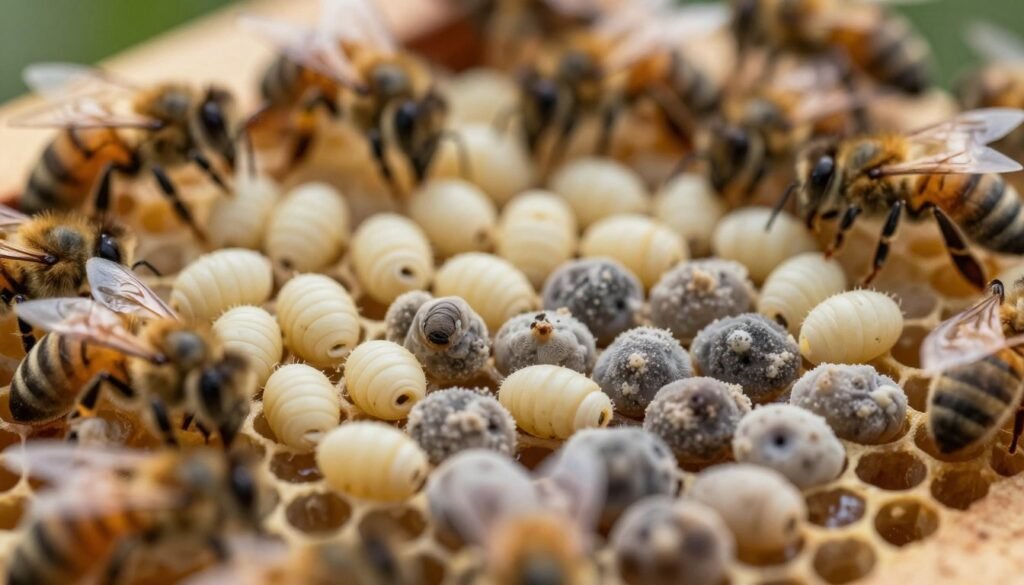
Both problems are closely linked to stress. A weak queen, poor nutrition, or a cold brood nest raises the chance of visible mummies or dead larvae.
There are no registered chemical treatments for these infections. Beekeepers often manage by requeening with resilient stock and improving colony nutrition and warmth.
- Chalkbrood: look for white or black mummies on the bottom board or comb.
- Sacbrood: dead larvae take a canoe shape and contain watery, granular material.
- Replace heavily infected frames to lower the spore load and give the colony a fresh start.
Regular visual inspection of brood combs and debris helps detect problems early. Maintaining strong Honey Bee colonies is the best long-term control for brood infections and overall hive health.
Mitigating Wax Moth Damage in Stored Equipment
Proper storage stops wax moth larvae before they transform comb into a tangle of silk and waste.
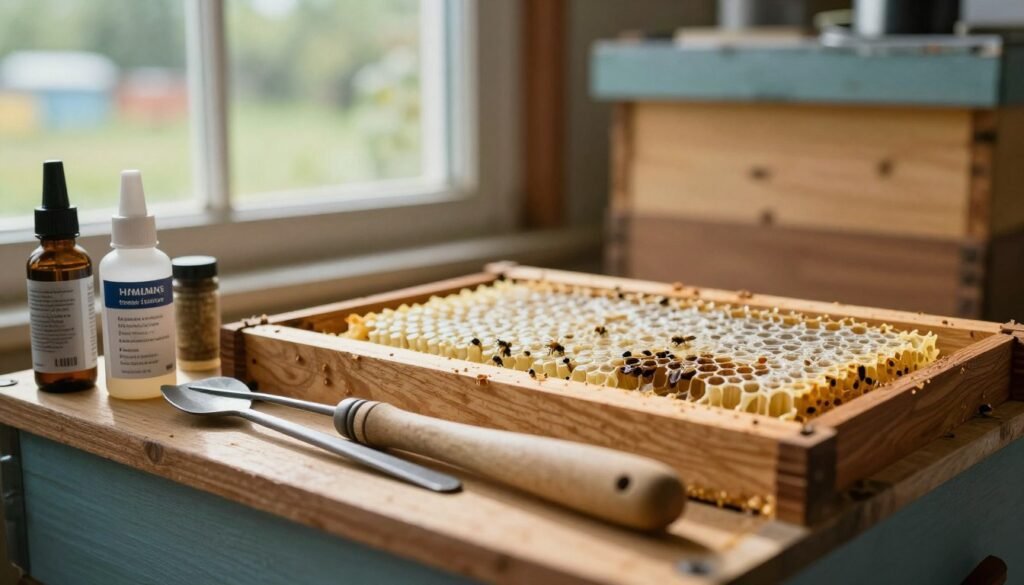
Wax moths (Galleria mellonella) tunnel through combs and leave silk cocoons that ruin the frame structure. Freezing unused combs for 1–2 days kills eggs and larvae and is the simplest, safest step for long-term storage.
Freezing Techniques
Cycle frames in a freezer, then store them in sealed containers. Inspect combs before returning them to a hive. Strong colonies will often remove small infestations themselves, so keep stocks robust.
Chemical Storage
Paramoth (PDB) crystals work well for stored combs but must never go near a living colony due to toxicity. Certan (B402), a Bacillus thuringiensis product, can be applied to stored combs as a biological control.
- Check stored equipment regularly for new larvae.
- Keep roofs tight and gaps closed to limit access.
- Protect comb integrity to support honey production and brood health.
| Method | Use | Notes |
|---|---|---|
| Freezing | Kill eggs & larvae | 1–2 days recommended |
| Paramoth (PDB) | Chemical storage | Never in active hive |
| Certan (B402) | Biological spray | Safe for stored combs |
| Colony strength | Natural control | Strong bees eject moths |
For staff practices on equipment movement and cross-site hygiene, consult cross-contamination guidance.
Small Hive Beetle Prevention and Control
Since 2002, the small hive beetle (Aethina tumida) has caused severe losses by consuming honey, pollen, and brood in managed colonies.
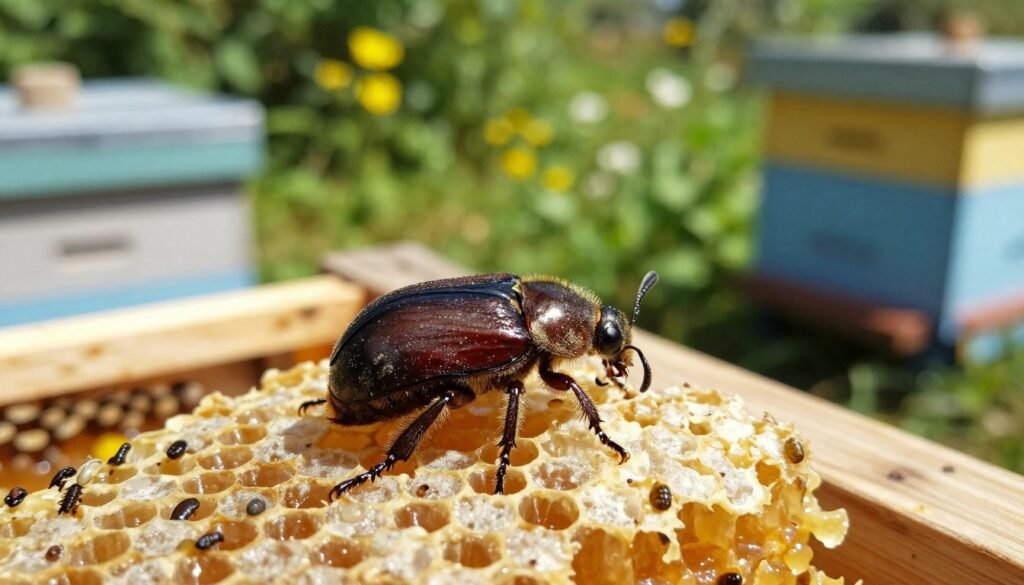
Identify larvae carefully. Beetle larvae carry dorsal spines that distinguish them from wax moth grubs. Spotting this feature helps decide whether comb replacement is needed.
Maintain a strong colony as the primary line of defense. Healthy adult bees police combs and remove eggs before larvae establish. This ecological control remains the most reliable prevention.
Use in-hive traps to lower adult beetle numbers and reduce damage. If larvae appear, remove infected combs promptly and consider a soil drench such as GuardStar around hive perimeters to kill pupae in the ground.
Avoid Checkmite+ strips for hive beetle control. They can contaminate wax and have not shown consistent effectiveness against this pest.
- Watch for slimy, fermenting comb or increased beetle adults during inspections.
- Replace badly damaged combs and keep brood frames tight and well defended.
- Report major infestations to state agricultural authorities for local tracking.
| Method | Target | Notes |
|---|---|---|
| In-hive traps | Adult beetles | Reduces breeding adults |
| GuardStar soil drench | Pupae in soil | Applied around hive base |
| Comb replacement | Infested comb | Removes larvae and contamination |
The Role of Social Distancing in Hive Health
Recent studies show that honey bees adopt coordinated behavior changes during infection events to protect core members of the hive.
Research led by Dr. Alessandro Cini at the UCL Centre for Biodiversity & Environment Research found that colonies alter normal activity when parasites like Varroa destructor increase risk.
Infected colonies often stop waggle dances, reducing contact between foragers and nest workers. The group will also partition the nest, keeping the queen and brood in an inner compartment while other workers occupy outer areas.
Mutual grooming may be suspended as well. That limits direct transfer of mites and other pathogens among adult bees.
- Colony partitioning: shields queen and brood.
- Suspended dances: lowers contact rates among workers.
- Reduced grooming: cuts individual-to-individual transmission.
These actions are a highly evolved response. They balance individual risk with the goal of colony survival and can help protect honey production and brood integrity.
“Understanding social distancing in bees gives beekeepers practical insight into natural defenses.”
For an accessible summary of the study and practical implications, see the honey bee social distancing research.
Best Practices for Equipment Sanitation
A clear plan for cleaning and storing equipment protects brood integrity and keeps colonies productive.
Sanitize tools and protective gear after each use. Wipe hive tools, smokers, and suits with an approved disinfectant. This habit cuts the chance that spores or pests travel on gear and reach another colony.
Keep the brood chamber clean. Replace damaged frames and remove debris during routine checks. Clean surfaces where larvae develop to support brood health and future productivity.
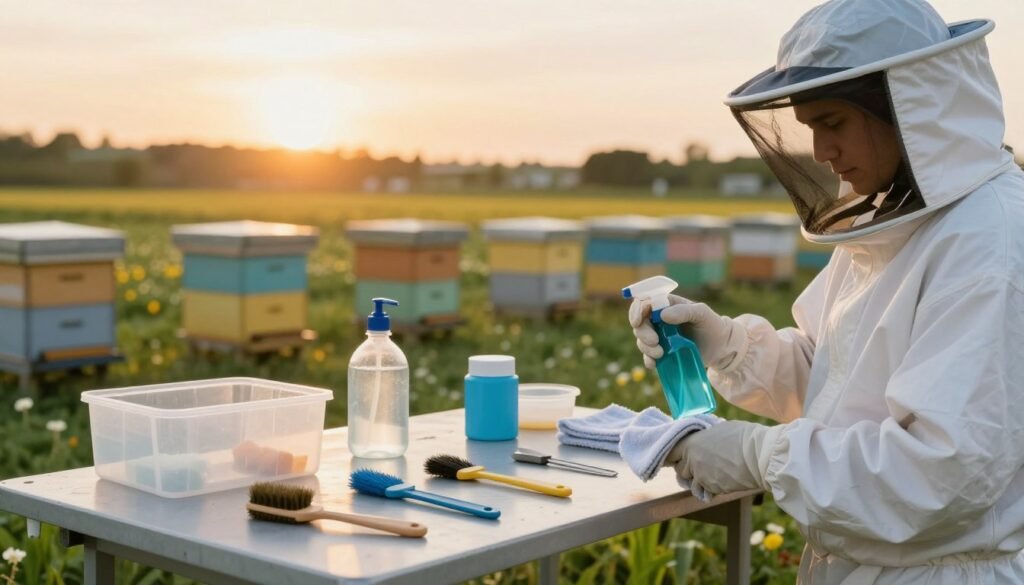
When infection is confirmed, either thoroughly decontaminate or destroy affected gear. Small items may be boiled, flame-sterilized, or soaked following label directions. For guidance on flame methods, see sterilize hive tools with flame.
- Store clean frames in sealed containers or freezers to stop pests.
- Track equipment movement and clean between hive visits.
- Train staff on sanitation routines and record keeping.
| Action | Method | Target | Notes |
|---|---|---|---|
| Tool wiping | Quaternary disinfectant | Hive tools, smokers | After each apiary visit |
| Frame replacement | Remove & replace damaged comb | Brood frames | When larvae evidence or contamination found |
| Sterilization | Flame or boiling | Small metal tools | Follow safety protocols |
| Storage | Freezing / sealed containers | Spare combs | Prevents moths and beetle pupae |
“A commitment to clean equipment signals professional care and supports long-term hive health.”
Conclusion
Routine checks and clear management choices sustain colony resilience over time.
Beekeeping that blends vigilance, integrated pest management, and sound sanitation protects brood, larvae, and adult workers. Small hive beetle control and careful monitoring for mites keep honeybee production stable.
Ongoing research sharpens our understanding of pathogen dynamics and social behaviours that help colonies resist threats. Beekeepers who commit to continual learning and practical management practices will safeguard hives and long-term yields.
For specific guidance on American Foulbrood actions and legal steps, see the AFB diagnosis and control resource.