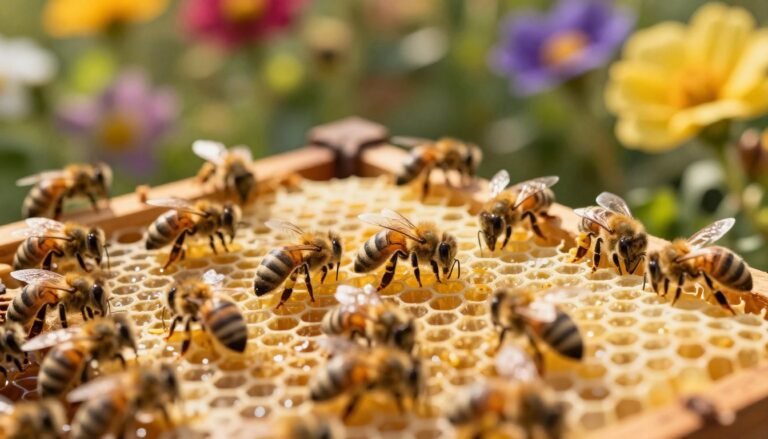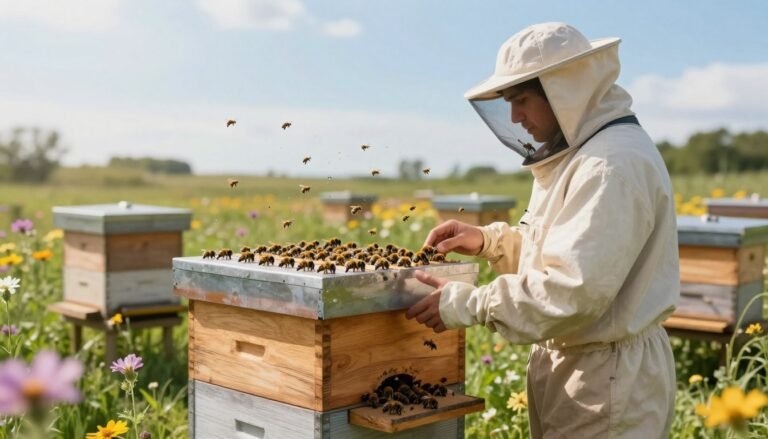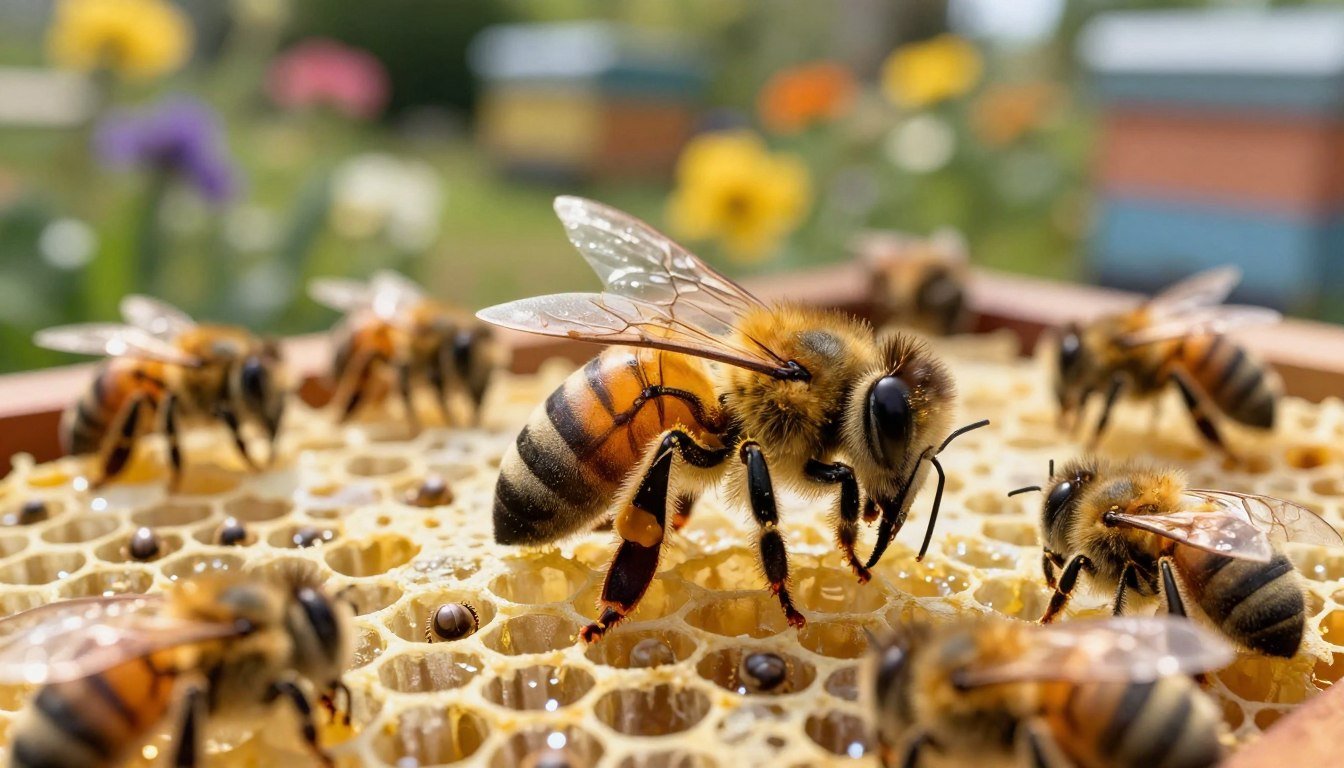
Jstrano installed 3 lbs of Italians in a new hive as a first-time beekeeping project. In that first week the colony went through a calm transition while the queen and workers settled into their roles.
Typically, a new package needs a few days to adjust before the queen begins full egg production. Observing the hive each day helps confirm the queen is present and active.
Successful management required patience and gentle checks for brood signs. If you want a practical timeline, this week-by-week guide outlines when laying and sealed brood typically appear.
Note: factors such as colony health, weather, and food stores shaped the time it took for queens to settle. For tips on supporting brood production safely, see this practical resource.
Key Takeaways
- New colonies often need a few days of calm for the queen to begin regular egg laying.
- Daily checks in the first week reveal if workers and queen are settling well.
- Brood presence is the clearest sign that the hive is establishing itself.
- Colony health and available food strongly influence early egg production.
- Use trusted guides and gentle management to support a smooth transition.
Understanding the Initial Establishment Phase
The queen’s arrival marks a critical shift as the colony settles into its new home. She is the only sexually mature female and her sole role is to lay eggs that will renew the workforce.
The Role of the Queen
The Role of the Queen
The queen ensures the colony grows by supplying eggs in cells across the comb. Her presence is confirmed when small, white eggs appear in the frame.
Worker activity follows the queen’s rhythm. Within a few days, workers focus on drawing comb and filling cells with nectar and pollen to feed brood and store honey.
Initial Hive Inspection
Initial Hive Inspection
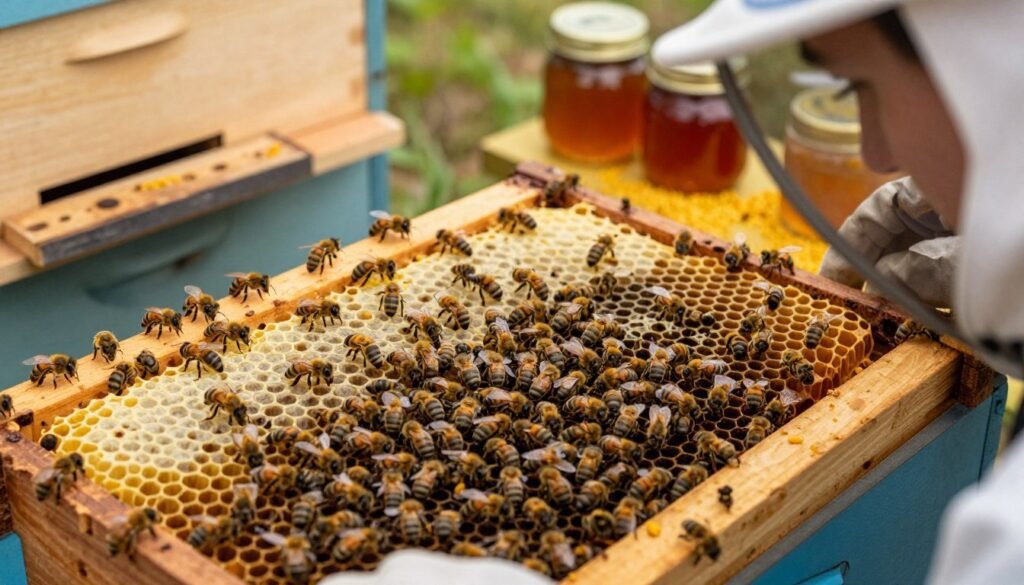
During an inspection, a beekeeping professional checks that the queen released from her cage is active. Look for workers clustered on wax comb and signs of fresh comb drawn in a way that supports brood.
- Check for eggs: this is the clearest proof the queen is performing.
- Observe workers: busy workers indicate strong organization.
- Avoid excess disturbance: leave the frame routine light in the first days so the colony can settle.
For practical setup and installation references, consult this beehive setup guide and these installation tips.
How Long Before Package Bees Start Laying Eggs
Once introduced, a healthy queen often begins making brood in three to four days. A mated queen needs a short period to settle after the queen released from her cage. Workers inspect her and the hive before accepting her fully.
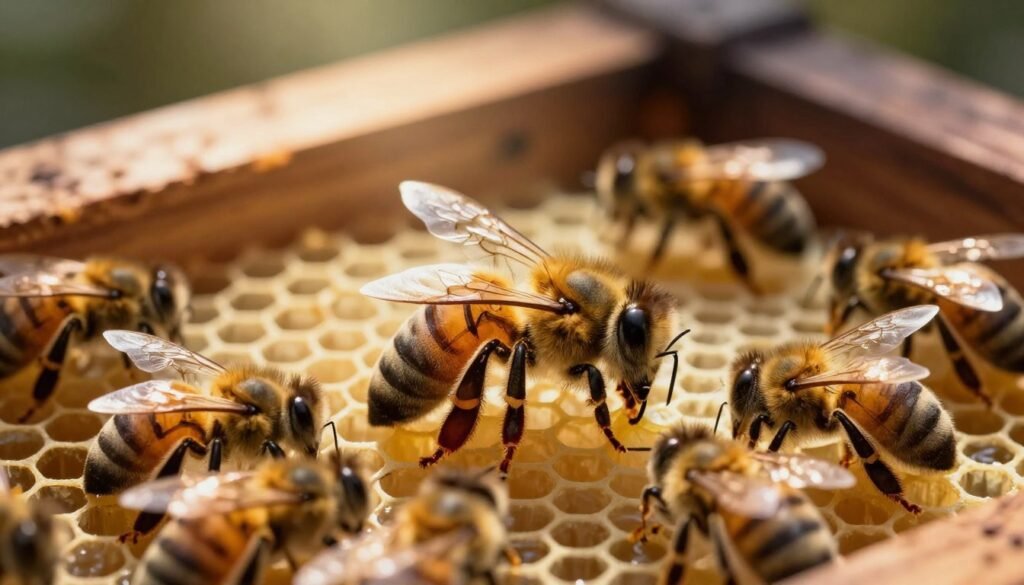
By day 7 you should see clear signs of larvae if the queen began laying on day 2 or 3. Even when laying begins on day 4, a one-week inspection typically shows eggs and tiny larvae.
Watch the comb and frames closely. The queen may place eggs in cells that are still being drawn. Workers finish comb as she deposits eggs so brood has room to develop.
- Check at seven to eight days: larvae confirm activity.
- Don’t assume loss too soon: absence of eggs at one inspection is not always failure.
- Environment matters: temperature and colony health affect laying time.
For differing opinions on release timing, read this release timing discussion. For buying and installation context, see this guide to packages and nucs.
| Milestone | Typical Day | What to See |
|---|---|---|
| Queen released | Day 0–2 | Workers inspect and cluster |
| First eggs | Day 3–4 | Single white eggs in cells |
| Larvae visible | Day 7–8 | Curved, white larvae in brood cells |
Environmental Factors Influencing Brood Rearing
Ambient temperature drives many daily choices inside the hive, from fanning to clustering. Worker bees form the colony’s thermostat and will change behavior to keep brood at safe levels.
Temperature and Cluster Dynamics
Temperature and Cluster Dynamics
When the thermometer drops to about 57° F, the insects form a tight cluster to protect the queen and developing brood.
The cluster keeps the nest near 93° F, which is critical for egg and larval survival. In summer the colony also targets 93° F, using water evaporation and wing fanning to cool the comb.
Cold weather slows comb building because workers conserve heat instead of expanding the nest. A small package will struggle if the cluster cannot spread to cover more cells.
- Workers regulate heat: they gather water and fan to adjust internal climate.
- Food availability matters: the queen will reduce output when pollen and nectar are scarce.
- Insulation helps: poorly insulated hives force the colony to burn reserves, slowing growth.
For methods to strengthen a small colony under challenging conditions, see this boost colony population naturally.
Troubleshooting Potential Queen Issues
A missing or failing queen changes hive behavior in clear ways that inspections can reveal. Quick checks are crucial because worker survival is limited to about six weeks.
Signs of a Failed Queen
Signs the queen may have failed
Look for no eggs or larvae after about two weeks of observation. A scattered brood pattern or many drone cells is another warning.
A tight, consistent brood pattern across a frame signals a healthy queen. If workers begin building emergency cells, the colony may be trying to replace her.
Introducing a New Queen
Replacing and introducing a new queen
If no egg appears after two weeks, order a new queen to save the colony. Use a cage to introduce the new queen so workers can acclimate before the queen released from the cage.
- Prefer a mated queen for fastest recovery; she can lay within days of acceptance.
- Monitor the hive for a week after release to confirm acceptance and rising egg counts.
- Remember that a weakened package will struggle through winter if a new queen is not established.
For cases of queen failure, read this guide on failed queens and this analysis of rejection reasons at why queens are rejected.
Managing Colony Growth and Comb Production
Allowing space on frames is the clearest step a beekeeper can take to guide comb production and colony growth.
New comb is typically used for honey, while older comb often houses pollen and brood. Give worker bees room on adjacent frames so comb can be drawn in an orderly pattern.
Watch for overcrowding signs, such as bees clustering at the entrance on a warm afternoon. That behavior indicates it may be time to add a super or extra frames to the hive.
- Inspect frames weekly to confirm cells are used for brood and stores in ways that support the queen’s egg output.
- Provide pollen and nectar sources nearby; worker bees need these to build comb and rear brood.
- Add a new super when frames fill to prevent swarming and protect winter stores.
For guidance on comb drawing issues, consult this guide to comb drawing. For a paced timeline after installation, see this first 10 days timeline.
| Action | When to Do It | Expected Result |
|---|---|---|
| Add frames or a super | When frames are >80% filled | More comb space; reduced swarm pressure |
| Weekly frame checks | Every 7 days in active season | Confirm brood pattern and stores |
| Supplement forage | During dearth or slow nectar flow | Supports comb building and egg production |
Conclusion
A calm, consistent approach gives new keepers the best chance of success. Watch the queen closely in the first week and note eggs and emerging brood to confirm the hive is healthy.
Temperature and forage matter. Provide pollen and honey sources and adjust care as days pass so the colony can build strength for summer and winter.
If issues arise with queens, consider timely replacement during summer to protect stores for winter. Read more on timing matters and follow seasonal checks for practical guidance.
Consistent observation is the most reliable tool. With patient care, your bees will mature into a productive, resilient colony.
FAQ
When do package bees begin laying eggs after installation?
Newly installed packaged bees with a mated queen usually produce eggs within 3 to 10 days. Worker bees initially focus on building comb, feeding the queen, and gathering pollen and nectar. Egg production ramps up as workers supply adequate brood food and royal egg-laying cells become available.
What role does the queen play during the initial establishment phase?
The queen is the colony’s sole fertile female and controls brood production. After introduction, she assesses the new hive, senses pheromone signals from workers, and begins regular egg-laying once comfortable. Her health and mating status determine whether eggs will develop into workers, drones, or queens.
What should I look for in the first hive inspection?
Early inspections should confirm a calm cluster, presence of comb construction, pollen stores, and traces of eggs or freshly hatched larvae. Avoid disturbing too often; a brief peek at 7 to 10 days helps determine if the queen is active and workers are feeding brood.
How do temperature and cluster behavior affect brood rearing?
Brood development requires steady warmth; bees maintain a brood nest temperature near 93°F (34°C). Cool weather or poor clustering reduces feeding and comb building, slowing egg incubation and larval growth. Adequate ventilation and insulation in spring help stabilize the cluster.
What signs indicate a queen is failing or absent?
Look for spotty brood patterns, only drone cells, or no eggs at all after two weeks. Workers may start laying unfertilized eggs that produce only drones. High aggression, lack of queen pheromone scent, and increased queen cells can also signal a problem.
When should I introduce a new queen to a struggling colony?
If a queen is absent or failing, introduce a verified mated queen within 1 to 3 weeks of detecting issues. Use a screened cage or queen introduction kit to allow gradual acceptance. Monitor closely for acceptance and resumed regular egg-laying over the next 7 to 14 days.
How quickly do workers build comb and expand the brood nest?
Workers can draw foundation and start new comb within days, but substantial comb expansion takes several weeks. Comb growth depends on worker population, nectar flow, and available frames. Strong spring forages speed comb construction and brood increase.
What should be done if a colony produces mostly drones?
Predominant drone production often means the queen is unmated, poor quality, or workers are laying. Replace the queen with a healthy, mated queen from a reputable supplier like Mann Lake or Brushy Mountain. Ensure adequate worker numbers and nutrition to support queen acceptance.
Can package colonies raise a new queen on their own?
They can if the colony has young larvae and sufficient nurse bees. Workers may build queen cells and rear a daughter queen, but success depends on timing, colony strength, and available resources. Introducing a proven mated queen shortens risk and downtime.
How does seasonality affect colony development and honey production?
Spring and early summer provide nectar and pollen that promote rapid brood rearing, comb building, and eventual honey stores. Late-season installations face lower forage, so colonies may struggle to establish before winter. Plan installations in early spring for best results.