A healthy, established beehive in the United States produces around 48 pounds of surplus honey a year on average — but that single number hides more than it reveals. The real answer depends on which of three very different numbers you’re actually asking about (total honey made, honey you can harvest, and honey the bees need to keep for themselves), and it swings enormously by region, colony age, and season. Here’s what the most current national data actually shows, and why your own hive’s number could reasonably land anywhere from zero to 100+ pounds.
Key Takeaways
- The USDA’s most recent national survey (2025 data, released March 2026) puts the average U.S. honey yield at 48.0 pounds per colony — down 7% from 51.7 pounds in 2024, part of a 14% drop in total U.S. honey production.
- “How much honey does a hive produce” actually has three different answers: total honey the colony makes (often 100+ pounds), the surplus you can harvest (the 48-pound national average), and what the bees need left behind to survive winter (roughly 40–90+ pounds depending on climate).
- Yield varies enormously by state — Mississippi and Montana colonies averaged 89 and 85 pounds per colony in 2025, while Oregon and Idaho averaged under 30.
- First-year colonies typically produce little to no harvestable surplus; most of their energy goes into building comb and growing the colony, not storing excess.
- Colony strength and local forage availability — not any single beekeeping trick — are what actually determine your number, according to Mississippi State University’s Extension Service.
Table of Contents
- The Three Numbers Hiding Behind “How Much Honey”
- The Real 2025 Numbers, State by State
- What Actually Determines Your Hive’s Yield
- Why First-Year Hives Produce Little or Nothing
- From Full Frame to Jar: What “Harvestable” Really Means
- How to Realistically Get a Bigger Honey Harvest
- Frequently Asked Questions
The Three Numbers Hiding Behind “How Much Honey”
Most articles on this topic quote a single range — “30 to 60 pounds a year” — and leave it there. That range is roughly right for one specific number, but it isn’t the only number that matters, and conflating them is where most of the confusion around this question actually comes from.
Beekeeping educator David Burns walks through exactly this distinction in the video above — how much a colony makes versus how much a beekeeper should actually take.
A strong, established colony with good forage can realistically produce 100–120 pounds of honey in a single season. Of that, a beekeeper in a temperate climate typically needs to leave somewhere between 40 and 90+ pounds behind, depending on how cold and how long the local winter runs, so the colony has enough food to survive until spring forage returns. What’s left over — usually somewhere in the 30-to-60-pound range, averaging 48 pounds nationally in 2025 — is the actual harvestable surplus: the honey you extract, bottle, and either use or sell.
A weak or newly established colony may make just enough to feed itself, with nothing left to harvest at all — which is normal, not a failure (more on that in the first-year section below).
The Real 2025 Numbers, State by State
Most sources answering this question cite a general, static range without pointing to where it actually comes from. The single most authoritative number available is the USDA’s National Agricultural Statistics Service (NASS) Honey report, released March 13, 2026, covering the full 2025 production year. It’s worth citing directly because the trend it shows is genuinely current: U.S. honey production totaled 116 million pounds in 2025, down 14% from 2024, driven by both fewer producing colonies (2.41 million, down 7%) and a lower yield per colony (48.0 pounds, down 7% from 51.7 pounds in 2024).
That national average, though, flattens out huge regional differences. Here’s how yield per colony compared across the states USDA tracks individually for 2025:
| State | Yield per colony (lbs) | Honey-producing colonies |
|---|---|---|
| Mississippi | 89 | 25,000 |
| Montana | 85 | 123,000 |
| North Dakota | 67 | 460,000 |
| Iowa | 62 | 34,000 |
| Pennsylvania | 57 | 25,000 |
| New York | 56 | 52,000 |
| United States (average) | 48.0 | 2,412,000 |
| Texas | 30 | 72,000 |
| Wisconsin | 30 | 50,000 |
| Idaho | 29 | 104,000 |
| Oregon | 27 | 87,000 |
Notice that North Dakota isn’t the highest-yielding state per colony, but with 460,000 producing colonies it’s by far the largest total producer in the country — over 30 million pounds in 2025 alone. Mississippi and Montana show the opposite pattern: fewer colonies, but each one averaging far above the national rate, likely reflecting more concentrated, high-forage placements. The takeaway isn’t that any one of these states is “doing it right” — it’s that regional forage and climate genuinely swamp any individual technique in determining the final number.
The gap between the highest and lowest states in this table — 89 pounds versus 27 — is roughly a 3x difference, and it isn’t explained by beekeeper skill. North Dakota and Montana both benefit from vast expanses of clover, alfalfa, and sweet clover with a relatively short but intense nectar flow that concentrated apiaries can exploit efficiently. States at the lower end, like Oregon and Idaho, tend to have more fragmented or drought-affected forage landscapes in a given year, or a higher proportion of colonies used primarily for pollination contracts (almonds, tree fruit) rather than honey production, which pulls the state average down even when individual honey-focused operations there do well. This is also why the year-over-year national figures matter more than any single year’s snapshot: 2025’s 7% yield decline and 27% price increase together suggest a supply-constrained market, not simply “a bad year” in one region.
What Actually Determines Your Hive’s Yield
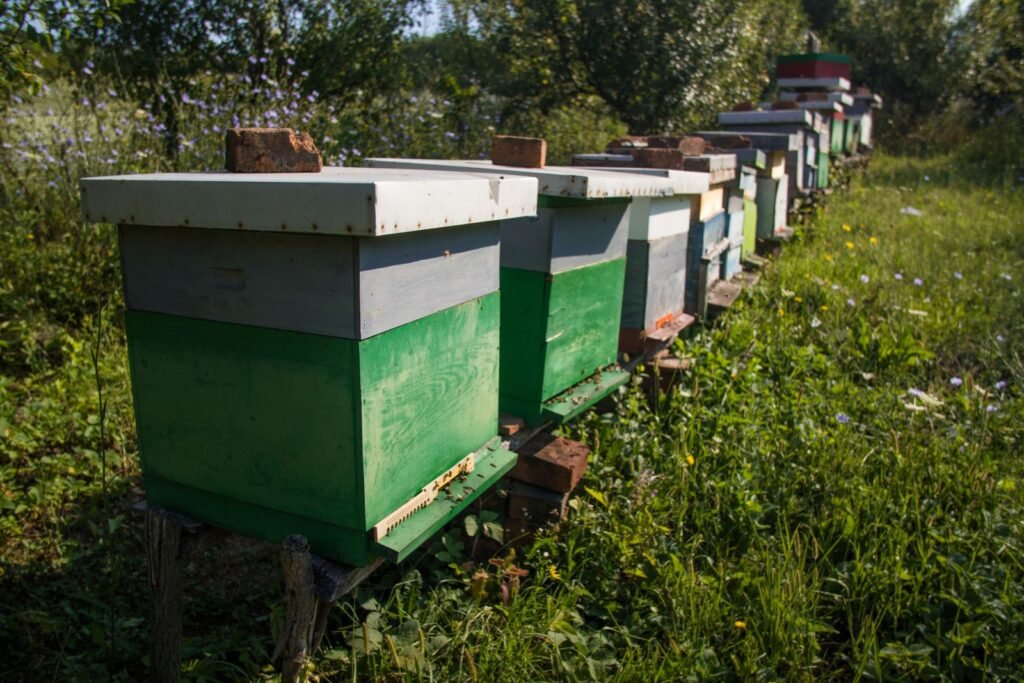
Once you set aside the state-level averages, the same handful of variables explain most of the season-to-season swing for any single hive:
- Colony strength. A hive’s honey-storing capacity is a direct function of how many foraging-age bees it has. A colony that entered spring weak — from winter losses, a failing queen, or disease — simply can’t field enough foragers to build a large surplus, no matter how good the forage is.
- Local forage and nectar flow. Bees can only make honey from nectar that actually exists within flight range. A hive placed near a long, overlapping succession of blooms will consistently out-produce one in a resource-poor area, regardless of the beekeeper’s skill.
- Weather. Cool, wet, or drought conditions during the main nectar flow can suppress both flower nectar production and the bees’ ability to fly and forage, even when the surrounding plants themselves look fine.
- Swarming. A colony that swarms mid-season loses a large fraction of its workforce right before or during the nectar flow, which can cut that year’s harvest dramatically even if everything else goes well.
- Pests and disease. Varroa mite pressure and the diseases it spreads are now one of the single biggest drags on U.S. colony health and, by extension, honey production — reflected directly in the $22.2 million U.S. beekeepers spent on varroa control and treatment in 2025 alone, per the same USDA report.
- Beekeeper management. Timing supers correctly, giving the colony enough room to store surplus without triggering swarming, and heading into winter with a strong, well-fed colony all genuinely move the number — just less than forage and colony strength do.
“The size of your honey crop is determined by your autumn management, overwintering success, and early spring management.” — Dr. Jeffrey W. Harris, Associate Extension/Research Professor, Mississippi State University Extension Service
That’s a genuinely useful reframe: by the time the nectar flow actually starts, most of what determines your harvest has already been decided by decisions made months earlier.
Why First-Year Hives Produce Little or Nothing
If you’re a new beekeeper doing this math for your own first season, the averages above will likely disappoint you — and that’s expected, not a sign anything went wrong. A package or nuc installed in spring spends most of its first season building comb, growing its worker population, and establishing enough of a food reserve to survive its first winter. Very little energy is left over for producing a harvestable surplus. This site’s own deeper look at whether you can harvest honey in your first year covers exactly when a first-year colony might have enough to spare, and when a first-year colony is actually ready for a honey super in the first place.
How you start also matters here: a nuc generally establishes faster than a package, since it starts with drawn comb and an already-laying queen — which can translate into a modest harvestable surplus even in year one, in a good location, where a package colony might have none.
From Full Frame to Jar: What “Harvestable” Really Means
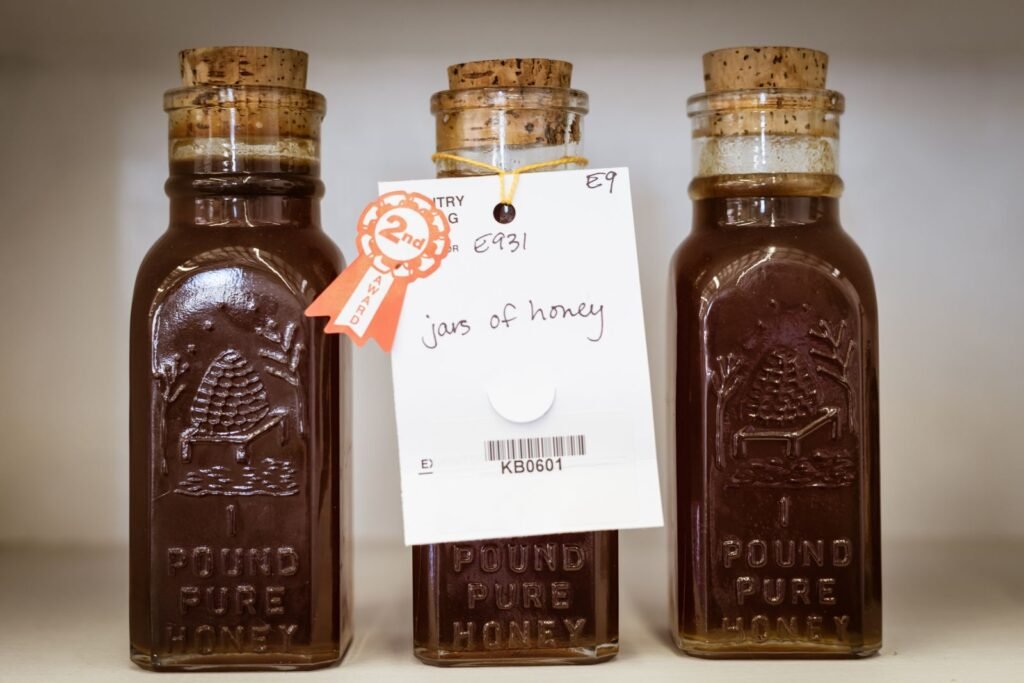
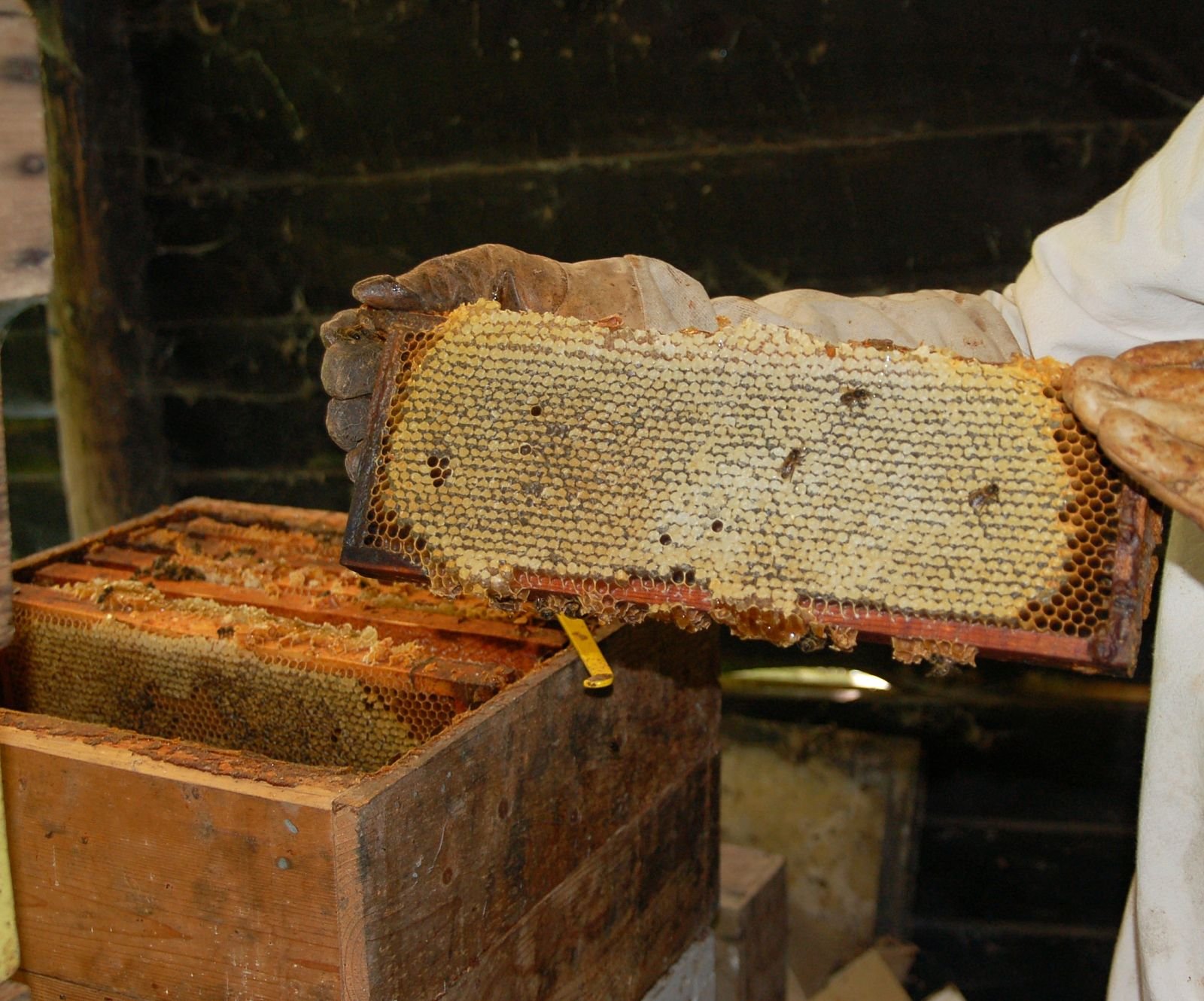
A frame that looks completely full and capped isn’t automatically ready to harvest — and pulling it too early, before the bees have their own reserves set aside, is one of the more common new-beekeeper mistakes. The honey has to be genuinely surplus: capped, cured, and beyond what the colony needs for itself through the next dearth or winter.
Once you’ve confirmed a frame is truly surplus, getting it from box to jar is its own process. This site’s guides on choosing a manual vs. electric extractor and radial vs. tangential extractor designs cover the actual extraction hardware, and whether you can bottle honey straight from the extractor addresses the step right after.
It’s worth flagging the other direction of error too: taking more than the true surplus. Overharvesting — pulling honey the colony was actually still relying on, usually because a frame simply looked full — is one of the more common ways beekeepers unintentionally weaken their own hive heading into a dearth or winter. The USDA figures above are a useful sanity check here: if your own harvest per colony is running dramatically above the 48-pound national average or your region’s typical range, it’s worth double-checking that you’ve left an honestly adequate reserve behind, not just assuming a bigger number is automatically a better season.
How to Realistically Get a Bigger Honey Harvest
Given everything above, the levers that actually move your number are narrower than most “10 tips” lists suggest:
- Go into winter strong. Per Dr. Harris’s point above, a colony’s honey crop is substantially decided by fall and early-spring management — feeding, mite treatment, and queen health matter more here than anything done during the nectar flow itself.
- Place hives where forage is genuinely abundant — not just where it’s convenient. Hive placement is one of the few variables entirely within a beekeeper’s control.
- Track your local nectar flow rather than guessing at timing. Learning the signs that a flow is starting or stopping helps you add supers before the colony runs out of storage room mid-flow — a common way beekeepers accidentally cap their own harvest low.
- Scale expectations to how many hives you can actually manage well. More hives only means more honey if each one gets proper attention; overextending past what you can realistically inspect and manage tends to lower the average yield per hive, not raise total output.
- Accept that some years will simply be worse than others. Weather and regional forage swings are the biggest single-season variable, and no amount of management fully offsets a genuinely bad year.
Frequently Asked Questions
How much honey does the average beehive produce per year?
Nationally, U.S. colonies averaged 48.0 pounds of harvestable surplus honey per colony in 2025, per USDA’s most recent survey — though the real range runs from close to zero for a struggling or first-year colony up to 100+ pounds for a strong colony in an excellent location.
How much honey does one hive need to survive winter?
It varies sharply by climate: the figure varies by climate — University of Illinois Extension recommends at least 90 pounds for a northern climate like Illinois, while beekeepers in the Deep South commonly leave closer to 40, since colonies there forage through more of the winter.
Can a first-year hive produce any harvestable honey?
Sometimes, but it’s not the norm — most first-year colonies put nearly all their energy into building comb and growing their population rather than storing a surplus. A strong nuc in a good location with an early start is the most likely first-year scenario to produce any harvestable amount.
Why did U.S. honey production drop in 2025?
USDA’s 2025 report attributes the 14% national production decline to both fewer honey-producing colonies (down 7%) and a lower yield per colony (down 7%), consistent with the ongoing pressure from Varroa mites and related colony health issues that beekeepers nationally spent $22.2 million treating that year.
Does having more hives mean proportionally more honey?
Not automatically. Yield per hive tends to drop once a beekeeper takes on more colonies than they can properly inspect and manage, so total honey doesn’t scale linearly with hive count past a certain point.
What’s the difference between how much honey bees “make” and how much a beekeeper can “harvest”?
A strong colony may produce 100+ pounds of honey in total, but a large share of that has to stay in the hive as the bees’ own food reserve for winter and dearth periods. “Harvestable” refers only to the genuine surplus left over after that reserve is accounted for — which is the number most yield statistics, including USDA’s, actually measure.