“Is that a bee or a wasp?” is one of the most common questions kids ask outdoors — and teaching them a few simple, reliable clues turns a moment of fear into genuine curiosity. The good news: bees and wasps look and act differently enough that even a young child can learn to tell them apart with a little practice, and understanding the difference actually matters, since bees are far less likely to sting unprovoked than several common wasp species.
This guide covers the simplest visual clues to teach kids, the behavioral differences that matter even more than looks, how to talk about stings without creating fear of every flying insect, and a few genuine bee look-alikes worth knowing about.
This is a genuinely worthwhile thing to teach deliberately rather than leaving to chance, especially for families who spend real time outdoors gardening, hiking, or simply eating meals on a porch or patio through the warmer months. A child who can confidently tell a bee from a wasp is less likely to panic at every buzzing insect and more likely to develop a genuine, lasting curiosity about the natural world around them, which is worth far more than a single afternoon of rote memorization.
Key Takeaways
- The single easiest visual clue for kids: bees look fuzzy and round; wasps look smooth, shiny, and have a narrow “waist” between their middle and back body sections.
- Behavior matters as much as looks — bees generally fly directly toward flowers and stay focused on them, while wasps hover, dart, and investigate food and trash more actively.
- Bees are generally more docile and sting only when directly threatened; several common wasp species (especially yellow jackets) are more defensive and can sting multiple times.
- Not every fuzzy-looking flying insect is a bee — hover flies are harmless bee mimics kids will genuinely encounter, worth knowing about to avoid false alarms.
- Teaching calm, informed behavior around stinging insects (don’t swat, walk away slowly) is more effective and less anxiety-inducing than teaching kids to fear all flying insects equally.
Table of Contents
- The Simplest Visual Clues to Teach
- Behavior Matters as Much as Looks
- Why the Difference Actually Matters
- Bee Look-Alikes: Not Every Fuzzy Flyer Is a Bee
- Teaching Calm, Not Fear
- Frequently Asked Questions
The Simplest Visual Clues to Teach
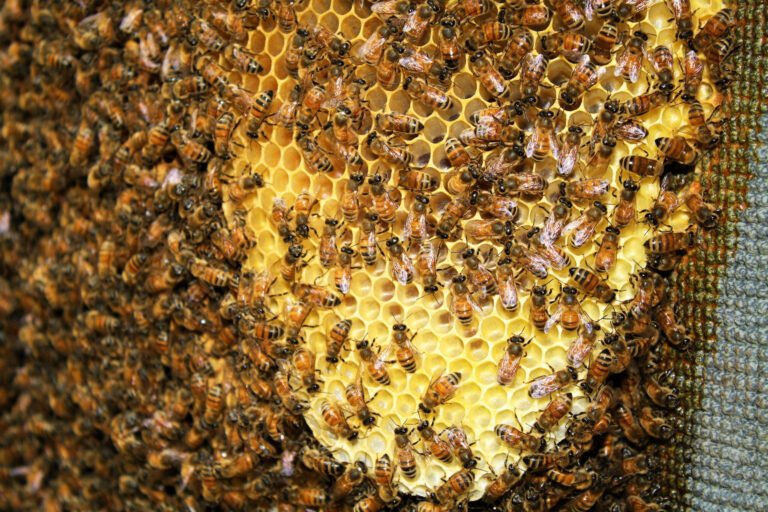
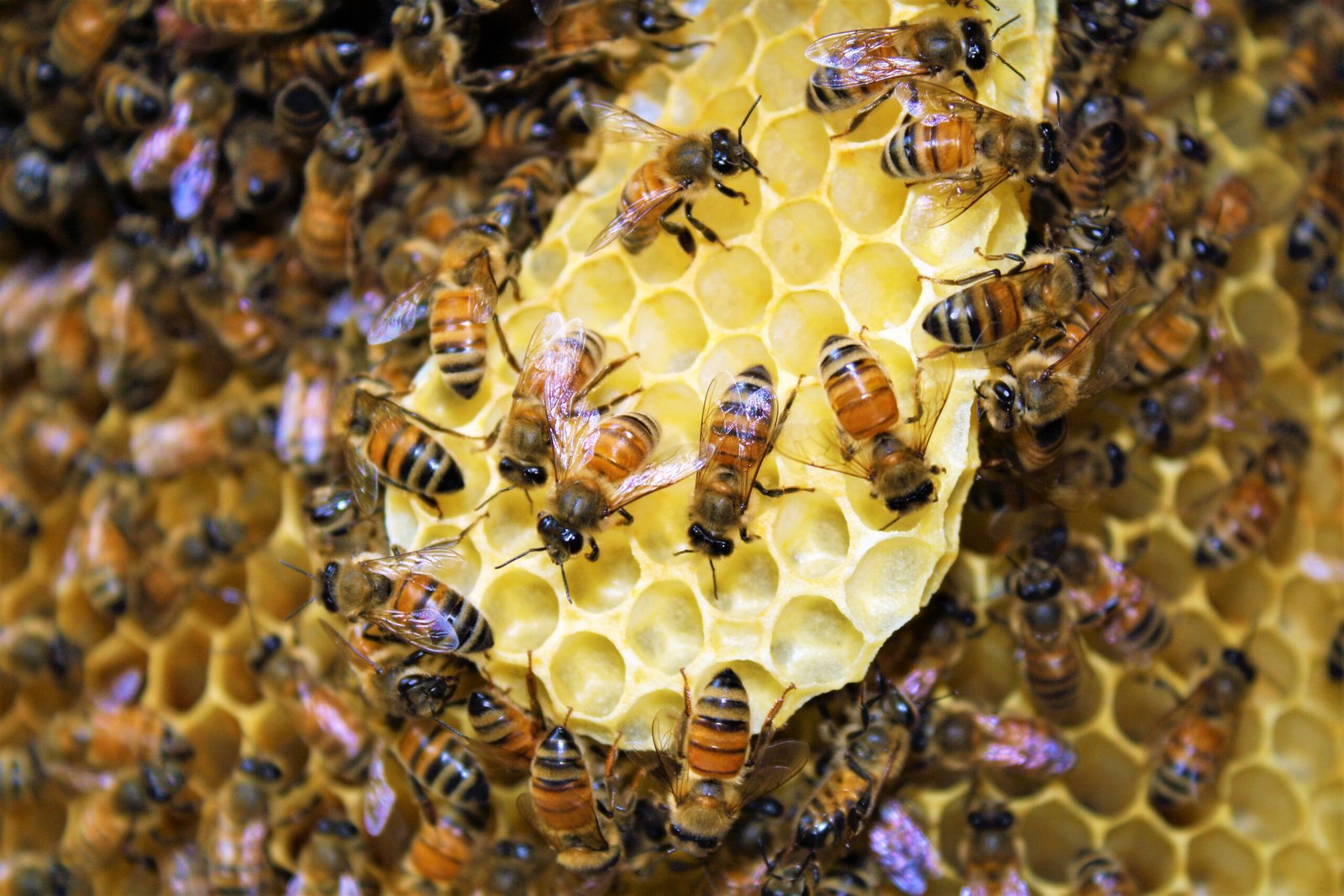
Start with the clue that’s easiest for a kid to actually use in the moment: bees look fuzzy and round, wasps look smooth and shiny. Bees have dense, visible hair covering a stocky, rounded body, since that hair is what helps them collect pollen — this gives them a soft, fuzzy appearance even from a few feet away. Wasps, by contrast, have smooth, hairless, glossy bodies with a distinctly narrow “waist” pinching in between their middle section and their back section, giving them a slimmer, more pinched silhouette overall. This single pair of clues — fuzzy and round versus smooth and narrow-waisted — is genuinely reliable and simple enough for even a young child to apply after a little practice.
A few secondary clues help once the basics click. Bee legs are short, thick, and flattened, often visibly carrying little clumps of yellow or orange pollen when a bee has been actively foraging – a genuinely fun detail for kids to spot, since it turns identification into a small scavenger-hunt game rather than a memorization task. Wasp legs, by contrast, are thin, smooth, and tend to dangle down noticeably during flight rather than tucking in close to the body. Color alone is a less reliable clue than most people assume, since both bees and wasps commonly show black-and-yellow striping – it’s the texture and body shape, not the color pattern, that actually distinguishes them most reliably.
Behavior Matters as Much as Looks
Beyond appearance, how an insect is behaving is often the faster, easier clue in the moment, especially from a distance where fine details are hard to see. Per the National Aquarium’s guide to bees and wasps, bees are focused pollinators that fly fairly directly toward flowers and spend their time gathering nectar and pollen, while wasps are predators with a more erratic flight pattern, often hovering and investigating food, trash, or sugary drinks rather than flowers specifically. A simple rule kids can use: an insect flying purposefully from flower to flower is very likely a bee; one hovering around a picnic table, a soda can, or a trash bin is more likely a wasp.
Nest-building behavior is another distinguishing clue worth teaching for slightly older kids who are curious about where these insects actually live. Bees build wax nests, either in a managed hive or in a natural cavity like a hollow tree, using wax the bees themselves produce. Wasps build papery nests from chewed wood pulp, often visible under eaves, in shrubs, or in the ground depending on the species – a genuinely different construction material and process that’s interesting to observe (from a safe distance) rather than just another fact to memorize.
Why the Difference Actually Matters
This isn’t just a fun fact — the practical stakes are genuinely different between the two. Bees are generally docile and sting only when directly threatened or when defending their hive up close, and a honey bee can only sting once before it dies, since its stinger stays behind. Several common wasp species, particularly yellow jackets, are more prone to defensive stinging, especially in late summer when colonies are at peak size and natural food sources become scarcer, and a wasp can sting multiple times since its stinger doesn’t detach. Teaching a child this distinction helps calibrate an appropriately cautious (rather than uniformly terrified) response — calm avoidance around a bee visiting a flower is very different from the caution warranted around a wasp nest or an agitated yellow jacket near food.
It’s also worth explaining the seasonal pattern to older kids, since it genuinely changes the calculus during the year. Wasps become noticeably more aggressive in late summer, particularly August and September, when colonies have reached their peak size but natural food sources like insects and nectar start running short – hungry, food-stressed wasps are more likely to investigate human food and defend their nests more aggressively during this window than earlier in the season. Bees don’t show this same seasonal aggression spike in the same way, since their foraging behavior around flowers stays fairly consistent through the growing season.
Bee Look-Alikes: Not Every Fuzzy Flyer Is a Bee
Kids will genuinely encounter insects that look like bees but aren’t, and knowing this prevents false alarms in both directions. Hover flies are a common example — harmless, sting-less flies that have evolved to mimic bee coloring and shape as a defense against predators, meaning a child (or adult) can reasonably mistake one for a bee. The reverse is also true: many distinct wasp species look meaningfully different from the “classic” yellow jacket image most people picture, which is part of why our site maintains a comprehensive wasp and predatory insect comparison chart for anyone wanting to go beyond the basic bee-vs-wasp distinction covered here.
Bumblebees are worth a specific mention too, since kids often don’t initially recognize them as bees at all – they’re noticeably larger, rounder, and fuzzier than the honeybees most people picture, sometimes leading kids to assume a bumblebee must be some kind of unusual wasp simply because of its unfamiliar size. Pointing out that bumblebees follow all the same fuzzy-and-round identification rules, just at a bigger scale, helps kids apply the lesson consistently rather than treating every unfamiliar-looking insect as a special exception.
Teaching Calm, Not Fear
The most useful lesson isn’t identification alone — it’s calm behavior around any stinging insect, bee or wasp. Teaching a child to stay still or walk away slowly rather than swatting or running (which can provoke a defensive sting) is more protective than trying to perfectly identify every insect encountered in the moment, and it works even when identification is uncertain. Framing bees specifically as helpful, generally non-aggressive garden visitors — rather than lumping them in with more defensive wasp species in a blanket “flying stinging things are scary” message — also supports a more accurate, less anxious long-term relationship with the outdoors, one genuinely worth the small effort of teaching the distinction early.
A simple, practical family rule that works well in the moment: freeze first, then walk (don’t run) away if a stinging insect lands nearby or seems interested in food. Swatting or flailing is the behavior most likely to trigger a defensive sting from either a bee or a wasp, since sudden movement reads as a threat regardless of which insect is involved – this single rule protects a child even when they haven’t yet learned to reliably tell the two apart, making it worth teaching first, before the finer identification details.
Frequently Asked Questions
What’s the easiest way for a kid to tell a bee from a wasp?
Look and behavior together: bees are fuzzy, round, and fly directly toward flowers; wasps are smooth, shiny, narrow-waisted, and hover more erratically around food or trash.
Are bees more dangerous than wasps?
Generally the opposite — bees are typically more docile and sting only when directly threatened, while several common wasp species (especially yellow jackets) are more defensive and can sting multiple times.
Why do some flies look like bees?
Hover flies have evolved bee-like coloring and shape as a defense against predators, even though they’re completely harmless and can’t sting at all.
Should I teach my kids to be afraid of all flying insects?
No — teaching calm, informed behavior (don’t swat, walk away slowly) is more protective and less anxiety-inducing than teaching blanket fear of every flying insect.
Where can I find more detailed wasp identification information?
Our comprehensive wasp and predatory insect comparison chart covers many more specific species beyond the basic bee-vs-wasp distinction.
FAQ
What’s the easiest way for a kid to tell a bee from a wasp?
Bees are fuzzy and round and fly toward flowers; wasps are smooth, narrow-waisted, and hover around food.
Are bees more dangerous than wasps?
Generally the opposite – bees are typically more docile than several common wasp species.
Why do some flies look like bees?
Hover flies mimic bee coloring as a predator defense, despite being completely harmless.
Should I teach my kids to be afraid of all flying insects?
No, teaching calm, informed behavior is more protective than blanket fear.
Where can I find more detailed wasp identification information?
Our comprehensive wasp and predatory insect comparison chart.