There is no active Beekeeping merit badge in Scouts BSA today — the badge was discontinued in 1995, and no direct successor ever replaced it. This surprises a lot of parents and Scouts searching for it, since the badge genuinely existed for most of the 20th century under a couple of different names. The good news for a Scout who’s specifically interested in bees: a real beekeeping-relevant path still exists, just not through the Beekeeping badge itself — the current Insect Study merit badge directly addresses bee safety and handling, and 4-H’s Beekeeping Project offers a genuinely deeper, hands-on hive-management program many families use instead. It’s an easy fact to miss, since plenty of general Scouting resource lists and old forum posts still reference the badge without flagging that it no longer exists, which is exactly how the confusion tends to persist years after the fact.
This guide covers the real history of the Beekeeping merit badge and why it was discontinued, what the current Insect Study merit badge actually requires regarding bees, how the 4-H Beekeeping Project works as the modern equivalent, and how a bee-interested Scout can realistically combine both paths.
Key Takeaways
- A Beekeeping merit badge existed under various names from 1911 to 1995, but it was discontinued with no direct successor badge.
- The current Insect Study merit badge specifically requires Scouts to address bee and ant hazards, including anaphylaxis awareness — a genuine, if partial, beekeeping connection.
- 4-H’s Beekeeping Project is the closest modern equivalent to a dedicated youth beekeeping program, with structured, multi-year curricula in many states.
- A Scout genuinely interested in beekeeping can pursue Insect Study within Scouts BSA and 4-H’s Beekeeping Project alongside it — the two aren’t mutually exclusive.
- 4-H beekeeping requirements vary by state and county, so checking with a local Cooperative Extension office is the right first step.
Table of Contents
- The Real History of the Beekeeping Merit Badge
- Why It Was Discontinued
- What Insect Study Requires Regarding Bees
- 4-H’s Beekeeping Project: The Modern Equivalent
- Combining Insect Study and 4-H Beekeeping
- How to Get Started
- Frequently Asked Questions
The Real History of the Beekeeping Merit Badge
Verifying this history through Scouting America’s own records matters for a practical reason beyond general curiosity: a family that assumes the badge still exists risks spending real time searching for a current pamphlet, requirements list, or counselor that simply doesn’t exist anymore, when that time could go directly toward one of the genuinely active alternatives instead.
According to Scouting America’s own historical merit badge records, a beekeeping-focused badge existed in some form for most of the 20th century. It began as “Beefarming” in 1911, was renamed “Bee Keeping” in 1915, and was renamed again to “Beekeeping” in 1956. That final version of the badge remained active until 1995, when it was discontinued. Across those eight decades, the underlying subject matter almost certainly evolved considerably alongside real advances in apiculture – from basic hive management through the mid-century introduction of modern pest and disease treatments – even as the badge itself kept the same general beekeeping focus under its various names. Unlike many discontinued badges that were folded into a renamed successor covering similar ground, Beekeeping simply ended, with no dedicated badge picking up the subject afterward.
Why It Was Discontinued
Understanding this general pattern helps set realistic expectations for the future too – if the badge was retired as part of a broad structural shift rather than a specific loss of interest in beekeeping, there’s no strong signal either way about whether a revival is likely.
Scouting America doesn’t publish detailed rationale for every individual badge discontinuation, but the broader pattern from this era is instructive: many narrow agricultural-specialty badges from Scouting’s early decades — Dairying, Beef Production, Corn Farming, Poultry Keeping, and Beekeeping among them — were phased out around the same general period as the badge roster shifted away from farm-specific specialty subjects toward broader science, career, and citizenship-focused badges. Beekeeping wasn’t singled out; it was part of a wider consolidation that touched a whole category of similarly narrow agricultural badges from the same era. This context matters for a Scout or parent trying to make sense of the discontinuation: it reflects a broader shift in how the badge roster was organized, not any judgment about beekeeping’s value as a skill or hobby worth learning.
What Insect Study Requires Regarding Bees
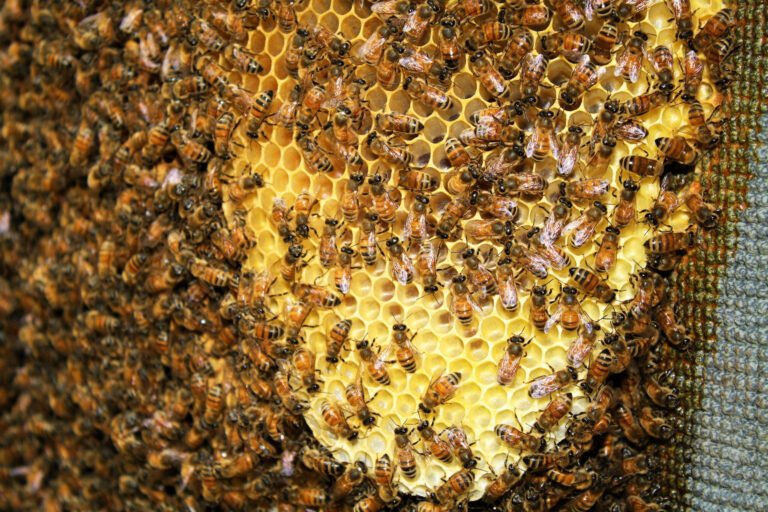
The current Insect Study merit badge, still active today, includes a requirement directly relevant to beekeeping: Scouts must explain to their counselor the most likely hazards associated with exposure to ants and bees, and what they should do to anticipate, prevent, mitigate, and respond to those hazards, including insect bites and anaphylactic shock. Beyond that specific requirement, Scouts pursuing Insect Study also observe 20 different live insect species across at least four insect orders, documented in a scrapbook with photographs or sketches and both common and scientific names, plus a career-exploration component researching an entomology-adjacent career path. A Scout with access to an active hive has a genuine advantage completing this observation requirement, since a single well-managed colony offers repeated, close-up opportunities to observe honey bee behavior in detail – foraging, communication, brood care – that would otherwise require visiting several different habitats to piece together an equivalent picture. This makes Insect Study the closest thing to an official bee-related badge currently offered, even though its scope covers insects broadly rather than beekeeping specifically. A merit badge counselor working with a Scout who has genuine hands-on beekeeping experience, whether through a family hive or a 4-H project, will often find that Scout arrives already well ahead on the bee-hazard portion of the requirement, since firsthand exposure to hive inspection and sting-response protocols maps directly onto what the badge asks Scouts to explain. That overlap is worth pointing out explicitly to a counselor, since it can make an otherwise broad, insect-wide badge feel much more personally relevant to a Scout whose real interest is specifically in bees rather than beetles or butterflies.
4-H’s Beekeeping Project: The Modern Equivalent
It’s worth being clear that 4-H and Scouts BSA are entirely separate organizations with no formal relationship to each other, so joining a 4-H beekeeping project doesn’t count toward Scouting advancement in any official capacity – it simply exists as a parallel, complementary opportunity a Scout is free to pursue alongside their regular Scouting activities.
For a Scout — or any young person — specifically drawn to hands-on beekeeping rather than general entomology, 4-H’s Beekeeping Project is the program that actually fills the gap the discontinued merit badge left behind. 4-H beekeeping programs typically progress from basic awareness — observing experienced beekeepers, studying bee anatomy and behavior, learning about equipment — toward members eventually managing their own hive for a full season, tracking colony health, addressing pests and disease, keeping records, and harvesting honey. This structured, multi-year progression is genuinely closer to what a historical Beekeeping merit badge likely covered than anything currently offered within Scouts BSA itself. Programs and specific requirements vary by state and county 4-H chapter, so checking with a local Cooperative Extension office is the right way to find exact local requirements. Some states organize their beekeeping project around a formal record book that members complete each year, documenting hive inspections, honey yields, and problems encountered and resolved, which gives a young beekeeper a genuine written record of their own progress over time – something no single merit badge, by its one-time nature, was ever designed to provide. Many state 4-H programs also connect members with a local mentor beekeeper for their first season, easing the transition from classroom learning to actually managing a living colony.
Combining Insect Study and 4-H Beekeeping
These two paths aren’t competing options — a Scout can pursue the Insect Study merit badge within Scouts BSA while also participating in a local 4-H Beekeeping Project, and the two genuinely reinforce each other. The insect-order observation and entomology knowledge built through Insect Study gives real context for understanding honey bee biology specifically, while the 4-H project provides the sustained, hands-on hive-management experience that a single merit badge, by design, was never going to cover in the same depth a multi-year 4-H project can. There’s also a practical scheduling benefit to combining them: Insect Study can typically be completed within a single Scouting season with a defined start and end point, while a 4-H beekeeping project runs on its own separate seasonal calendar tied to the actual biology of the hive – meaning a family can pursue the merit badge as a relatively quick, structured achievement while treating 4-H as the longer-term commitment that actually builds real beekeeping competence over successive years.
How to Get Started
Approaching both paths at once, rather than picking one and assuming the other is unnecessary, gives a bee-interested young person the most complete introduction available given what actually exists today.
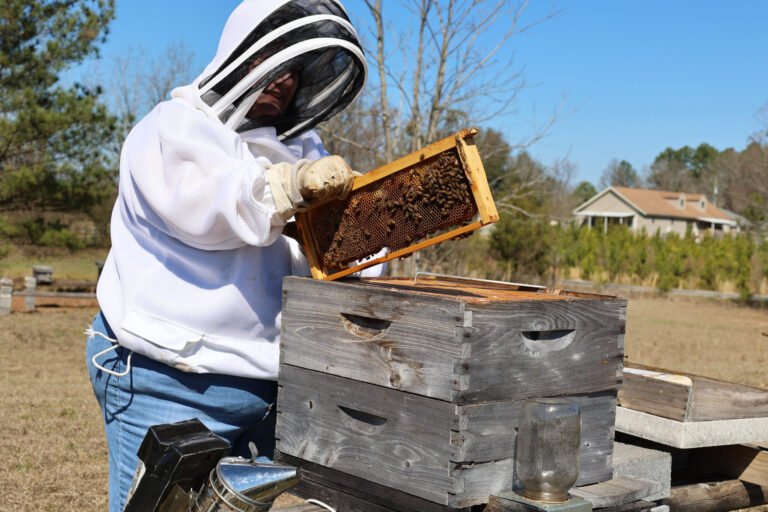
A Scout interested in bees should start by talking to their troop’s merit badge counselor about Insect Study, since that’s the concrete, achievable badge available right now within the Scouts BSA program. Separately, contacting the local county Cooperative Extension office — the organization that administers 4-H programs regionally — is the way to find out whether a beekeeping project is offered locally, what it involves, and when enrollment happens for the upcoming season. Many 4-H beekeeping programs welcome complete beginners with no prior bee experience, so a Scout doesn’t need to have kept bees before to get started. Cost is worth budgeting for realistically before enrolling: a 4-H beekeeping project that leads to managing an actual hive generally requires the same basic equipment – a suit, a smoker, a hive tool, and the hive itself – that any new adult beekeeper would need, so families should ask their local Extension office about typical startup costs and whether the program offers any shared equipment, loaner hives, or cost-sharing arrangements for new youth members before committing.
Frequently Asked Questions
The following questions address the specific points that come up most often once a family understands the discontinued badge’s real history and the two current alternatives available.
Is there currently a Beekeeping merit badge in Scouts BSA?
No. The Beekeeping merit badge was discontinued in 1995 and has no direct successor badge.
What’s the closest current merit badge to beekeeping?
Insect Study, which specifically requires Scouts to address bee and ant hazards including anaphylaxis awareness, though its overall scope covers insects broadly.
What is the modern equivalent to a youth beekeeping badge?
4-H’s Beekeeping Project, offered by county Cooperative Extension offices in many states, provides structured, hands-on hive-management experience over multiple years.
Can a Scout do both Insect Study and 4-H beekeeping?
Yes. The two programs aren’t mutually exclusive and genuinely complement each other for a bee-interested Scout.
Do I need prior beekeeping experience to join a 4-H beekeeping project?
No. Most 4-H beekeeping programs are designed to welcome complete beginners.
FAQ
Is there currently a Beekeeping merit badge in Scouts BSA?
No. The Beekeeping merit badge was discontinued in 1995 and has no direct successor badge.
What’s the closest current merit badge to beekeeping?
Insect Study, which specifically requires addressing bee and ant hazards including anaphylaxis awareness.
What is the modern equivalent to a youth beekeeping badge?
4-H’s Beekeeping Project, offered by county Cooperative Extension offices in many states.
Can a Scout do both Insect Study and 4-H beekeeping?
Yes. The two programs genuinely complement each other for a bee-interested Scout.
Do I need prior beekeeping experience to join a 4-H beekeeping project?
No. Most 4-H beekeeping programs are designed to welcome complete beginners.