Starting an apiary is exciting, but choices about gear matter. New beekeepers often look to save money by selecting secondhand frames, boxes, or tools. That can seem smart at first.
Yet used beekeeping equipment can hide microorganisms that harm a healthy colony. A single contaminated bee brush or hive tool may carry pathogens that spread through a hive and cut honey yields.
Professional beekeepers advise caution: the cost to replace a lost colony often exceeds any short-term savings on used gear. Inspect history, clean thoroughly, or prefer new items to protect your bees and honey production.
Key Takeaways
- Secondhand gear can introduce disease to a healthy colony.
- Tools like a bee brush or hive tool may harbor persistent pathogens.
- Professional beekeepers often recommend new equipment for beginners.
- Replacing a lost colony usually costs more than new gear up front.
- Inspect and sanitize any used equipment before use, or avoid used items altogether.
Understanding the Risk Factors When Buying Used Hive Boxes
Choosing previously owned equipment can lower initial outlay but demands close inspection. A seasoned beekeeper knows that the main risk is introducing pathogens that can harm an otherwise healthy colony.
Prioritize condition over savings. Check wood for rot, frames for intact foundation, and metal tools for rust. Even a well-worn bee brush can carry spores that affect honey yields.
- Many beekeepers sell gear due to retirement or downsizing, creating legitimate sources.
- Every piece of used equipment must be vetted and cleaned before use.
- Consider long-term colony health versus short-term money saved.
| Item | Advantages | Concerns | Typical Cost Range |
|---|---|---|---|
| Frames | Low cost, quick setup | Wax residue, disease spores | $2–$8 each |
| Bee brush & hive tool | Affordable, functional | Hidden contamination | $5–$20 |
| Complete bee hives | Major savings on gear | Structural damage, pest history | $50–$300 |
For practical guidance, review an inspection checklist for used beekeeping equipment and consider economic perspectives like beekeeping as a side income.
The Hidden Danger of Biological Pathogens
Some pathogens can survive long periods in stored equipment and silently threaten a new apiary.
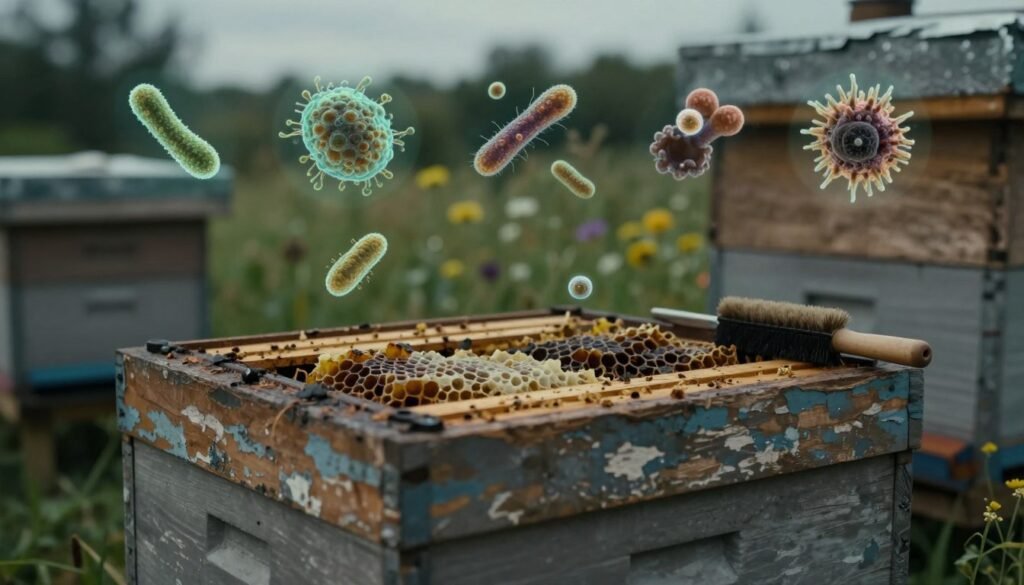
Persistent pathogens like American Foulbrood can remain infectious for years inside drawn comb and frames. This bacterium is fatal to a colony and can hide in tiny cracks of wood or plastic parts.
Persistent Pathogens
Pathogens may hide in crevices of frames, under cappings, or on a bee brush and hive tool. Even items that look clean can carry spores.
Check every piece of gear. Inspect wood and plastic for signs of past disease. If contamination is possible, do not introduce the item to an active bee hive without treatment.
Chemical Accumulation in Wax
Drawn comb often contains residues from treatments and environmental contaminants. Over time, these chemicals concentrate and can leach into honey.
Old comb may also weaken colony health and reduce productivity. Replace or render old wax before reuse, and pay special attention to frames and comb that came from unknown sources.
| Hazard | Where it hides | Action to take |
|---|---|---|
| American Foulbrood spores | Drawn comb, frame joints, wood cracks | Destroy heavily contaminated comb; sterilize or avoid reuse |
| Chemical residues | Old wax in comb, plastic foundations | Render wax or replace comb; test honey if unsure |
| Microscopic contamination | Tools, bee brush, small fittings | Sanitize metal tools; replace porous items |
For a deeper checklist on inspecting secondhand gear, see this inspection guide for used beekeeping equipment. Good inspection and cautious use protect your bees and honey.
Logistical Challenges and Equipment Compatibility
Measurements matter: mismatched parts can turn a simple set-up into a daily headache.
Beekeeping equipment depends on tight tolerances. Non-standard dimensions make it hard to stack boxes or fit frames neatly. That mismatch causes gaps, poor ventilation, and extra work for the beekeeper.
Non-Standard Dimensions
Check every measurement before you commit. A used honey extractor or other equipment may have parts that do not meet modern standards. Confirm bolt patterns, drum sizes, and mounting points so the unit works with your tools.
Wood and plastic components must align precisely. Older plastic bee fittings and custom wooden frames often differ from today’s specs. That mismatch can prevent frames from seating correctly and reduce honey flow and comb straightness.
- Verify frame spacing and overall box dimensions to match your frames.
- Ensure tools such as a bee brush fit into your workflow without forcing adjustments.
- Test extractors and moving parts for compatibility with current parts and standards.
For broader context on bee population trends and sustainability in equipment choices, see this overview of global trends and a guide to reducing plastic use in apiaries: bee population trends and reducing plastic in apiaries.
Essential Inspection Protocols for Secondhand Gear
Start every purchase with a documented inspection by an authorized apiary official to protect your colonies. A state apiary inspection certificate is the clearest proof that a bee hive or colony has been checked and cleared of disease.
Check the condition of wood and plastic frames thoroughly. Look for old comb, debris, cracks, or warping that could hide pathogens or pests.
Ask for a written history of the equipment. Knowing prior owners, treatment records, and storage practices helps reveal issues a quick glance cannot.
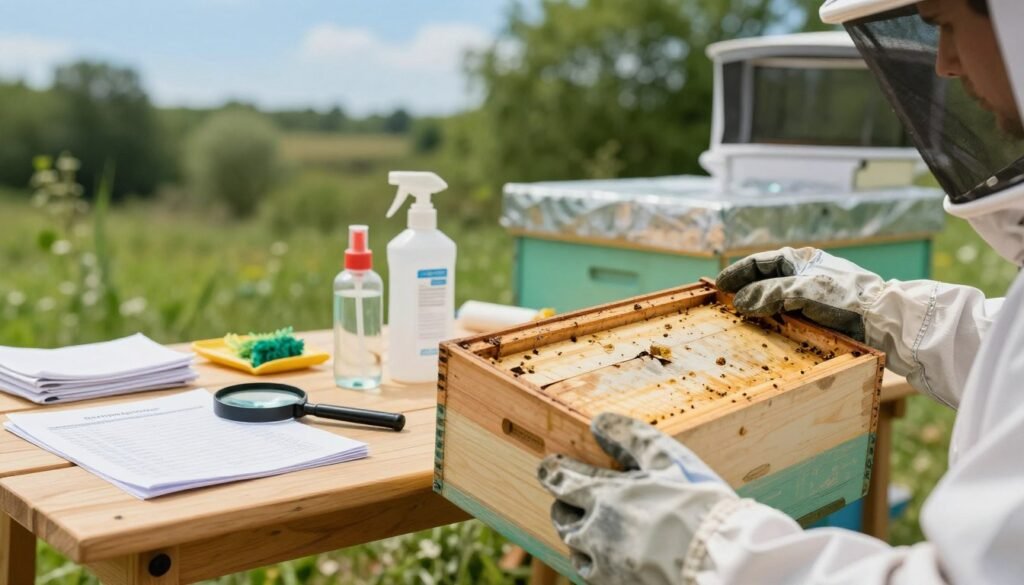
Sanitize your hive tool and other tools after inspection. Clean metal tools and a bee brush before they touch your apiary to prevent transfer of spores or bacteria.
- If you find used comb, burn it immediately to eliminate contamination risks to your honey bee colony.
- Inspect plastic bee hives for hairline cracks or structural damage that could harbor pests or fail in cold weather.
- Professional beekeepers recommend purchasing only equipment verified disease-free by a qualified inspector.
For practical repair tips and to assess structural issues before purchase, review a guide to repair damaged hive boxes. That helps you decide if a piece of equipment is salvageable or better avoided.
Best Practices for Cleaning and Sanitizing Used Supplies
Begin by separating metal, wood, and fabric so each material gets the right treatment. Sort items outdoors, keep contaminated pieces apart, and plan steps for cleaning and sterilization.
Sterilizing Metal Tools
Soak metal tools in a solution of 1kg washing soda per 10 liters of water to remove propolis and residues. For extra pest control, freeze metal for 48 hours at -20°C before scraping and re-cleaning.
Managing Wooden Components
Carefully torch or heat wood surfaces to kill lingering spores in corners and joints. Burn heavily contaminated comb and render old wax; replace plastics if hairline cracks remain.
Handling Protective Clothing
Launder suits and gloves after each use. Note that dark propolis stains can persist, so consider replacing a suit that has heavy contamination or poor contact sealing.
- Sanitize a honey extractor separately to avoid cross-contamination.
- Avoid reusing a bee brush; thorough cleaning often fails to remove all spores.
- Always wear chemical-resistant gloves during cleaning.
For detailed methods on sterilisation and irradiation, see the sterilisation discussion. For buying and care guidance, consult this equipment guide.
Motivations Behind the Used Beekeeping Equipment Market
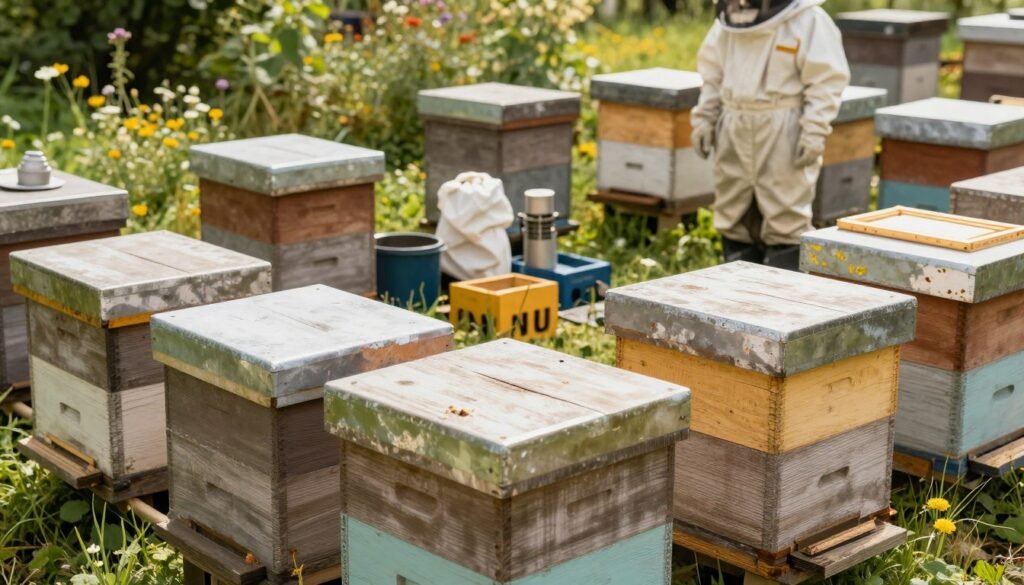
Personal changes drive a large share of the market. Relocation, health concerns, or less free time lead beekeepers to sell quality equipment.
Mature beekeepers sometimes stop because heavy frames and regular lifting become too much. Their well-kept tools and frames can be a cost-saving option for others.
- Relocation or retirement often creates ready-to-use supplies at lower cost.
- Downsizing after many swarms gives a simple solution for buyers wanting to expand.
- Estate sales may offer significant savings but require careful inspection of history and condition.
- Time constraints lead some to sell; make sure the gear is free of disease before introducing it to your colony.
| Seller Situation | What you gain | Checklist before purchase |
|---|---|---|
| Relocation or retirement | Well-maintained frames and bee hives at lower cost | Verify condition, ask for treatment history |
| Physical limitations | Gently used tools and honey extractor | Inspect frames, check plastic for cracks |
| Downsizing from many colonies | Large lot sales; possible savings | Sample comb check; confirm no disease |
For a practical view of beekeeping economics and whether this approach suits your plan, read is beekeeping profitable.
Final Considerations for Your Apiary Investment
Prioritizing clean, proven supplies sets the foundation for a productive apiary.
Invest in professional-grade equipment and reputable suppliers to protect honey yields and your colony. Good gear cuts long-term cost and saves you precious time.
If you consider secondhand items, only accept pieces with clear history and verification. To learn more about careful selection, review this guide on whether to buy used beehives before you decide.
Remember: every tool from a simple hive tool to a bee brush matters. Choose supplies that keep your bees healthy and let beekeepers focus on growth, not preventable problems.