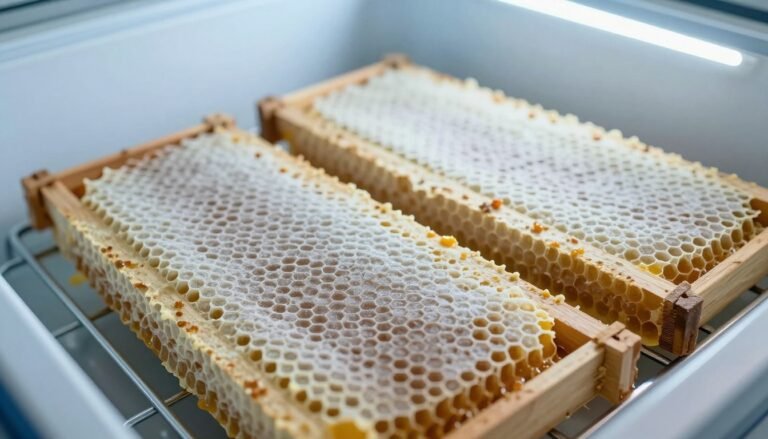
Keeping a productive apiary starts with smart comb care. This compact guide explains clear steps for turning tired frames and honeycomb into clean blocks of usable beeswax. It emphasizes safe handling, basic equipment checks, and timing your work in spring when wax and honey often look bright and fresh.
Bees secrete white wax that darkens as the colony fills cells with nectar and pollen. Regular frame maintenance and rotating foundation help protect hive health and extend the life of your equipment.
For practical tips on replacing and treating used comb, see this comb care guide. If you manage plastic foundation after colony loss, this cleaning resource shows safe steps for sanitizing frames and boxes.
Key Takeaways
- Rotate about 20–30% of frames each year to reduce contamination risk.
- Work in spring for easiest rebuilding and best honey appearance.
- Melt and filter wax for new foundation, blocks, or crafts.
- Freeze suspect frames before handling to kill pests.
- Sanitize and dry equipment thoroughly after cleaning.
Understanding the Importance of Comb Rotation
Rotating frames regularly keeps hive hygiene high and supports colony vigor. This simple routine lowers pest and disease pressure and encourages bees to build fresh, bright wax each spring.
Propolis plays a big role in hive maintenance. It is a sticky plant resin bees use to seal gaps, and it can darken wax and stain clothing. As workers move across the brood area, they leave propolis and debris in cells, which over time reduces cleanliness and brood quality.
The Role of Propolis
Propolis helps protect the colony but also marks sections that may need replacement. Inspect brood frames for heavy buildup and consider swapping worn foundation when you see dense staining or clogged cells.
Sustainability in the Apiary
Bees expend significant energy making wax, so conserving this material matters. Regular frame and foundation rotation reduces waste, cuts equipment costs, and encourages bees to produce new comb for honey and brood.
For practical guidance on frame replacement, consult this comb care guide and guidance on discarding suspect frames at this disease discard resource.
Identifying When to Remove Old Dark Comb
A deep, dark tint in brood areas signals that it’s time for close inspection of your frames.
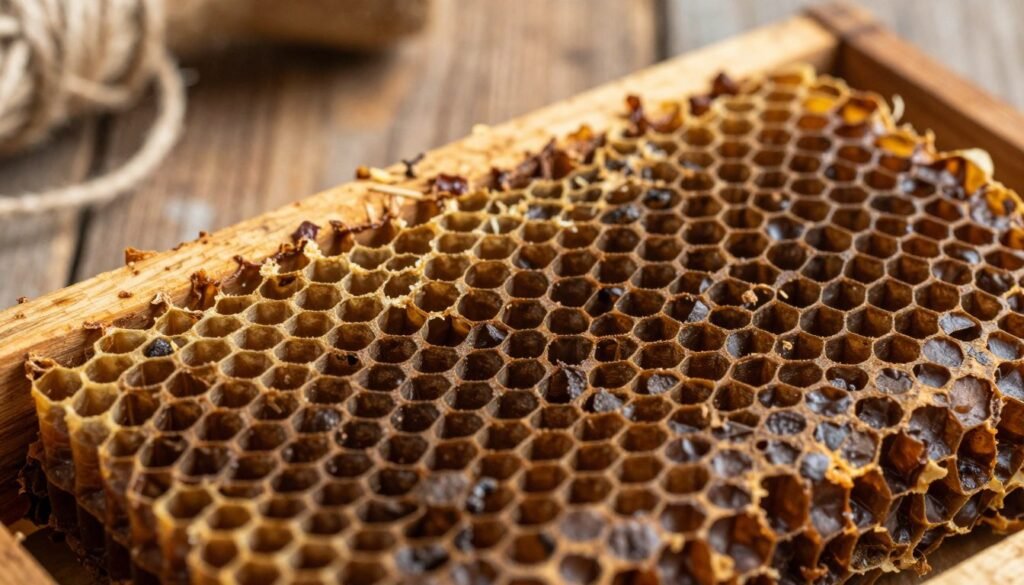
Visual signs matter: frames in the brood box often turn dark brown from heavy propolis and repeated bee traffic. Cells may shrink as wax builds up, and the queen may avoid laying in cramped cells.
If a honeycomb looks nearly black and snaps when folded, remove that frame from your equipment that year. Many beekeepers pull worn frames in the Fall before winter or in early spring when the queen resumes laying.
“Regular frame rotation keeps brood areas fresh and supports colony health.”
- Check brood frames annually and mark very dark frames for replacement.
- Watch for shrunken cells, brittle honeycomb, or heavy propolis buildup.
- Rotate about a third of frames each year for better hive health.
| Sign | What it Means | Action |
|---|---|---|
| Dark brown color | Propolis and repeated use | Mark for removal |
| Shrunken cells | Less space for brood | Replace foundation |
| Brittle, black comb | Advanced wear | Discard from hive |
For guidance on when to retire brood frames consult this retire brood frames resource, and if boxes need attention see tips on repair damaged boxes.
How to Recycle Old Beeswax Comb Safely
A gentle, sun-powered melter offers an efficient route for turning spent frames into clean blocks of wax.
Solar wax melter techniques rely on steady sun. Allow at least four hours of bright, uninterrupted sun for an effective melt. A basic setup pairs a styrofoam cooler with an aluminum pan and a pane of glass to trap heat and run off honey and debris.
Avoiding High Heat Methods
Open flames and direct stovetop heating risk scorching and fire. Beeswax is flammable and will darken if overheated. Use low, consistent temperatures and never leave hot wax unattended.
Filtering Impurities
Filtering makes clean wax: pour melted wax through cheesecloth or a fine screen to remove bee cocoons, propolis, and pollen. This yields clearer blocks suitable for foundation or crafts.
“Using a solar wax melter is the safest and most efficient way to render dark comb without wasting electricity.”
- Process frames when the queen is not laying in a box for best timing.
- Collect clear wax for new foundation or blocks.
- Keep aluminum pans and screens dedicated to wax work only.
| Method | Pros | Cons |
|---|---|---|
| Solar wax melter | Low cost, low risk, uses sun | Needs 4+ hours sun, slower |
| Stovetop melting | Fast | High fire risk, may scorch wax |
| Electric wax melter | Controlled temp, steady | Uses power, costlier |
For more on frame handling see this comb care guide, and for gear review check this wax extraction equipment resource.
Essential Tools for the Rendering Process
Gathering a few proven pieces of equipment cuts mess and saves time. A compact kit helps every beekeeper turn spent frames into clear blocks of wax with less fuss.
Required Equipment for Beekeepers
Start with a sturdy hive tool. Use it to scrape wax and foundation from frames before any melting begins. A clean scrape makes filtering easier and shortens render time.

A solar wax melter or electric wax melter is the core piece of equipment. Solar wax saves power and yields bright, usable wax. Fit an aluminum pan beneath the melter to catch liquid as debris drains away.
- Plastic or metal molds let you form neat blocks for later use.
- Reserve containers for strained wax and for sludgy debris.
- Keep a dedicated melter and pans to protect other beekeeping equipment from staining.
| Tool | Purpose | Note |
|---|---|---|
| Hive tool | Scrape frames and remove foundation | Essential for clean prep |
| Melter (solar or electric) | Render wax into a liquid | Solar is low-cost; electric is controlled |
| Aluminum pan & molds | Collect and shape wax | Use dedicated pans |
“A dedicated set of tools extends the life of your hive gear and makes rendering repeatable.”
For tips on turning filtered wax into foundation, see this guide on create wax foundation at home.
Managing Biosecurity and Chemical Risks
Chemical residues and resilient spores make careful handling of rendered wax vital.
American foulbrood spores survive long in wax and can re-infect a healthy colony. That risk alone makes biosecurity non-negotiable for beekeeping operations.
Beeswax is lipid-based and will absorb miticides and pesticides. Standard home rendering often does not remove these chemicals, so contaminated wax can pose ongoing hive and human health risks.
If you suspect serious disease, burn the affected equipment rather than trying to salvage it. Using a wax melter for contaminated wax increases the chance of spreading spores or chemicals.
Many beekeepers reserve suspect wax for non-hive products like candles and avoid returning it to foundation. Always use a dedicated hive tool and clean equipment between boxes to limit cross-contamination.
- American foulbrood spores persist in wax and can destroy a colony.
- Lipid-based wax absorbs miticides not removed by basic rendering.
- When in doubt, dispose of infected frames and affected equipment.
For detailed health concerns about recycled foundation see potential health concerns with recycled foundation. For guidance on encouraging bees to clean frames consider encouraging bees to clean comb.
Creative Uses for Rendered Beeswax
Clean, filtered wax opens a range of simple projects for home and apiary use. Pour warm wax into a mold for candles, ornaments, or neat blocks that fit shelves and kits. Small molds make ideal gifts and quick sales at markets.
Skincare and kitchen uses work well. Blend wax with oil for balms and salves that soothe hands after hive work. Make reusable wraps to replace single-use plastic when storing honey jars or lunch snacks.
Many beekeepers press rendered wax into new foundation sheets for frames. This saves money on equipment and returns material to the hive cycle. Use a solar wax melter or a controlled wax melter for clean results.

“Repurposing filtered wax stretches the value of every honeycomb and supports sustainable beekeeping.”
- Use a hive tool to collect wax scraps during inspections.
- Melt small bits in a solar wax melter during spring workdays.
- Save sludgy debris for non-hive projects like polish or wood finish.
| Project | Materials | Notes |
|---|---|---|
| Candles | Clean wax, wick, mold | Low-temp pour keeps color light |
| Foundation sheets | Filtered wax, stamping mold | Use healthy, tested wax for brood frames |
| Wraps & polish | Wax, oil, fabric or beeswax polish tin | Great use for surplus wax and propolis traces |
Conclusion
In summary, smart handling of spent frames keeps your apiary efficient and profitable. Good routines protect the colony and support healthy bees, hive growth, and steady honey yields.
Use a solar wax melter or a controlled melter and the right beekeeping equipment to turn dark comb into clean wax blocks for foundation, molds, or candles. Stay vigilant for disease and chemical signs before returning material to the hive.
Keep your tools and frames dedicated and clean. For practical tips from other keepers on wax recovery, see this wax recovery thread.