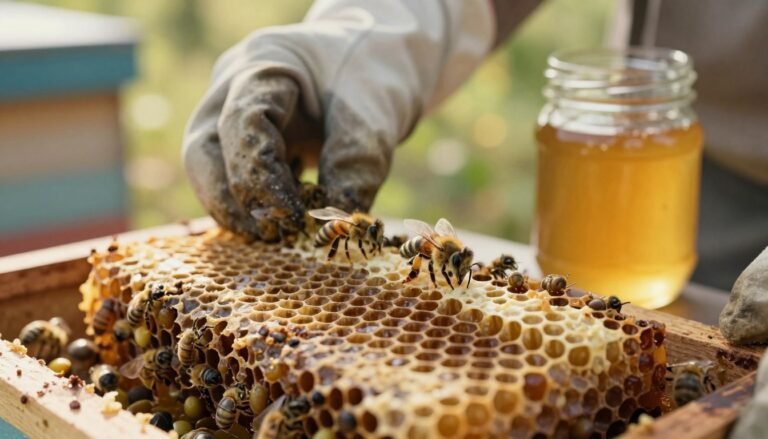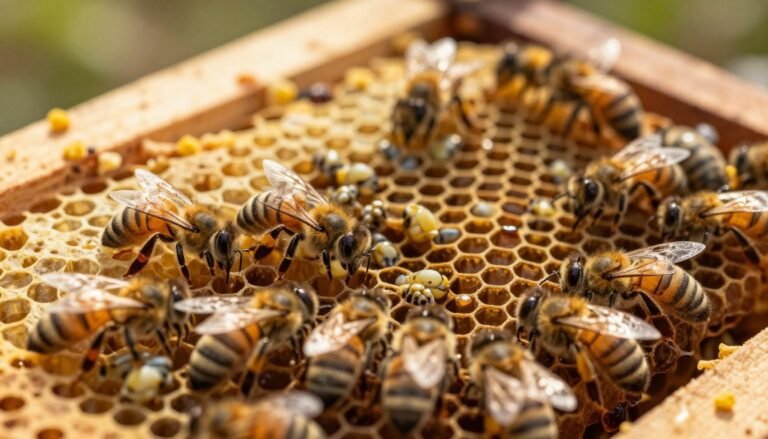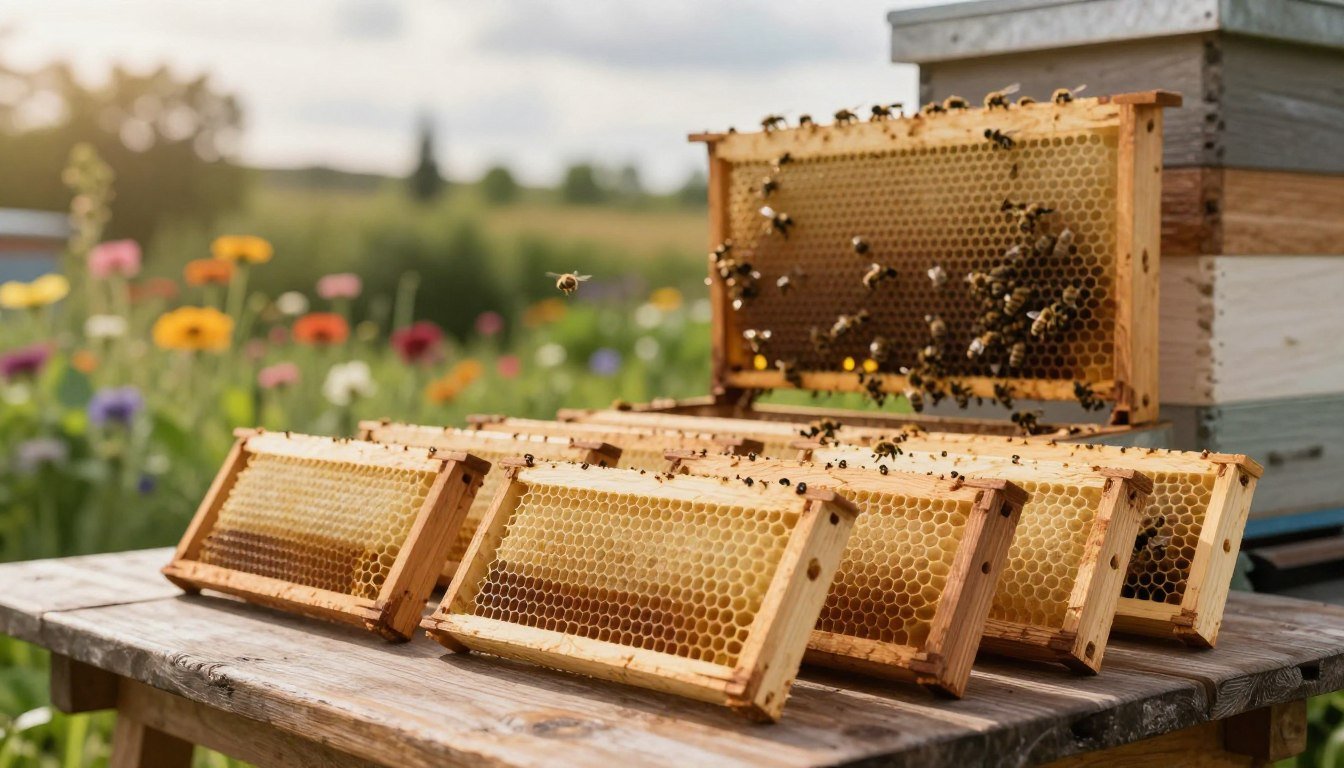
Switching to a natural comb approach can refresh how you manage your hive. Hilary Kearney, who runs sixty colonies in San Diego, champions methods that let bees build comb without pre-made foundation. This introduction outlines why many beekeepers consider the change and what to expect.
Foundationless beekeeping asks you to trust the colony’s instincts. When given an empty frame, bees often choose blank wood over sheets with foundation. That choice can yield cleaner wax, more natural cell sizes, and a healthier brood pattern.
We will cover practical tips to manage your brood box and hive box, plus steps to prevent cross-combs. For an in-depth how-to on comb guides and setup, see this helpful resource on foundationless brood frames.
Key Takeaways
- Natural comb supports cleaner beeswax and small cell structure.
- Empty frames often outperform pre-waxed sheets when bees prefer choice.
- Comb guides help keep new comb straight during the draw.
- Inspect every two weeks when comb is new to catch cross-combs early.
- Transitioning takes patience but can improve hive health and brood quality.
Understanding the Philosophy of Foundationless Beekeeping
L.L. Langstroth kept successful hives without foundation, and his methods still influence beekeepers today. That historical root reminds us that allowing bees to build natural comb is not a new experiment but a return to tradition.
When bees draw comb on their own, they set cell size naturally. This freedom avoids the artificial cell pattern imposed by plastic foundation or wax sheets. Colonies that choose empty frame space often show a healthier mix of worker and drone cells.
Allowing natural comb gives bees room to rear drones, which supports genetic diversity in hives. This balance typically results in roughly 17% drone comb across a healthy colony.
- Choice matters: many beekeepers report bees prefer empty over pre-filled sheets.
- Time investment: this way needs more checks early as comb is drawn.
- Wax quality: beeswax from natural comb often tests cleaner and more usable.
For a practical guide to foundation options and product choices, see best foundation for honey production.
Key Benefits of Using Foundationless Frames for Honey Supers
Removing commercial sheets often uncovers a clear benefit: less contaminated beeswax. A 2010 study by Mullin et al. found 98% of commercial foundation samples carried pesticides and miticides. That residue can harm queens and shorten bee lifespans.
Cleaner beeswax is the first major upside. By switching to foundationless frames, beekeepers reduce recycled-wax contamination. This yields purer wax from the extractor and fewer chemical risks in stored comb.
Natural cell size is another key gain. When bees build comb without imposed pattern, they set cell dimensions that suit colony needs. That can improve brood health and support a balanced drone ratio.
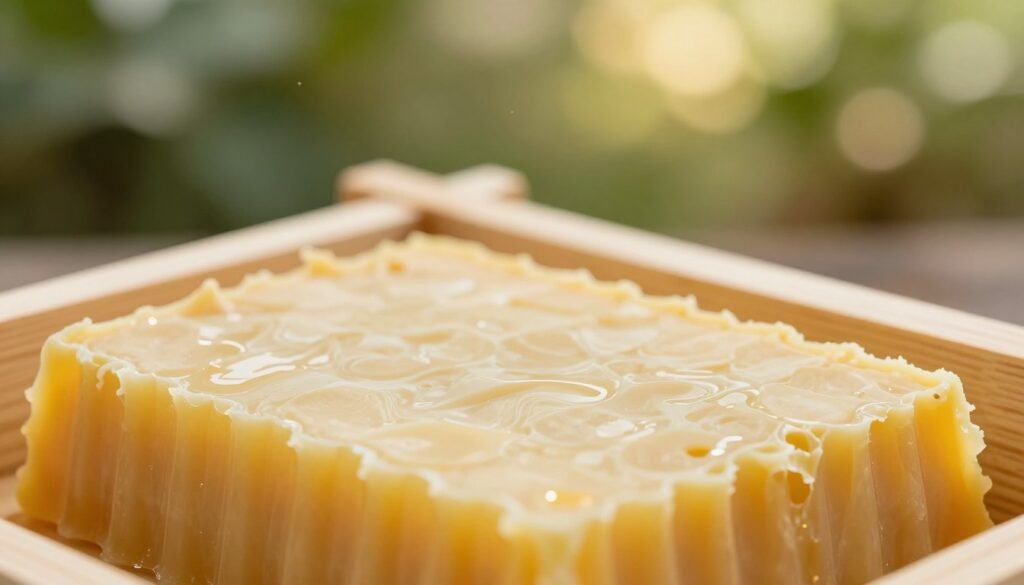
- Less pesticide carryover in wax used in supers.
- Bees build their own cell size, aiding development.
- Compatible with radial extractor use when frames are wired for support.
“Using plain wood helps colonies regulate cell size and reduce chemical exposure.”
| Benefit | Impact | Practical note |
|---|---|---|
| Cleaner wax | Lower pesticide load in comb | Better for edible wax and brood reuse |
| Natural cell size | Improved bee development | May reduce stress and queen issues |
| Extractor compatible | Frames can be spun in radial extractors | Wire and support are required |
| Reduced plastic use | Less chemical exposure long-term | Supports sustainable beekeeping |
Want guidance on dealing with contaminated comb or when to remove old comb after disease? See discard comb after disease for practical steps.
Essential Materials for Building Your Own Frames
Good construction starts with a short parts list and solid prep. Gather standard wooden frames, 14-inch paint stirrer sticks to act as comb guides, 1-inch nails, and chemical-free beeswax for coating guides.
Selecting Quality Pieces
Inspect each unit closely. Buy second-quality frames during sales to save money, but reject any with warped wood or weak lugs.
Glue the bottom bar firmly. A well-glued bottom adds rigidity as bees build comb and reduces breakage when lifting a full frame.
- Center and nail the paint stirrer in the top bar to guide straight comb.
- Use a double boiler to melt beeswax safely and coat wooden guides before placement.
- Check that the top bar is smooth and ready to receive the guide to prevent early cross-comb.
| Material | Purpose | Practical tip |
|---|---|---|
| Standard wooden frame | Structure to hold comb | Buy on sale; avoid warped pieces |
| 14-inch paint stirrer | Comb guide | Center and nail into the top bar |
| 1-inch nails | Fastening | Use sparingly; avoid splitting wood |
| Chemical-free beeswax | Coating guides | Melt with double boiler and brush on |
For a practical how-to on moving to no-foundation setups, see this guide to foundationless beekeeping and tips on proper spacing in best frame spacers.
Techniques for Installing Comb Guides
Start by placing a vertical guide in the top bar. This simple step helps bees build straight comb from the center of the frame.
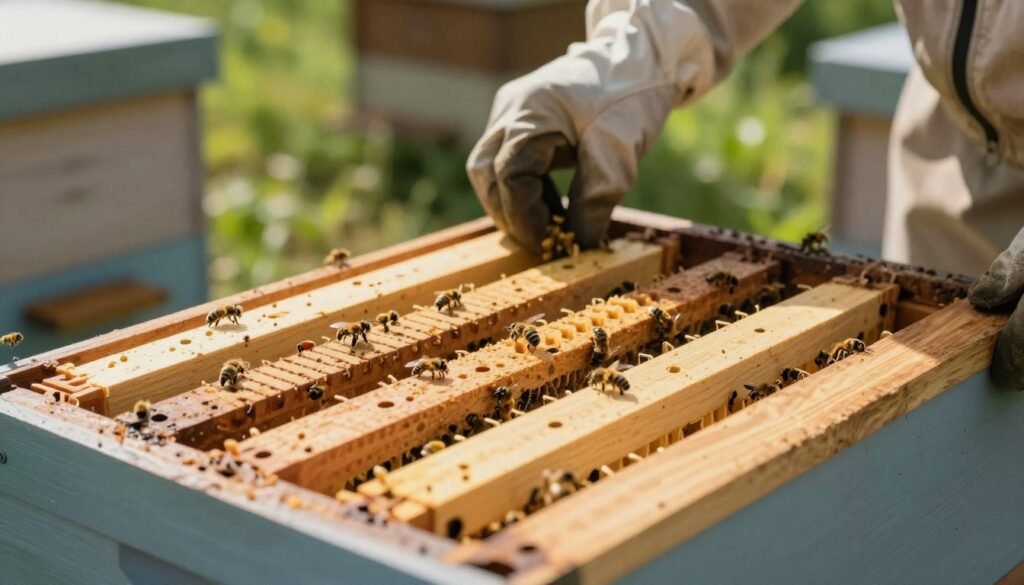
Coat wooden strips with melted beeswax using a double boiler and never leave the pot unattended; wax is flammable.
Nail the strip into the top bar so it hangs about one inch down. Drill support holes in the side bars before assembly when building new frames.
- Extractor-ready support: add stainless steel wire or nylon monofilament to avoid breakage during spinning.
- T-shaped slat: a T-slotted guide, suggested by Dr. Leo Sharashkin, encourages straight comb growth.
- Placement tip: center the guide and check alignment before closing the box.
| Task | Why it matters | Quick action |
|---|---|---|
| Wax-coat strips | Encourages immediate acceptance | Melt with double boiler; brush on |
| Hang ~1 inch | Starts vertical comb build | Nail into top bar; verify center |
| Add extraction support | Prevents comb loss in spinner | Install wire or monofilament |
For step-by-step prep, see this comb honey frame preparation guide.
Managing Hive Leveling and Comb Development
Start by making sure the hive sits perfectly level; even a small tilt will cause bees to build across multiple frames and create cross-bridges. A level hive keeps comb vertical and simplifies inspections.
Most smartphones include a spirit-level app. Use it along the plane of the frame tops and side-to-side. Recheck after moving boxes or strong winds.
The Importance of Leveling
Leveling is preventative maintenance. A true level reduces comb stress and the chance that bees will join adjacent units. Georgy Taranov found that removing the top half of old comb prompts bees to rebuild that section faster than removing the bottom half. This shows how gravity and position affect rebuilding time.
Introducing Frames Gradually
When you add foundationless frames, place one or two at a time. Alternate new pieces with drawn comb or a sheet of foundation to anchor building behavior.
- Leave a thin wax strip on the top bar as a visual and tactile guide so bees begin in the right place.
- Install supports like bamboo skewers or stainless wire so comb survives handling and extractor strain.
- Manage the brood box to limit excess drone comb and keep colony balance healthy.
“Introduce empty units slowly and keep the box level; small, steady actions prevent large comb problems.”
For beginner hive selection and setup tips, see this guide on how to choose a beehive. For deeper reading on no-foundation methods, check this foundationless frames redux.
Addressing Common Challenges and Cross-Comb Issues
Cross-comb can start small but escalate fast if not noticed during routine checks. Catching problems early saves time and protects brood. Use steady inspections every two weeks during a nectar flow.
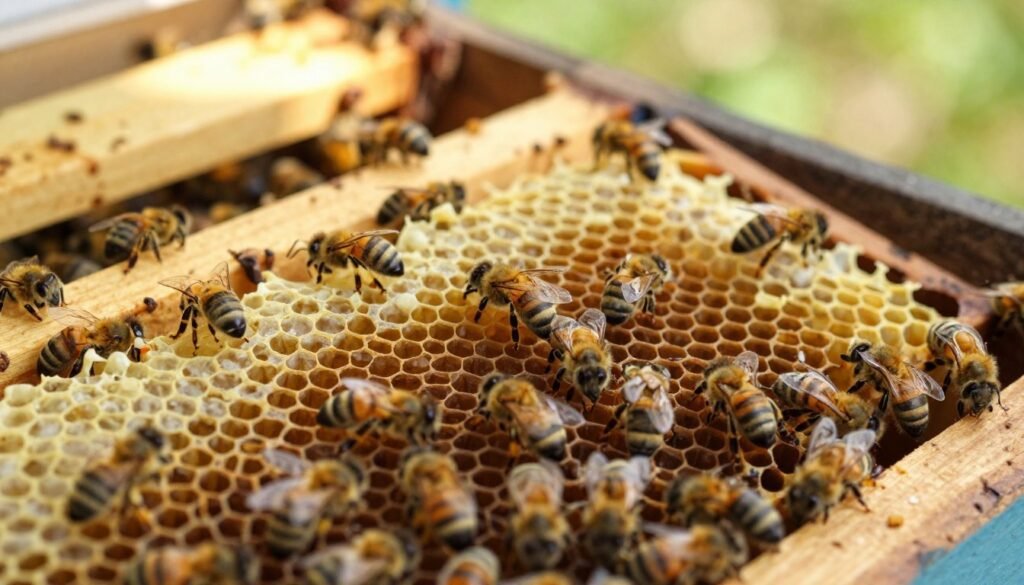
Fixing Mild Cross-Comb
When comb flares slightly, work calmly. Gently push the flared comb back into the correct frame and hold it in place.
Secure the repair with simple rubber bands until the bees reattach the wax. Keep a lidded container nearby to store any damaged pieces you remove.
Handling Advanced Cross-Comb
If comb grows perpendicular across several frames, surgical action is needed. Cut the offending bridges and re-tie usable comb to the proper frame.
Use rubber bands or string to anchor loose sections; bees will chew through and rebuild the joins. Plan to remove irreparably damaged wax to avoid sticky leaks during inspections.
Mitigating Mite Risks
Varroa favor drone brood, which increases with natural comb choices. Keep mite levels low before winter when the colony is broodless.
Targeted treatments and regular checks help protect colonies and reduce strain on the queen. For cleaning and reuse tips related to old foundation, see this guide on how to clean plastic foundation after colony.
| Issue | Quick fix | Note |
|---|---|---|
| Mild cross-comb | Push back + rubber band | Monitor 1–2 weeks |
| Advanced bridges | Cut and re-tie | Use lidded container for scrap |
| Mite buildup | Winter treatment | Prioritize drone brood checks |
Conclusion
To conclude, trying starter strips and guiding your bees yields straighter comb and better wax.
Transitioning to foundationless frames offers clear benefits: healthier colonies and less chemical carryover from commercial foundation. Level the hive and install centered strips to encourage vertical building.
Expect more hands-on checks early and careful brood management. Start with a few frames and watch how the colony responds. The effort pays back in pure beeswax and a stronger, more natural brood pattern.
For practical steps and deeper reading, see this concise foundationless beekeeping guide.
FAQ
What is the main advantage of using foundationless frames in supers?
The primary advantage is cleaner beeswax and more natural comb. Without a sheet of plastic or wired wax, bees build cells to their own scale. This often produces purer wax and fewer residues, which matters for beekeepers harvesting comb honey or rendering beeswax.
Will bees build comb quickly on foundationless frames?
Yes, colonies with strong nectar flow and healthy populations can draw comb fast. Speed depends on forage, weather, and the strain of bee. Introducing comb guides or starter strips helps bees focus their efforts and speeds construction.
How do I guide bees to build straight comb on empty frames?
Use thin beeswax starter strips, a light top-bar notch, or a small amount of drawn comb attached near the top. These guides give bees a reference point so comb hangs straight from the top bar to the bottom. Keep spacing accurate to prevent cross-combing.
Can I use wooden frames designed for foundation sheets instead of specialty frames?
Yes. Standard wooden frames can hold natural comb if you remove the foundation and fit comb guides. Ensure the frame spacing matches the hive standard and that the bottom bar supports the weight of filled comb to avoid sagging or breakage.
How do I prevent cross-combing between frames?
Maintain correct frame spacing and keep the hive level. Introduce foundationless frames gradually, one or two at a time, and replace them with drawn comb from other hives when possible. Regular inspections during comb building catch issues early.
What should I do if I find mild cross-comb?
For small connections, gently separate comb with a hive tool or warm water to soften wax, then re-secure frames. If separation risks disturbing brood, leave it until after brood emerges or transfer frames into a nuc for controlled repair.
How do I handle severe cross-comb or comb attached to the hive box?
Severe cases require careful removal. Cut away excess comb using a hive tool and sharp knife, working slowly to avoid crushing bees. Consider moving remaining comb into a nuc box with proper frames to let bees finish repairs in a controlled space.
Does natural comb increase Varroa mite risk?
Natural comb can affect mite dynamics because drone comb and cell size influence mite reproduction. Manage mite loads with monitoring, drone brood removal, and integrated pest management. Using foundationless methods does not inherently raise mite risk if monitoring is consistent.
Can I extract honey from foundationless comb with a standard extractor?
You can extract if comb is built on plastic or wired-into frames, but pure free-hanging comb may not withstand centrifugal forces. Many beekeepers harvest capped comb whole or use shallow frames with partial support for extraction.
Should I mix foundationless and foundation frames in the same hive?
Yes, mixing can work well. Introduce a few foundationless frames among drawn comb so bees orient properly. Gradual integration reduces cross-combing and helps colonies adapt while you evaluate comb quality and behavior.
What tools and materials are essential for building DIY foundationless frames?
Basic materials include quality wooden frames, starter strips of beeswax, nails or stainless steel staples, and a sturdy bottom bar or comb support. A small brood box or nuc can be useful for moving delicate comb during repairs.
How important is hive leveling when using foundationless setups?
Leveling is critical. Uneven hives encourage slanted comb and cross-connections. Use a carpenter level during setup and recheck after transport. Proper leveling keeps comb parallel to the top bars and reduces structural problems.
Will using foundationless frames affect honey yields?
Yields depend on forage, colony strength, and comb management. Some beekeepers report similar or slightly reduced yields due to increased care during comb building. Proper management and timely extraction will keep production competitive.
Are there bee strains better suited to building natural comb?
Yes. Certain strains, like Italian and Carniolan bees, are known for fast comb construction and gentle behavior. Genetic traits influence drawing speed and tendency to create drone comb, so select stock that fits your management goals.
How often should I inspect frames during comb development?
Inspect frequently during early construction—every 7 to 10 days—to catch cross-comb or burr comb early. Once comb is stable and drawn, reduce disturbance to avoid chilling brood and to allow bees to finish capping.