Published August 31, 2026
Table of Contents
- Why a Mentor Genuinely Matters
- Prepare Before You Start Looking
- Finding a Local Beekeeping Club
- Practical Search Strategies
- How Organized Club Mentorship Programs Work
- Questions to Ask a Potential Mentor
- Building the Relationship Once You’ve Found Someone
- Eventually Becoming a Mentor Yourself
- Who Especially Benefits From a Mentor
- Online Mentorship When Local Options Are Limited
- Paid Mentorship and Apprenticeship Programs
- Best Time of Year to Start Looking
- A Mentor’s Advice Isn’t Automatically Universal
- Is It Okay to Learn From More Than One Mentor?
- Mentorship as a Path Toward Formal Certification
- What You Can Offer a Mentor in Return
- Youth and Family Mentorship Programs
- A Realistic Timeline for Building the Relationship
- Keeping Notes From Your Mentor Sessions
- Common Mistakes
Why a Mentor Genuinely Matters
A beekeeping mentor gives you access to hands-on, locally relevant judgment that books and online guides genuinely can’t replicate — real-time feedback on your specific colony’s condition, region-specific timing advice, and the accumulated pattern-recognition experienced beekeepers develop over years of hands-on practice. For a new beekeeper, this kind of direct, personalized guidance meaningfully reduces the trial-and-error learning curve and the real risk of losing colonies to preventable early mistakes. Contributing your own colony data to resources like Bee Informed Partnership is another good habit a mentor can help you build early on.
Prepare Before You Start Looking
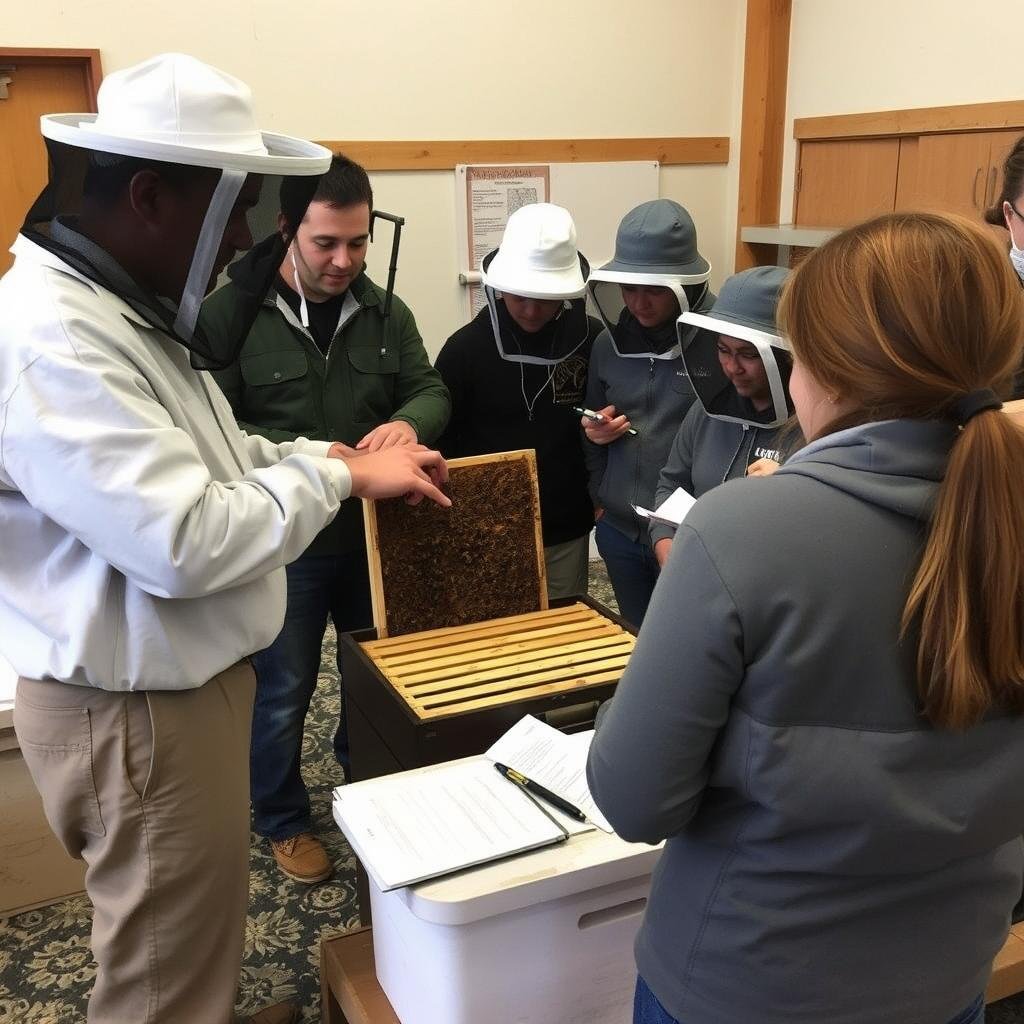
Reading a foundational beekeeping book or taking an introductory class before actively seeking a mentor gives you enough basic vocabulary and context to have genuinely productive conversations, rather than needing every single concept explained from absolute zero. Experienced beekeepers are generally more willing to invest their time in someone who has clearly made an initial effort to learn independently, since it signals real commitment rather than a casual, low-effort interest.
Finding a Local Beekeeping Club
Local beekeeping clubs and associations are the single most reliable channel for finding a mentor, since they concentrate experienced beekeepers actively willing to help newcomers in one accessible place — search specifically for clubs named after your county, city, or region rather than assuming only a state-level organization exists, since many active clubs operate at a more local level than beekeepers new to the search initially expect.
Practical Search Strategies
Beyond a basic web search for “[your county] beekeeping association,” check Facebook specifically, since many active local clubs maintain a Facebook group or page rather than (or in addition to) a standalone website, and contact your state’s Department of Agriculture, which often maintains lists of registered local associations. State beekeeping association websites frequently list affiliated local chapters directly, giving you a reliable starting directory rather than relying purely on general search engine results.
How Organized Club Mentorship Programs Work
Many established clubs run formal mentorship programs, pairing new members with experienced volunteers through structured workshops, hands-on apiary visits, or ongoing one-on-one pairings arranged specifically for this purpose — a more reliable path to a genuine mentor relationship than hoping to organically connect with someone at a general meeting. Attending club events consistently, asking genuine questions, and volunteering for apiary workdays all increase your visibility and signal real interest to potential mentors within the club.
Questions to Ask a Potential Mentor
Before committing to a mentor relationship, it’s reasonable to ask how long they’ve kept bees, how many hives they currently manage, and whether they’ve mentored newer beekeepers before — these questions aren’t rude, they’re a normal part of finding a genuinely good fit, since not every experienced beekeeper is naturally suited to teaching, regardless of how skilled they are with their own colonies.
Building the Relationship Once You’ve Found Someone
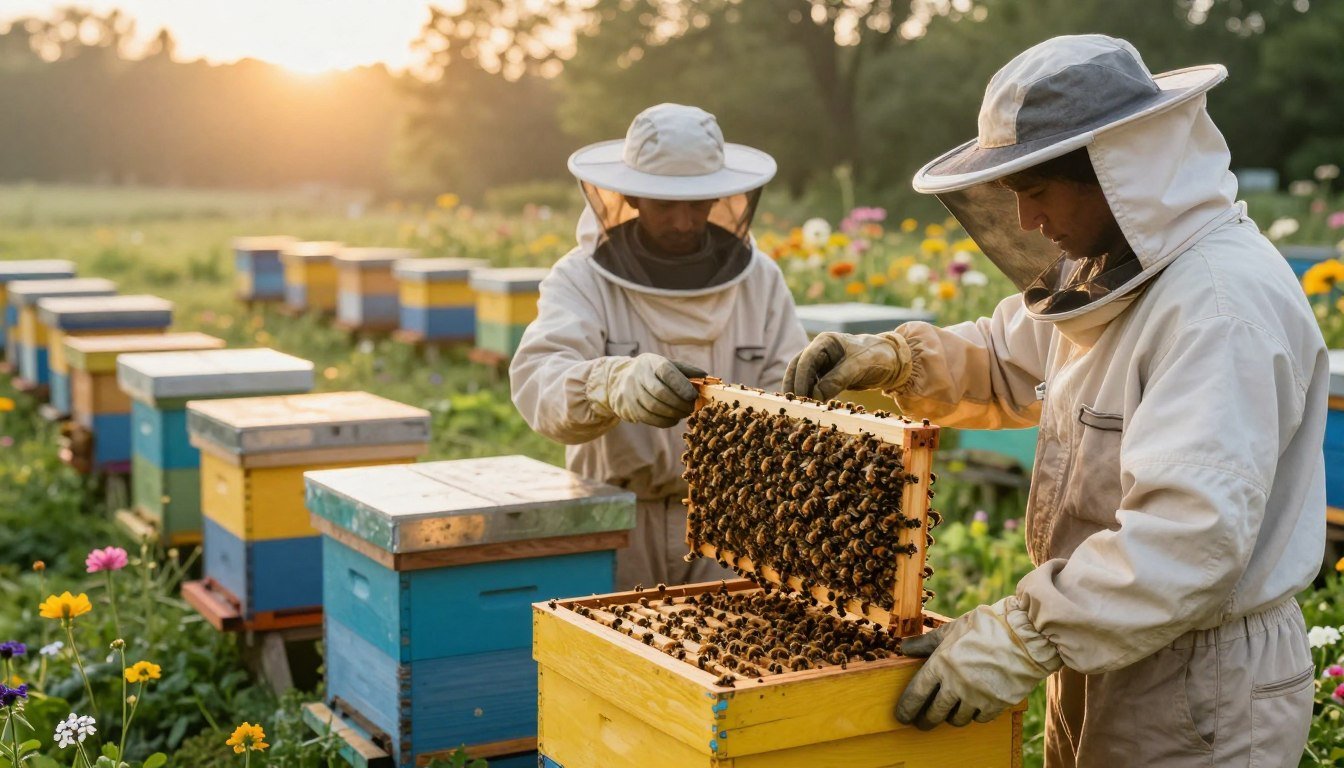
A good mentor relationship generally works best with clear, respectful boundaries around the mentor’s time — asking specific, well-thought-out questions rather than expecting unlimited availability, offering to help with their own apiary work in exchange for the guidance, and following through on advice given rather than repeatedly asking the same question without applying prior answers. Treating the relationship as a genuine two-way exchange, not a one-directional service, tends to produce longer-lasting, more valuable mentorships.
Eventually Becoming a Mentor Yourself
Many beekeeping communities face an ongoing need for more mentors relative to the number of new beekeepers seeking guidance each season, so once you’ve built a few years of solid hands-on experience, considering whether to mentor newer beekeepers yourself continues the same knowledge-transfer cycle that helped you get established — a genuinely meaningful way to give back to the local beekeeping community that supported your own early learning.
Who Especially Benefits From a Mentor
Complete beginners in their first one to two seasons, and beekeepers relocating to a genuinely new climate or region where their prior experience doesn’t fully transfer, benefit most from actively seeking out a mentor relationship. An experienced beekeeper with several established seasons behind them in a familiar climate may get more value from peer-level club discussion and continuing education than from a formal mentor relationship specifically.
Online Mentorship When Local Options Are Limited
Beekeepers in genuinely rural areas without a nearby active club can find some value in online beekeeping forums and video-call mentorship arrangements, though remote guidance inevitably misses the hands-on, in-person observation that makes local mentorship so valuable — a video call can’t replicate someone physically pointing at a frame and explaining exactly what they’re seeing. Treating online mentorship as a genuine supplement rather than a full substitute, and continuing to look for any reasonably nearby in-person option even if it requires more travel, generally produces better learning outcomes.
Paid Mentorship and Apprenticeship Programs
Some experienced beekeepers or commercial operations offer structured paid apprenticeship arrangements involving more substantial hands-on time and instruction than casual club-based mentorship typically provides, which can be a genuinely worthwhile investment for someone seriously committed to beekeeping (especially at a commercial or sideline scale) but isn’t necessary for most hobbyist beekeepers, who generally get sufficient guidance through free club-based mentorship alone.
Best Time of Year to Start Looking
Late winter and early spring, before the active season’s first colony inspections and management decisions begin in earnest, is generally the best window to connect with a potential mentor, since experienced beekeepers have more available time before their own apiary work ramps up and you’ll be positioned to shadow real hands-on activity from the very start of the season rather than joining mid-cycle already behind on context. Many clubs also schedule their new-member orientation and mentorship-pairing events specifically for this pre-season window.
A Mentor’s Advice Isn’t Automatically Universal
A good mentor relationship still benefits from cross-checking advice against broader sources occasionally, since even experienced beekeepers develop regional habits or personal preferences that aren’t necessarily universal best practice — a mentor’s specific timing or technique choices reflect their own apiary’s particular conditions and experience, not necessarily the single correct approach for every situation. This isn’t a reason to distrust a good mentor, just a reminder that one person’s experience, however valuable, is still one perspective rather than the complete picture.
Is It Okay to Learn From More Than One Mentor?
Learning from multiple experienced beekeepers, whether formally or just through casual club interaction with several members, is genuinely valuable rather than something to avoid — different beekeepers emphasize different aspects of the craft, and seeing several approaches to the same problem (like swarm prevention or overwintering prep) builds a more complete, flexible understanding than relying on a single perspective alone, even a very good one.
Mentorship as a Path Toward Formal Certification
A strong mentor relationship can also naturally support progress toward formal credentials like Master Beekeeper certification down the road, since many certification programs value or explicitly require documented hands-on experience and practical skill demonstration that a mentor relationship helps build genuinely, not just theoretically. Beekeepers with longer-term certification goals should mention this to a potential mentor early, since an experienced mentor can often tailor guidance to specifically prepare you for whatever formal pathway you’re eventually aiming toward.
What You Can Offer a Mentor in Return
Beyond the general offer to help with apiary work, new beekeepers often bring genuinely useful contributions a busy, established beekeeper appreciates — extra hands during time-sensitive tasks like swarm season or extraction, help with equipment assembly or maintenance, or simply covering routine checks during a mentor’s vacation or busy period. Framing the relationship explicitly around this kind of practical reciprocity, rather than assuming your presence alone is sufficient payback, tends to produce a genuinely stronger and more sustainable mentorship.
Youth and Family Mentorship Programs
Some clubs and 4-H-affiliated programs specifically offer youth beekeeping mentorship, pairing younger or teen beekeepers with experienced adult volunteers in a structured educational setting, distinct from general adult mentorship pairing. Parents or guardians looking to introduce a young person to beekeeping should specifically ask local clubs about youth-focused programming, since not every club structures its general mentorship offering in a way that’s well-suited to younger participants without a more tailored program in place.
A Realistic Timeline for Building the Relationship
A genuinely solid mentor relationship generally develops over a full season or more rather than forming instantly after a single meeting, so beekeepers new to this search shouldn’t expect an immediate deep connection — showing up consistently to club events and apiary workdays over several months, and letting the relationship develop naturally through repeated, genuine interaction, produces a stronger and more durable mentorship than trying to force a fast connection with any single experienced beekeeper.
Keeping Notes From Your Mentor Sessions
Writing down key advice, timing recommendations, and troubleshooting tips shortly after each mentor session helps you actually retain and apply what you’ve learned, rather than relying purely on memory during a season already full of new information — a simple notebook or notes app dedicated specifically to mentor-session takeaways becomes a genuinely valuable personal reference you can revisit in future seasons long after the specific conversation has faded from memory.
Common Mistakes
Approaching a potential mentor with zero prior effort to learn independently, expecting every basic concept explained from scratch, undervalues the time investment you’re asking for and reduces your odds of a willing match. Treating a mentor as an on-call service available for constant, unstructured questions without respecting their own time and apiary responsibilities strains the relationship quickly. Giving up after one unsuccessful attempt to find a good match overlooks that mentor-mentee fit varies genuinely by personality and teaching style — trying a different club member or program is a normal, reasonable next step, not a sign the search itself failed.
Sources
Mentorship-seeking strategies and club-based mentorship program structures reflect established beekeeping community guidance and documented practices from state and local beekeeping associations.
FAQ
Do I need any prior knowledge before seeking a beekeeping mentor?
A basic foundation from a book or introductory class is genuinely helpful — it lets you have more productive conversations and signals real commitment, though it’s not a strict prerequisite for reaching out to a local club.
Where’s the best place to look for a beekeeping mentor?
Local county or city beekeeping clubs and associations are the most reliable channel, since they concentrate experienced beekeepers who are actively willing to help newcomers, often through organized mentorship programs.
Is it okay to ask a potential mentor about their experience level?
Yes — asking how long they’ve kept bees, how many hives they manage, and whether they’ve mentored before is a normal, reasonable part of finding a genuinely good fit, not an intrusive question.
What if I can’t find a local beekeeping club?
Check your state’s Department of Agriculture for regional association listings, search Facebook specifically for local groups, or connect with a state-level beekeeping organization that may be able to point you toward the nearest active chapter.
Should I bring anything when meeting a potential mentor for the first time?
Genuine, specific questions about your own situation and goals are more valuable than any physical item — showing up prepared to discuss what you actually want to learn signals real interest and helps a potential mentor gauge whether they’re a good fit to help you.
How many mentor sessions should I expect in a typical season?
This varies widely by mentor availability and your own schedule, but many new beekeepers meet with a mentor several times over a season — informal club interactions plus a handful of dedicated apiary visits during key management periods like spring buildup and fall preparation.