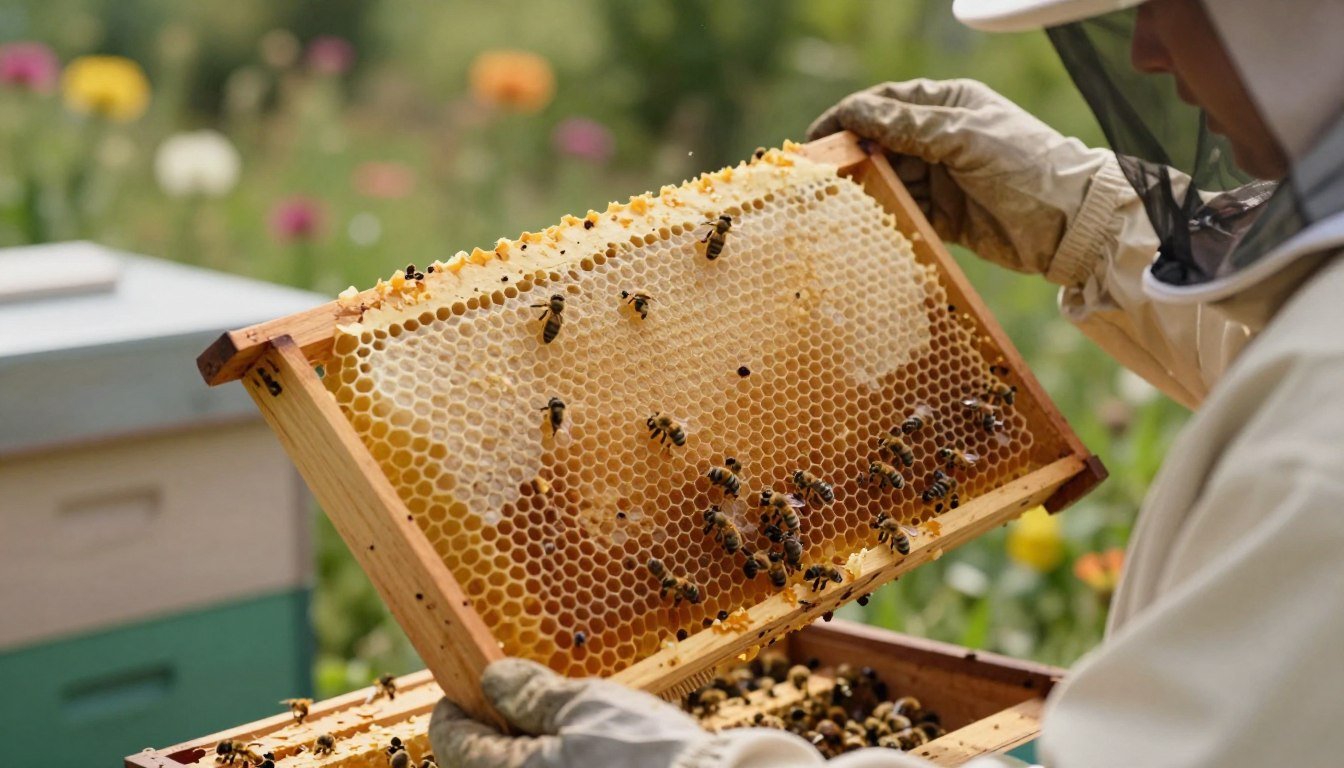
Early spring sets the pace for colony growth. An overwintered hive needs open space and ready frames so the queen can lay and workers can store nectar and honey.
Understanding the drawn comb benefit often takes years of hands-on experience. When a colony lacks proper structure, brood rearing and the brood nest arrangement suffer. This limits population growth during the crucial season.
Immediate activation matters: prepped foundation or prebuilt frames let queens start laying right away and save worker energy that would otherwise go to wax making. A steady nectar flow and the right space speed building and prevent foragers from dumping stores into the brood nest.
Good storage and protection of established frames between years keeps hives ready and reduces startup time. Learn practical steps to keep frames safe and reuse quality foundation by visiting advice on storing frames and the benefits of using prebuilt comb in a new package at giving a package established comb.
Key Takeaways
- Space and structure let the queen lay and workers store resources efficiently.
- Prebuilt frames speed colony build-up and save worker energy.
- Insufficient comb can mimic queen failure; inspect colony conditions first.
- Early nectar flow and proper space drive rapid population growth.
- Protecting frames between seasons preserves hive readiness.
Why Drawn Comb Value for Beekeepers is Essential
Ready frames and built cells let colonies capitalize on short nectar flows. Missing a bloom often means lost honey that never returns in that season. A small time window can determine hive success.
The Role of Comb in Hive Health
The comb serves as the hive’s central hub. It houses brood, stores pollen, and supports nurse activity. When cells are occupied by nectar, the brood nest shrinks and the colony’s growth stalls.
Providing preformed foundation or ready frames saves bees energy otherwise spent making wax. That conserved labor turns into increased brood rearing and a larger workforce during critical months.
Impact on Nectar Storage
House bees that collect a full crop need empty cells to store it. Without space, they may ingest nectar or waste time reallocating stores. Experienced managers keep extra supers of ready frames on strong hives to catch every drop.
One cell of nectar is one less cell for brood. That reality makes timely space management a competitive advantage. Read more about foundation versus prebuilt options at foundation vs drawn comb.
The Biological Cost of Wax Production
Wax synthesis drains a hive’s honey stores at a surprising rate. A colony must burn roughly six to seven times the weight in honey to make new wax. That means about 6 lbs of honey per pound wax, or roughly one to two pounds of honey per frame built.
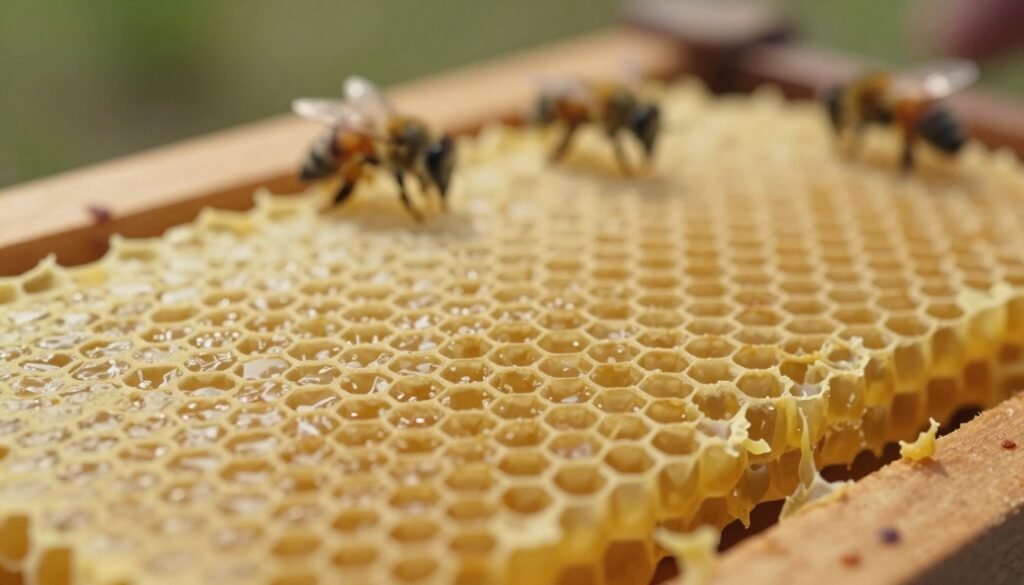
The metabolic toll hits the brood nest and thermoregulation. When workers divert calories to wax, fewer resources support brood rearing and maintaining brood nest temperature. This reduces short-term productivity across the colony.
“Every cell represents a real honey investment — protect existing frames to keep the colony efficient.”
Providing ready foundation and prebuilt frames lets bees shift energy into raising brood and storing honey. Smart managers reuse existing comb to preserve stores and expand productive space without forcing heavy wax production.
To learn how much honey wax creation costs, see the detailed FAQ on honey-to-wax ratios at honey consumption for wax. If colonies won’t build fresh cells when needed, check common causes at why bees won’t draw comb.
Strategies for Encouraging Natural Comb Building
Encouraging natural comb building starts with managing energy and space inside the hive. Supply bees with a steady source of heavy 2:1 syrup when nectar flow is absent. Add a few drops of lemongrass oil to the feed as a stimulant to increase uptake.
Use a large feeder that holds at least a gallon so the colony can consume syrup quickly. Small Boardman jars at the entrance rarely give the intake rate needed to support wax production.
Creating Ideal Environmental Conditions
Keep foundation and new frame foundation immediately adjacent to the warm brood nest. Wax gets brittle in cold weather and will not be worked well when it is chill.
Move partially drawn frames to the outside of the box to stop tunneling up the hive center. In horizontal setups, add a top bar or new frame between honey frames and the brood nest to guide drawing comb.
- Feed consistently — occasional jars won’t sustain wax building.
- Protect temperature — warmth near the brood supports wax work.
- Place foundation wisely — location saves bee time and energy.
Understanding Synthetic Alternatives
Synthetic sheet products give colonies immediate working cells without the long wax-making labor. These options supply ready frames that let the queen lay and workers store nectar right away.
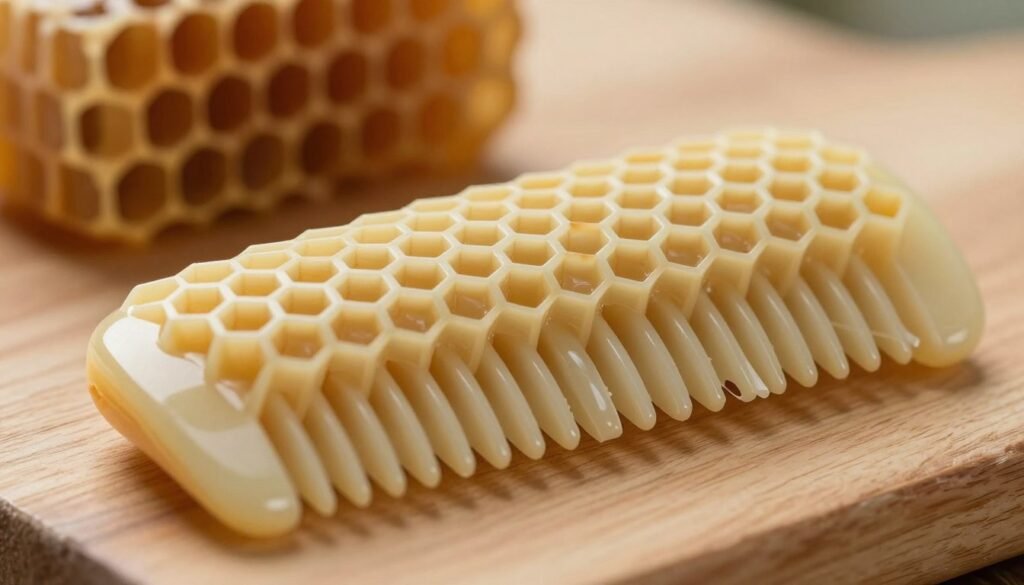
Benefits of Synthetic Options
Instant space shortens the time a hive needs to reach full strength. With ready cells, a colony can expand brood and catch a brief nectar flow.
- Energy saved: bees avoid heavy wax production and devote resources to brood and foraging.
- Consistent cell size: BetterComb uses 5.35–5.4mm cells, an acceptable size for brood frames.
- Seasonal advantage: ideal in short seasons where drawing comb would cost precious time.
Material Composition and Safety
Synthetic sheets are made from a food-grade polymer that mimics beeswax chemistry but contains no animal fats. BetterComb is produced in an ISO 22000 facility and meets FDA food-contact rules.
Safe by design: manufacturers control ingredients to avoid toxic residues. At end of life, the material can be melted and repurposed, often into candles.
“Synthetic frames provide built-out space that prevents the brood nest from becoming clogged during heavy nectar flow.”
When integrating these frames, avoid checkerboarding since colonies often prefer natural surface choices when both are available. To learn practical tips on turning increased space into extra stores, see how to increase honey production.
Best Practices for Integrating New Frames
Place new frames where worker traffic and brood warmth meet. Position frame foundation next to the brood nest so bees inspect and accept cells quickly.
If using more than half synthetic frames, set them in the hive center and move older drawn frames outward. Avoid checkerboarding synthetic and natural frames; bees will favor natural surface and may ignore alternatives.
Choose frame type by climate and intent. Wired frames give extraction strength in hot areas and during honey production. Pinned frames suit cool regions and brood use but offer less structural support.
Secure the frame foundation tightly in the box. Proper assembly prevents burr comb and allows the queen to lay once workers adjust cell spacing.
| Feature | Best Use | Climate | Notes |
|---|---|---|---|
| Wired frame | Honey extraction | Hot | High strength, recommended for supers |
| Pinned frame | Brood frames | Cool | Good for brood, less stable when full of honey |
| Synthetic frames | Rapid expansion | Short seasons | Place center, avoid mixing with natural frames |
| Old drawn frames | Support & storage | All | Move outward to guide drawing and storage |
“Correct placement and secure foundation are the small steps that yield big gains in hive productivity.”
For detailed placement tips when building small colonies, see guidance on proper comb construction in a nuc.
Managing and Protecting Your Existing Inventory
A well-maintained inventory of foundation and frames is insurance against a tight nectar season. Store extra supers in a cool, dry box to limit moths and other pests.
Inspect every frame at the end of the season. Remove damaged wax or stained cells and note any signs of disease in the brood or nest.
If you receive damaged foundation, file a claim quickly and keep all packaging. Contact the carrier immediately and save photos. For guidance on when to discard affected comb after disease, see advice on discarding infected comb.
When shipping wax products, watch transit temperatures. Material can freeze and crumble below 5 degrees Celsius, so plan packing and timing.
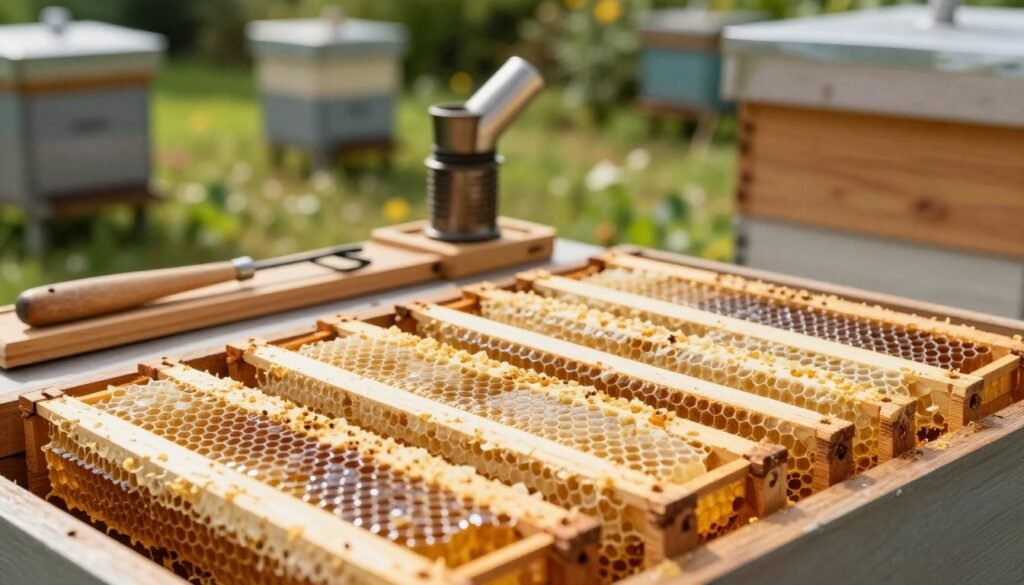
- Store supers flat and sealed in a pest-proof box.
- Keep older drawn frames outward when assembling a hive to guide bees.
- Regularly inspect the brood nest so the queen has clean cells to use.
| Risk | Prevention | Action |
|---|---|---|
| Wax moths | Cool, dry storage; sealed boxes | Freeze or fumigate affected frames; rotate inventory |
| Transit damage | Secure packaging; track shipments | File carrier claim; keep packaging and photos; call 403-764-8177 |
| Disease in brood | Inspect frames; isolate suspect boxes | Follow removal protocols; consult guidance at comb fragility & management |
“Protecting inventory lets the beekeeper respond quickly when spring nectar arrives.”
Final Thoughts on Hive Productivity
Small management steps often yield large gains in honey production and colony health.
Maximizing hive productivity requires attention to biology, timing, and equipment choices. Prioritizing ready frames—both natural and drawn comb—cuts the energy burden on bees and speeds spring buildup.
Consistent brood-nest checks and timely space additions during nectar flows are hallmarks of successful beekeeping. Learn deeper timing and wintering principles in the colony buildup guidance.
Invest in quality frames and follow placement best practices to boost long-term production. Practical care preserves the comb and secures returns; see an overview of apiary benefits at apiary benefits.
FAQ
What exactly is drawn comb and why does it matter in a hive?
Drawn comb is fully built wax cells created by honey bees. It matters because ready-made cells save the colony time and energy, letting workers focus on brood care and nectar processing. Frames with drawn foundation speed colony growth during a nectar flow and help maintain a compact brood nest.
How does prebuilt wax affect colony health and brood development?
Prebuilt wax gives the queen stable, correctly sized cells for laying. That uniform structure supports healthier brood development and reduces stress on workers. Colonies with adequate built foundation generally show higher brood survival and more consistent population gains.
Does having more drawn frames increase honey storage during a flow?
Yes. Frames with ready cells let bees store nectar immediately, raising honey production during peak flows. They also reduce the need for syrup feeding and lower the biological cost of wax production, which preserves colony resources.
What is the energy cost for bees to produce an ounce of wax?
Bees convert large amounts of nectar into wax. Estimates vary, but producing one pound of wax can require several pounds of honey. That energy investment can be conserved when beekeepers supply foundation or frames with cells already formed.
When should I give new frames to a colony to encourage building?
Introduce new frames early in the season, just before or at the start of a nectar flow. Place them near the brood nest or between brood frames so workers find them quickly. If conditions are poor, feed sugar syrup to stimulate comb construction.
How can I create the right conditions for bees to build natural cells?
Provide strong colonies with healthy queens, ample space, and stable temperatures. Ensure good forage nearby and avoid frequent inspections that chill the nest. Reducing stress and supplying sufficient worker numbers speeds natural cell building.
Are synthetic foundations and plastic frames safe to use in hives?
Modern plastic foundations and wax-coated options are widely used and generally safe when produced to industry standards. They resist deformation, can be reusable, and help colonies build quickly. Choose products from reputable brands and monitor for chemical residues.
What are the advantages of using foundationless frames versus wax foundation?
Foundationless frames let bees build natural cell sizes, which can reduce issues like drone-laying queen or cell size mismatch. Wax foundation speeds construction and keeps comb straight in frames. The choice depends on management goals and local conditions.
How should I integrate new frames into an established hive without causing chaos?
Add one or two frames at a time, placing them next to existing brood or storage frames. Avoid sudden large changes that force reorganization. If introducing foundation, wedge a drawn frame adjacent to the new one to guide building orientation.
What storage and handling practices protect my inventory of drawn frames?
Store drawn frames in cool, dry locations or in freezer bags to prevent wax moths and other pests. Rotate stock yearly, inspect for contamination, and use moth traps or freezing treatments when necessary. Proper stacking and labeling preserve frame integrity.
Can I transfer drawn frames between colonies without upsetting the bees?
Yes, but proceed carefully. Move frames during calm weather and avoid frames with open brood unless the receiving hive is queenright and strong. If moving drawn storage frames, situate them near the center of the target colony to encourage adoption.
How many pounds of wax does a medium-sized operation typically need each season?
Needs vary by region and colony count, but small-scale beekeepers may use tens of pounds, while commercial operations use thousands. Track frame replacement rates, supers used during flows, and brood requeening schedules to estimate annual wax requirements.
Does feeding syrup help bees build more cells faster?
Yes. Supplemental syrup provides the carbohydrates workers need to produce wax and expand comb. Feed carefully to avoid robbing and only when natural nectar is scarce or when preparing for a flow to boost building activity.
How do I balance providing frames and allowing bees to conserve resources?
Supply frames or foundation when colonies lack them or during strong flows. Avoid over-supplying when colonies are weak, as they may not defend or maintain excess comb. Time additions to match colony strength, worker population, and nectar availability.