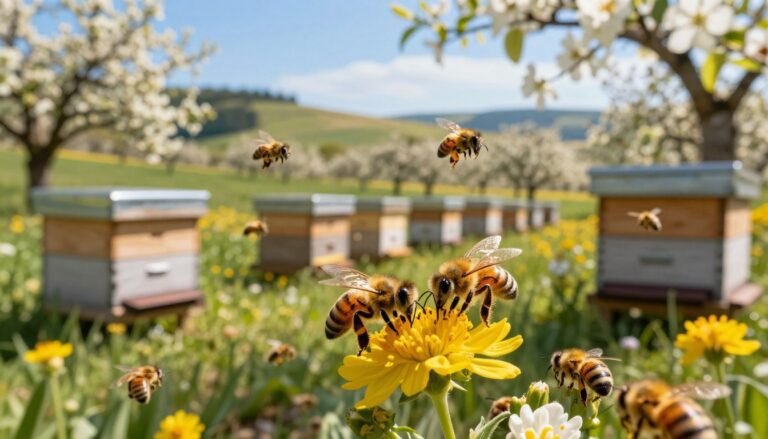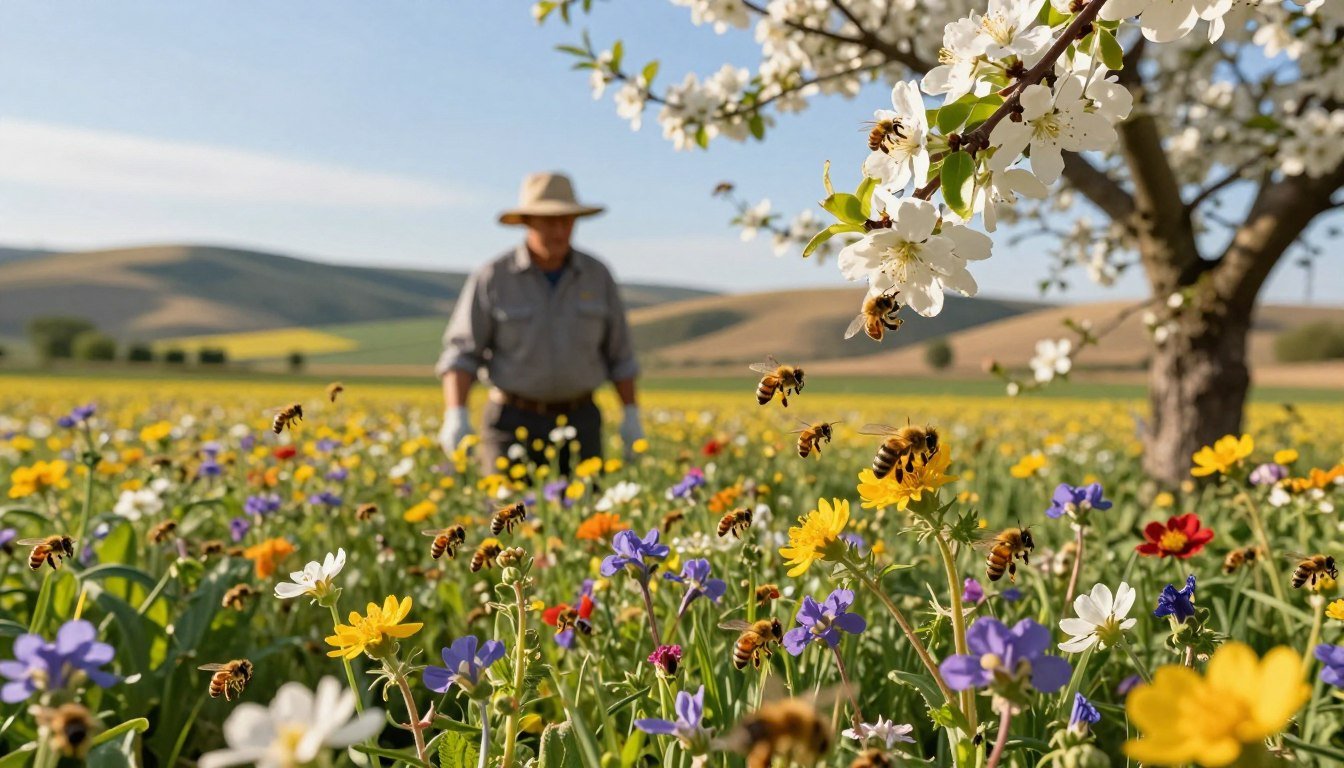
The almond belt in California relies on a vast, seasonal movement of honey bee hives. About 1.3 million acres of almond trees need two honey bee hives per orchard to reach full bloom. Commercial beekeepers move roughly 2.6 million hives across the United States each year to meet that demand.
Clear contracts help growers and beekeepers plan timing, water access, and land use. Well written terms reduce financial risk and protect colony health during transit and on leased fields. Best management practices keep bees healthy while they provide essential services.
Formal agreements also specify responsibilities for bloom notifications and honey recovery. When roles are defined, both parties gain legal protection and practical peace of mind. For more on renting bees for service delivery, see renting bees for pollination services.
Key Takeaways
- California almond pollination drives national hive movement each year.
- Contracts cut risk and clarify timing for bloom and delivery.
- Beekeepers need access to water and clear land to keep colonies healthy.
- Best management practices protect honey bee health during deployment.
- Formal terms offer legal protection for both growers and beekeeper partners.
Understanding the Importance of Pollination Agreements
A solid written contract turns the seasonal movement of hives into a predictable service for growers and beekeepers. Commercial beekeepers operate like livestock producers, moving bee colonies to follow flowering windows. An average operation now manages about 5,700 colonies, which shows the industrial scale behind modern pollination.
Those large numbers mean significant financial risk if roles and costs are unclear. Formal terms outline who supplies water, supplemental food and forage, and how to handle colony loss during bloom.
Clear expectations protect honey bee health and farm yields. Almond growers depend on reliable services during almond pollination, especially as native pollinators decline. Written terms help both parties plan timing, delivery of hives, and long-term cooperation.
- Risk reduction: who pays for lost colonies or veterinary care.
- Operational clarity: delivery windows, hive counts, and forage plans.
- Relationship building: repeat contracts boost reliability year after year.
For community-level support and apiary planning, see how community gardens can support apiaries.
Legal Foundations for Growers and Beekeepers
Clear legal terms protect both the person who owns the hives and the farm operator. A short written contract reduces uncertainty and keeps focus on hive health and yield. In 2018, about 82% of U.S. honey bee colonies worked almond pollination, so written terms matter at scale.
Handshake vs. Written Contracts
Many relationships begin with a handshake. That can work for small, trusted partners. But a simple note or contract gives clarity on timing, hive counts, and who handles chemical use near blossoms.
Liability and Legal Protection
Growers usually accept responsibility for sting incidents that affect workers or the public while hives are onsite. A contract should list physical and mailing addresses for both parties to ensure fast, clear communication.
| Topic | Handshake | Written Contract | Why It Matters |
|---|---|---|---|
| Timing | Informal | Set dates for delivery/removal | Prevents misunderstandings |
| Liability | Unclear | Assigns responsibility for stings, loss | Reduces legal risk |
| Use of Chemicals | Often verbal | Recorded restrictions and notice rules | Protects colony health |

- Best practice: even long-term partners sign a short contract.
- Keep records: addresses, contacts, and timing reduce disputes.
Navigating Crop Pollination Agreements and Pesticide Clauses
Clear notification windows keep beekeepers ready to place hives at peak bloom. A standard 48-hour notice helps align deliveries so bees arrive when blossoms open. This simple rule reduces missed windows and wasted travel time.
Specific chemical protections in the contract boost beekeeper confidence. Many beekeepers accept a modest fee discount in return for strict protection against exposure. Contracts should state night-only applications and ban tank mixing of fungicides with insect control products.
If a grower fails to notify a planned spray, they must accept full liability for losses. The agreement should also set a damage threshold — for example, a 50% loss of adult bees triggers compensation.
| Requirement | Recommended Term | Benefit |
|---|---|---|
| Notice period | 48 hours before bloom | Proper timing for hive placement |
| Application timing | Night only | Reduces bee exposure |
| Mixing rules | No tank mixes with fungicides | Lower chemical risk |
| Liability threshold | 50% adult bee loss | Clear compensation trigger |
Good communication is a best practice that protects pollinators and improves services for almond growers. For more detailed risk guidance, see risk mitigation and incentives.
Defining Colony Strength and Quality Standards
A reliable standard for colony strength makes expectations explicit between beekeepers and growers. Clear measures reduce disputes and ensure the service paid for meets field needs during almond pollination.
Timing matters: honey bee activity stops in temperatures below 55°F and when it is wet or windy. That means inspections should consider weather to avoid false low counts.
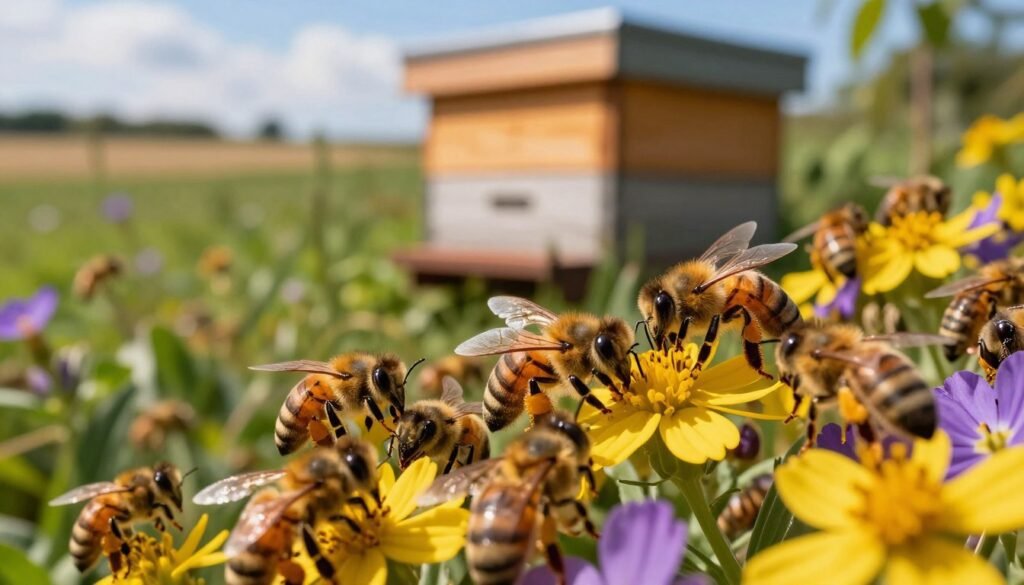
Methods for Colony Strength Inspection
Inspectors typically open 10% to 25% of the hives on site to count active frames. An active frame is one where bees cover at least 75% of both sides of a standard frame during inspection.
- Colony strength is defined by bees covering frames; this links directly to foraging ability.
- Growers often pay a third-party for verification to confirm beekeeper promises.
- Contracts should state bonuses or penalties for deviations from minimum strength.
Beekeepers must maintain agreed strength for the contract duration so almond growers get reliable service during mid-February bloom when honey bee numbers are lowest. The use of pesticides near hives can further stress colonies, so strong standards and regular checks protect pollinators and honey production.
For seasonal checklists and inspection routines, see seasonal beekeeping tasks and best practice guidance in this inspection brief.
Logistics of Hive Deployment and Removal
Logistics begin the moment trucks arrive: safe, level locations save time and protect colonies.
Growers must mark suitable sites, provide easy truck access, and place hive pads away from dust and heavy sun. Clear directions reduce handling time and lessen stress on honey bee workers.
Provide uncontaminated water within a short walk of hives; this is vital for colony health and cooling during bloom. Proper water access lowers forage stress and supports honey production.
Removal timing matters. Beekeepers need a 48-hour notice window to collect hives after the contract ends or the bloom period closes. Contracts should set a maximum deployment length, with renewal terms if extra time is needed.
“Site prep and timely notices reduce losses, cut extra moves, and protect both hives and farm workers.”
- Prepare level spots for easy maintenance access.
- Compensate beekeepers for requested hive moves beyond the agreement.
- Address drift risks from neighbor applications in the contract to protect colonies.
For practical guidance on on-farm habitat and water planning see the supporting pollinators guide.
Financial Considerations and Payment Structures
Upfront funds stabilize operations for both sides and protect colony health during transport. A common term in almond pollination is a 40% prepayment before hives arrive in California. This cash helps beekeepers cover fuel, staging, supplemental feed, and inspections.
Upfront Payment Benefits
Beekeepers value a 40% prepayment. It guarantees income and supplies the working capital needed to move colonies on schedule.
- Costs covered: transport, prep, and lost honey production during bloom.
- Attraction: growers offering prepayment often secure better hives for almond pollination.
- Trust: clear due dates reduce disputes and support long-term partnerships.
Penalties for Non-Compliance
Contracts should state compensation if a grower violates the pesticide exposure term and harms bees. Penalties must be specific and measurable.
- Late payments may incur fees or delay hive placement.
- Failure to meet colony strength triggers agreed penalties to protect grower investment.
- Financial terms should reflect shipment stress and health risks to the honey bee.
“Clear payment terms and fair penalties align incentives and reduce operational risk.”
Mitigating Risks Through Formal Contracts
A clear contract locks in duties for site maps, hive counts, notification windows, and financial remedies.
Formal terms are the most effective way to reduce the risk of pesticide exposure to honey bees and colonies. A well-drafted contract sets best management practices that protect colony health and the honey supply.
Include specific use limits, timing rules for applications, and a requirement that growers assume liability for damage caused by their treatments. State the physical location of the field and the exact number of hives to prevent deployment errors.
Dispute procedures matter. Spell out arbitration steps so conflicts resolve quickly without costly litigation. That keeps beekeepers focused on hive health and growers focused on yields.
- Documented information: site maps, contacts, and hive counts.
- Liability: grower assumes damage costs from their applications.
- Resolution: arbitration for unresolved disputes.
“A season-long contract becomes a roadmap that aligns objectives, reduces operational risk, and protects pollinators.”
Formalizing the relationship lets both parties concentrate on successful almond pollination while lowering financial exposure. For related stewardship ideas see sustainable beekeeping.
The Role of Pollination Brokers in Modern Agriculture
Brokers act as quality gatekeepers, ensuring colonies meet agreed strength before delivery.
They contract with multiple beekeepers to guarantee timely pollination services and to substitute colonies when mortality spikes. Brokers also handle logistics, scheduling, and payment flows so growers save time.
For beekeepers, a broker often secures prompt payment and reduces the risk of unpaid invoices. That financial certainty helps maintain healthy operations and steady honey production.

- Broker fees usually range from $2 to $20 per colony, covering coordination costs.
- Brokers manage multi-source fleets, easing strain when local populations fall.
- Growers benefit from one point of contact and verified colony quality.
| Service | Typical Fee | Primary Beneficiary | Risk Mitigated |
|---|---|---|---|
| Coordination | $2–$20/colony | Growers | Scheduling conflicts |
| Quality verification | Included in fee | Both | Weak colonies |
| Payment guarantee | Service charge | Beekeepers | Late or missing payments |
| Substitution logistics | Included | Growers | High mortality events |
“Brokers bridge growers and beekeepers, making service delivery reliable and repeatable.”
For standards on verification and inspection, see the colony inspection guidance.
Best Management Practices for Pesticide Exposure
Nighttime spray routines, strict no-mix rules, and fast alerts together form the foundation of safer field practice.
Nighttime Application Protocols
Apply treatments when foragers are inactive. Nighttime applications reduce contact with honey bees and lower exposure to the colonies in bloom periods.
Tip: Schedule sprays after dusk and avoid dawn hours when bees resume flight.
Tank Mixing Risks
Growers should avoid mixing fungicides with insect controls. Combined products can create synergistic harm that raises mortality and weakens hive health.
Keep single-product applications when possible and share chemical names so the beekeeper can plan protective steps.
Notification Requirements
Clear, timely alerts give beekeepers a chance to move or shield hives. Contracts should require advance notice, list active ingredients, and set emergency contacts.
- Provide at least 48 hours notice before planned treatments during almond pollination.
- Share specific chemical information so beekeepers can assess exposure risk.
- Agree to avoid sprays during peak bloom unless safety measures are in place.
“Timely communication and conservative application routines protect bees while letting growers manage pest risk.”
Incorporating Bee-Friendly Cover Crops
Planting flowering cover species gives bees steady food between orchard blooms.
Bee-friendly mixes such as clovers or brassica blends add diverse forage that supports colony nutrition and resilience to exposure. These plants also improve soil structure and organic matter for the land owner.
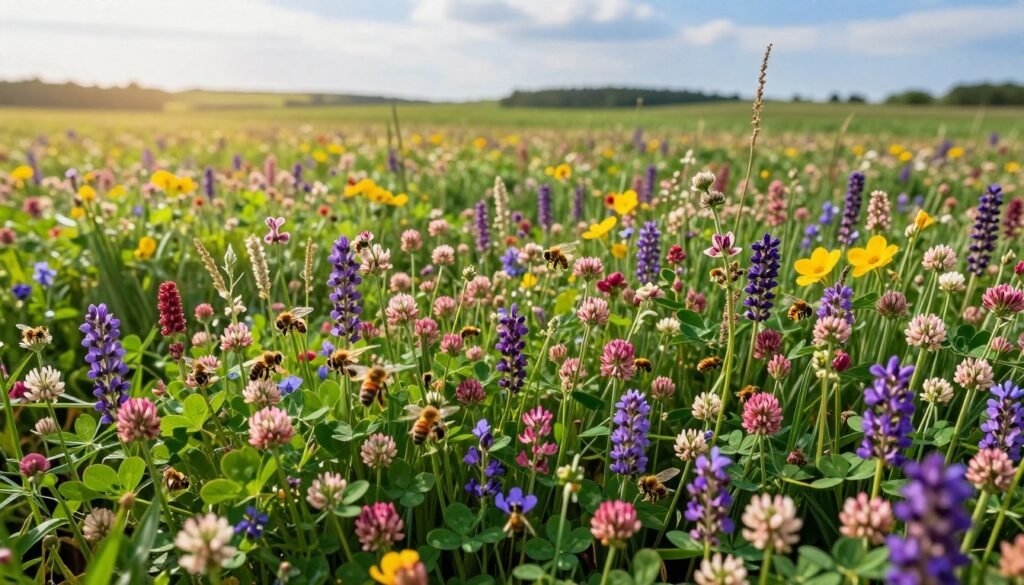
Growers must ensure reliable water so seedings establish in dry regions. Without irrigation, many cover mixes fail to germinate and provide little benefit to honey production or native pollinators.
| Cover Type | Forage Benefit | Water Needs |
|---|---|---|
| Clover mix | Long bloom, high nectar | Moderate |
| Brassica blend | Early-season flowers, pollen | Low–Moderate |
| Native wildflower mix | Diverse seasonal forage | Moderate–High |
Beekeepers value cover plantings in service contracts because added food and water access improve colony strength and long-term production. Investing in these plantings yields better protection for colonies and greater farm sustainability.
“Diverse forage increases resilience and supports stronger hives during high-stress periods.”
For research on implementation and outcomes, see a related verification brief at cover crop verification studies.
Conclusion
,Strong notice rules, verified colony counts, and fair payment terms close the loop on successful pollination services.
Clear roles reduce surprises. A concise contract makes responsibilities measurable for both the grower and the beekeeper. This protects hive health and supports reliable scheduling.
Addressing chemical exposure and agreed strength standards helps protect honey bees while ensuring service quality. Timely alerts and simple dispute steps keep operations moving smoothly.
Use verified guidance to draft terms. For an industry overview see contracting overview, and for habitat ideas consult pollinator-friendly gardening.
Bottom line: clear communication, fair finance, and practical protections let the grower and beekeeper build a lasting, mutually beneficial relationship.