Reviewed by Thomas B. · How we review
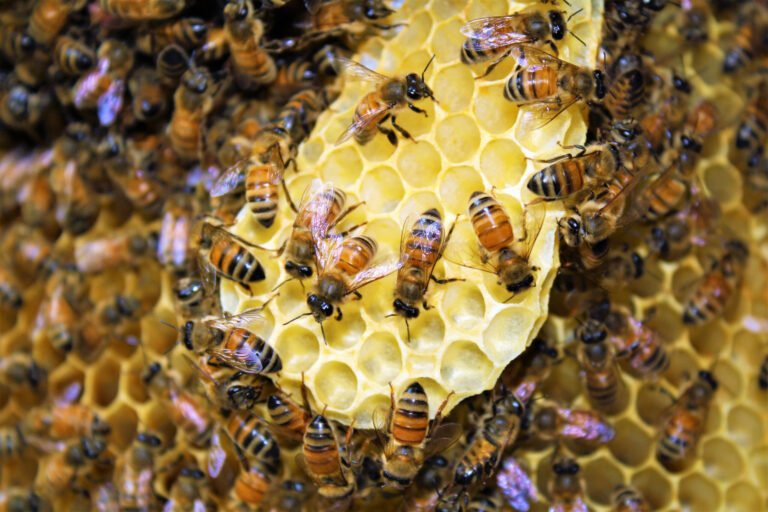
Beeswax is a natural material from the hive whose chemical profile supports diverse properties and modern applications.
This short review synthesizes recent research to show how composition links to performance, safety, and product development potential for U.S. teams.
We frame “Bioactive compounds in beeswax” as a unifying idea that connects chemistry to function, from antioxidant and antimicrobial effects to barrier and structuring roles.
Interest is rising because consumers prefer sustainable, natural options while scientists use the wax as a low-toxicity matrix for delivery systems like solid lipid nanoparticles.
The article will trace scope and relevance, detailed composition, therapeutic mechanisms, materials science uses, SLN advances, quality and standardization, and future trends.
Our goal is practical: help U.S. researchers and product teams turn evidence on wax bioactivity into credible, high-performing food and topical products while addressing stability, scalability, and regulation.
Key Takeaways
- Beeswax links chemistry to function across food, cosmetic, and healthcare products.
- This review summarizes recent research and translational implications for product teams.
- Its hydrophobic matrix and melting range suit delivery systems and topical formats.
- Quality, adulteration, and standardization affect safety and performance.
- Interest grows as sustainability and low-toxicity materials guide innovation.
Scope and relevance: a scientific review of beeswax bioactivity and applications
This review maps current evidence on how hive-derived materials translate to practical uses across food, cosmetic, and medical fields.
User intent centers on an evidence-based understanding of how chemical profiles from honey, propolis, royal jelly, and related honeybee products yield measurable activity and practical outcomes for study and product design.
Researchers need clear methods to design controlled protocols. Industry teams need journal-quality documentation to support formulations that meet U.S. regulatory expectations.
The literature synthesizes findings from multiple databases and notes that variability among different honeybee sources drives the need for standardized analytical frameworks.
“Standardized compositional data is essential to correlate chemical markers with antimicrobial and skin-related outcomes.”
- Aggregated research maps chemical features to function and flags gaps for future study.
- Cross-comparisons among honey, propolis, and beeswax prevent overgeneralization of activity.
- Reliable data supports translational work using beeswax as a structuring agent and delivery matrix.
Bioactive compounds in beeswax: chemical composition and structural features
A closer look at the wax reveals a layered chemistry that controls texture, melting, and functional use.
Major constituents and their roles
Esters form the bulk of the matrix and set rheology and processability. Long-chain fatty acids and alcohols tune hardness and pliability.
Hydrocarbons and minor phenolics occur at lower levels but can add antioxidant value and sensory notes.
Impurities, adulteration, and analytical profiling
Adulteration shifts the chemical composition and degrades functional performance. Targeted profiling helps maintain quality and reproducibility.
“Quantitative fingerprints support authenticity testing and guide sourcing.”
Structure-function links
The crystalline structure and hydrophobic matrix explain the 61–67°C melting range and strong compatibility with lipid-soluble actives.
Free acid content affects emulsification behavior, release kinetics, and long-term stability during storage and processing.
- Composition-driven hydrophobicity favors encapsulation of lipid-soluble ingredients.
- Analytical checks guide selection of co-ingredients and processing temperatures.
| Constituent | Typical range | Functional effect | Analytical marker |
|---|---|---|---|
| Esters | 60–70% | Matrix rigidity, melting | GC-MS ester profile |
| Long-chain acids | 10–20% | Hardness, emulsification | FTA titration |
| Alcohols & hydrocarbons | 8–15% | Rheology, sensory | GC fingerprint |
| Phenolics (minor) | <2% | Antioxidant notes | HPLC trace |
For practical testing and extraction methods that preserve the chemical composition, see a reliable guide on wax extraction and profiling.
Therapeutic properties and mechanisms linked to beeswax bioactives
Evidence from recent papers ties specific wax constituents to antioxidant and antimicrobial activity relevant to topical medicine.
Antioxidant and antimicrobial effects reported in past studies
Minor phenolics and lipophilic esters provide antioxidant action by scavenging free radicals and stabilizing oils in formulations.
Synergy among these ingredients reduces oxidative stress and helps preserve sensitive actives during storage.
Several studies report antimicrobial effects, especially versus gram-positive skin flora, where matrix-embedded agents disrupt membrane integrity and lower colony counts.
“Matrix delivery can increase residence time and enhance local antimicrobial activity.”
Skin barrier support and wound care: from occlusion to bioactive synergy
Beeswax forms an occlusive film that lowers transepidermal water loss and supports a moist healing environment.
When combined with plant oil or propolis, the mixture often shows complementary antimicrobial and anti-inflammatory effects useful for OTC ointments and drug-adjacent uses.
- Acts as an excipient to extend residence time over lesions.
- Interacts with skin lipids to aid barrier repair while keeping irritation low.
- Requires standardized assays and clinical trials to parse wax-specific outcomes from co-ingredients.
From chemistry to application: materials science uses in oleogels and delivery systems
Practical formulations use wax crystallites to turn liquid oil into stable, spreadable oleogels for multiple applications.
Oleogels form when tiny crystallites create a three-dimensional network that immobilizes the oil phase. This structure gives predictable texture and controlled spreadability for both food and pharmaceutical systems.
Rheology, stability, and delivery
Gel strength, yield stress, and thixotropy change with wax concentration and cooling rate. Manufacturers tune these parameters to meet sensory or dosage requirements.
Key stability risks include oil leakage, polymorphic shifts, and oxidation. The hydrophobic matrix mitigates these by limiting mobility and protecting lipophilic actives.
“Oleogels act as reservoirs for lipophilic actives, supporting localized release and protection against environmental stressors.”
- Compatibility with oils depends on polarity and chain length; shorter chains may reduce gelation efficiency.
- Processing windows follow a 61–67°C melt range; controlled thermal history and shear yield consistent microstructure.
- Applications span food spreads, confectionery fillings, topical ointments, and semi-solid dosage forms.
| Feature | Formulation Lever | Practical Effect |
|---|---|---|
| Gel strength | Wax %, cooling rate | Texture & spreadability |
| Oxidative stability | Antioxidants, packaging | Extended shelf life |
| Release profile | Microstructure, co-structurants | Localized delivery |
Materials choice favors biodegradability, low toxicity, and regulatory familiarity. Select wax grades carefully to support supply-chain and clean-label needs.
Research spotlight: beeswax solid lipid nanoparticles (SLNs) for nutrient delivery
Nanocapsules made from a hive-derived lipid were trialed to boost stability and controlled release of vitamin D3 and omega-3.
Formulation insights and encapsulation metrics
The journal study aimed to improve delivery of fat‑soluble nutrients using a solid lipid matrix. Shakeri et al. co-encapsulated vitamin D3 and omega‑3 to test encapsulation and release behavior.
Optimal particles were spherical nanocapsules sized 63.5 nm. Best loading used vitamin D3 at 5 mg/mL and omega‑3 at 10 mg, which maximized encapsulation efficiency for both compounds.
Release profile and oxidative resilience
The release was biphasic: 19.4% of omega‑3 and 9.3% of vitamin D3 were surface-adsorbed and released rapidly, followed by sustained core release. These early effects can support quick bioavailability while preserving a prolonged supply.
Under harsh oxidation, 96.2% of vitamin D3 and 90.4% of omega‑3 remained protected inside the nanoparticles. No agglomeration occurred after 30 days at 4°C, showing practical stability for refrigerated products.
Market and scale-up implications for U.S. food products
Beeswax’s hydrophobic matrix and 61–67°C melt range help shield labile oil-based actives during processing and distribution. This supports fortified dairy analogs, nutrition bars, and emulsified dressings as viable products.
“SLNs offer a clean-label route to stabilize sensitive nutrients while enabling controlled delivery.”
- Scale-up levers: surfactant selection, homogenization intensity, and thermal schedule to reproduce 63.5 nm size.
- Regulatory needs: verify loading, release rates, and oxidative resilience for labeling and safety.
Positioning beeswax among different honeybee products and their bioactivities
A side-by-side look at honey, propolis, royal jelly, pollen, venom, and wax highlights unique strengths for product developers.
Honey is sugar-rich and carries phenolics that deliver antioxidant capacity and broad antimicrobial effects. It can also contain pollutants, so sourcing matters.
Propolis is resin-heavy and highly variable by region. Its strong antimicrobial and anti-inflammatory properties make it an active ingredient rather than a neutral carrier.
How royal jelly, pollen, and venom differ
Royal jelly is protein- and lipid-rich and shows systemic effects like immunomodulation and hypotensive activity but can trigger allergies.
Pollen varies by botanical source and alters the antioxidant and nutritional profile of honey and propolis.
Bee venom contains peptides such as melittin with potent pharmacology and a higher allergy risk compared to wax.
Standardization challenges across products
Different honeybee sources and seasons produce compounds different honeybee profiles, complicating cross-product comparisons. This variability hinders pooled evidence and regulatory claims.
“Benchmarks require compositional baselines to compare performance fairly.”
- Beeswax often serves as a low-toxicity structurant and carrier.
- Honey and propolis more often act as active agents with measurable biological effects.
- Integrated characterization panels can normalize variability and support targeted claims for each product.
Quality, safety, and standardization: addressing adulteration and consistency
Reliable authentication is the backbone of any formulation that relies on hive lipids for texture and delivery.
Analytical workflows verify chemical composition and flag altered profiles that reduce performance. Use GC‑MS for ester and hydrocarbon profiling, FTIR for rapid fingerprinting, and DSC for thermal behavior and melting range checks. These tests reveal shifts that show compounds different from expected supplier ranges.
Performance and safety hinge on predictable properties bioactive and thermal metrics. Batch release specs should list ester ratios, free acid levels, melting point, and oxidative stability thresholds. Cross‑reference journal ranges and Gupta & Kumari (2023) to set acceptance criteria.
Contaminants and allergen management
Screen for pesticides, heavy metals, and PAHs to meet U.S. food and topical medicine rules. Implement routine surveillance and supply‑chain testing.
Supplier controls and lab alignment
- Require supplier audits, traceability, and harvest records.
- Use standardized reference materials and inter‑lab calibration to ensure reproducible results.
- Apply labeling, patch testing, and clear allergen statements for clinical or OTC products.
“Lessons from propolis quality control help design robust frameworks for wax authentication.”
Trends and future directions in beeswax research and applications
New research is steering hive-derived materials toward scalable delivery systems that serve food, pharma, and personal-care markets.
Emerging delivery systems
Solid lipid nanoparticles now show real promise. Shakeri et al. produced 63.5 nm particles with high loading of vitamin D3 (5 mg/mL) and omega-3 (10 mg).
Surface-adsorbed release was rapid (19.4% omega-3; 9.3% vitamin D3). Oxidative protection remained high (96.2% and 90.4%), and no agglomeration occurred after 30 days at 4°C.
These results point to future trials loading essential oils, antibiotics, and postbiotic actives for targeted delivery.
Materials translation and product pathways
Oleogels and nanoparticles are complementary: oleogels suit semi-solid formats, while SLNs fit beverages and emulsions. This split supports diverse food and nutrition products.
Pharmaceutical routes can treat the wax as a GRAS-like scaffold for lipophilic drug delivery, given standardized sourcing and robust release data.
Sustainability and collaborative research
Aligning product roadmaps with beekeeping health and biodiversity builds consumer trust and supply resilience.
- Optimize oil-phase chemistry and surfactant selection to tune release and keep clean-label claims.
- Run comparative studies to map bioactive compounds different sources onto consistent benchmarks.
- Push clinical trials to confirm properties bioactive compounds and scale safety and efficacy.
| Research focus | Near-term goal | Key lever | Impact |
|---|---|---|---|
| SLN optimization | Reproducible nanosize | Homogenization & surfactant | Stable micro-delivery |
| Oleogel tuning | Sensory & spreadability | Wax % & cooling | Consumer-ready textures |
| Comparative sourcing | Standardized specs | Analytical panels | Regulatory confidence |
| Cross-sector trials | Clinical validation | Academia-industry partnerships | Market adoption |
“Materials-focused work that tunes crystallization and interfacial behavior will unlock next-generation delivery platforms.”
Conclusion
The wax’s unique structure and composition guide how it performs as a carrier, barrier, and texture agent.
Summary: Chemical features — esters, hydrocarbons and acid fractions — set melting, hydrophobicity, and delivery behavior. These properties support antimicrobial effects, barrier support, and strong encapsulation performance for food and topical products.
Standardized analytical chemistry underpins authenticity, safety, and consistent outcomes for U.S. product teams. See a study on nanoencapsulation for practical SLN results and protection of fat-soluble actives here.
Across the bee product set — honey, propolis, and pollen — source variability demands specs and validation. Practical next steps: define materials specs, run matrix tests, build stability and efficacy dossiers, and partner with beekeepers for sustainable supply resources.
Call to action: Combine chemistry, materials science, and formulation work to turn properties bioactive compounds into reliable consumer benefits.
FAQ
What are the main chemical constituents found in beeswax and how do they affect functionality?
Beeswax contains esters, long-chain fatty acids, primary alcohols, and hydrocarbons, plus minor phenolic molecules. These constituents set melting range, crystallinity, and hydrophobicity, which in turn determine texture, barrier properties, and behavior as a lipid matrix in formulations for food, cosmetics, and pharmaceuticals.
Why do researchers and industry care about these bioactive elements in beeswax?
The active fraction contributes antioxidant and antimicrobial activity and enhances skin barrier function. That makes the material attractive for wound-care products, topical formulations, fortified foods, and controlled-release systems where natural, low-toxicity matrices are preferred.
How does composition variability impact quality and standardization?
Geographic origin, bee species, floral source, and processing produce chemical differences. Variability complicates standardization, affects melting point and functional performance, and raises adulteration concerns. Robust analytical profiling is essential for consistency and regulatory compliance.
What analytical methods detect impurities or adulteration?
Gas chromatography–mass spectrometry (GC–MS), high-performance liquid chromatography (HPLC), and nuclear magnetic resonance (NMR) are common. These methods profile fatty acid and ester patterns, identify non-native oils, and spot contaminants to ensure product integrity for food and medicinal uses.
What evidence supports antioxidant and antimicrobial properties?
Several peer-reviewed studies report radical-scavenging activity linked to minor phenolics and inhibitory effects against common skin pathogens. While effects vary with source and extraction, the material shows promise as a complementary preservative and topical support agent.
How does beeswax support skin barrier and wound care?
It forms an occlusive, breathable layer that reduces water loss and protects wounds. When combined with antimicrobial or anti-inflammatory actives, synergy can accelerate healing and reduce infection risk, which is useful in ointments and medical dressings.
What role does beeswax play in oleogels and delivery systems?
As a structurant, it organizes liquid oils into semi-solid gels, imparting stability and tailored rheology. This property enables use in spreadable foods, topical vehicles, and lipid-based carriers for lipophilic nutrients and drugs.
Are there formulation tips for creating stable solid lipid nanoparticles (SLNs) using beeswax?
Optimal SLN performance depends on controlled particle size, appropriate surfactant choice, and processing temperature to ensure high encapsulation efficiency and predictable release. Selecting surfactants and co-lipids that match the wax’s melting profile improves stability under storage and stress.