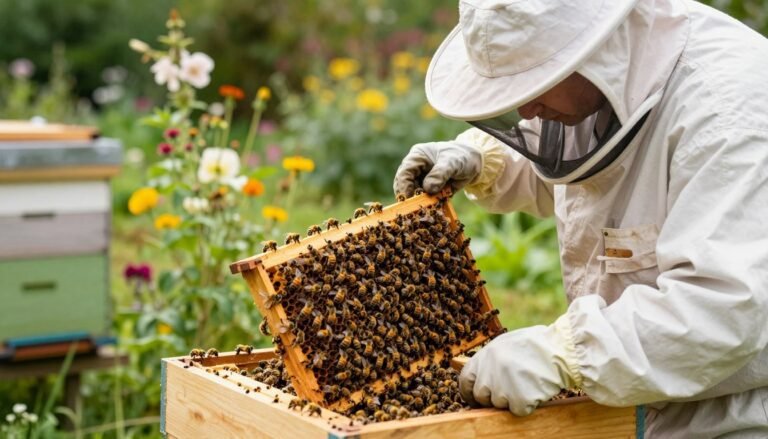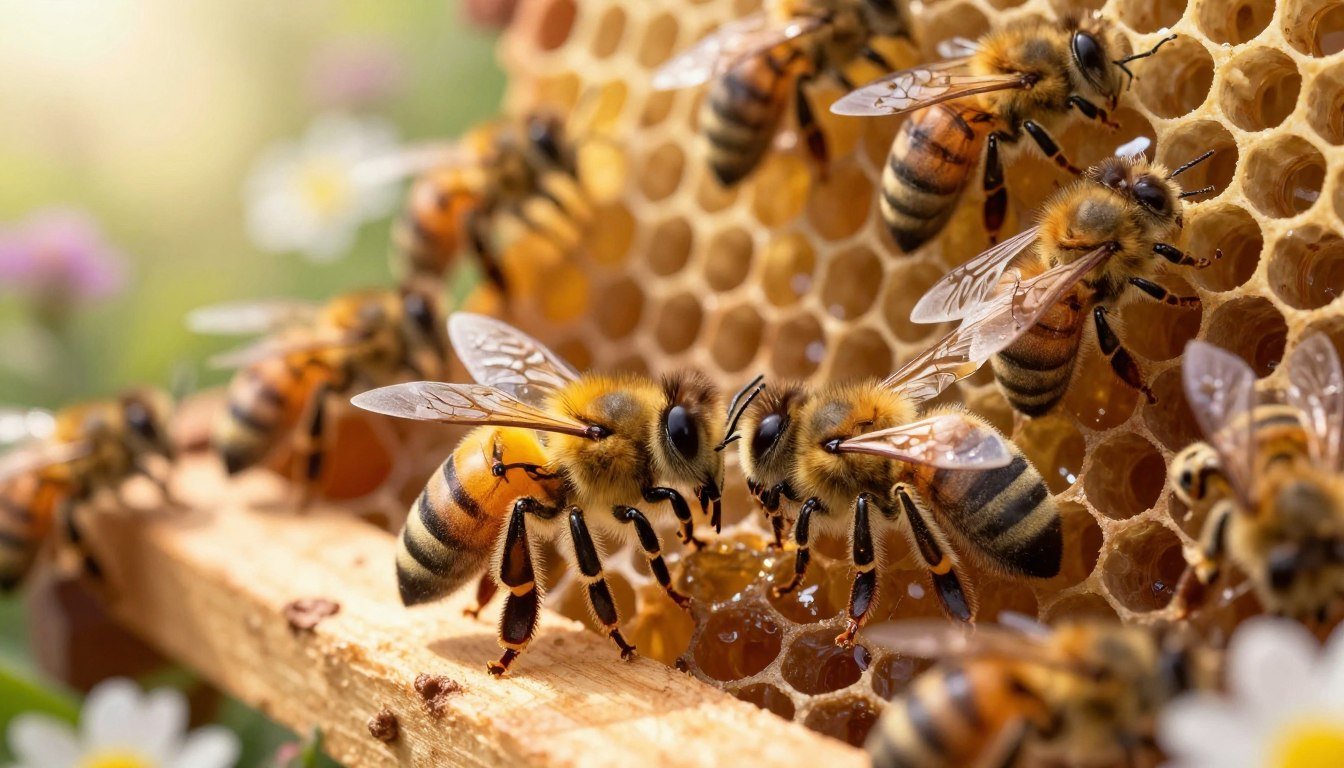
Dual-queen setups offer higher honey production and resilience, but they require careful observation and clear strategies.
Experienced beekeepers, like Bill Hesbach of Connecticut, stress that success depends on understanding colony dynamics and timing.
Foundational research, such as Moeller’s 1976 USDA report, still guides modern practice. Patrol for queen cells and capped brood, balance nurse bees, and use a reliable queen excluder to limit wandering.
Prepare over many days each season to reduce stress, watch for swarm cells, and avoid disrupting natural supersedure unless the colony shows clear signs of failure. For deeper reading on supersedure and seasonal tasks see this supersedure post and practical seasonal beekeeping tasks.
Key Takeaways
- Study colony behavior before adding a second queen; timing and balance matter.
- Monitor queen cells, capped brood, and nurse bees to protect honey production.
- Use a queen excluder and watch for swarm cells to prevent loss of stock.
- Build on proven work, such as Moeller’s report and Hesbach’s practical notes.
- Spring prep and steady maintenance reduce problems and boost yields.
Understanding Honey Bee Social Structure
Honey bee societies operate like integrated teams, with roles tuned to the season and colony needs. This unity gives the colony strength during foraging, brood care, and defense.
The Eusocial Nature of Bees
The honey bee is a classic eusocial species. The queen specializes in reproduction while workers handle brood care, foraging, and nest maintenance. This division keeps the colony efficient and resilient.
Variations Across Species
Not all species follow the same blueprint. Some relatives, like the sweat bee Halictus sexcinctus, show flexible social systems that range from solitary to communal or eusocial forms.
- Workers perform specialized tasks that shift with age and need.
- Queens focus on laying eggs to secure the next generation.
- Complex chemical and behavioral signals help the colony coordinate.
For practical beekeepers, understanding these biological differences clarifies why managing a hive requires attention to queen status and worker balance. For more detailed references and beekeeping resources, consult trusted guides.
Can Two Queens Live in One Hive
Finding more than a single egg-layer in a brood nest sparks a common question among beekeepers.
Short answer: honey bees rarely tolerate a rival and will fight until one dies. When both females appear on comb, the sight usually marks a natural switch rather than stable co-rule.
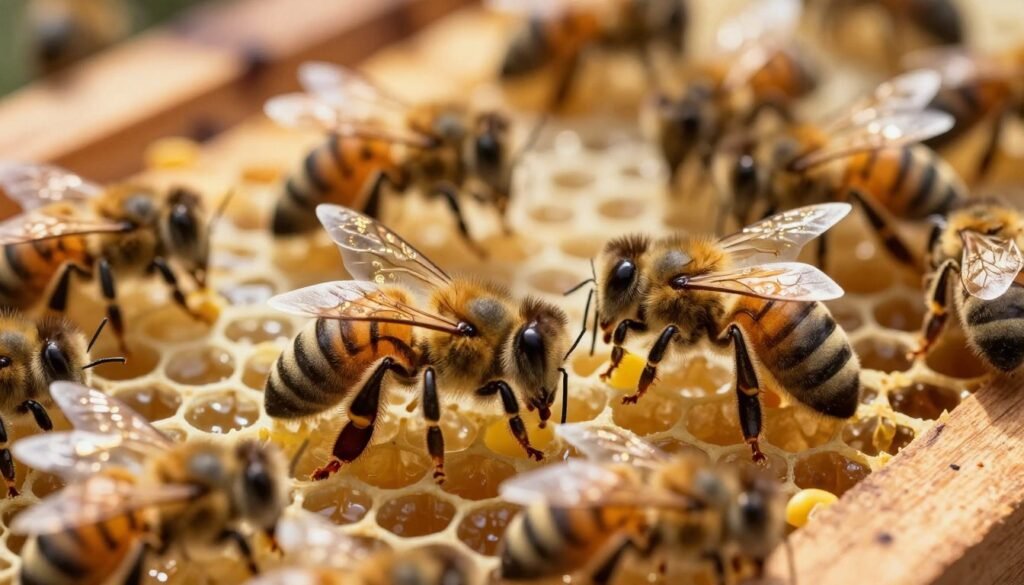
Experienced keepers report that most cases are mother-daughter supersedure. The original queen may still be present while her daughter begins laying. That overlap is brief and often chaotic.
“Finding two queens in a hive is uncommon and often reflects a supersedure event.”
If you deliberately attempt shared control, you must use separation gear. Without barriers, aggression ends the experiment quickly.
For field reports and community discussion, see this multiple queens in the hive post.
- Most encounters end with a single surviving ruler.
- Overlap often signals a replacement, not permanent pairing.
The Biological Reality of Queen Interactions
The queen’s scent is the colony’s chemical headline, shaping daily tasks.
The Role of Queen Mandibular Pheromone
Queen mandibular pheromone is the main signal that holds a colony together. It suppresses worker reproduction and keeps brood care and foraging steady.
Research in the Journal of Insect Behavior (1991) shows that pheromone spread and congestion alter bee actions. When the scent map changes, worker choices shift rapidly.
- The queen mandibular pheromone blocks many workers from producing their own eggs.
- Every honey bee colony depends on that chemical to signal a healthy egg-layer.
- When queens overlap, scent becomes uneven and workers may show confusion.
- Queens are wired to contest rivals; chemical cues rarely stop fights.
- Overall, studies find queen interactions rest on tight chemical and social feedback.
“Pheromonal control is central to social harmony among bees.”
Why Beekeepers Attempt Dual Queen Systems
A deliberate double-queen setup gives managers a fast route to fuller stores and stronger flight teams.
The main goal is higher honey production. By adding a second egg-layer, keepers raise brood output and enlarge the field force before peak nectar. Faster buildup helps colonies match a heavy main flow and capture more forage.
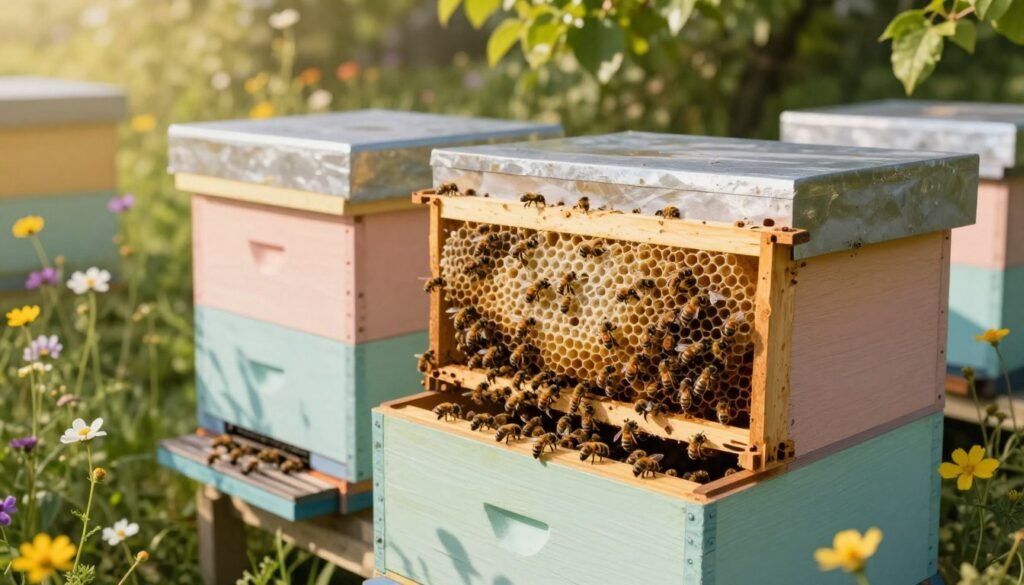
This approach is a practical way to accelerate growth. It splits brood across separate chambers and lets each queen focus on laying. That division boosts egg counts and shortens the time needed to reach peak strength.
- Higher egg counts drive larger foraging teams and bigger harvests.
- Balancing two brood areas requires careful inspection and timing.
- A double queen hive often outperforms a single colony when managed well.
Many seasoned keepers accept the extra labor because the reward is a notable increase in honey at season end. Proper planning and steady oversight make this method effective and repeatable.
Essential Equipment for Horizontal Configurations
Gear choices matter when arranging lateral brood bodies and storage. A snug fit and correct spacing protect brood and help workers orient quickly.
Selecting migratory covers
Pick covers that seat tightly against the top super. Gaps let wind, moisture, and unwanted movement disrupt frames and reduce honey production.
Choose full‑size migratory covers that match your boxes. A proper cover reduces weather damage and preserves internal temperature.
Using shim adjustments
Bill Hesbach recommends a flat queen excluder without a raised rim to remove extra bee space between chambers. That flat excluder must sit level so queens remain separated and safe.
When you use a flat excluder, fit a full‑size shim beneath it. The shim lets the migratory cover sit snugly against the honey super and prevents nurse bees from drifting through tiny gaps.
- Prevent queen contact by using a flat excluder and correct shims.
- Check the size and placement daily for the first few days after a retrofit.
- Optimized equipment reduces work for the beekeeper and boosts seasonal yields.
Setting Up Your Vertical Hive System
Stacking brood boxes and supers into a tall tower changes how the queen and workers move, and it alters temperature gradients inside the hive.
Start with a stable base and plan access points so frames can be inspected without tipping the stack. Bill Hesbach noted that keepers once tilted towers to the ground for safe handling before reassembling them.
Place a queen excluder between brood chambers and honey supers to keep the queen below and protect honey stores. Check that the excluder sits flat and remains secure.
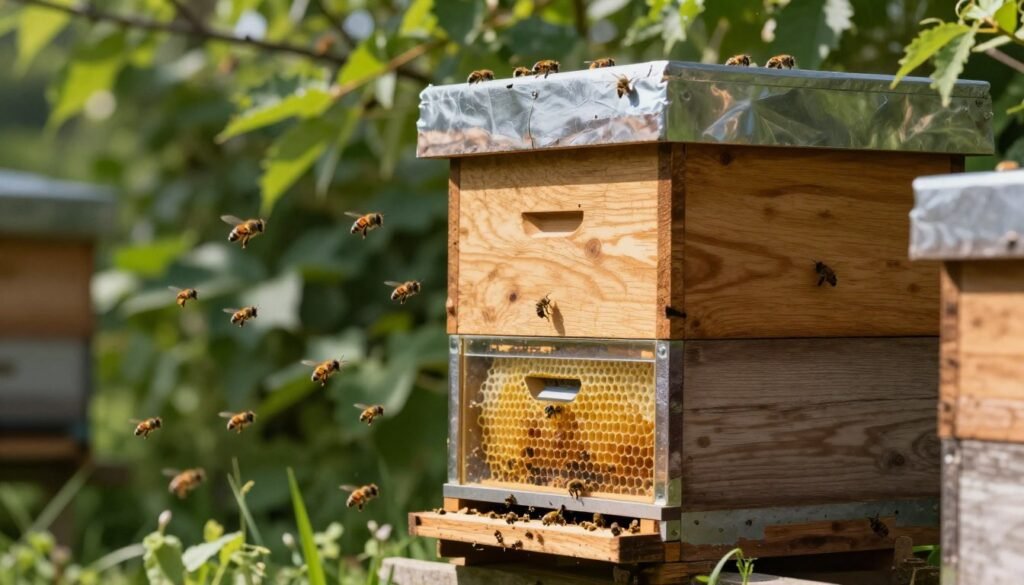
Vertical setups grow heavy quickly and often require two people to lift full boxes. Monitor the colony for several days after each addition to catch crowding or swarm prep early.
Remember that every bee helps control heat and pheromone flow through the stack. Managing queens in this configuration demands careful timing and a clear plan for movement and inspection.
- Stack boxes so weight is balanced and frames stay aligned.
- Inspect across multiple days after changes to spot stress or swarm cells.
- Use the queen excluder to separate brood from honey storage.
Managing Queen Excluders for Colony Safety
A properly seated excluder is the single best defense against accidental queen encounters during seasonal changes.
Use a flat queen excluder whenever possible. A flat unit removes unwanted bee space and stops wandering that leads to fights.
If you must use a wood-framed excluder, add a filler strip under the raised rim. This simple fix closes gaps and keeps the queens separated from each other’s brood area.
Check the queen excluder each inspection. Look for warps, gaps, or slipped frames. Even small shifts let worker movement change and invite conflict.
- Safety first: the excluder confines the queen to brood boxes and protects the colony.
- Eliminate bee space: flat excluders and filler strips prevent cross‑traffic at the edges.
- Inspect often: damaged or shifted excluders reduce honey and raise risk.
“A secure barrier makes management predictable and preserves productivity.”
For practical setup tips, review this guide on queen excluder usage.
Timing Your Setup with the Nectar Flow
Plan your queen strategy around the local bloom calendar to make every nectar surge count. Good timing lets your workforce match peak forage and turns effort into a predictable harvest.
Preparing for the Main Flow
Begin about six weeks before the main nectar flow. That window gives the queen time to raise egg numbers so workers emerge by peak bloom.
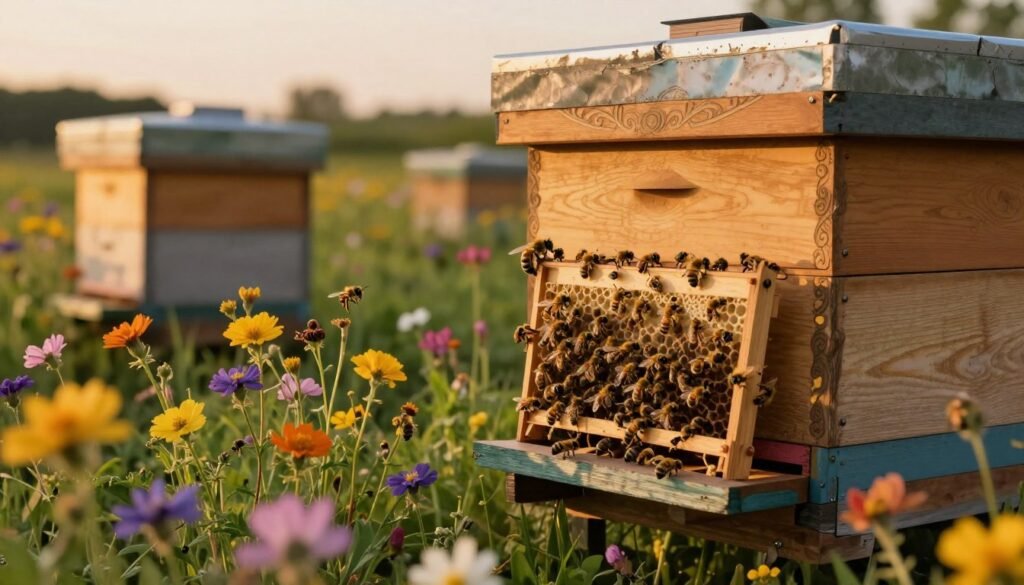
Packages and newly formed colonies need extra buildup, especially when frames are foundation rather than drawn comb. Overwintered hives often reach strength faster, so schedule earlier for package-derived setups.
- Timing is critical: a strong field force must be ready on the key days of bloom.
- Start six weeks early so the queen increases laying and brood turnover lines up with flowers.
- Each bee should focus on foraging during the main flow to maximize honey returns.
- Delays risk missing the nectar surge and reducing seasonal yields.
- Monitor local bloom schedules to sync your hives with the landscape.
Strategies for Introducing a New Mated Queen
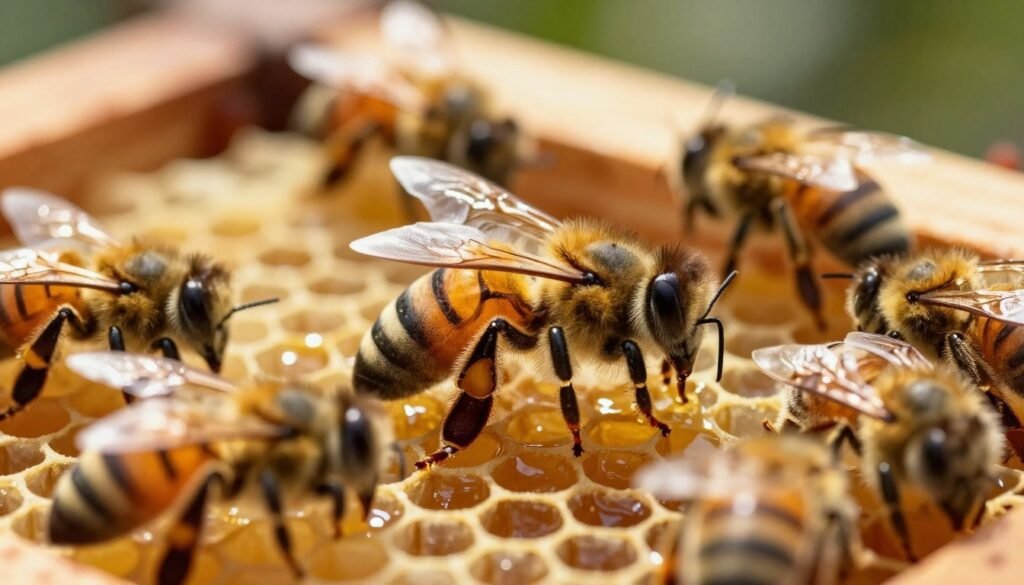
Timing a new mated queen’s arrival to a strong spring buildup makes acceptance far easier. Start with an overwintered colony and a young laying queen or a well-fed early package on drawn comb.
Introduce slowly. Use a screened queen cage and leave her in place for several days so workers can scent her. That staged approach helps the colony accept her without conflict.
Splitting a strong colony is a common way to add a new mated queen. The split gives space for brood and eggs while the new ruler settles. Every bee will usually accept the newcomer if introductions occur over multiple days.
Monitor queen health and brood patterns after release. A productive laying queen keeps colonies stable and preserves honey output through the flow.
- Start with robust stock or well-fed package on drawn comb.
- Use a protective cage; wait several days before full release.
- Watch brood and stores to verify acceptance and laying rate.
For practical setup steps and installation tips, review this beehive installation guide.
Balancing Nurse Bee Populations
Nurse bees form the backbone of brood care and their balance decides colony growth. These workers feed larvae, tend eggs, and regulate brood temperature. A shortage harms development fast.
Monitor both chambers daily for brood coverage and nurse activity. In vertical systems, nurse movement through a queen excluder helps equalize effort between areas. Watch for gaps where brood is uncared for.
Simple checks—count frames with active larvae and note where most nurse bees cluster. If one queen’s brood lacks attention, that side will show cooling and spotty brood patterns within days.
- Keep nurse numbers balanced to support steady egg laying.
- Adjust frames or shift brood to guide nurse distribution.
- Use placement and excluder setup to encourage free movement of workers.
| Issue Observed | Likely Cause | Action |
|---|---|---|
| Spotty brood pattern | Too few nurse bees on that side | Move frames with brood toward the swarm of workers; inspect again after 3–5 days |
| Cold brood nest | Nurse scarcity or poor insulation | Reposition boxes for warmth; equalize worker access through excluder |
| Overcrowded nurse cluster | Uneven distribution of laying between queens | Redistribute frames and consider frame swaps to balance tasks |
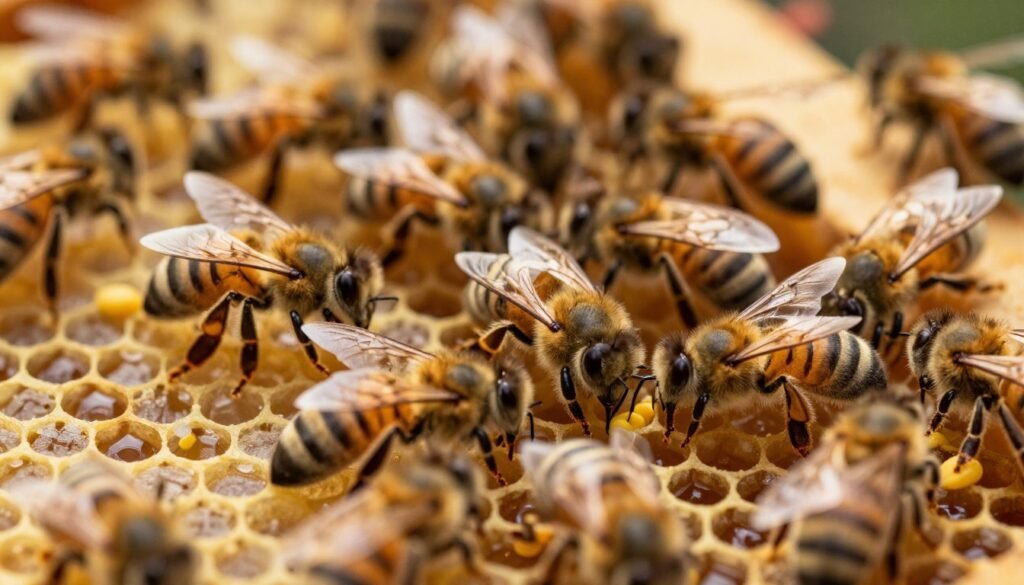
For step-by-step methods on equalizing populations, see equalizing bee colonies for practical guidance.
Monitoring Brood Development and Egg Laying
A steady schedule of inspections helps you spot changes in eggs, larvae, and capped brood early.
Check capped brood regularly to judge if the laying queen keeps a uniform pattern. Large, healthy areas of capped brood mean the next generation of bees is developing properly.
Inspect frames every few days during buildup. Look for a steady spread of eggs and fresh larvae. If brood appears spotty, nurse numbers or feeding may be uneven.
Watch for queen cells. An abundance of queen cells often signals preparation to swarm or to replace the ruler. Addressing that early protects stores and honey production.
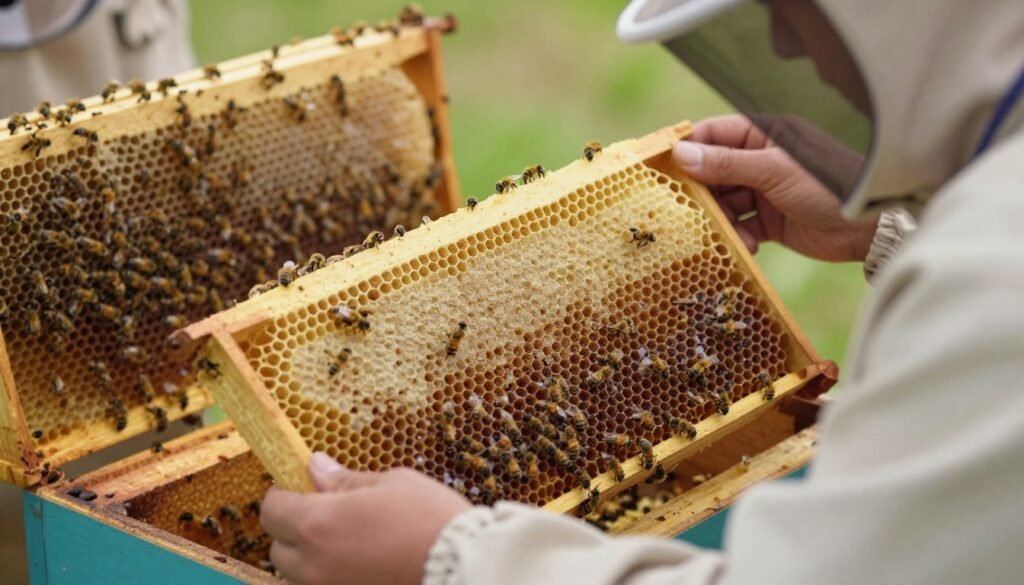
- Monitoring capped brood is the best indicator of a productive laying queen.
- Inspect every few days to confirm uniform egg distribution.
- Large capped areas show a healthy colony and future foraging strength.
- Early action on queen cells prevents seasonal losses.
- Close attention to larvae and the egg-layer preserves honey yields.
For guidance on expanding colonies while preserving brood health, review advice on how to expand an apiary safely.
Preventing Swarm Mentality in Large Colonies
Large colonies often shift mood quickly when brood space tightens and scent signals thin.
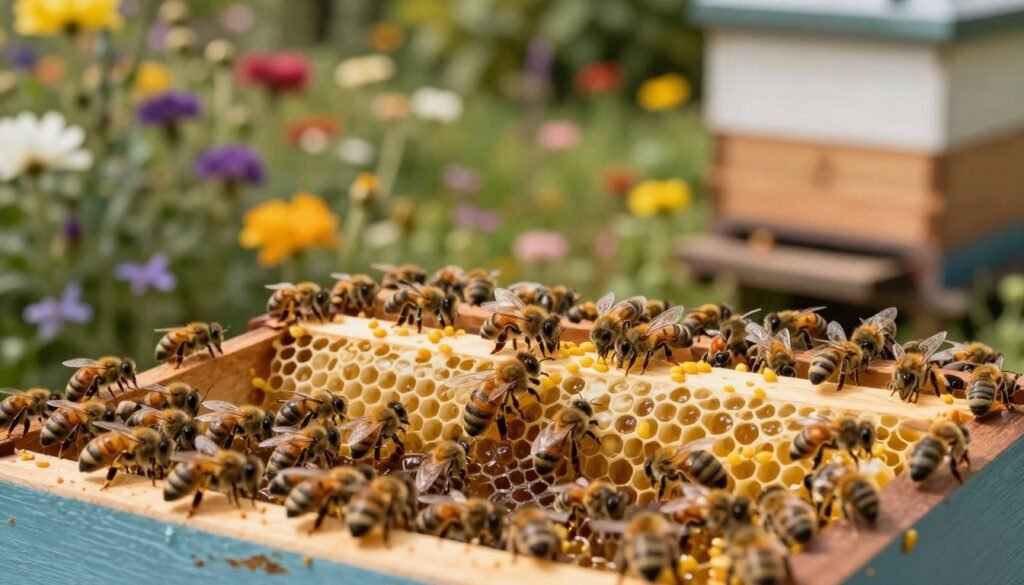
Preventing swarm mentality is a major challenge for big apiaries. Congestion and diluted queen pheromone make workers prepare swarm cells fast.
If you’ve seen many queen cells, act quickly. Michael Bush advises splitting the colony to stop a mass departure.
Every worker plays a role during buildup. Manage frames so the queen has room to lay eggs and workers stay busy collecting nectar and storing honey.
Large colonies need frequent inspections. The move from calm to swarm can happen within a few days, so check brood patterns and stores often.
- Watch for cluster changes and early swarm cells.
- Provide extra drawn comb or add a box to give laying space.
- Split the brood nest promptly when many queen cells appear.
“Split early to preserve stock and harvests.”
Troubleshooting Common Management Issues
Calm observation is the most effective tool when problems appear in a multi-queen setup. Start each inspection with a quick scan for brood pattern, queen activity, and stores. Short notes taken across a few days help reveal trends.
If eggs are sparse or brood looks spotty, check the laying queen first. A failing original queen may explain poor honey production or reduced worker numbers.
It is common to find a lot of queen cells during certain parts of the season. Do not rush to remove them. Michael Bush warns that forcing succession often ends poorly.
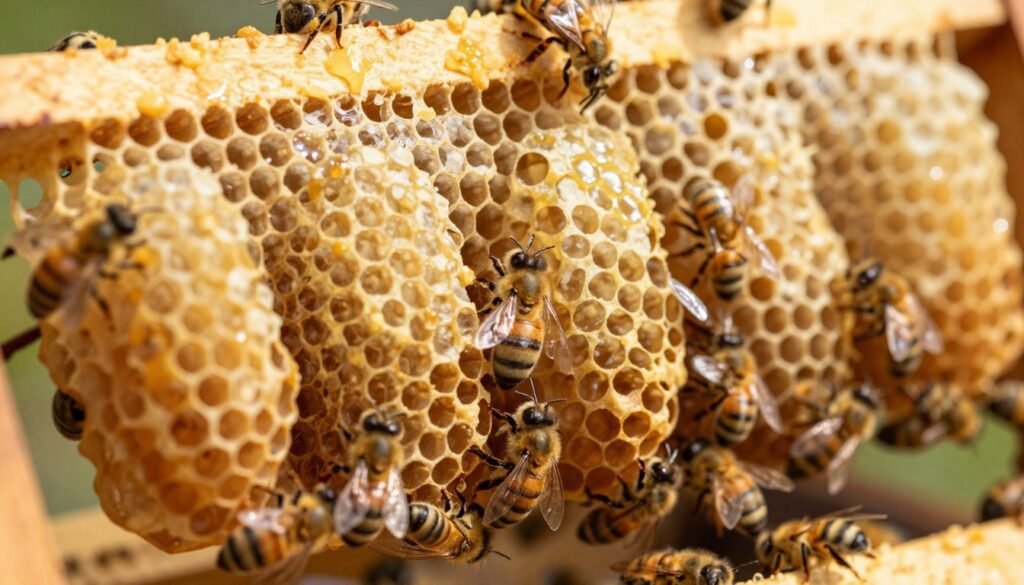
Some controversial methods—such as altering a queen’s mandibles—appear in field reports from China. These are risky and not recommended for most keepers.
- Spend a few hours each week inspecting hives to catch problems early.
- Watch worker distribution across boxes; imbalance hurts brood care.
- If you have a question about why a colony is not producing, verify the original queen’s health before major interventions.
“Even a bit of mismanagement can lead to the loss of a queen.”
Comparing Vertical and Horizontal Methods
Your choice between upright towers and side‑by‑side boxes will shape daily inspections, lifting, and honey retrieval.
Vertical systems use stacked boxes and are efficient for maximizing storage and honey production. They concentrate brood and stores in a narrow column, which helps pheromone flow and seasonal buildup.
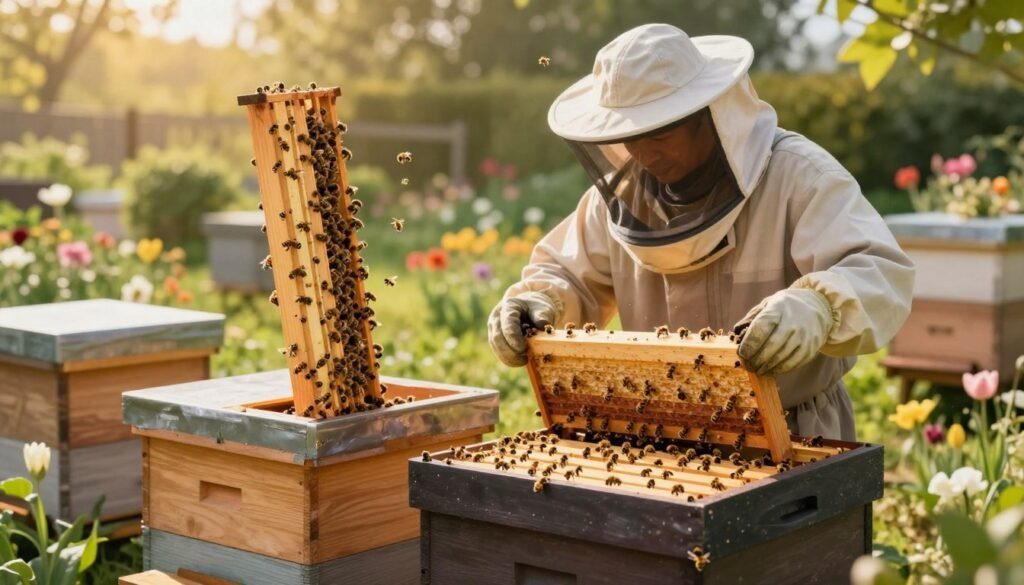
Horizontal setups place two colonies side‑by‑side and let both share supers. This arrangement reduces heavy lifting and simplifies end‑of‑season extraction. For a practical walkthrough, see the horizontal beehive guide.
Each way has tradeoffs. Vertical hives often yield well but demand more physical effort. Horizontal hives make inspections and frame swaps easier, which helps keep eggs and brood steady without frequent heavy lifts.
- Vertical: compact storage and strong honey returns, but heavier handling.
- Horizontal: easier management and shared supers, with simpler harvests.
“Pick the layout that fits your strength and routine; practical handling preserves colony health.”
Risks of Interfering with Natural Succession
Intervening in a colony’s royal change often causes more harm than benefit to both bees and keeper.
Natural succession is an evolved process. It balances genetics, season, and hive needs. Bees replace a laying queen for reasons the keeper may not spot.

Every time you open a box to swap a queen you risk upsetting pheromone maps and worker roles. That disturbance often leads to poor brood care, lost eggs, or weakened foraging.
“Interfering with the royal succession of a hive almost always ends poorly for the beekeeper.”
- The original queen is often replaced by a daughter for precise biological reasons.
- When you question the colony’s choices, remember bees managed succession for millennia.
- Allowing bees to tend their eggs and brood usually preserves strength and honey stores.
If you must act, act gently and use tested procedures. For guards on removing extra cells and safe intervention methods, consider guidance on removing extra queen cells.
Assuming you know better than the bees is a dangerous thing. Respect the process and step in only when clear failure is documented.
Conclusion
Balance, patience, and proper gear make complex colony systems manageable for practical keepers.
Respect the honey bee’s biology and let natural succession guide most decisions. Careful timing and steady inspections protect brood and stores. A planned double‑layer setup with a flat excluder reduces accidental contact between queens.
Managing a two queen system rewards effort with higher honey returns when colonies remain balanced. Track eggs and brood patterns, and act quickly if nurse distribution slips or swarm signals appear.
Remember that one queen is the normal standard. Any deviation demands deliberate steps, correct equipment, and calm oversight to protect stock and preserve harvests.
With patience and clear routines you’ll improve colony health and enjoy sweeter, more reliable honey yields across your apiary—whether you run a single hive or a paired arrangement.
FAQ
Can a hive host more than one laying queen?
Yes, beekeepers sometimes maintain a dual-queen arrangement where two laying queens occupy separate chambers or boxes. This setup requires careful management—separating queens by a solid divider or using a partitioned brood box helps prevent lethal encounters and reduces pheromone confusion among workers.
How does queen mandibular pheromone affect colony behavior?
Queen mandibular pheromone (QMP) signals colony cohesion, suppresses worker ovary development, and guides brood care. When two queens are present, overlapping QMP can alter worker responses, so timing and physical separation are essential to preserve brood patterns and reduce queen stress.
What equipment is essential for a horizontal dual-queen configuration?
For horizontal setups, you’ll need a migratory cover, selector shims or a solid divider, and adequate entrances to prevent drifting. Properly placed apiary hardware maintains distinct queen zones while allowing workers to move and share forage resources safely.
When is the best time to introduce a new mated queen into a multi-queen system?
Introduce a new mated queen during strong nectar flow and when brood rearing is active. This timing ensures plenty of nurse bees to accept the queen, accelerates laying, and reduces rejection risk. Use timed queen cages or excluders to control initial contact.
How do beekeepers balance nurse bee populations between compartments?
Balance by redistributing frames of nurse-rich capped brood and open brood between boxes, equalizing food stores, and monitoring bee traffic. Regular inspections during the first two weeks help you detect imbalances and move frames to even nurse care and brood rearing.
Can queen excluders prevent queens from moving between sections effectively?
Yes, queen excluders restrict queen movement while allowing workers to pass, but they can reduce brood distribution and heat exchange. Use excluders selectively and combine with other barriers or shims to control queen placement without overly stressing the colony.
What signs indicate successful brood development with dual queens?
Look for steady egg patterns, regular capped brood, and healthy larvae across both sections. Consistent honey stores and normal worker behavior—nurse activity on brood frames and forager traffic at entrances—also signal successful dual-queen brood rearing.
How do you prevent a large colony from swarming when using two queens?
Reduce swarm triggers by providing ample space, supering for honey storage during peak flow, requeening troubled areas, and splitting colonies if congestion appears. Maintaining balanced brood distribution and frequent inspections during spring lowers swarm impulse.
What risks come from interfering with natural queen succession?
Interfering with succession can cause queen rivalry, reduced colony fitness, or increased disease transfer. Artificially prolonging dual-queen states without proper separation may trigger aggression or weaken colony cohesiveness, so intervene only with a clear management plan.
Are vertical and horizontal dual-queen methods equally effective?
Both methods have merits. Vertical systems stack queens in separate boxes, often easier for seasonal management. Horizontal systems use adjacent compartments that favor forager sharing. Effectiveness depends on local forage, beekeeper skill, and equipment—choose the approach that matches your apiary goals.
How quickly can a new queen begin laying after introduction?
A successfully mated queen may start laying within 24–48 hours after release, but a full, consistent pattern typically appears within 7–14 days as workers clear old brood and accept her pheromones. Monitor eggs, larvae, and capped brood to confirm steady laying.
What troubleshooting steps help when queens show aggression or poor acceptance?
Isolate queens with cages or shims, re-evaluate pheromone cues by moving brood frames, and reduce direct encounters. If aggression persists, consider requeening with a different stock or reverting to a single-queen setup to protect colony health.
How do migratory covers and shim adjustments support dual-queen setups?
Migratory covers secure colony contents during transport and protect separated zones. Shims adjust airflow and limit bee passage between sections, giving you fine control over worker movement and helping manage temperature and pheromone diffusion in dual-queen colonies.
What monitoring schedule is recommended during nectar flow for dual-queen hives?
Inspect every 7–10 days during main flow to check brood balance, honey storage, queen health, and entrance activity. Frequent but focused checks let you respond quickly to congestion, disease, or queen losses without overhandling the bees.
Can multiple queens increase honey production?
Properly managed multi-queen systems can boost honey yield by increasing brood rearing and forager numbers. Benefits depend on balanced nurse populations, adequate forage, and preventing crowding. Poor management, however, can negate gains through stress or queen loss.