Published November 26, 2025 · Last Updated August 26, 2026
Extracting honey is simple but can get messy. Plan a clean workspace and gather the right gear before you open a hive.
Core tools include an uncapping knife, a fine strainer, food-safe buckets, a capping tray, jars with tight lids, and a measuring jug with a spout. If you lack an extractor, borrow one from a local club or try a crush-and-strain method.
Timing matters. Aim for capped frames during peak nectar flow — often early June and again in September in the U.S. Leave enough stores for winter and for first-year colonies to build strength.
Work indoors when possible to reduce agitation and robbing. A garage or clean basement protects the product and keeps bees calmer while you uncap, spin, strain, and bottle.
For a practical step-by-step guide and extraction tips, see this detailed how-to on extracting frames and managing cappings: extracting honey instructions.
Key Takeaways
- Prepare a tidy indoor workspace and assemble tools before opening the hive.
- Use an uncapping knife, strainer, buckets, and an extractor or alternate method.
- Time your harvest with capped frames and local nectar flow to protect quality.
- Leave enough stores for winter and for young colonies to thrive.
- Handle supers and frames gently and wear proper protection for safety.
Start smart: goals, safety, and scope for a successful honey harvest
Before you lift a frame, set clear goals and match the scale of your plan to your skill level. New beekeepers often feel overwhelmed, but a tidy plan makes the process manageable.
Match your harvest to your operation size and experience
Start with at least two hives when possible. Two hives let you compare strength and shift resources to support a weaker colony. Many beekeepers skip taking product in the first year; comb-building and nectar storage take time.
Personal safety and bee behavior basics before you open the hive
Wear proper protection and use smoke sparingly. Move slowly and read bee body language to reduce agitation. Plan batch work to limit hive openings and keep boxes and supers organized.
- Prioritize colony health over amount removed; conservative limits protect winter stores.
- Choose a method that fits your scale: crush-and-strain for a little, extractor for many frames.
- Document results by hive and recruit help for heavy lifting or busy steps.
| Operation Size | Recommended Method | Safety Notes | Expected First-year Yield |
|---|---|---|---|
| Single hobby hive | Crush-and-strain | Work with helper for lifting | Often none or minimal |
| Two hives | Small extractor or mixed | Stagger openings; conserve brood nest | Small surplus possible |
| Multiple hives (3+) | Commercial extractor | Organize workflow, label frames | Higher, predictable yield |
Timing your honey harvest around nectar flow and capped honey
Aligning your extraction schedule with local nectar flow windows reduces stress on the bees and improves product stability.
Nectar flow windows and seasonal harvests in the U.S.
Most U.S. beekeepers plan pulls in early June and again around September to target spring and fall flows. Some aim for monofloral flows by timing boxes to specific bloom periods. Add supers just before a strong flow so bees have space, but avoid adding them so early that colony focus drops.
How much to leave for winter
In cold regions leave about 60–70 lb per hive; in mild climates 20–30 lb often suffices. Convert needs to frames using average weights: deep ≈6 lb, medium ≈4 lb, shallow ≈3 lb. Weigh frames when accuracy matters.
Readiness checks: capped honey, shake test, and moisture targets
Harvest when frames are roughly 80% wax-capped. Do a gentle shake—if nectar drips, it’s not cured. Use a refractometer to confirm moisture is in the 17–21% range to prevent fermentation. Stage equipment and a sealed bucket to move capped frames quickly and avoid robbing during harvest honey operations.
Gear, workspace, and setup: tools and space that make extracting honey easier
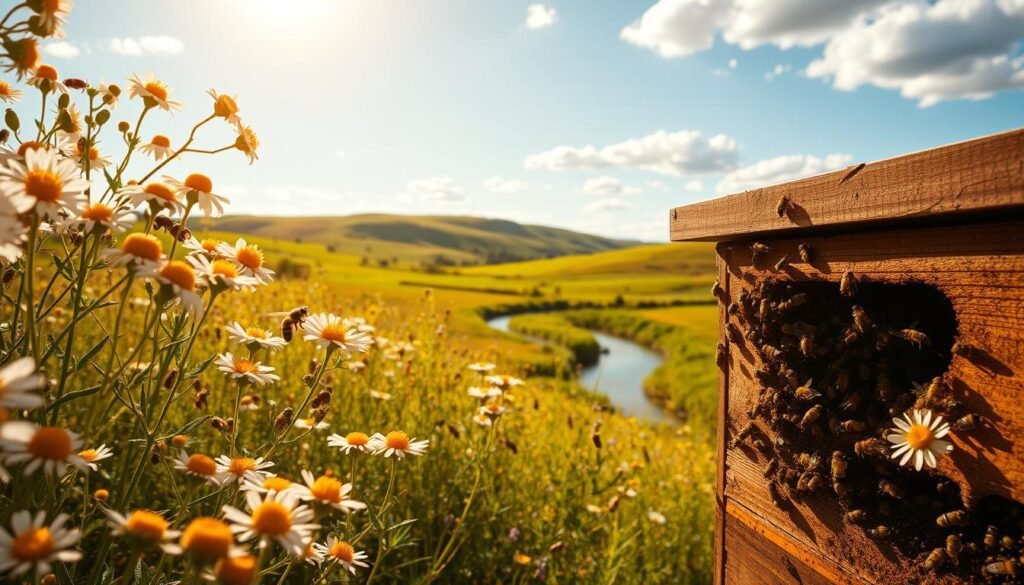
Set up your workspace so the extractor and all tools sit in a clean, logical flow. A simple layout saves time and keeps product quality high.
Core equipment
Assemble an extraction kit before opening any hive. Include an uncapping knife or hot knife, a fine mesh strainer, food-safe buckets, a cappings tray, a measuring jug, and plenty of jars with tight lids.
Choosing a safe extraction space
Work indoors when possible: a garage, clean basement, or large kitchen works well. Place the extractor at the top of the workflow with a strainer over the collection bucket under the spout.
Frame handling and bee removal
Remove frames gently and keep brood frames separate from honey frames. Use smoke sparingly or a bee escape board to clear boxes with minimal stress.
Food-safe workflow and labeling
Sanitize glass and containers in a hot dishwasher cycle. Oven-dry jars on low heat before filling. Label jars and containers with product name, net weight, and producer contact.
- Stage a clear path: box → uncap → spin → strain → jar.
- Keep a spare bucket and backup containers ready.
- Train helpers on each side of the process to avoid bottlenecks.
| Item | Why it matters | Tip |
|---|---|---|
| Extractor | Speeds extraction and preserves comb | Place centrally with bucket below spout |
| Uncapping knife | Efficiently removes cappings | Uncap over a cappings tray to collect wax |
| Fine strainer & bucket | Removes debris and stores filtered product | Have a second bucket on hand |
| Jars & containers | Final packaging and sale | Choose glass for presentation or plastic for weight |
Honey harvesting step-by-step: from hive to jars
Move deliberately from hive to jar, keeping frames organized and bees calm at every step.
Remove frames only after confirming capped honey and leaving winter stores. Clear bees using gentle smoke, a soft brush, or a light shake. Place frames into a covered box so robbing doesn’t start while you work.
Uncap over a cappings tray with a hot knife for clean cuts. A serrated knife dipped in hot water works too. Finish low cells with an uncapping scratcher to expose all cells.
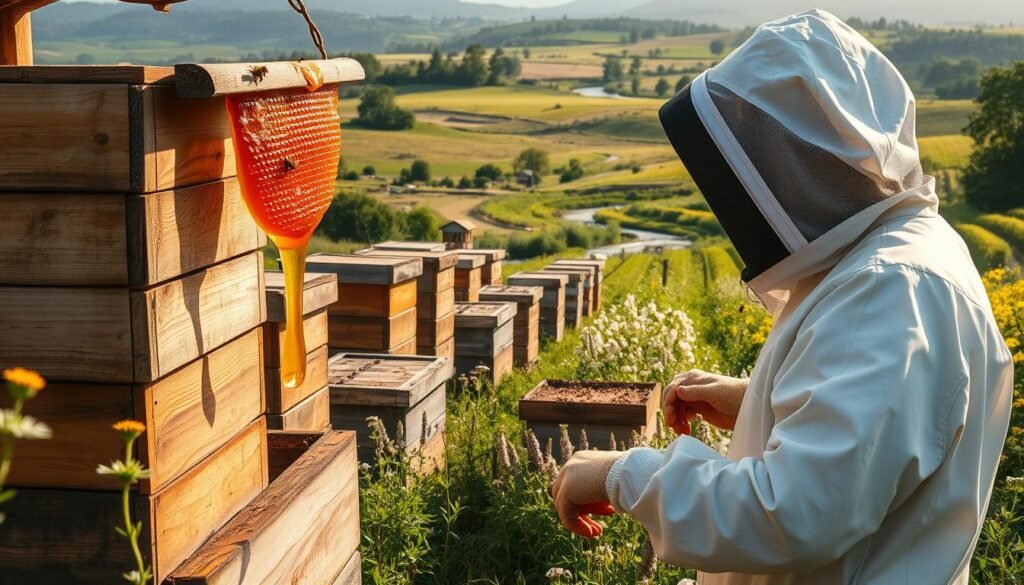
For the extractor method, load uncapped frames vertically and start the drum slow. Increase speed and spin about 10–12 minutes, flipping frames halfway to clear the other side. Route the spout into a fine mesh strainer set on a bottling bucket.
For small runs or foundationless comb, use crush-and-strain: cut comb into a drilled bucket, mash with a masher, and let gravity drain overnight through the strainer into the collection bucket.
- Rest filtered product in a covered bottling bucket to let bubbles rise.
- Sanitize jars and containers in a hot dishwasher cycle and oven-dry glass on low.
- Fill jars with a measuring jug, cap, and label for sale or storage.
| Method | Comb Impact | When to Use |
|---|---|---|
| Extractor | Preserves wax comb | Multiple frames; efficient |
| Crush-and-strain | Comb lost | Small batches; foundationless comb |
| Hybrid | Selective preservation | Mix of both approaches |
After the harvest: wax, storage, cleanup, and season-to-season variation
Once the last frame is emptied, attention turns to wax recovery, safe storage, and a quick cleanup. Good post-extraction work preserves product quality and readies gear for the next flow.
Collecting and processing beeswax cappings without wrecking cookware
Collect cappings into a dedicated tray or bucket while uncapping. Strain residual honey from cappings before melting to save product.
Gently melt cappings in hot water; the wax will float and solidify on top for easy removal. Use older pots—wax sticks and is hard to remove from favorite pans.
Storing product to reduce crystallization and choosing jars vs. plastic
Store honey in sealed jars in a dark, dry cupboard at room temperature. Crystallization is natural; some beekeepers cream product intentionally for a smooth texture.
Choose glass if presentation matters and you need to oven-dry lids. Use food-safe plastic for lighter, break-resistant containers. Always keep containers airtight.
Hot-water cleanup, equipment care, and planning for the next harvest
Clean extractor, buckets, strainers, and knives with hot water and mild detergent; honey dissolves easily. Wipe sticky surfaces with a hot cloth and inspect parts for wear.
Log yields by hive, box, and super so you can compare year-to-year. Return wet supers to the hive briefly when appropriate so bees reclaim residual honey.
- Wax: Store finished wax in clean lidded containers for candles or balms.
- Comb storage: Protect empty frames from wax moths and rodents in pest-resistant storage.
- Equipment: Check seals, bearings, and knives; schedule repairs before the next extraction.
| Task | Action | Benefit |
|---|---|---|
| Process cappings | Melt in hot water; skim wax | Recover wax, reduce waste |
| Store product | Airtight jars or food-safe plastic | Limits crystallization, preserves flavor |
| Clean gear | Hot water & mild detergent | Prevents contamination, extends life |
| Recordkeeping | Log by hive, super, box | Improve decisions for next year |
Conclusion
Conclusion
Close the season with a short checklist that protects the hive and preserves product quality.
Successful honey harvesting balances quality, safety, and the colony’s needs. Most beekeepers target two pulls—early summer and early fall—to separate flavors and manage surplus.
Leave adequate stores and brood space; consult local guidelines for pounds to keep per hive. See regional timing and calendar tips at beekeeping calendar advice.
Keep your workflow simple: clear steps from pulling a super to bottling reduce stress on bees and speed the process. Use readiness checks—capping percent, shake test, and moisture—to time the harvest properly.
Organize gear, clean thoroughly, and build ties with local beekeepers for shared tools and knowledge. For costs, yields, and planning data, review this practical fact sheet: harvest methods and breakeven.
FAQ
What are the first steps to plan a safe and successful honey harvest?
Start by defining your goals and the scale of your operation — backyard hobbyist or small commercial apiary — then assess your experience and equipment needs. Wear appropriate protective gear, review basic bee behavior, and schedule work during calm weather and daylight. Prepare an extraction area away from hive traffic and collect tools like an extractor, uncapping knife, buckets, strainers, and jars before you open boxes.
How do I know when to harvest during the nectar flow season?
Watch local nectar flows — typically spring and sometimes late summer or early fall in many U.S. regions. Look for frames with mostly capped comb and reduced foraging activity when inspecting the hive. Use a shake test and check moisture targets to confirm readiness: properly capped and low-moisture frames are best for removal.
How much should I leave for the bees to survive winter?
Leave enough stores to meet regional winter needs. For many temperate locations, this means retaining several full deep brood boxes or the equivalent in pounds of food — often 40–60 pounds per colony depending on climate. Account for colony size, local forage, and whether you feed sugar syrup or fondant ahead of winter.
What core tools are essential for extracting and bottling at home?
Essential items include a centrifugal extractor or manual tangential extractor, an uncapping knife or scratcher, food-grade buckets, fine strainers or settling tanks, glass jars or approved food-grade containers, and a heat source for the uncapping knife. Also have a bee brush or escape board, smoker, and hive tool for safe frame handling.
Where should I set up extraction to keep bees and neighbors happy?
Choose a sheltered, ventilated area away from hive entrances and foot traffic. A garage, shed, or covered patio works well if you can control bees and spills. Keep screens or tents to divert returning foragers and place a water source away from the workspace so bees won’t be attracted to your buckets.
What’s the safest way to remove frames and clear bees before extraction?
Use smoke sparingly to calm bees, then gently brush or shake bees off frames into the hive or onto a board. An escape board used 24 hours prior can reduce live bees on supers. Work steadily and calmly to avoid crushing bees, and keep frames level to prevent comb breakage and spills.
How do I uncap sealed comb without damaging the wax cappings?
Use a hot uncapping knife or a serrated comb scratcher to remove thin layers of wax cappings. Heat the knife evenly and work along the comb surface to expose cells. Collect cappings for rendering into beeswax; avoid cutting too deep and keep frames supported to prevent sagging or comb collapse.
When should I use an extractor versus crush-and-strain methods?
Use a centrifugal extractor for stored comb on frames or when you want to preserve reusable foundation. Choose crush-and-strain for small batches, foundationless comb, or comb that won’t return to the hive. Extractors are faster and cleaner for larger yields; crush-and-strain is simpler for hobbyists with limited equipment.
What are the proper steps when using a frame extractor?
Load frames symmetrically to balance the drum, spin one side then the other, and let the honey flow into a clean, food-safe bucket. Run the honey through strainers or a settling tank to remove debris and air bubbles. Bottle when clear and at the desired moisture level; label jars with date and source.
How do I handle cappings and render beeswax safely?
Collect cappings in a strainer or bucket, then render using a solar melter, double boiler, or dedicated wax press. Keep cookware dedicated to wax work to avoid contamination. Filter melted wax through cheesecloth, cool in molds, and store in a dry, cool place for crafts or sale.
How should I store finished product to minimize crystallization?
Store jars at stable room temperatures (around 60–70°F) away from direct sunlight. Glass jars with airtight lids slow crystallization. If crystallization occurs, gently warm jars in a water bath below 120°F until crystals dissolve — avoid overheating to preserve flavor and enzymes.
What cleaning and sanitation practices protect equipment between seasons?
Rinse frames and tools with hot water to remove residues, then sanitize with a food-safe sanitizer or brief vinegar rinse. Thoroughly dry woodenware to prevent mold. Lubricate extractor parts as manufacturer recommends and store all gear in a dry, rodent-free location until the next harvest.
How do I label jars and track seasonal variation for future harvests?
Include harvest date, apiary location, and floral source on labels. Note weather patterns, nectar flow timing, and colony strength in a hive log. This tracking helps you predict yields, plan feeding, and adjust harvest timing for better results in following seasons.
Are there legal or food-safety rules I should follow when selling product?
Yes. Follow local and state regulations for food handling, packaging, and labeling. Check requirements from the U.S. Food and Drug Administration and your state’s department of agriculture for scales, weights, and permitted claims. Maintain basic food-safety practices and clean records to comply with inspections.