Queen loss tests even experienced beekeepers. During the busy summer beekeeping season, strong colonies and productive queens define success.
Early action matters: within the first 24–48 hours workers sense missing pheromones and shift into emergency mode. In week one to three the colony may raise a new queen if eggs or tiny larvae are available.
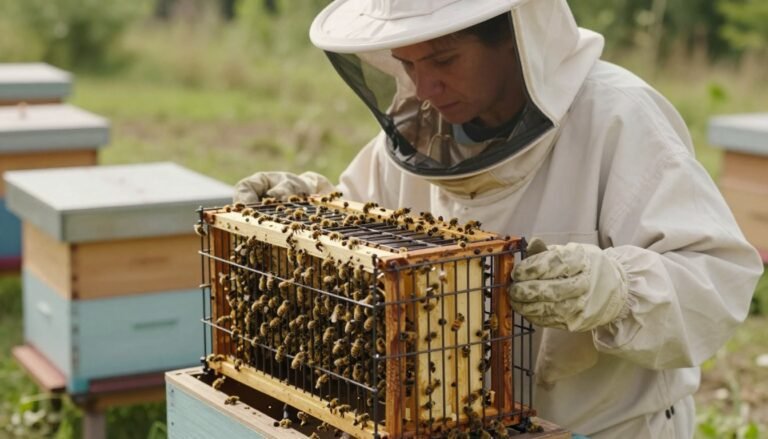
Inspect frames weekly and note brood patterns, drone buildup, or the rise of laying workers. These signs tell a beekeeper whether intervention is urgent or whether the colony still has a chance.
Given civil twilight that runs from about 3:30 am to 11:15 pm during peak season, mating flights and foraging schedules shape recovery time. If the colony fails to produce a viable queen by the third or fourth week, decline often follows.
For details on timelines and steps to rescue or combine colonies, see this informative guide: queenless colony timeline.
Key Takeaways
- Detect queen loss fast and inspect frames every week.
- First 1–3 weeks are the prime window to rear a replacement queen.
- Three to four weeks without a laying queen often signals a point of no return.
- Laying workers and drone buildup warn of terminal decline.
- Combine with a strong colony or introduce a caged queen when needed.
Understanding the Dynamics of a Queenless Colony
A productive queen keeps the colony balanced by laying eggs and spreading scent across every frame. That daily egg output—up to 2,000—replaces aging workers and fuels population growth.
Pheromones are the colony’s main way to sense queen health. Workers detect scent on comb and bees. When scent fades, behavior shifts quickly and roles change.
Inspections carry risks. If a beekeeper is not careful, the queen may be injured or lost during handling of frames or boxes. Always hold frames over the box so a dropped queen lands safely.
Young queens face danger on mating flights. Many fail to return, so mating is a fragile time for any colony hoping to recover.
- Egg-laying power: core to brood renewal and seasonal honey buildup in the first year.
- Pheromone network: maintains order and signals when intervention is needed.
- Practical care: manage boxes and avoid unnecessary queen excluders that hurt honey reserves.
For a focused checklist on locating a missing queen and next steps, see is the queen there?
How Long a Hive Can Stay Queenless Before Terminal Decline
A colony’s trajectory after queen loss hinges on brood stages and worker mortality. The first weeks are decisive. With no new eggs, brood numbers fall as workers age. Smith & Peck (2023) reported an average survival of 86 days in observation hives.
Brood cycles set the clock. If frames show only capped brood, the colony cannot raise a new queen from eggs. That scenario is an emergency and often signals irreversible decline.
The Role of Brood Cycles
Eggs and young larvae are essential for producing replacement queens. Without them, queen cells cannot form. Queen cells may also indicate swarming or attempted replacement, not always successful.
Factors Influencing Colony Longevity
- Worker lifespan — roughly half perish within 25 days once decline is terminal.
- Season — summer swarms raise risk; winter colonies struggle to thermoregulate.
- Frame condition — presence or absence of eggs determines rescue options.
- External threats — predators or migration events raise terminal rates.
| Factor | Effect | Typical Timeframe |
|---|---|---|
| Remaining eggs/larvae | Allows rearing of new queen | 3–21 days |
| Only capped brood | No new queen possible | Emergency now |
| Worker mortality | Population decline | 50% loss ~25 days |
| Observed survival | Avg. until terminal decline | ~86 days (Smith & Peck) |
Deciding to intervene is urgent. For guidance on terminal decline indicators and options, review this analysis at terminal decline or basic rescue steps at beekeeping basics.
Identifying the Early Warning Signs of Queen Loss
Early inspections focus on finding eggs on frames; their absence is the clearest early warning.
Open brood shows the queen was present within the last few days. If open larvae are visible but no fresh eggs appear, the colony has limited time to produce a replacement.
Only capped brood is more serious. That pattern means no new eggs exist and immediate intervention is required to avoid rapid decline.
“Always check frames first. Eggs are the simplest, fastest cue that the queen has been active recently.”
- Look for eggs on at least some frames each weekly inspection.
- Note swarm cells or queen cells; they may signal replacement or swarm preparation.
- If the queen failed to return from mating, signs of decline appear within days.
| Sign | What it means | Timeframe |
|---|---|---|
| Fresh eggs | Queen present recently | 0–3 days |
| Open brood without eggs | Queen absent; limited window to rear new queen | 3–14 days |
| Only capped brood | No eggs; emergency intervention needed | Immediate |
For practical field checks, use this guide to recognize a queenless hive and review signs that a colony is preparing to swarm.
The Biological Impact of Laying Workers
Laying workers signal a deep biological shift that usually appears about 32 days after queen loss.
When brood pheromones vanish, worker ovaries activate. That change leads to many worker-laid eggs and a rise in drone production. This is a sign the colony has been without a laying queen for several weeks.
Worker-laid eggs often appear in multiples per cell because workers cannot reach the cell bottom. You will also see bullet-shaped drone brood in worker cells.
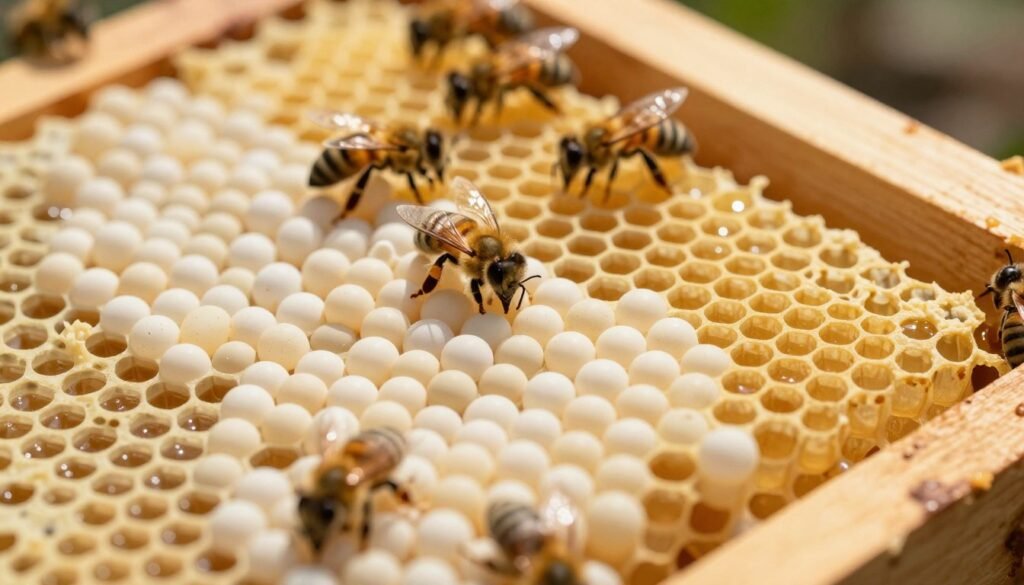
Detecting Unfertilized Drone Brood
Drone brood may take up to 12.5% of comb area in troubled colonies. This trend makes introducing a new queen difficult. Smith & Peck (2023) found laying workers developed in all observed queenless colonies.
“The presence of multiple eggs per cell and scattered drone brood are classic indicators of terminal decline.”
| Sign | What it shows | Typical timeframe |
|---|---|---|
| Multiple eggs per cell | Worker laying | ~32 days |
| Bullet-shaped drone brood | Unfertilized eggs developing into drones | Weeks after queen loss |
| High comb drone density | Colony shifting reproductive focus | Up to 12.5% comb area |
Recognizing these signs is vital for practical beekeeping. For targeted frame checks and to map brood trends, see brood pattern assessment.
Assessing the Window of Opportunity for Rescue
Successful rescue depends on locating fertilized eggs or very young larvae. Workers must feed selected larvae royal jelly past day three to trigger queen development. Raising a new queen from an egg takes about 15 days, then additional days for mating flights.
The rescue window is narrow: if open brood is present and larvae are under three days old, the colony may rear a viable new queen naturally. If no eggs or only capped brood exist, natural replacement is unlikely.
Smith & Peck (2023) noted colonies sometimes hold on for many days, but practical rescue becomes difficult after three weeks without fresh eggs. A beekeeper looking to save the colony should inspect frames for open brood first.
Introducing a mated queen is often the most reliable option. A mated queen can restore the colony to queenright status within a few days and halt laying-worker trends.
“Act quickly: the presence of tiny larvae is the single best indicator that natural requeening still has a chance.”
For step-by-step salvage techniques and requeening options, review this practical guide on salvaging a failed queen.
Proven Methods for Requeening Your Hive
A prompt, well-planned requeening gives workers a clear pheromone signal and stabilizes the colony. Acting before laying workers dominate is critical. A mated queen restores steady egg laying and reverses decline within days.
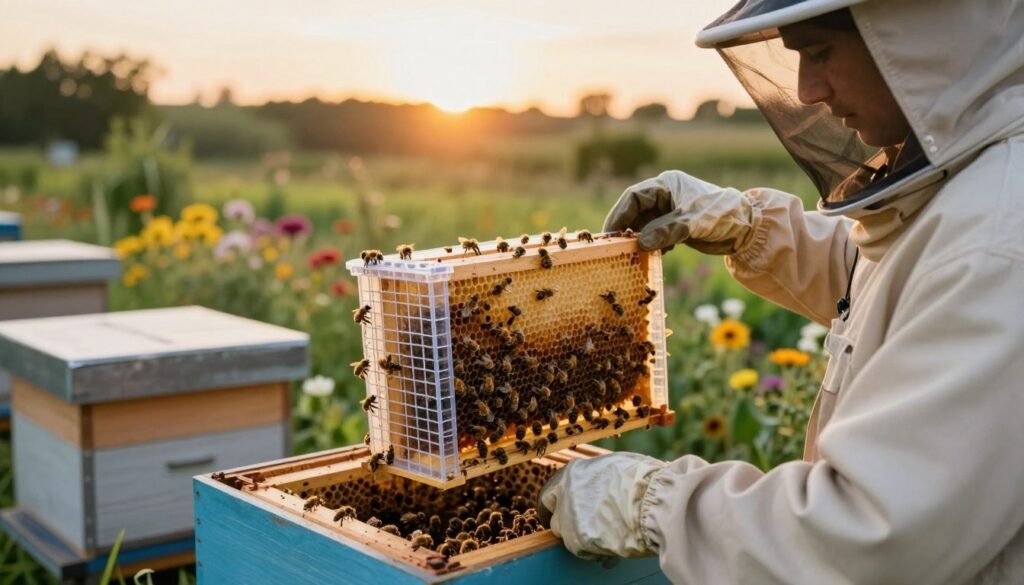
Introducing a Mated Queen
Use a caged, mated queen with a candy plug to give workers time to accept her scent. The candy plug functions as a simple timer, delaying release while attendants inspect and feed her.
Using Queen Cages for Success
If workers attack the cage, remove the queen for 24–48 hours and try again. Reintroducing after a brief pause often reduces aggression and improves acceptance rates.
For product choices and tips on cage types, see this guide to best queen cages.
Monitoring Worker Reception
Watch worker behavior at the cage. Friendly clustering means likely acceptance. Aggression signals rejection and a need for reassessment.
“When introduced correctly, a mated queen halts laying-worker trends and returns the colony to regular brood cycles within a week.”
- Place the caged queen between frames near brood temperature.
- Check frames after three to five days for release and initial egg laying.
- If acceptance fails, remove and regroup or consider combining with a strong colony.
| Method | Benefit | Typical result |
|---|---|---|
| Caged mated queen with candy plug | Gradual acceptance, lower rejection | New egg laying in ~7 days |
| Immediate release (rare) | Fast restoration if accepted | High risk of attack, variable |
| Combine with strong colony | Boosts population and stores | Colony recovery over weeks |
| Retry introduction after removal | Reduces worker aggression | Improved acceptance on second attempt |
For step-by-step requeening instructions and timing, consult this requeening resource: requeening a bee hive.
Managing Mite Risks in Declining Colonies
When a colony weakens, mites may persist and spread to stronger neighbors during the active season.
Declining colonies often act as reservoirs for Varroa. Mites survive on remaining bees and on comb, so nearby colonies face increased problems if infection spreads.
Drone brood attracts phoretic mites. Even if mite replication slows without steady brood, the risk remains because mites ride on adults and move during robbing or drifting.
Smith & Peck (2023) observed mites persisting after the last bees perished. That finding makes prompt action vital in fall and winter when losses influence next season.
- Inspect frames and boxes for drone brood and unusual comb activity.
- Monitor mite loads on remaining workers and on incoming robbers.
- Isolate or remove collapsing colonies to limit spread.
“Treat declining colonies as active biosecurity risks; containment protects your apiary.”
For a practical schedule on checks and thresholds, use the Varroa monitoring calendar to guide treatment timing and protect honey production.
Conclusion
Early detection of missing eggs or changes to brood is the single best defense against collapse. Act fast in the first week to protect workers and give the colony time to recover. A clear plan for inspections and requeening often makes the difference.
Decisions matter: choose between letting bees raise a new queen or introducing a mated one. Monitor frames for eggs and queen cells, watch for drone buildup, and be ready to act within days to avoid laying-worker trends.
For practical steps to rebuild population and support winter readiness, review tips to boost colony population naturally. Keep notes each year on queen age and brood quality to reduce repeat problems.
Thank you for following this guide. Protecting queens, brood, and stores now gives your hive the best chance to produce honey and thrive through winter.
FAQ
What determines how long a colony without a queen will survive?
Several key factors affect survival time: presence of open brood, worker age distribution, season, available stores of honey and pollen, and parasite load such as Varroa mites. If a colony still has plenty of open brood, nurse bees and food, it can last several weeks while rearing a replacement. In late season or with little brood, decline can be rapid because the colony cannot produce new workers or maintain temperature and forage.
How does the brood cycle influence a queenless colony’s fate?
Brood stages set a biological clock. Worker eggs take about 21 days to develop, so if ample open brood exists, workers will emerge for a few weeks and keep the colony functional. Once existing brood finishes and no new fertilized eggs are available, population falls and the colony becomes vulnerable to cold, disease and mites.
What early signs indicate a colony has lost its queen?
Look for reduced egg-laying, scattered or absent eggs, erratic brood patterns, and workers building emergency queen cells. Foragers may behave normally at first, but within days nurse activity shifts toward brood capping and queen cell construction. A sudden drop in population or excess drone brood also signals trouble.
How do laying workers change the colony’s biology?
Without a queen, some workers develop active ovaries and lay unfertilized eggs that produce only drones. This harms colony cohesion because drones consume resources and cannot sustain the workforce. Laying workers also reduce acceptance of new queens and complicate requeening efforts.
How can I detect unfertilized drone brood from laying workers?
Drone brood from laying workers appears in multiple cells per cell row, with irregular spacing and cappings that sit higher than worker cells. You’ll find larvae at different stages in adjacent cells and more drone-shaped brood in worker-sized cells. A pattern of patchy, inconsistent brood strongly suggests laying workers.
What is the realistic window for rescuing a queenless colony?
The rescue window varies by season and available brood. In spring and summer, you often have two to three weeks to introduce a mated queen before population decline becomes irreversible. In fall and winter the window is much shorter. Acting quickly improves success rates.
What methods reliably restore a missing queen?
Proven approaches include introducing a verified mated queen in a queen cage, combining the queenless colony with a strong queenright colony using newspaper method, or allowing workers to raise a new queen from young larvae if available. Choice depends on timing, resources and colony temperament.
How should a beekeeper introduce a mated queen to maximize acceptance?
Use a screened or corked queen cage with candy plug to allow gradual release over several days. Place the cage between frames in the brood nest and avoid opening the hive for at least 48 hours. Ensure the colony is calm, has sufficient food, and that no laying workers dominate the brood nest before introduction.
What is the role of queen cages in successful requeening?
Queen cages protect the new queen while workers inspect her pheromones and gradually accept her. The delay reduces immediate aggression and gives the queen time to acclimate. Proper placement in the brood cluster and a slow release are critical for acceptance.
How can I monitor worker reception of a new queen?
Observe worker behavior around the cage: gentle grooming and reduced aggression are positive signs. After release, check for steady egg-laying within a week and a resumed regular brood pattern within two to three weeks. Continued fighting, balling or missing queen indicates rejection.
How do mite infestations affect a declining colony?
Varroa mites thrive in weakened colonies. High mite loads accelerate decline by spreading viruses, reducing bee longevity, and impairing brood development. A queenless colony cannot maintain hygienic behaviors, so mite control becomes more urgent during rescue or consolidation efforts.
What immediate steps should be taken if a winter colony loses its queen?
In cold months, options are limited. If brood and stores are sufficient, consider uniting with a strong, queenright colony using the newspaper method. Introducing a nuc with a young queen is another option if weather allows. Monitor stores and provide supplemental feeding if needed.
When is it too late to save a queenless colony?
If the colony has extensive laying worker activity, no remaining young larvae and a collapsing population, success becomes unlikely. At that stage, combining with a healthy colony or requeening a nuc and reallocating frames is often the most practical choice to preserve resources.
What common mistakes should be avoided during requeening?
Avoid rushing a live queen into a colony with laying workers, introducing a poorly mated queen, or neglecting mite treatment prior to requeening. Also, do not place the queen directly in a high-traffic entrance or open the hive repeatedly during the acceptance period.