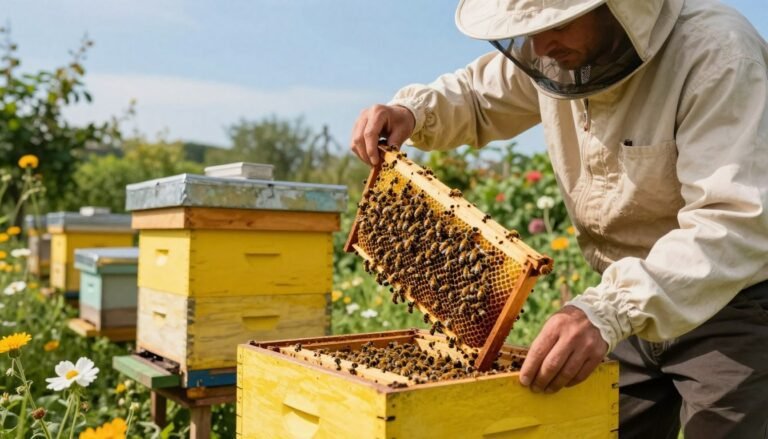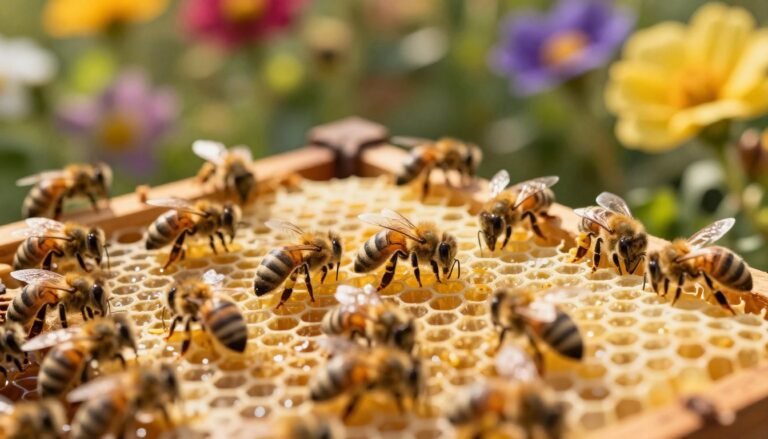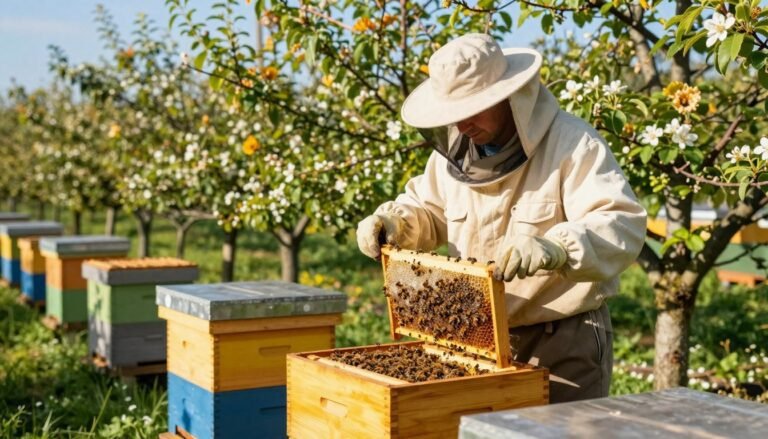
Beekeepers often see some colonies grow while others shrink. Scott Souders notes this imbalance often stems from worker bees entering the wrong hive after flights. This guide explains simple steps that keep each hive healthy and stable.
Every bee in your apiary affects the whole operation. By learning basic yard layout and hive handling, you limit accidental movement between colonies and protect your stock. For practical relocation and splitting strategies, see the splitting and nuc handling guide. For layout tips that cut misrouting at the landing zone, consult this small-scale apiary plan.
Key Takeaways
- Population balance matters: misdirected bees can weaken some hives.
- Yard layout and stand spacing help prevent bee mix-ups.
- Move or shield a hive briefly after relocation to avoid returns to the wrong box.
- Consistent entrance orientation and clear flight paths reduce errors.
- Simple management keeps each colony productive and secure.
Understanding the Mechanics of Bee Drifting
A simple orientation error can send a forager into the wrong hive and change colony populations fast. That slip of navigation is what we call drifting, and it differs from robbing in intent and effect.
The Difference Between Drifting and Robbing
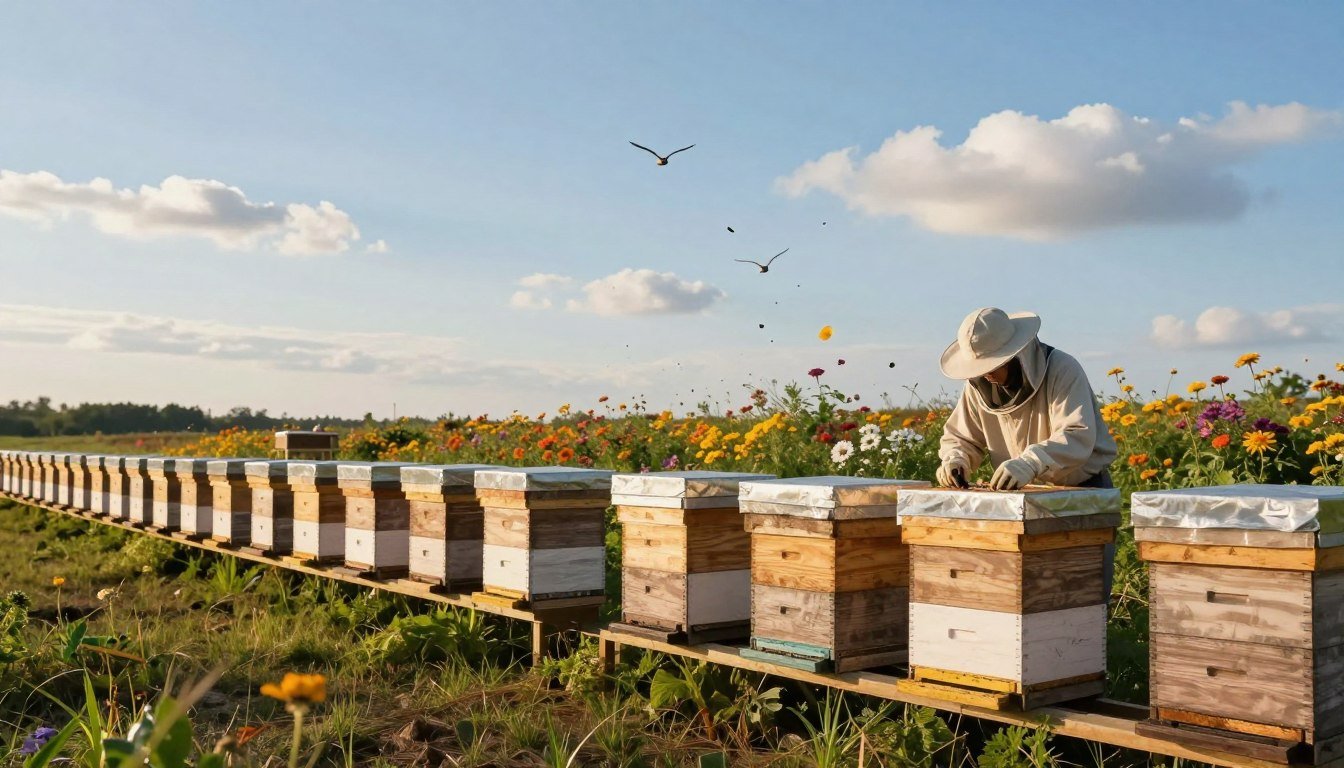
Drifting is accidental: a foraging bee or young worker finds another entrance and enters by mistake. Robbing is deliberate — bees invade another box to steal honey. Studies show that foragers in long, visually identical lines are three times more likely to drift than those in circular layouts.
Research suggests up to 40% of some foragers may enter neighboring colonies at any time. Drones drift even more and often gain acceptance. A drifting bee carrying nectar can spread diseases or varroa, and queens returning from mating flights risk fatal encounters if they enter a hive that already has a queen.
Environmental Factors Influencing Navigation
- Crosswinds push foragers off their line and disrupt orientation flights.
- Identical boxes placed close together give few landmarks for bees to find home.
- Young bees are vulnerable during early flights before landmarks are memorized.
For practical tips on layout and management, see a short guide on reducing drift and common mistakes new keepers make at Beginner Mistakes.
Why You Need to Reduce Drifting in New Nuc Yards
A single misoriented forager can start a chain that weakens an entire apiary. When bees wander between hives, some boxes swell while others thin out. That imbalance cuts overall productivity and raises risk across all colonies.
Beekeepers must act because wandering workers can carry serious disease. Pathogens like American Foulbrood move easily when bees enter the wrong box, and a local problem can become an apiary-wide crisis.
Loss of workers harms brood care and temperature control. A colony that loses steady numbers struggles to rear young and gather honey during peak flights. Overloaded hives may then swarm, spreading drones and genetic material across apiaries.
Key impacts:
- Uneven population growth and lower foraging returns.
- Higher chance of disease transfer between colonies.
- Increased swarming risk for overpopulated hives.
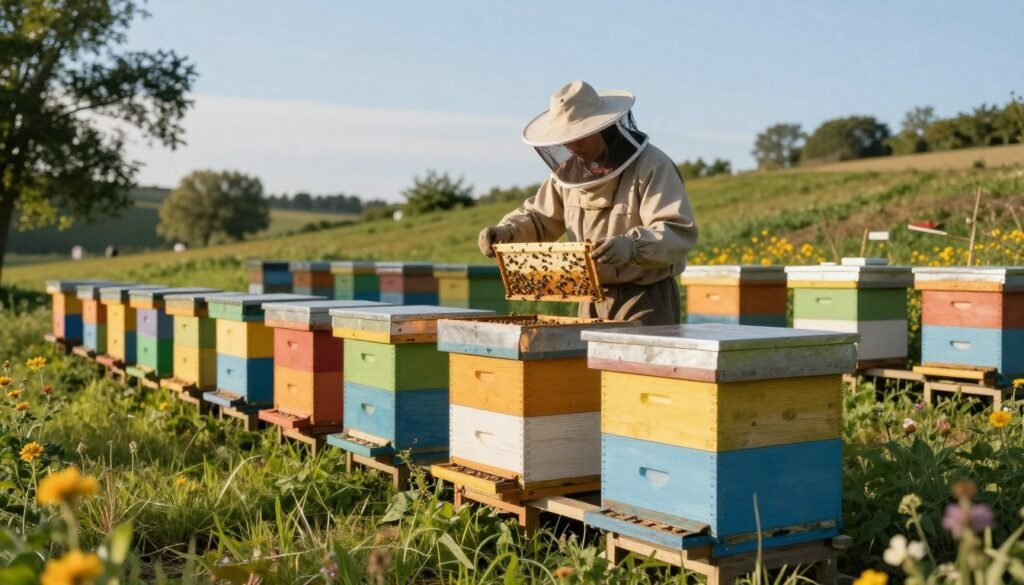
For guidance on relocation and isolation, review the note about moving a newly formed group to a separate apiary. Also consider practices like separate tools for ill and healthy stock described at separate tools for sick colonies.
Proven Strategies to Reduce Drifting in New Nuc Yards
A tidy arrangement and clear visual cues help bees locate their own hive on busy flights.
Optimizing Hive Arrangement and Spacing
Stagger stands and avoid long straight lines. Arrange hives in arcs or clusters so foraging bees learn distinct routes. Research shows spacing colonies about 100 meters apart cuts varroa transfer compared with close together placements.
Using Visual Landmarks and Color Coding
Paint boxes different colors and add simple symbols at the hive entrance. Natural markers like an upright log or a shrub give fast orientation.
“Scott Souders stopped wandering bees in a row of five hives by placing an upright log as a landmark.”
Implementing Entrance Reducers
Entrance reducers limit traffic and make it harder for a drifting bee to slip into the wrong box. They also help manage flow during mating flights and heavy foraging.
- Staggered rows create better navigation markers.
- Different facing directions help foragers find home.
- Use small openings during high activity periods.
| Strategy | Benefit | Notes |
|---|---|---|
| Spacing (≈100 m) | Lower varroa spread | Effective in larger apiaries |
| Visual landmarks | Fewer mistaken entries | Use logs, shrubs, painted marks |
| Entrance reducers | Controlled traffic | Useful during mating and high flights |
For practical setup and colony care, see a short guide on resource hives and nucs and tips on boosting population at boosting colony population naturally.
Corrective Measures for Existing Apiary Imbalances
Moving a strong hive beside a weak one during peak flights helps redirect returning foragers. This simple swap can shift field workers back into a depleted box and restore resources fast.
Plan the swap for mid-day when most bees are out. This raises the chance that foragers will return to the new location and bolster the weaker colony.
Swapping Hive Positions
Share frames of brood and nurse bees from the strong hive to the weak hive to boost population and resources. A productive queen will aid recovery once orientation is reset.
- Move stands during high activity hours for best results.
- Monitor colonies closely for signs of American Foulbrood; early detection protects the apiary.
- If one colony keeps losing workers, relocate it to a different area to reset orientation.
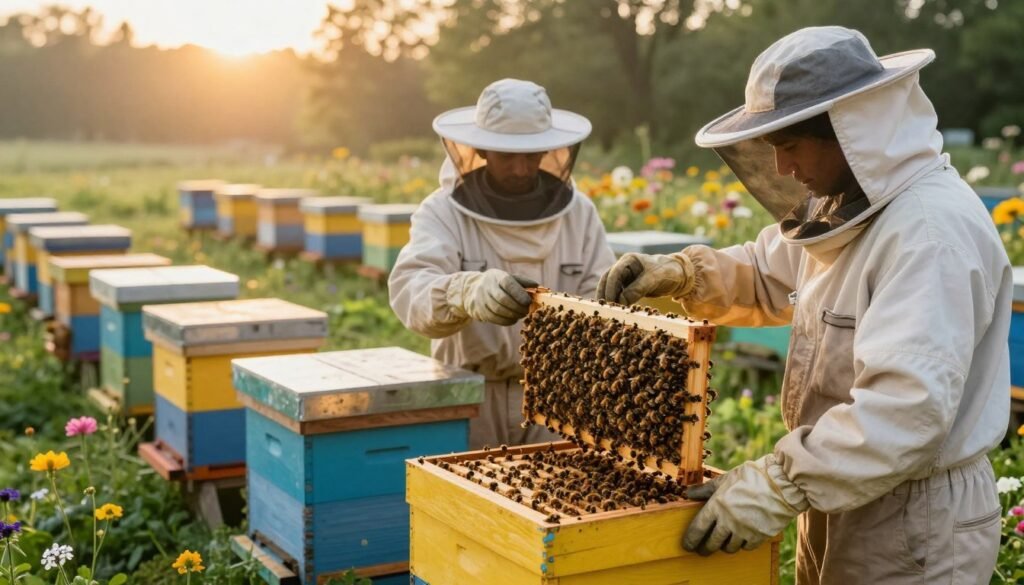
| Action | Purpose | When to Use |
|---|---|---|
| Swap hive positions | Redirect foragers | Peak foraging hours |
| Share frames | Balance population, transfer resources | When weak colony lacks brood |
| Move isolated colony | Reset orientation, stop ongoing losses | Persistent worker loss |
Managing wandering workers is core biosecurity. For seasonal cues on colony health and winter prep, see signs your bees are preparing for.
Final Thoughts on Maintaining a Healthy Apiary
Clear landmarks and consistent entrances make navigation simple for foragers returning from flights. Watch each hive entrance during visits. Small changes in color, spacing, or a landing marker give bees reliable cues.
Beekeepers should check colonies often and note traffic patterns. Catch signs of drifting early so you can protect honey stores and brood. Keeping a record helps spot trends before a problem grows.
Remember the role of queen and drones in genetic health. Thoughtful layout and steady monitoring are the best way to keep bees productive and hives balanced.
For practical guides, read a brief on reducing drift, signs of preparing to swarm, and general beekeeping basics.
FAQ
What causes worker bees to wander between colonies in a new nuc yard?
Young foragers and orientation flights are the main culprits. When hives sit close together on long, straight rows, bees use visual cues and the first landmarks they see. Similar entrances, identical hive paint, and strong forage scents make navigation harder. Weather, wind, and scarce resources also push individuals to explore nearby colonies.
How can hive placement lower the chance of workers entering the wrong home?
Staggering hives and increasing space breaks visual lines and reduces cross-traffic. Placing boxes at different angles and avoiding long straight rows disrupts straight-line navigation. Even modest gaps between stands let bees rely more on their own landmarks rather than nearby entrances.
Are visual landmarks and color coding effective for orientation?
Yes. Bright, contrasting colors and unique patterns on hive fronts help foragers and orientation bees recognize their colony quickly. Add distinctive landmarks near each entrance—colored flags, painted boards, or numbered tags—to strengthen homing cues during flights and reduce mix-ups.
Will entrance reducers help smaller colonies and lower intrusions?
Entrance reducers narrow access, making guards more effective and easing thermal control. Smaller openings limit the number of simultaneous visitors and give resident workers a better chance to identify outsiders. Use reducers during early spring and when populations are weak.
What adjustment works best when one colony loses population because of drifting?
Swap hive positions carefully: move the weaker hive a short distance and rotate stronger colonies away. This confuses returning drifted bees enough that they often reorient to the correct site. Avoid large, abrupt relocations that trigger mass reorientation or queen loss.
How do orientation flights influence colony fidelity in new yards?
Orientation flights teach young bees the landmark layout around their home. If these flights occur where many similar hives sit close together, bees memorize a confusing scene and are more likely to select wrong entrances. Providing clear, unique markers during this period improves long-term fidelity.
Can drifting spread pests or disease across an apiary?
Yes. Drifting transports mites, viruses, and pathogens between colonies. When workers enter foreign hives, they can carry varroa loads, Nosema spores, or contaminated food. Reducing misorientation and monitoring for disease lowers cross-colony transmission and protects overall apiary health.
Is hive color choice important for preventing mix-ups with nearby apiaries?
Distinctive color schemes help bees distinguish their own site from other yards. Use bold, contrasting paints and maintain consistent patterns for each colony rather than uniform colors across all hives. This reduces loss of foragers to neighboring apiaries and helps maintain local populations.
What role does regular inspection and management play in limiting wandering workers?
Frequent inspections let beekeepers detect drifting early by identifying foreign pollen, mixed brood patterns, or uneven population sizes. Corrective steps—like repositioning boxes, changing entrance features, or managing queen strength—restore balance before problems escalate.
How should a beekeeper design a new nuc yard for best navigation and low drift?
Plan for varied spacing, non-linear layouts, and unique visual markers at each entrance. Avoid identical hive boxes in tight rows. Install entrance reducers initially, encourage orientation flights near their hive, and stagger inspections to minimize disturbance. These measures give new colonies the cues they need to find their own home.