Published March 31, 2026
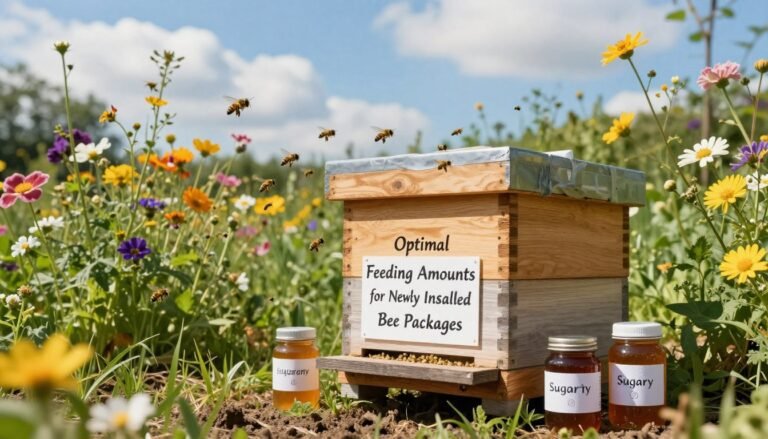
Setting up a strong start for a new colony hinges on reliable feeding. When you place a package into a hive, constant access to syrup helps bees draw comb and build brood. Choose a top option that fits your box and super so the colony can work without stress.
Lappe’s Bee Supply offers universal hive top units with 2- or 4-hole bases and perforated lids that ease syrup access. The two-jar model measures 10″ × 5-3/4″ × 8″ high and fits 5-, 8-, or 10-frame hives.
Using trusted gear from a reputable bee supply website saves time and reduces handling. New beekeepers benefit from proper frame and comb layout while feeding a couple of weeks to encourage steady brood and comb building. Learn more about sourcing live bees and nucs at buying packaged bees and nucs.
Key Takeaways
- Reliable top feeding supports comb drawing and brood build-up.
- Lappe’s Bee Supply offers compatible top units and clear specs.
- Measure your hive box and super before choosing a unit.
- Short-term feeding saves time and aids colony establishment.
- Free USA shipping over $100 can reduce start-up costs.
Understanding the Nutritional Needs of New Bee Packages
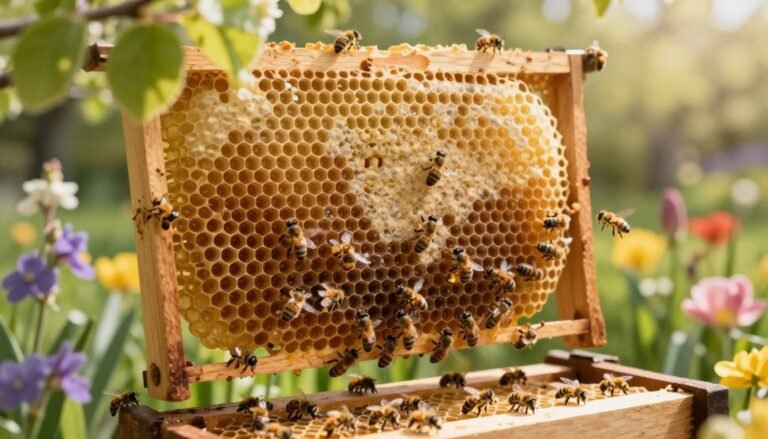
Consistent syrup availability helps a fresh colony draw comb and raise the first brood. New colonies rely on steady energy to stimulate the queen and build wax. Providing regular syrup encourages laying and supports young larvae.
Plastic jars from Lappe’s Bee Supply hold 32 oz each, which gives a substantial volume of syrup without constant topping up. Many members on beekeeping forums note that this amount allows bees to work frames and draw comb more efficiently.
Using a top placement reduces disturbance to the bees and lets you monitor feed levels. In beekeeping 101, keeping the box balanced with the right frame spacing and super placement guides colony growth.
Practical tip: Check home forums and general beekeeping boards for seasonal advice. Adjust feeding by hive side or post position if you manage a couple of hives and monitor honey stores through the first year.
- Keep syrup available to sustain brood development.
- Use measured jars to reduce handling time and waste.
- Follow community guidance via a focused feeding guide: Honey Bee Nutrition: Supplemental Feeding Guide.
Why Choosing the Best Feeder for Newly Installed Packages Matters
A reliable syrup strategy directly affects how fast bees draw comb and fill frames. Early energy access lets workers focus on building a stable nest instead of searching for food.
The Role of Liquid Syrup
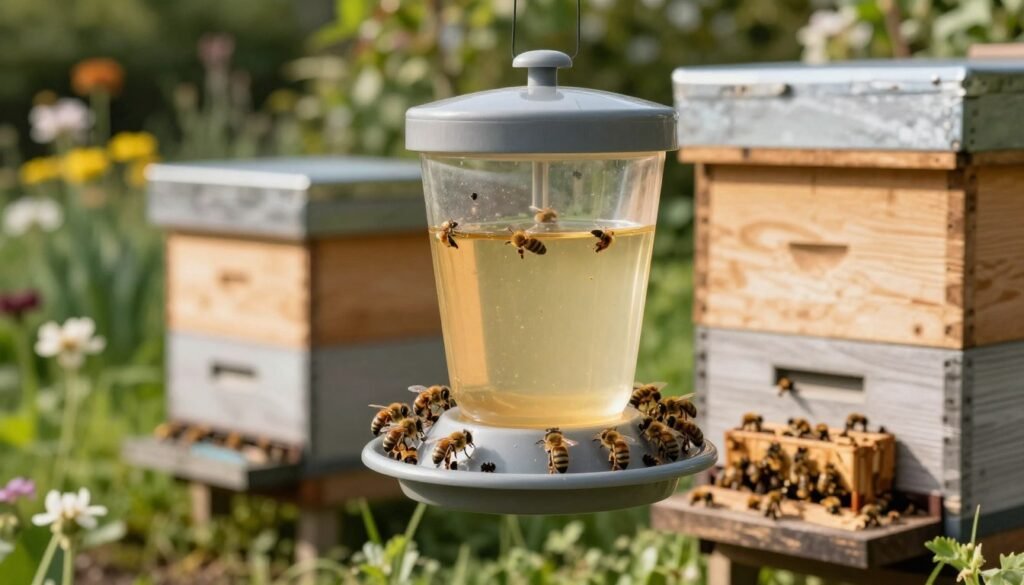
Liquid syrup acts as a nectar substitute and supplies the carbohydrates needed to start comb production. A high-capacity top unit, such as Lappe’s 4-jar model (10″ × 10″ × 8″), fits 8- or 10-frame hives and reduces refill trips.
Supporting Brood Development
Steady feeding supports the queen and growing brood. In beekeeping 101, consistent syrup helps larvae develop and encourages steady laying.
- Top placement keeps syrup inside the hive and can lower robbing risk, as noted by members on beekeeping forums.
- Compatibility with your hive box and super is essential to avoid disturbance.
- Using a large-capacity solution saves time during the first critical year.
| Feature | Lappe 4-Jar Unit | Practical Benefit |
|---|---|---|
| Dimensions | 10″ × 10″ × 8″ | Fits 8- or 10-frame hives |
| Capacity | 4 × 32 oz jars | Longer feeding intervals, less handling |
| Placement | Top | Reduces disturbance; lowers robbing risk |
| Use case | New colonies and nuc set-up | Supports comb draw and brood build |
For a deeper comparison of feeder types, see this guide on feeder types that members on forums often reference.
Evaluating Different Types of Hive Feeders
Choosing the right syrup delivery system can change how quickly a colony establishes comb and brood.
Internal, top-mounted units are often favored by members on beekeeping forums. They keep syrup inside the hive box, which helps prevent robbing and keeps honey stores cleaner.
External options may be easier to refill but can draw other bees and pests. In many threads on forums general beekeeping, hobbyists say the safest way to support a nuc is a system that avoids opening the hive.
Comparing Internal and External Options
Internal units let workers reach syrup without long flights. That means frames and comb can develop faster, a common note in beekeeping 101 advice.
External units save time at refill but raise robbing risk and can disturb brood when you work at the hive. Consider how each option fits your super, frame layout, and routine.
- Efficiency: Top-mounted designs reduce disturbance and handling time.
- Capacity: Match jar or tank size to the hive’s needs and your available time.
- Installation: Proper placement on the inner cover ensures safe access and limits leakage.
“Be mindful: Lappe’s Bee Supply warns they cannot refund or replace units damaged by improper use or leakage.”
For an overview of different approaches, see this guide on feeder types and a practical look at frame-mounted options in this frame feeder comparison.
Benefits of Using Universal Hive Top Feeders
A well-built top unit streamlines syrup delivery and keeps colony activity focused on comb building.
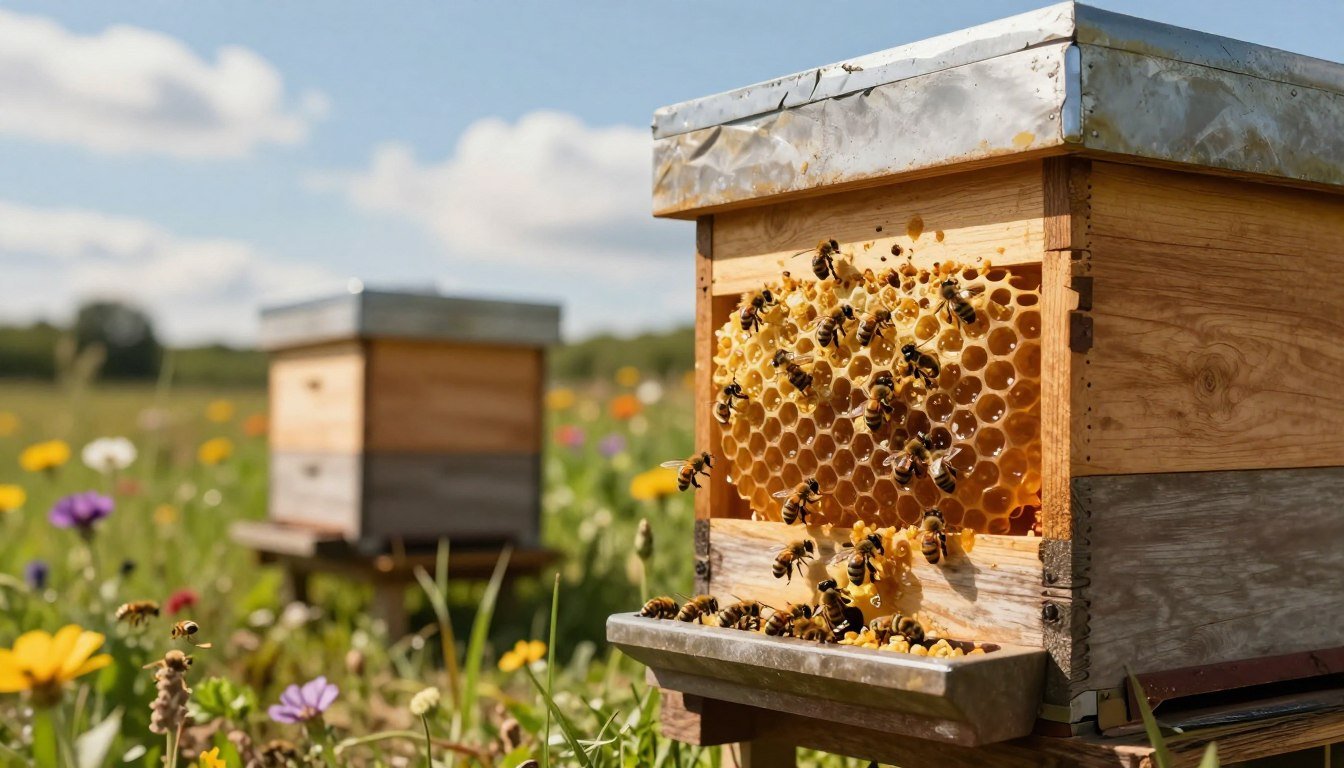
The universal hive top feeder from Lappe Bee Supply sits on the inner cover and needs an empty deep shell beneath it. This arrangement keeps syrup inside the box and reduces disturbance during inspections. Members on general beekeeping forums note its durable construction and ease of use.
Design and capacity: Each jar holds 32 oz, so a four-jar layout extends refill time. That capacity supports a growing nuc and helps workers work frames without frequent interruptions.
Ease of Access
Placing the unit on top lets bees reach syrup without long flights. That reduces stress and cuts the time you spend opening the hive. Forums beekeeping 101 members praise this when managing brood and comb during early buildup.
Compatibility with Hive Boxes
These units fit most standard hive box sizes, including 5-, 8- and 10-frame setups. The universal fit saves adjustments and prevents leaks when used as directed.
- Durable design: Praised in forums general and by experienced members.
- Consistent feeding: Keeps syrup available to support brood and honey production.
- Time saving: Less handling means faster inspections and calmer bees.
| Attribute | Specification | Practical Benefit |
|---|---|---|
| Placement | Top, on inner cover | Limits disturbance; reduces robbing risk |
| Jar capacity | 32 oz per jar | Longer intervals between refills |
| Compatibility | 5-, 8-, 10-frame hives | Works with common hive box sizes |
| Use case | Supporting nuc and early brood | Encourages comb draw and steady laying |
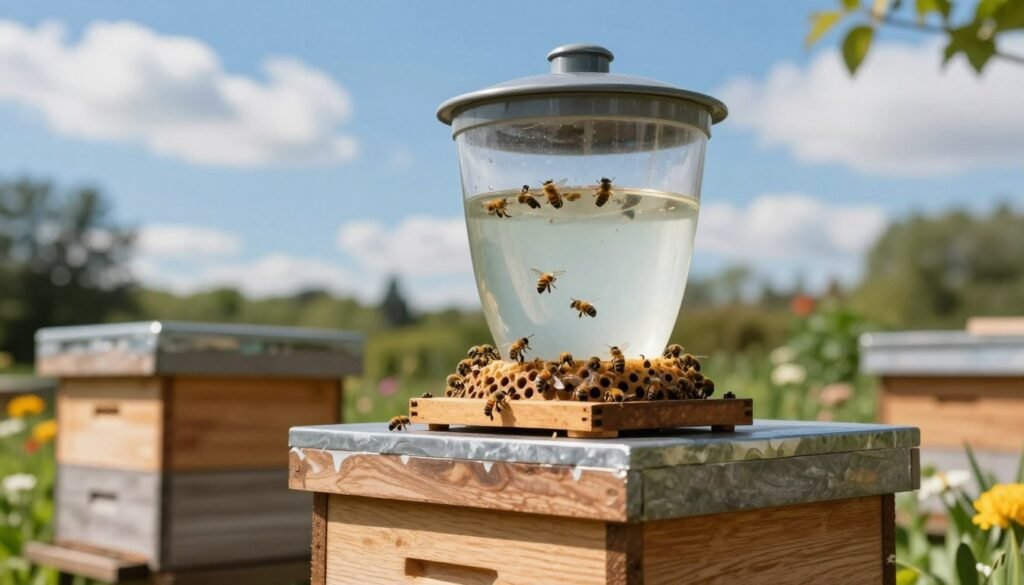
To review practical advantages and setup tips, see this short guide on top feeder advantages.
Essential Equipment for Successful Syrup Delivery
A compact kit of jars, lids, and a stable top mount sets the stage for reliable syrup delivery to a growing colony.
Successful syrup delivery depends on quality parts. Use perforated lids and matched jars from a trusted bee supply catalog so syrup reaches the frames and comb without spills.
According to general beekeeping forums, a dedicated unit beats makeshift containers. It reduces handling and limits hive disturbance during inspections.
- Placement: Set the unit on the inner cover so bees can access syrup at the top.
- Spare parts: Keep extra jars and lids on hand to swap quickly and avoid opening the box.
- Maintenance: Clean and dry lids to prevent fermentation that can harm brood and a nuc.
Inspect frames and comb regularly to confirm the colony uses the syrup to support brood and comb draw. Consistent gear and upkeep create a stable environment where bees focus on growth.
“Use dedicated components rather than ad-hoc containers to reduce robbing and spoilage.”
For more on necessary tools, see this short guide to essential equipment and a practical review of jar-style designs in essential equipment and a focused look at frame and top models at feeder options.
Avoiding Common Pitfalls During the Installation Process
A level hive box and a snug inner-cover setup keep syrup where it belongs and bees safe.
Proper placement begins with mounting the unit directly on the inner cover and covering it with an empty deep shell, as Lappe’s Bee Supply specifies. This prevents leaks and cuts down on robbing.
Members of general beekeeping forums warn that a poorly installed unit can drown bees or attract outsiders. Check that frames and comb allow clear passage from brood to syrup so workers do not get trapped.
Proper Placement on the Inner Cover
- Ensure the hive box is level so syrup flows evenly into jars.
- Use a shim if needed to create enough space beneath the unit.
- Always cover the unit with an empty deep shell to limit access by other bees.
“An improperly installed unit can cause both leakage and robbing—double-check level and cover before filling.”
| Issue | Cause | Fix |
|---|---|---|
| Leakage | Unit not seated on inner cover | Re-seat unit; use gasket or shim |
| Drowning | Open syrup surface or overflow | Perforated lids; maintain syrup level |
| Robbing | No empty deep shell cover | Install empty deep shell; tighten entrance reducer |
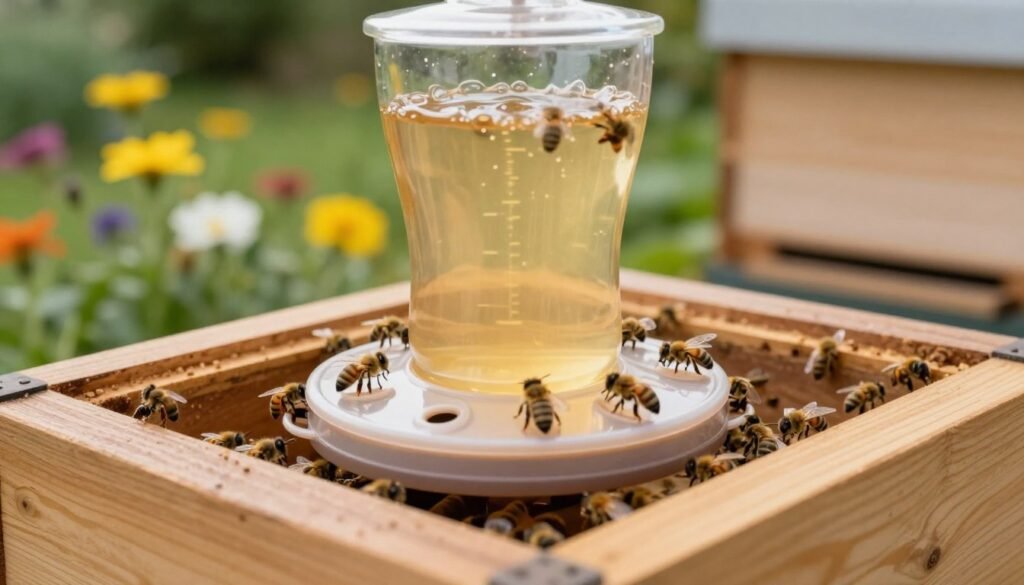
For a clear walkthrough on site layout and hive setup, see how to set up a backyard apiary.
Maintaining Your Feeding System for Optimal Hive Health
Routine maintenance keeps syrup clean and reduces disease risk.
Inspect jars and lids at every refill. Rinse with hot water, dry completely, and replace any warped parts.
Home forums general often stress that a clean unit stops mold and fermentation before it starts. A large forum 1.6m members discussion recommends weekly visual checks during active feeding.
Check the hive box and each frame for sticky residue or signs of spoilage. Look at comb and brood patterns to confirm the colony uses the syrup.
- Store spare jars and lids in a dry place during the off-season.
- Use perforated lids to limit drowning and contamination.
- Keep a simple log of refill dates and observations.
| Task | Frequency | Benefit |
|---|---|---|
| Wash jars and lids | Every refill | Prevents mold; keeps syrup safe |
| Inspect frames & comb | Weekly during feeding | Tracks brood progress and syrup use |
| Off-season storage | End of season | Protects parts; extends life |
“A clean feeder is the best way to prevent disease and ensure optimal hive health.”
For checking incoming bees and nuc health, also learn how to inspect purchased nucs.
Tips for Preventing Robbing and Contamination
Keeping syrup inside the hive box gives colonies a better chance to defend their stores. Lappe’s design that sits within the box helps limit access by outside bees and reduces robbery pressure.
Practical steps:
- Reduce the hive entrance so guard bees can control traffic and repel intruders.
- Only add enough syrup the colony will use in a few days to avoid spills and fermentation.
- Keep the unit and lids clean; debris attracts pests and speeds contamination.
Members of home forums general and forum 1.6m members often stress quick action when robbing signs appear—noisy activity, sudden guards at the entrance, or syrup trails on frames and comb.
Secure lids and check seals each refill to stop leaks on the ground that draw other bees. Use the community guidance in beekeeping forums and consult local resources like feeding honey bees to prevent starvation for detailed safety tips.
“Limit exposed syrup and let guards do their job.”
Conclusion
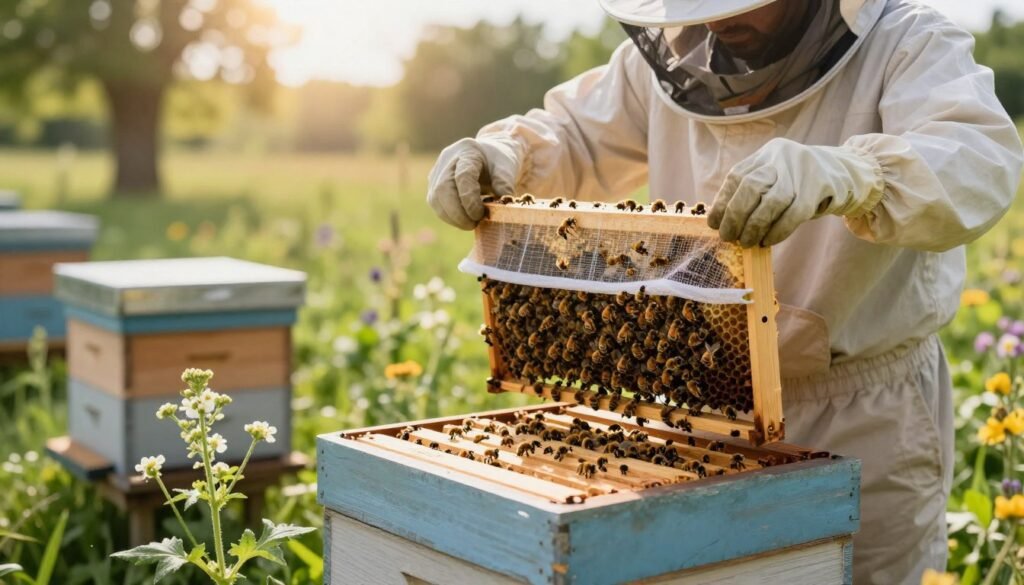
A thoughtful syrup routine shortens the time it takes bees to establish strong brood and full frames. Consistent feeding helps comb go up quickly and lets the queen lay steadily. Use a reliable feeder that fits your hive and frame layout, and keep syrup levels steady to avoid disturbance.
Practical support: Consult home forums general and wider general beekeeping threads, and choose parts from a trusted bee supply source. Members of forum 1.6m and local groups often share setup tips that save time.
Prioritize cleanliness of the feeder, box, and frame gear. Small, regular checks keep colonies healthy and let your bees focus on growth.
FAQ
What type of syrup should I use when installing a new bee package?
Use a simple 1:1 sucrose syrup (equal parts white granulated sugar and warm water) to stimulate feeding and comb drawing. This concentration supplies energy without overwhelming brood rearing. Avoid honey from unknown sources to reduce disease risk. Offer syrup in a clean container such as a top-mounted jar, frame feeder, or entrance feeder that matches your hive box and frames.
How often should I check syrup levels after placing a nucleus or package in the hive?
Inspect syrup levels every 48–72 hours during the first two weeks. New colonies consume more as they build comb and raise brood. Refill before syrup runs out to prevent starvation or robbing. Keep checks brief and calm to limit disturbance to the bees and brood.
Where should a top-mounted feeder sit on the inner cover or super?
Place a top-mounted feeder centered over the brood box, directly on the inner cover or a shallow super designed for feeding. This location gives easy access without blocking frames. Ensure a small gap or screened hole for bee access and ventilation while preventing syrup spills onto brood frames.
Are internal frame feeders or external entrance feeders better for a new hive?
Internal frame-style feeders keep syrup inside the hive, reducing robbing and exposure to pests. External entrance feeders are easier to refill but raise robbing risk and can stress a new colony. For packages and nucs, internal or top feeders that fit under the inner cover generally work best to support brood development and comb drawing.
How can I prevent robbing when feeding newly installed bees?
Reduce robbing by using internal or top feeders, feeding at dusk, and minimizing syrup smell. Narrow the hive entrance and add an entrance reducer. Avoid spills and remove unused syrup equipment promptly. Clean up nearby spills on hive stands and lids to stop attracting wasps or bees from other colonies.
What capacity feeder should I choose to support hive growth and comb drawing?
Choose a feeder with enough capacity to last 2–4 days between refills. A 1–2 gallon top or frame feeder suits many installs, while smaller nucs may only need 12–32 ounces. Match capacity to hive strength, local nectar flow, and how often you can safely check the hive.
Can I use a universal hive top feeder with supers in place?
Yes. Many universal top feeders fit standard 10-frame and 8-frame hive boxes and can sit above a super or inner cover. Confirm the feeder’s dimensions and whether it requires a shallow super or reducer. Proper fit maintains ventilation and access while protecting frames below during feeding.
How do I keep syrup from contaminating frames, brood, or comb?
Use feeders designed to prevent dripping and to restrict bee access to vents or ports. Level the feeder and set it on a flat inner cover or spacer. Check seals and replace cracked jars or lids. If syrup reaches frames, remove and clean affected comb to avoid mold and mites.
What equipment should I have on hand for safe syrup delivery to new hives?
Basic items include a clean top feeder or frame feeder, food-grade containers, an entrance reducer, a small pour jug, and a hive tool. Keep spare inner covers, an extra super for a universal feeder, and personal protective gear. Stock Lappe Bee Supply or trusted suppliers for quality components and spare parts.
When should I stop feeding sugar syrup to a newly installed colony?
Gradually reduce supplemental feeding when bees are drawing comb, raising brood well, and natural nectar is available—typically after several weeks to the first major nectar flow. Stop before heavy honey flow to avoid diluting harvest. Monitor brood pattern, stored nectar, and overall hive population when deciding to taper off.
How does syrup feeding support brood development and comb building?
Syrup supplies immediate carbohydrates that allow workers to forage less and focus on comb building and nurse duties. Consistent syrup access helps the queen lay steadily and supports brood thermoregulation. Proper feeding accelerates wax production and foundationless comb drawing.
What maintenance steps keep feeding systems sanitary and effective?
Clean feeders between uses with hot water and mild detergent, rinse thoroughly, and air-dry. Replace cracked plastic or corroded metal parts. Sanitize jars and lids if disease is suspected. Store equipment dry and shaded to prevent algae growth and extend service life.
Are there risks of disease or pests when using feeders during installs?
Yes. Contaminated honey or unclean containers can introduce pathogens. Fermented syrup attracts small hive beetles and ants. Use food-grade sugar, clean gear, and adjust syrup strength to reduce fermentation. Employ screened bottom boards and traps to limit pest impacts.
How do I adapt feeding practices across seasons and year one of hive care?
During spring installs, feed more to encourage buildup; in late summer or fall, reduce feeding as colonies prepare for winter. Monitor stores through inspections and weight checks. Adapt frequency and concentration of syrup based on nectar flows, local forage, and hive population to support long-term health.
Where can I find reliable advice and community experience on feeding new packages?
Consult recognized beekeeping forums such as Beekeeping 101 boards, local beekeeping associations, and national sites like Bee Culture or American Beekeeping Federation resources. Supplier forums and Lappe Bee Supply support pages also offer practical tips from experienced members and hobbyists.