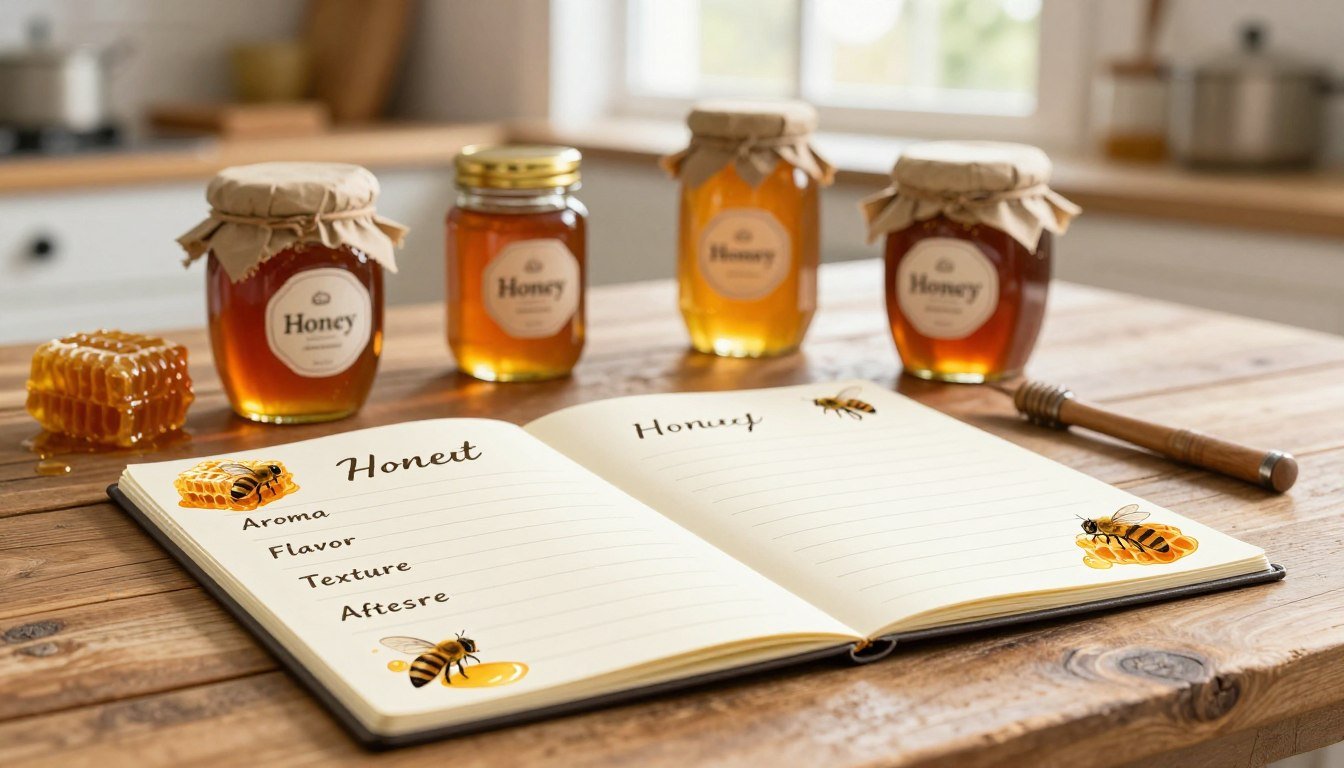
This concise introduction presents a practical framework to record the unique character of each harvest. Use a simple sheet to capture color, aroma, viscosity, and mouthfeel so you can compare batches across seasons and locations.
Scientific work like Marshall et al. (2014) shows that floral diversity and environment change phenolic content, which affects flavor. That means consistent records help you link terroir to taste and improve overall quality.
Whether you’re new to this or already run an apiary, a disciplined approach helps you refine your palate and document results with precision. For practical techniques, see this tasting guide, and consult grading context in an analysis of grading standards.
Key Takeaways
- Use a structured sheet to record color, aroma, texture, and flavor evolution.
- Document seasonal and geographic changes to showcase regional terroir.
- Apply a consistent five-step evaluation: visual, aroma, taste, mouthfeel, harmony.
- Refine your palate through regular, disciplined practice and clear records.
- Scientific findings link floral diversity to compositional changes; record phenolic clues.
Understanding the Terroir and Complexity of Honey
Terroir shapes every jar: soil, climate, and plant life combine to give each batch its character. Floral diversity and seasonal shifts alter phenolic content, which changes aroma, color, and texture.
Floral Sources and Nectar Diversity
Worker bees gather nectar from many plants, so no two honeys will taste identical. A dominant nectar source, like alfalfa or clover, can steer the flavor toward delicate or robust ends of the spectrum.
High quality honey often crystallizes naturally; this is a sign of raw product quality rather than a defect. Your palate should track sweet, sour, bitter, salty, and savory cues to map complexity.
Geographic Influence on Flavor Profiles
Jonathan White found regional contrasts — alfalfa honey in Southern California can be darker and stronger than Rocky Mountain batches. That regional signature is the essence of terroir.
- Color and texture reflect local floral mixes.
- Seasonal blooms shift the balance of phenolics and aroma.
- Taste buds detect how flavor evolves on the tongue during evaluation.
| Factor | Effect on Flavor | Example |
|---|---|---|
| Primary nectar source | Shapes dominant aromas and sweetness profile | Alfalfa yields a richer, darker profile in warm regions |
| Season | Alters phenolic concentration and color | Spring wildflower mixes are lighter than late-season buckwheat |
| Region | Imparts a consistent regional signature | Coastal vs. mountain varieties show clear contrasts |
To deepen your sensory skills, consult the ultimate honey tasting guide and review common popular U.S. varieties to compare regional profiles.
Setting Up Your Professional Honey Tasting Environment
A controlled room with stable light and temperature helps reveal true aromas. Anne Lesenne at the University of Arizona recommends a calm, well-lit space free from noise and strong scents.
Keep the room between 68–72°F (20–22°C). This temperature range lets volatile compounds release so the palate can detect subtle flavor and texture differences.
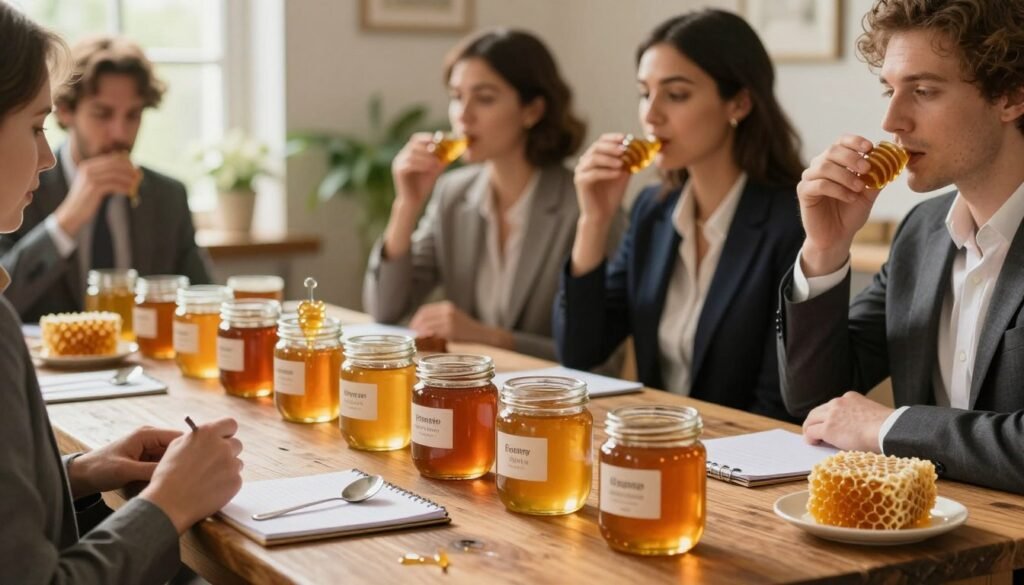
Prepare samples in clean glass containers and arrange them from lightest to darkest color. Use wooden or plastic spoons; metal can alter mouth sensations.
- Avoid food for at least one hour before a session to keep sensitivity high.
- Have room temperature water ready to cleanse palate between samples.
- Use plain crackers to neutralize taste, and wait about 15 minutes between different varieties.
- Do not wear lotions, colognes, or strong perfumes during the session.
Follow strict protocols and you will create a consistent setting that supports objective assessment of quality, aroma, texture, and flavor. For a deeper procedural checklist consult this tasting guide.
Using a Honey Tasting Notes Template for Small Producers
Start each session with a calm checklist to capture color, clarity, and initial scent. A brief form focuses the palate and ensures consistent records across batches.
Visual Assessment and Clarity
Hold the sample up to a light and note color, transparency, and any crystals. Clarity and hue are strong clues to the nectar source and seasonal shifts.
Aroma Analysis and Volatile Compounds
Stir the jar gently with a spoon to release volatiles, then warm a small amount between your palms to boost scent release. Use the UC Davis honey flavor wheel to identify floral, fruity, or earthy families.
Inhale from the container; your nose often detects subtle flavors before the tongue.
Flavor Evolution and Texture Evaluation
Place a small scoop on the tongue and take note of how flavor evolves from entry to finish. Press some against the roof of your mouth to judge smoothness or granularity.
Cleansse palate with room temperature water and plain crackers between samples. See a practical tasting guide and regional context at regional climate profiles to refine your approach.
Enhancing Your Evaluation with Food Pairings
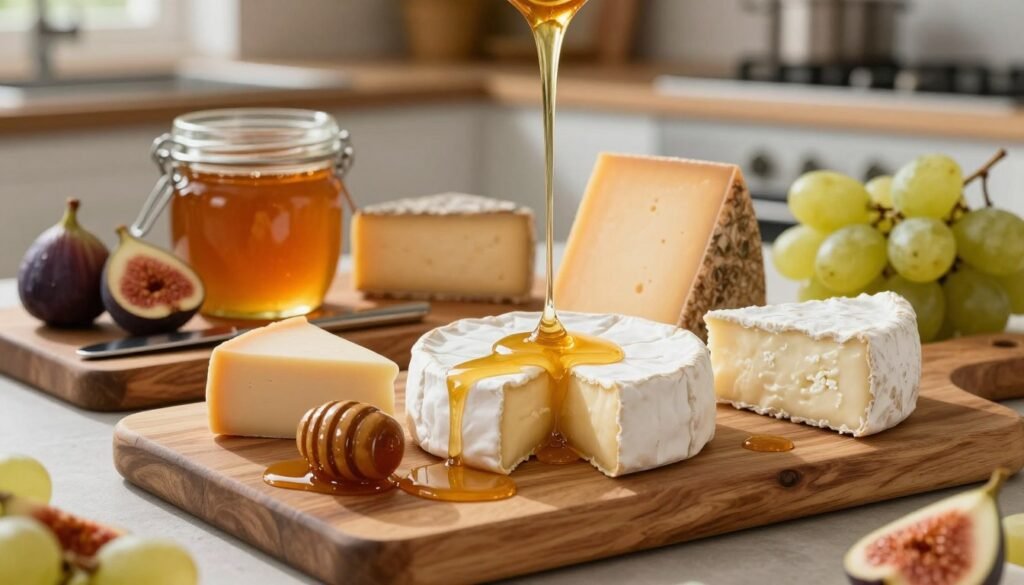
Food pairings expand an evaluation beyond spoon-only sampling. They show how sweetness, acidity, and texture behave with real ingredients. Use a charcuterie board to test interactions and document outcomes during each session.
Cheese and Culinary Pairings
Match intensity. A strong blue cheese will stand up to a dark, robust buckwheat or chestnut jar. Goat cheeses pair well with mesquite or orange blossom jars because the contrast lifts both components.
Acacia is remarkably versatile. It works with many cheeses, meats, and fruits and is ideal for a mixed board. The University of Arizona notes that alfalfa is subtle and pairs easily with a range of dairy options.
- Create a board with soft, semi-hard, and blue cheeses to observe balance.
- Serve each sample in its own small container to avoid cross-contamination.
- Use tropical fruits to highlight hidden fruity undertones that routine tasting can miss.
- Match the flavor intensity of the jar to the cheese strength for harmony.
| Cheese Type | Suggested Pairing | Why it Works |
|---|---|---|
| Blue | Buckwheat / Chestnut | Sweet depth balances pungent, salty bite |
| Goat | Mesquite / Orange blossom | Bright floral notes lift tangy creaminess |
| Soft (Brie) | Acacia / Alfalfa | Delicate sweetness complements buttery texture |
Document each pairing in your tasting sheet. Note how aroma, texture, and finish change when combined. For pairing guides and sales ideas, consult an ultimate honey tasting guide and B2B resources on B2B sales strategies.
Conclusion: Mastering the Art of Honey Tasting
Treat each session as a short field report: record what the nose, tongue, and eyes reveal. A steady routine improves your palate and helps you take note of color, clarity, and aroma with confidence.
Use clear, consistent notes and compare samples across seasons. Regular practice trains taste buds to detect subtle honey flavor and other flavors that point to the nectar source and region.
Keep your environment clean and samples at the right temperature in a neutral container. Share results with peers and consider practical sales guidance like this selling raw honey at U.S. farmers to promote provenance and quality.
Your dedication turns jars into stories. Over time, accurate records will preserve the experience and elevate the overall standard of local varieties.
FAQ
What is the best way to cleanse the palate between samples?
Use plain water and unsalted plain crackers or a small bite of mild cheese to neutralize the tongue. Avoid strong flavors like coffee or citrus. Allow at least 60–90 seconds between samples so the mouth resets and subsequent flavors register clearly.
How should I control sample temperature and containers?
Serve jars or tasting spoons at room temperature, around 68–72°F. Use clear glass or neutral ceramic containers to avoid imparting aromas. Keep lids on until tasting to preserve volatile compounds.
How many samples should I evaluate in one session?
Limit sessions to six to eight samples to prevent palate fatigue. If you need to taste more, break the session into shorter rounds with a longer pause and palate refreshers between sets.
What visual attributes should I record during assessment?
Note color, clarity, and viscosity. Look for light to dark hues and any crystallization. Clarity and uniform texture indicate careful handling and good filtration; rapid crystallization often signals high glucose content or cool storage.
How do I evaluate aroma and identify volatile compounds?
Gently warm a small spoonful in your cupped hand and inhale short, repeated sniffs. Record floral, herbal, fruity, or toasted descriptors. Common aroma families include floral (clover, alfalfa), fruity (tropical fruits, citrus), and woody or herbaceous notes.
What is the recommended tasting technique to assess flavor evolution?
Place a small sample on the tip of the tongue, breathe through the nose, then move it around the mouth. Track initial sweetness, mid-palate complexity, and finish. Note textural feel—silky, thick, or grainy—and any aftertaste like malt, caramel, or mineral.
How do terroir and region influence flavor profiles?
Local flora, soil, and climate shape nectar chemistry and thus flavor. Coastal regions may yield more saline or floral notes, while alpine or buckwheat-rich areas produce robust, earthy profiles. Record the source and bloom period to correlate with sensory results.
Which floral sources most commonly produce distinct flavors?
Alfalfa and clover tend toward delicate, grassy notes; buckwheat gives dark, molasses-like flavors; many tropical fruits and wildflowers create bright, fruity characters. Identifying the nectar source helps explain aroma and taste markers.
How should I pair samples with food to enhance evaluation?
Pair lighter varieties with soft cheeses like chèvre or ricotta to highlight floral notes. Richer, darker styles suit aged cheddars or blue cheese to balance robust flavors. Small bread or neutral crackers also reveal textural interplay.
What records should small producers keep after each tasting?
Log sample ID, harvest date, floral source, region, color, clarity, aroma descriptors, flavor stages, texture, and any pairing notes. Include storage conditions and container type to track factors that affect quality over time.
How can I assess quality and detect off-flavors?
Look for fermentation (sour or yeasty notes), fusty or musty aromas indicating poor storage, and chemical or medicinal off-notes from contamination. Fresh, clean sweetness with consistent finish typically signals high quality.