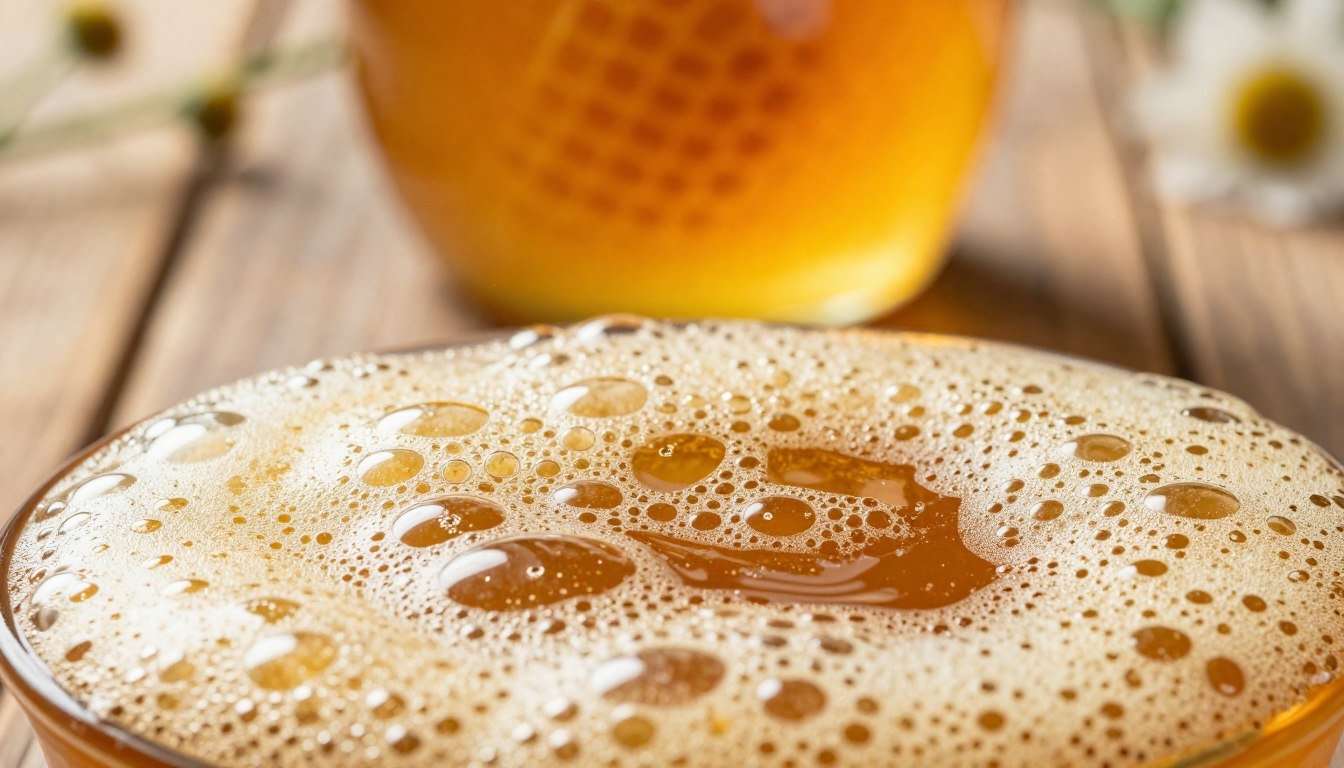
July 23, 2024 brought clear insights about the natural white foam that sometimes sits atop raw honey jars. This thin layer often surprises shoppers, but it is a positive sign of careful handling and minimal processing.
The foam forms when air gets trapped during bottling. These small pockets do not harm the product and often point to authentic, unfiltered quality.
Foam raw honey reflects gentle extraction and settling rather than heavy filtration. Many consumers prefer this natural appearance over overly clear, processed jars.
For more on grading and clarity standards, see this guide to honey grading. Understanding these clues helps you value the purity of the jars you bring home.
Key Takeaways
- White foam atop raw honey can indicate high-quality, minimally processed product.
- Air trapped during bottling causes the thin layer and tiny bubbles.
- Foam raw honey often means gentle handling and preserved nutrients.
- The layer is harmless and distinguishes raw from heavily filtered options.
- Check grading and clarity standards to better evaluate quality.
Understanding Bubbles in Honey Jar What They Mean
A pale layer on top of raw jars is often just a natural mix of tiny air pockets and microscopic particles from comb and pollen.
Many buyers spot the white stuff and ask about safety. In most cases, this film is a positive sign. It shows the product avoided heavy heating and intense filtration.
That thin layer of foam raw indicates careful handling and preserved enzymes. You can trust jars with this feature as authentic and minimally processed.
Learn to recognize the difference between harmless surface film and true spoilage. For more on foam appearance, see this explanation of white foam, and to check fermentation risks consult a guide to identifying fermented samples.
- The white stuff often holds tiny solids and air.
- Foam honey can be a mark of quality, not damage.
- Understanding this layer helps you enjoy authentic taste and texture.
The Natural Origins of Honey Foam
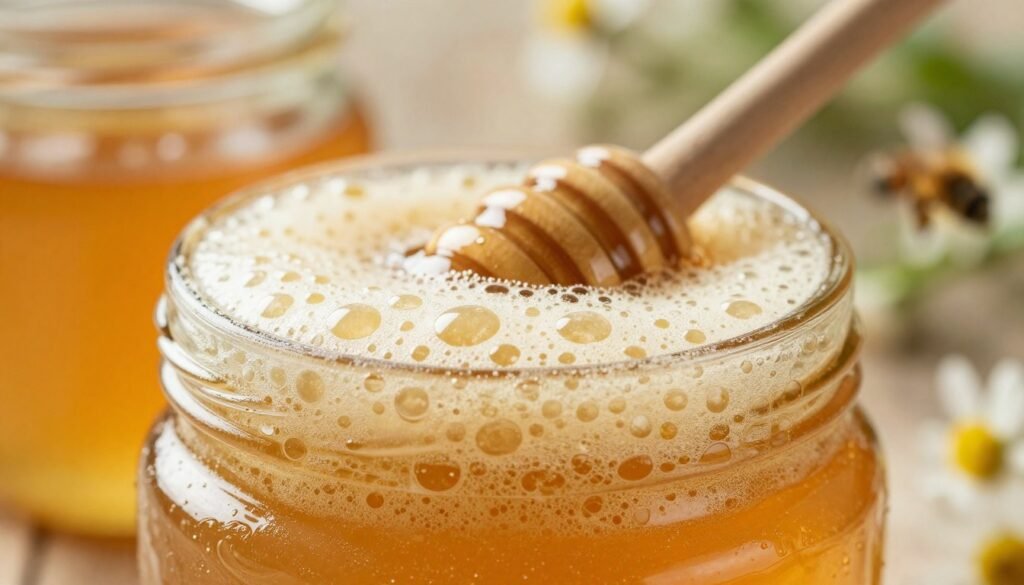
Raw honey preserves many substances that commercial processing often removes. Small particles, proteins and tiny air pockets can gather at the surface and form a pale film. This layer is an honest trace of minimal handling and low heat during extraction.
The Presence of Enzymes
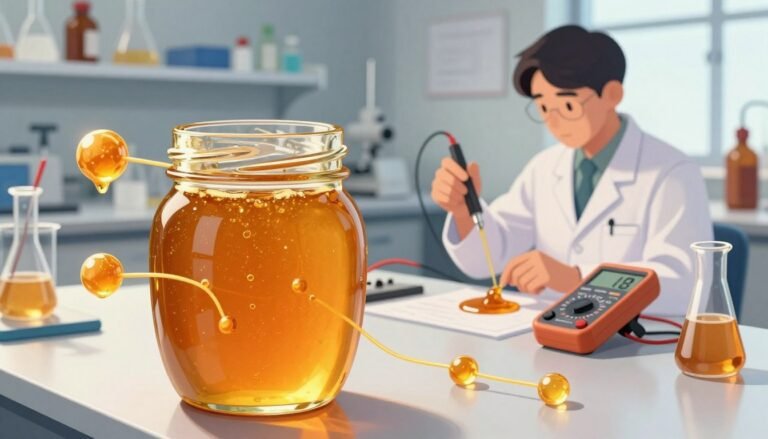
Enzymes remain active when producers avoid excessive heat. These compounds help maintain flavor and potential health benefits. Their presence can encourage visible surface activity without harming the product.
Indicators of Minimal Processing
The foam often acts as an indicator that a sample is minimally processed. Unlike processed honey, which is heated and filtered for clarity, foam raw honey shows preserved antioxidants and pollen.
- The foam is a primary sign of preserved enzymes.
- High-quality honeys keep natural elements intact by avoiding industrial heat.
- Minimal processing ensures the product stays close to its harvested state.
For more context on why some jars display this surface film, see why Svastya honey may foam.
Why Air Bubbles Form During Extraction
As the product moves from extractor to bottle, microscopic air pockets travel upward and form a pale layer.
Bottling and Handling Processes
Extraction and transfer involve pumps, sieves, and movement that trap tiny pockets of air inside the viscous liquid. These air bubbles are common during extraction bottling and do not harm the product.
Over time, those micro pockets slowly rise to the top. The steady climb creates the light foam collectors see on the surface.
The effect is stronger when producers avoid heavy heat and aggressive filtration. With minimal processing, the tiny bubbles remain visible, which many shoppers link to authentic, foam raw honey.
- Small air pockets become trapped during extraction and rise to the surface.
- As time passes, more pockets reach the top and change the foam layer.
- Low-heat handling and limited filtering keep these features visible.
For packaging tips and labeling guidance related to raw products, see how to package and label honey for.
The Role of Beeswax and Pollen Particles
Tiny flakes of wax and pollen often collect at the surface and form a soft, creamy layer.
Raw honey preserves many natural elements from the hive. Bits of wax, pollen, propolis, and proteins are lighter than the syrup and tend to float. This movement creates the gentle foam seen on top of many jars.
Because these honeys avoid heavy filtering, the visible content reflects the plants the bees visited. That diversity of particles supports flavor and may add trace nutrients that processed variants lack.
- Wax and propolis are natural solids that collect at the surface.
- Pollen and proteins form part of the creamy layer and indicate botanical variety.
- Less filtering means more of these beneficial elements remain.
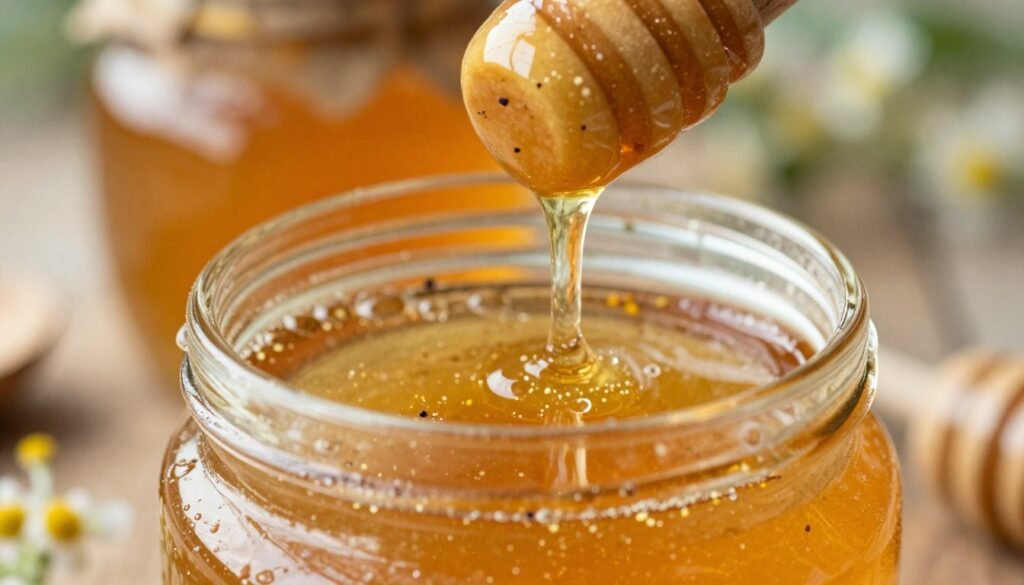
| Component | Role | Typical Effect on Surface |
|---|---|---|
| Beeswax | Physical particle from comb | Forms light flakes that float |
| Pollen | Source of botanicals and proteins | Gives creamy texture and color |
| Propolis | Resinous compound with compounds | Adds tiny specks and mild sheen |
| Proteins | Trace nutritional elements | Help form stable foam layer |
For more on surface indicators and how raw differs from filtered products, read this white foam overview and a raw vs processed comparison.
Impact of Temperature on Honey Texture
Temperature controls how smooth raw honey stays and how much pale foam appears on the surface.
Keep jars at steady room temperature. Small swings speed up changes that alter texture.
At about 57 degrees, crystallization happens faster over time. That makes a spread grainy sooner than if stored warmer or cooler.
Fluctuations affect different honeys in unique ways. Floral and nectar sources change viscosity and how the foam looks.
Remember: honey has essentially an infinite shelf life when stored properly. You do not need to refrigerate it. Proper storage helps preserve quality and honors the work bees put into each batch.
| Storage Temp (°F) | Typical Effect | Best Practice |
|---|---|---|
| Below 50 | Fast crystallization, thicker texture | Keep slightly warmer or use gentle warming |
| 57 | Crystallizes fastest over time | Avoid sustained storage at this point |
| 65–75 | Stable texture, minimal surface change | Store at steady room temperature |
| Above 80 | May thin and darken with long exposure | Avoid prolonged heat to protect flavor |
For tips on long-term handling and to learn about controlled crystallization, see this guide to store honey long-term and a beekeeper’s note on controlled reheating at crystallized honey.
Is It Safe to Consume Honey Foam
Many honey lovers prize the pale surface layer as a natural, edible part of the harvest. Raw honey foam is completely safe to eat and often signals minimal processing.
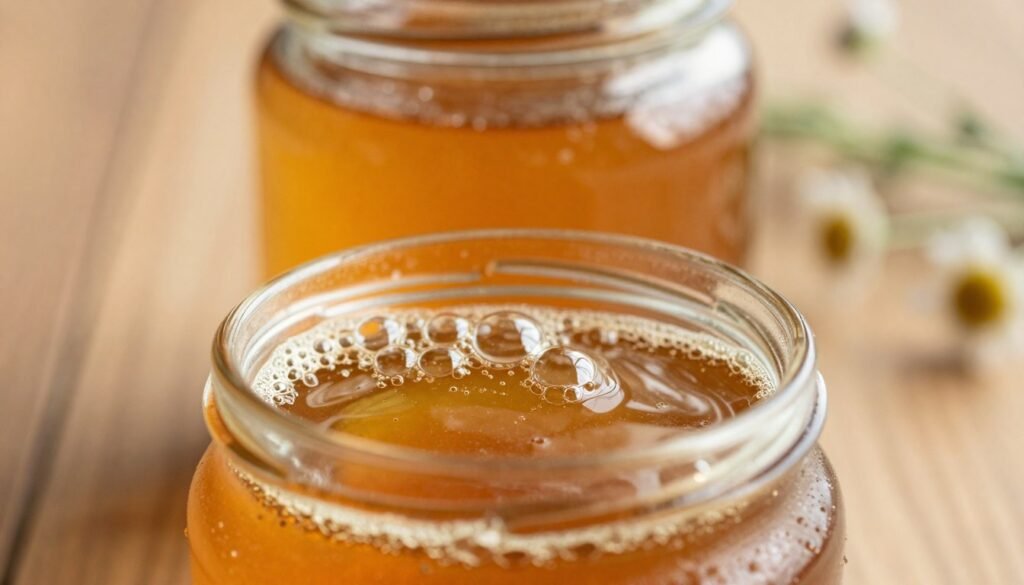
Taste notes for the foam are usually light and airy, with a rich floral finish that mirrors the rest of the jar. Fans describe the texture as a delicate cream that adds a subtle lift to toast or yogurt.
Practical uses: you can stir the foam back into the liquid, spread it on bread, or enjoy it on its own. It contains the same trace wax and nutrients found throughout authentic honeys, so you keep the benefits while adding a pleasing mouthfeel.
“The foam is an edible hallmark of careful extraction and a sign of real, minimally handled product.”
There is no safety concern with this layer. If you’d like a deeper read on surface signs and quality, see understanding the white foam.
Distinguishing Natural Foam from Spoilage
A pale layer on the surface usually signals natural particles and trapped air, not spoilage.
Check smell and taste. Natural foam has no sour odor and does not impart a fermented flavor. If the sample smells off or tastes puckery, treat it as suspect.
Remember: honey is naturally antimicrobial and resists bacterial growth. That long shelf life holds as long as there is no unusual scent or flavor.
The white stuff on the top often contains pollen, beeswax and tiny air pockets. These particles and active enzymes are a positive sign of minimal processing and preserved purity.
If you ever doubt quality, a quick sniff and taste test is enough. For handling tips and to learn how to avoid contamination, read this how to avoid honey contamination.
“When the surface lacks a sour smell and the flavor is clean, the foam is simply a natural layer.”
Conclusion
A soft surface film often reflects careful work from comb to bottle. This pale foam is a good sign that your raw honey stayed close to its natural state and kept enzymes, pollen, beeswax, proteins and propolis intact.
Extraction bottling can trap tiny air and tiny bubbles that rise to the top over time. That white stuff is edible, safe, and adds gentle texture and taste while marking minimally processed quality.
For producers, temperature control matters. Learn how to avoid overheating during extraction to protect enzymes and reduce excess foam raw honey.
Questions about a batch? Contact Massey Honey Co. at 1-800-775-7443. Enjoy your jar knowing it reflects real bees and real care.
FAQ
Why are there air pockets and foam at the top of raw honey?
Small air pockets and a thin layer of foam often appear after extraction and bottling. They form when air mixes with nectar, pollen, and tiny wax or propolis particles during stirring and filling. This surface layer can also be driven by natural enzymes and proteins from bees, and it usually indicates minimal processing rather than spoilage.
Does foam affect the taste or quality of minimally processed honey?
No—light foam or a few surface pockets rarely change flavor. Those elements are common in raw, unfiltered honey and reflect retained pollen, enzymes, and fine particles that contribute to aroma and taste. Overly frothy or sour-smelling honey may warrant further inspection for fermentation.
Can temperature cause changes in honey texture and trapped air?
Yes. Heat makes honey less viscous, allowing trapped air to rise and form a thin top layer during cooling. Cold temperatures speed crystallization and can push tiny gas pockets out. Frequent temperature swings during storage or transport increase visible surface changes.
Are white streaks or a creamy layer the same as foam?
Not always. A creamy, opaque layer often signals natural crystallization or the formation of glucose crystals, while a light white film can be foam with entrapped particles. Both are normal for unprocessed honey and don’t mean contamination.
Is it safe to eat honey that has foam or small particles on the surface?
Yes—foam with pollen, propolis bits, or beeswax is safe and common in raw honey. Consume as usual unless you detect off-odors, visible mold, or a fizzy taste; those signs may indicate fermentation and you should discard the jar.
How does bottling and handling create air and foam?
Rapid extraction, vigorous stirring, and fast filling trap air and mix microscopic solids into the liquid, creating a top layer. Slower filling, gentle handling, and allowing time for trapped air to escape reduce foam during packaging.
Can foam indicate added water or processing problems?
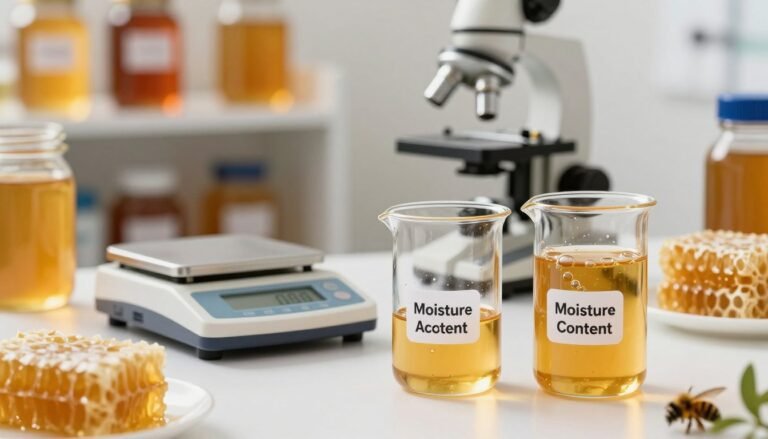
Excessive foam combined with a thin, watery feel can suggest high moisture or poor storage, which raises fermentation risk. However, light surface foam alone usually reflects natural components and handling rather than adulteration.
Do pollen and beeswax particles cause foam?
Yes. Tiny fragments of pollen, beeswax, and propolis act as nucleation points for air and foam. Their presence is common in raw, unfiltered honey and is often considered evidence of authenticity and retained natural content.
How can I tell natural foam from spoilage?
Natural foam is mild, odorless, and stable. Spoilage often brings a sour or alcoholic smell, visible bubbles throughout the jar, and a fizzy or fermented taste. When in doubt, smell and taste a small sample; discard if it seems off.
Does processing remove foam and particles?
Commercial filtration and heating reduce surface foam, remove pollen and wax particles, and produce clearer honey. That makes the product more uniform but also strips some enzymes, flavors, and beneficial elements found in minimally processed options.