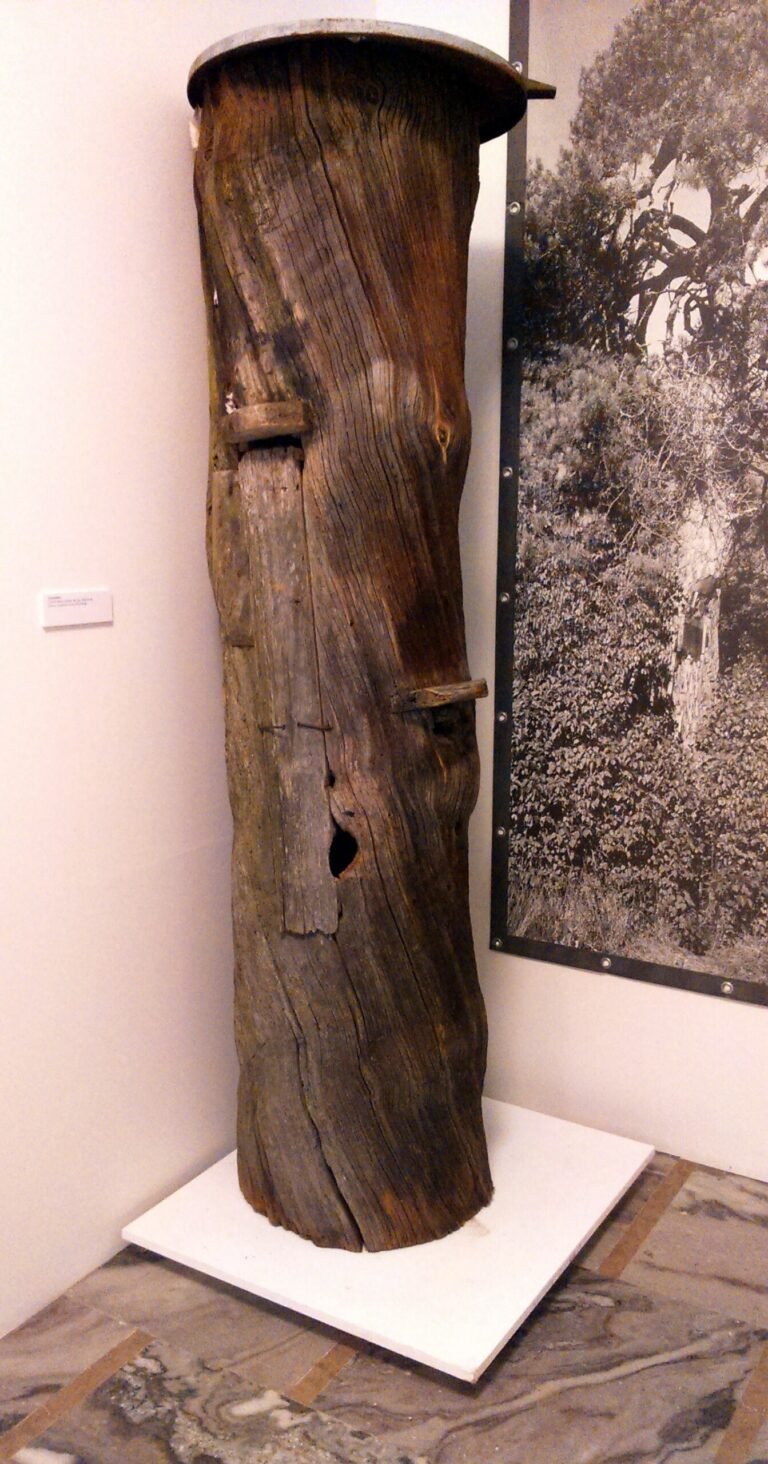
Portugal’s cork forests have supplied wine-bottle stoppers to the world for centuries, but cork bark had an earlier and less famous job: housing bees. The cortiço — a cylindrical hive made from a single sheet of harvested cork bark, fitted with cross-sticks inside for the bees to build comb against — has been used in Portugal since the Roman era, and in parts of the country’s Barroso highlands, it still is.
Key Takeaways
- A cortiço is a traditional Portuguese beehive made from a cylindrical section of cork bark, with wooden cross-sticks fitted inside to support the colony’s comb.
- The practice dates back to the Roman era and was historically concentrated in Portugal’s Alentejo and Algarve regions, where cork oak forests (montados) are most extensive.
- Cortiços are still used today, mainly in the Barroso highlands, alongside modern Langstroth-style equipment rather than as a replacement for it.
- Mel do Alentejo, a real EU-registered Protected Designation of Origin (PDO) honey, comes from the same cork-oak-dominated region historically associated with cortiço beekeeping.
- Cork’s natural properties — lightweight, insulating, breathable, and naturally resistant to moisture and pests — made it a genuinely practical hive material long before synthetic alternatives existed.
What a Cortiço Actually Is
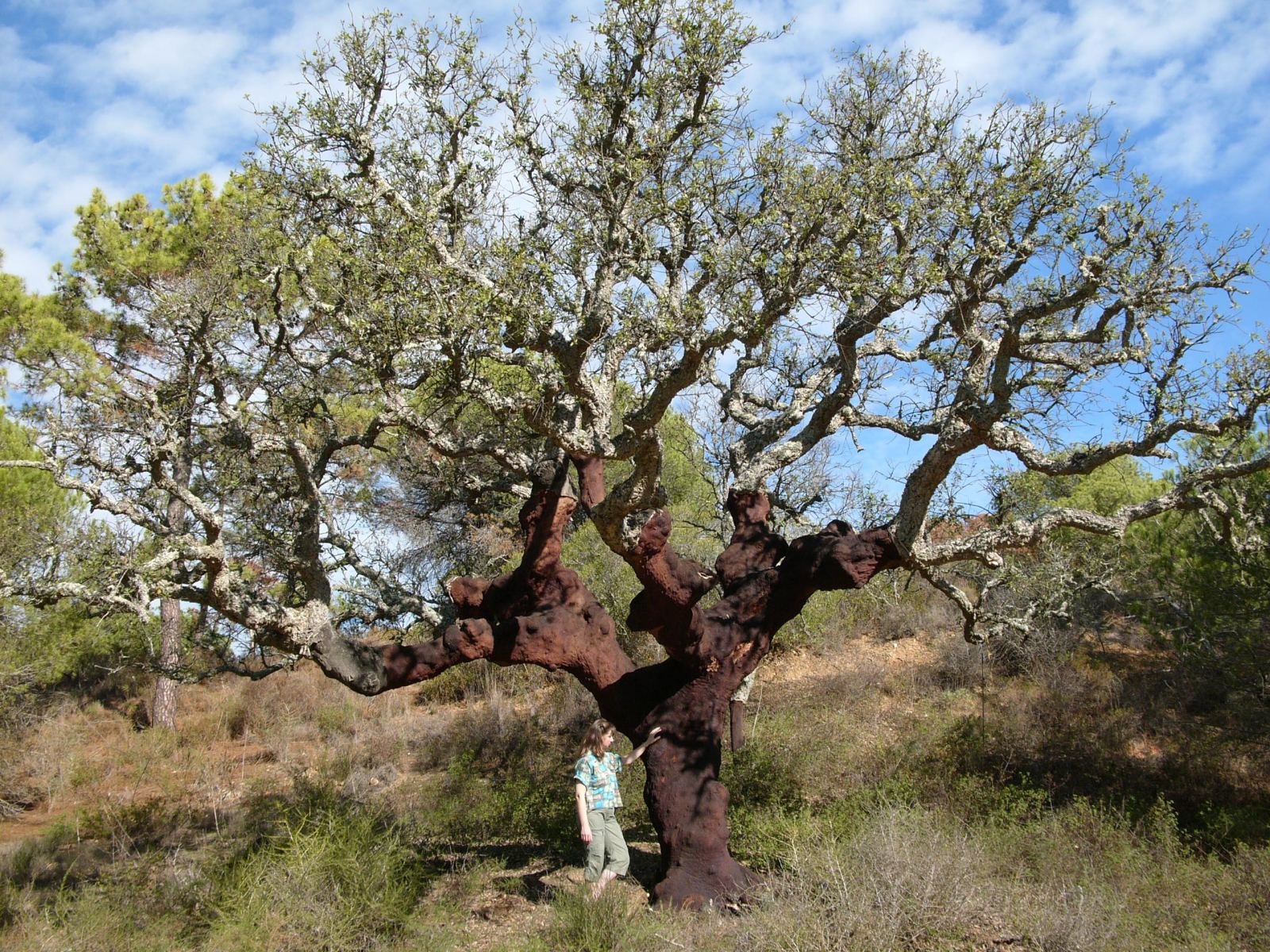
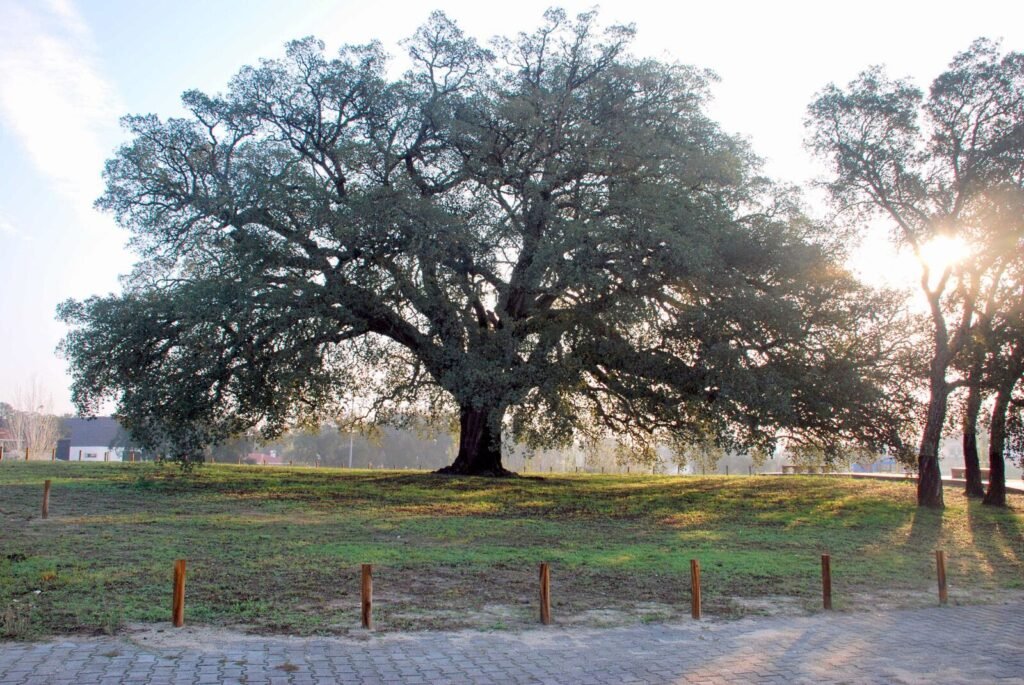
A cortiço is made by harvesting a single large, curved sheet of cork bark from a mature cork oak (Quercus suber) — the same harvesting process that supplies Portugal’s wine-cork industry — and shaping or binding it into a cylinder. Wooden cross-sticks are fitted horizontally inside the cylinder, giving the colony’s comb something to attach to and be lifted out on, an approach conceptually similar to top-bar hive designs used elsewhere in the world. The finished hive is typically closed at both ends, with a small entrance left for the bees, and stacked or arranged in rows in a sheltered apiary setting rather than left standing on its own.
Cork’s specific material properties are what made it a genuinely good, not just convenient, hive material. It’s naturally lightweight compared to clay or solid wood, provides real insulation against both summer heat and winter cold, is breathable enough to help manage condensation inside the hive, and resists moisture and insect damage far better than most other plant materials available to a Roman-era or medieval Portuguese beekeeper. Long before anyone understood hive thermodynamics in scientific terms, cork’s practical performance in the field would have made it an obvious repeated choice.
A Roman-Era Tradition Centered on Alentejo and Algarve
Cortiço beekeeping traces back to the Roman era in Portugal, making it one of the older continuously documented beekeeping methods in the Iberian Peninsula. It was historically concentrated in the Alentejo and Algarve regions, which is not a coincidence — both regions sit within Portugal’s montado landscape, the extensive, semi-wild cork and holm oak woodland that has supplied the country’s cork industry for centuries. Wherever cork oaks were harvested at scale for their bark, the same raw material was locally available and inexpensive for building hives, so beekeeping and cork harvesting developed alongside each other as two uses of the same regional resource rather than as separate industries that happened to coexist — Alentejo’s official regional tourism board traces that same cork-harvesting tradition in detail.
This regional link is also why Mel do Alentejo, a honey with real, legally registered EU Protected Designation of Origin (PDO) status, comes from exactly this cork-oak-dominated part of the country. A PDO designation means the honey’s production, and often its distinctive floral and terroir character, is tied to a specific defined region — in this case, the same Alentejo landscape that historically supported cortiço beekeeping, even though most Mel do Alentejo production today comes from modern equipment rather than traditional cork hives specifically. The designation is officially registered with Portugal’s DGADR traditional products directory, the government body that maintains the country’s protected-origin food listings.
Still in Use Today: The Barroso Highlands
Cortiços haven’t disappeared into pure museum-piece status. In Portugal’s Barroso highlands, a mountainous region in the north known for preserving several traditional agropastoral practices, cork-bark hives remain in active use today, kept alongside modern Langstroth-style equipment rather than instead of it. That coexistence is a realistic, honest picture of how most surviving traditional beekeeping methods actually persist in the developed world — not as a wholesale alternative to modern beekeeping, but as a smaller-scale practice some beekeepers maintain deliberately, whether for cultural continuity, a belief in cork’s insulating properties for the local climate, or simply because it’s the method a family apiary has always used.
A Wider Pattern: Natural-Material Hives Across Cultures
The cortiço belongs to a much broader global pattern this site has documented elsewhere: beekeepers across very different, unconnected cultures independently arriving at cylindrical, natural-material hives long before the modern moveable-frame box existed. Ancient Egyptian beekeepers built cylindrical clay hives stacked in long rows using the same basic cylinder logic applied to a completely different raw material, while Poland’s bartnictwo tradition and Russia’s bortnichestvo tradition both solved the same basic problem — a durable, weather-resistant cavity for a colony — using hollowed logs and living tree trunks instead. Cork just happened to be the locally abundant, well-suited material in Portugal’s specific ecology, the same way clay suited the Nile valley and timber suited Poland’s and Russia’s forests.
Frequently Asked Questions
What is a cortiço?
A cortiço is a traditional Portuguese beehive made from a cylindrical section of harvested cork bark, with wooden cross-sticks fitted inside to support the colony’s comb — used in Portugal since the Roman era.
Are cortiços still used in Portugal today?
Yes, though on a limited scale. They remain in active use in the Barroso highlands in northern Portugal, generally alongside modern Langstroth-style equipment rather than as a full replacement for it.
Is Mel do Alentejo honey made using cortiços?
Mel do Alentejo is a real EU-registered Protected Designation of Origin honey from the same cork-oak-dominated Alentejo region historically associated with cortiço beekeeping, though most current production uses modern equipment rather than traditional cork hives specifically.
Why was cork used for beehives?
Cork is naturally lightweight, insulating, breathable, and resistant to moisture and pest damage — practical properties that made it a genuinely effective hive material long before synthetic alternatives existed, and it was also the most locally abundant material in Portugal’s cork-oak growing regions.