Nevada has no mandatory beekeeper registration requirement in state law at all. Unlike most states, where a registration statute simply hasn’t been activated or is limited by a threshold, Nevada’s entire beekeeping chapter — NRS Chapter 552 — genuinely contains no registration provision to activate in the first place. What the state does regulate directly and firmly is hive structure, disease response, and honey extraction hygiene, with real enforcement teeth including destruction of noncompliant equipment without compensation to the owner.
This guide covers Nevada’s actual regulatory approach under NRS Chapter 552 — no registration, but a strict movable-frame requirement, disease inspection and destruction authority, rules for importing bees, and honey-extraction hygiene rules — plus how Nevada’s cottage food law treats homemade food sales, and why honey specifically falls outside that simplified path.
Key Takeaways
- Nevada has no state beekeeper registration requirement — NRS Chapter 552 doesn’t contain a registration provision at all.
- Nevada law requires all bees to be kept in movable-frame hives; noncompliant hives can be destroyed without compensation if not corrected within a minimum 3-day notice period.
- Importing queens or other bees in screened cages without comb requires a certificate of inspection dated within 60 days of shipment confirming they’re free of disease and pests.
- The Department of Agriculture can order inspection of any Nevada apiary annually or more often, with real destruction and quarantine authority if disease is found.
- Nevada’s cottage food exemption caps sales at $35,000 per year and lists specific eligible foods — honey is not among them, meaning it doesn’t qualify for the simplified cottage food registration path.
Table of Contents
- Does Nevada Require Beekeepers to Register?
- The Movable-Frame Requirement
- Disease Inspection and Destruction Authority
- Importing Queens and Bees Into Nevada
- Honey Extraction and Abandoned Equipment Rules
- Penalties for Non-Compliance
- Selling Honey Legally in Nevada
- Frequently Asked Questions
Does Nevada Require Beekeepers to Register?
No. Nevada Revised Statutes Chapter 552, “Bees and Apiaries,” gives the State Department of Agriculture broad control over the apiary industry and inspection authority, but contains no registration requirement anywhere in its text. This puts Nevada in a genuinely different position from states like Kentucky, where the authority to require registration exists in statute but simply hasn’t been activated — Nevada’s law was never written to include a registration mechanism at all. The Department’s regulatory focus instead centers entirely on hive structure standards, disease response, and inspection access. This is a genuinely useful distinction for anyone comparing Nevada to a neighboring state before deciding where to set up an apiary near a state line — Nevada beekeepers face none of the paperwork or annual renewal obligations that beekeepers in a mandatory-registration state deal with, even though the underlying substantive standards around hive structure and disease control are, in practice, not radically different.
The Movable-Frame Requirement
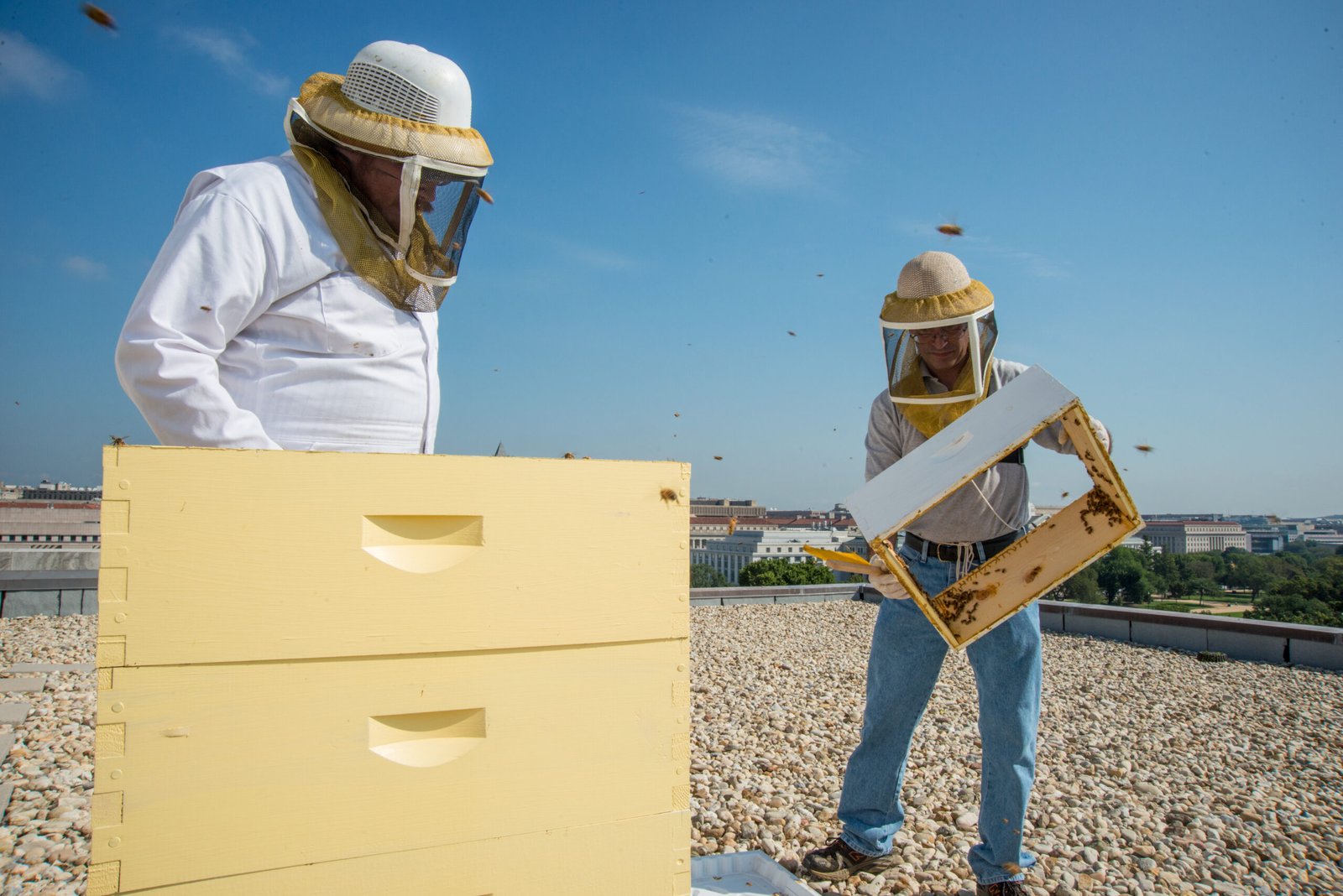
Under NRS 552.230, it’s unlawful for any person to possess bees kept in anything other than movable-frame hives. If an inspector finds bees in non-compliant equipment, written notice — served in person or by registered or certified mail — gives the owner a minimum of three days to correct the condition. If the owner fails to provide accessible movable-frame hives within the specified time, the bees, hives, and combs can be condemned and destroyed by the inspector without compensation. This is a notably firm enforcement mechanism compared to states that simply require conversion without spelling out a specific minimum notice window this short. In practice, this means a beekeeper who inherits or acquires equipment with fixed comb — a rustic-style hive bought at an estate sale, for instance — needs to treat conversion to movable frames as an immediate priority rather than a someday project, since Nevada’s statute gives an inspector the authority to act on a genuinely tight timeline once a violation is documented.
Disease Inspection and Destruction Authority
Under NRS 552.160, the Department may order inspection of any or all Nevada apiaries annually, or more frequently if deemed necessary, or upon a report giving reason to believe a specific apiary may be diseased or that honey, honeycomb, or beeswax is exposed to robber bees. If disease is found, the Department can order destruction of the diseased bees, hives, and appliances at the owner’s expense, order treatment instead if an inspector believes the problem can be abated that way, or proclaim a formal quarantine under NRS Chapter 554. Orders must be served on the owner personally, by registered or certified mail, or — if the owner can’t be located — by posting the order in a conspicuous place at the apiary itself. Separately, NRS 552.205 allows the Department to establish colony-strength standards and certify hives specifically for commercial pollination use, when demand for pollination services warrants it, with reasonable fees covering the cost of that certification. This certification program exists specifically for commercial beekeepers contracting out pollination services to growers, who often need documented proof of colony strength to satisfy their own contractual obligations — a hobbyist keeping a couple of backyard hives purely for honey production has no practical reason to seek this certification, but it becomes directly relevant the moment pollination contracts enter the picture.
Importing Queens and Bees Into Nevada
Under NRS 552.212, no one may ship or transport queens or other bees in screened cages without comb into Nevada unless the shipment is accompanied by a certificate from an authorized officer of the state of origin, confirming the bees were inspected within 60 days before shipment and found free of disease and pests. If a shipment arrives without that certificate, the Department can hold it and notify the owner that the bees will be destroyed 48 hours after notice unless a proper certificate is supplied within that window. This is a fast-moving compliance deadline — beekeepers ordering queens or package bees from out of state should confirm their supplier is providing proper certification before the shipment ever leaves, rather than trying to sort it out after Nevada’s 48-hour clock has already started. Since the certificate specifically has to be dated within 60 days of shipment, it’s also worth confirming the timing works out for your planned delivery date rather than assuming any recent-looking paperwork will satisfy the requirement — a certificate issued 70 days before your package actually arrives no longer meets the statute’s window, even if the bees themselves are perfectly healthy.
Honey Extraction and Abandoned Equipment Rules
Nevada law requires that all honey extraction take place in a location bees can’t access, either during or after the extraction process; an inspector can prohibit or halt extraction in any space that isn’t bee-tight until it’s made so. Separately, neglected or abandoned used hives or appliances containing beeswax or comb — unless kept in an enclosure that prevents bee access — are declared public nuisances outright under NRS 552.250, and are subject to seizure and destruction by an inspector without compensation. Concealing the existence of disease among your own bees, or exposing your bees to known infected material, is independently unlawful under NRS 552.240. Both of these provisions reflect the same underlying logic that runs through most of Nevada’s beekeeping chapter: because disease and pest problems in one apiary can spread to neighboring colonies with real economic consequences for the broader beekeeping community, the law treats seemingly small compliance failures — an unsecured stack of old equipment, a beekeeper quietly hoping a disease symptom will resolve on its own — as public nuisances with genuine legal weight behind them, not just best-practice suggestions.
Penalties for Non-Compliance
Nevada backs its beekeeping chapter with both civil and criminal penalties. The Director of Agriculture can, after notice and an opportunity for a hearing, impose a civil penalty of up to $500 per violation, with proceeds deposited into the State General Fund. Separately, violating any provision of the chapter is classified as a misdemeanor under NRS 552.310, giving Nevada’s enforcement framework both an administrative and a criminal track depending on the circumstances and severity of the violation.
Selling Honey Legally in Nevada
Nevada’s cottage food exemption under NRS 446.866 lets a “cottage food operation” — someone preparing food in their own home kitchen, selling directly and in-person to consumers for their own consumption, with gross sales under $35,000 per calendar year — skip standard food establishment licensing, provided the products are properly labeled, prepackaged, and registered with the local health authority. Critically, the statute defines exactly which foods qualify: nuts and nut mixes, candies, jams and preserves, flavored vinegar, dried herbs and seasoning mixes, dried fruits, cereals and trail mixes, popcorn, and certain non-hazardous baked goods. Honey is not on that list. That means honey doesn’t qualify for Nevada’s simplified cottage food registration path the way it does in several other states, and a Nevada beekeeper looking to sell honey should expect to work through the state’s standard food establishment framework rather than the cottage food exemption — worth confirming directly with the relevant Nevada health authority before assuming the cottage food process applies to a honey business. This is a detail that trips up beekeepers who’ve read general cottage-food guides not written specifically with honey in mind, since honey is treated as an eligible cottage food product in a number of other states covered elsewhere in this series — Nevada’s specific enumerated list is the exception worth double-checking rather than assuming a national default applies.
Frequently Asked Questions
Do I need to register my beehives in Nevada?
No, Nevada has no state beekeeper registration requirement at all.
Can I keep bees in a skep or other fixed-comb hive in Nevada?
No, movable-frame hives are legally required; noncompliant equipment can be destroyed without compensation after a minimum 3-day correction notice.
What do I need to import queen bees into Nevada?
A certificate of inspection, dated within 60 days of shipment, confirming the bees are free of disease and pests.
Does Nevada’s cottage food law cover honey?
No, honey is not on the list of eligible foods under Nevada’s cottage food exemption, so it doesn’t qualify for that simplified registration path.
What happens if my bees are found diseased in Nevada?
The Department of Agriculture can order destruction or treatment at the owner’s expense, or declare a formal quarantine.
FAQ
Do I need to register my beehives in Nevada?
No, there is no state registration requirement in Nevada.
Can I keep bees in a skep or other fixed-comb hive in Nevada?
No, movable-frame hives are required by law.
What do I need to import queen bees into Nevada?
A certificate of inspection dated within 60 days of shipment.
Does Nevada’s cottage food law cover honey?
No, honey is not on Nevada’s list of eligible cottage food products.
What happens if my bees are found diseased in Nevada?
The Department can order destruction, treatment, or a formal quarantine.