Published September 1, 2026
Most of the solitary bees covered on this site are gentle, docile creatures with no colony to defend and little reason to bother anyone. Wool carder bee males break that pattern entirely. A male wool carder bee will patrol a patch of flowers like a tiny, relentless bouncer, physically ramming, chasing, and sometimes fatally injuring any bee, butterfly, or even hummingbird that dares to forage on “his” flowers, dozens of times an hour. This guide covers what wool carder bees genuinely are, the remarkably aggressive male territorial behavior that makes them a real outlier among the bees discussed anywhere on this site, the distinctive leaf-hair nesting habit that gives the species its name, and exactly why females remain completely gentle despite the males’ considerable reputation.
Table of Contents
- What Wool Carder Bees Actually Are
- Identification: Yellow Markings and Abdominal Spikes
- Male Territorial Aggression: A Genuine Exception on This Site
- “Carding” Wool: The Nesting Habit That Gives Them Their Name
- Females Remain Completely Harmless
- Attracting Them: Which Garden Plants Matter Most
- How Wool Carder Bees Compare to Other Solitary Bees on This Site
- Common Mistakes
- Why Researchers Study This Species’ Aggression
- Frequently Asked Questions
What Wool Carder Bees Actually Are
The European wool carder bee, Anthidium manicatum, is originally native to Europe but was accidentally introduced to eastern North America in the early 1960s, first documented near New York, and has since gradually spread across much of the continent. Much like the mason and leafcutter bees already covered elsewhere on this site, it’s a solitary cavity-nesting bee with no colony structure, no worker caste, and no shared nest defense in the usual sense, though as the next section covers, “no shared defense” doesn’t mean “no defense at all.”
Identification: Yellow Markings and Abdominal Spikes
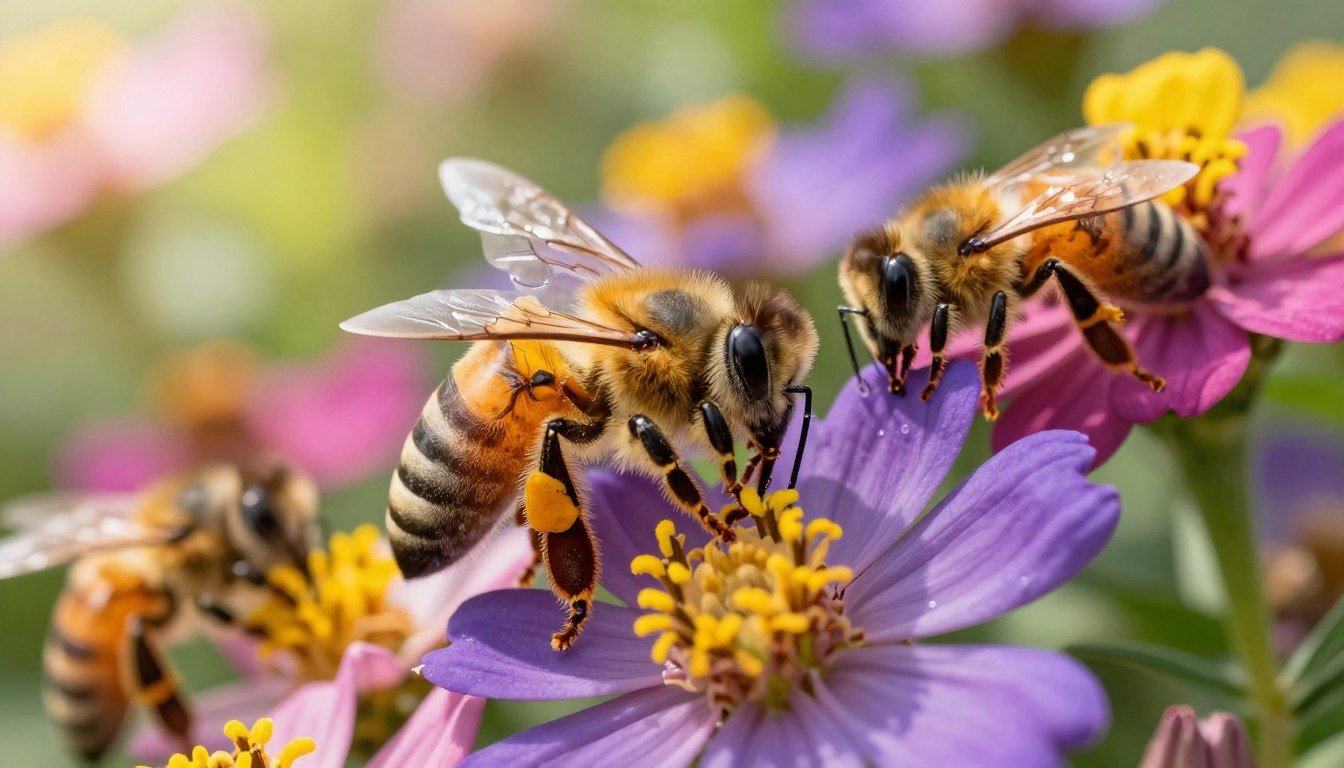
Wool carder bees are roughly honeybee-sized, with bold yellow markings on a black body and a distinctly bright yellow face, a color pattern that separates them at a glance from the duller, more muted coloring typical of many other native bees covered in this cluster. Males are noticeably larger than females, a genuine reversal of the more typical pattern seen across most other bee species, and carry a row of visible spines at the tip of the abdomen, a hard, pointed weapon used specifically in the territorial confrontations described below rather than for any defensive sting.
Male Territorial Aggression: A Genuine Exception on This Site
This is the single most distinctive thing about wool carder bees, and it genuinely breaks the pattern established by nearly every other species covered on this site: male wool carder bees are aggressively territorial, patrolling a patch of flowers and physically attacking, ramming, and chasing off virtually anything else that tries to forage there, other bees, butterflies, and even hummingbirds, sometimes as often as 70 times per hour. Unlike a honeybee or wasp sting, this aggression has nothing to do with venom; males use the sharp spines at the tip of their abdomen as a physical weapon, and documented confrontations have occasionally resulted in fatal injury to smaller competing pollinators. This makes male wool carder bees a genuine, rare exception to the “harmless male, incapable of stinging” pattern repeated throughout this site’s other bee and wasp guides; while it’s still true a male carder bee cannot sting, since males of every bee species lack a stinger entirely, this is the one species on this site where “cannot sting” doesn’t mean “cannot hurt other pollinators.”

Do wool carder bee males patrol the same flower patch for their entire adult lives?
Not necessarily the exact same patch indefinitely, but a male will typically defend a chosen territory consistently for extended periods during his active season, only shifting to a new area if the original patch’s bloom fades or a more favorable territory becomes available nearby.
“Carding” Wool: The Nesting Habit That Gives Them Their Name
The “wool carder” name comes directly from a genuinely distinctive nesting behavior unique among the bees covered on this site. Rather than sealing brood cells with mud, like mason bees, or cut leaf pieces, like leafcutter bees, female wool carder bees scrape and gather soft, fuzzy plant hair, most often from the leaves of lamb’s ear, mullein, and other densely wooly-leaved plants, using their mandibles to comb and roll the fibers into a compact bundle, a process directly analogous to carding wool in textile-making, hence the name. This plant-fiber material is then used to line and construct brood cells inside a pre-existing cavity, giving carder bee nests a genuinely soft, cottony texture unlike any other nesting material covered elsewhere on this site.
Does the female wool carder bee choose her mate based on his territorial success?
Research suggests territory quality and defense success do play a role in mating opportunities, since females tend to visit and forage on flowers within a successfully defended territory, giving the resident male more frequent opportunities to mate with visiting females than a male without a defended territory would have.
Females Remain Completely Harmless
Despite the males’ territorial reputation, female wool carder bees are just as gentle and non-aggressive toward people as any other solitary bee discussed on this site, focused entirely on foraging and nest provisioning rather than defending territory. Females can technically sting but very rarely do, only if directly and firmly handled, exactly the same pattern seen in mason, leafcutter, and other solitary bees covered elsewhere. The male aggression that defines this species’ reputation is specifically directed at other pollinators competing for the same flowers, not at people, and even the most territorial male poses essentially no risk to a person simply observing or gardening nearby.
Can I actually watch a wool carder bee “carding” a leaf if I have lamb’s ear planted?
Yes, and it’s a genuinely rewarding thing to observe up close; a female methodically scraping and rolling fuzzy leaf fibers into a compact bundle with her mandibles is a distinctive, slow-enough-to-watch behavior that’s easy to catch on a sunny afternoon once lamb’s ear or mullein is established and blooming nearby.
Attracting Them: Which Garden Plants Matter Most
Two plant categories matter most for supporting a wool carder bee population in a home garden. For nesting material, densely fuzzy-leaved plants like lamb’s ear (Stachys byzantina) and various mullein species provide the specific plant hair females need for carding and building brood cells; a garden with lamb’s ear planted is genuinely more likely to attract nesting females than one without it. For forage, wool carder bees show a documented preference for flowers in the mint family, including catmint, betony, and salvia, along with various other tubular flowers that suit their foraging style. Providing both the nesting material and the preferred forage together gives this species the best realistic chance of establishing in a garden.
How Wool Carder Bees Compare to Other Solitary Bees on This Site
Wool carder bees share the basic solitary, cavity-nesting lifestyle with mason bees and leafcutter bees, both covered elsewhere on this site, but differ in two genuinely notable ways: their nesting material (plant hair rather than mud or cut leaves) and, especially, the males’ territorial aggression toward other pollinators, a behavior not documented in either of those other species. Where mason and leafcutter bee males are simply harmless and unremarkable, wool carder bee males are harmless to people specifically but genuinely disruptive to other insects sharing the same flower patch, making this species a uniquely two-sided case within this site’s otherwise consistently gentle native bee coverage.
Do wool carder bees pose any documented threat to honeybee colonies specifically?
No meaningful documented threat exists at the colony level; individual foraging honeybees can be chased or occasionally injured by a territorial male at a shared flower patch, but this remains an isolated, individual-forager-level interaction rather than anything resembling the hive-level predation pressure covered elsewhere on this site for genuine honeybee predators.
Are there other Anthidium species besides the European wool carder bee found in North America?
Yes, several native Anthidium species occur naturally across North America and share the same general wool-carding nesting behavior, though the introduced European wool carder bee specifically is the species responsible for most of the documented territorial-aggression research and the one most commonly encountered in urban and suburban gardens across the eastern half of the country.
Is there a season when wool carder bee activity, including the territorial behavior, is most noticeable?
Summer is typically peak season across most of the species’ North American range, coinciding with both the bloom of preferred forage plants like catmint and betony and the availability of lamb’s ear and mullein leaves for nesting material, meaning both the aggressive male patrolling behavior and active female nest-building are most likely to be observed during the warmer months.
Does the introduced status of this species mean it competes significantly with native bees for resources?
Some competition for shared forage and nesting cavities is plausible given the species’ now-widespread North American presence, but current research hasn’t documented the kind of significant, well-established competitive displacement of native bee populations that would classify it as a seriously invasive species, distinguishing it from more aggressively invasive introduced insects.
Is it safe to let children or pets watch wool carder bee activity in the garden up close?
Yes; the territorial ramming behavior is directed at other flying insects and occasionally hummingbirds, not at people or larger animals, and since males cannot sting at all and females sting only in genuine self-defense if directly handled, simply observing the bees from a normal garden distance carries no meaningful risk.
Common Mistakes
The most common mistake is assuming a bee physically ramming and chasing other insects away from a flower patch must be dangerous to people, when the aggression is specifically directed at competing pollinators and males cannot sting under any circumstances. Another mistake is assuming the leaf damage caused by females “carding” wool from mullein or lamb’s ear indicates a plant disease or pest problem, when it’s cosmetic damage from a beneficial native bee gathering nesting material, similar in spirit to the harmless leaf-cutting activity covered in this site’s guide to leafcutter bees. People sometimes also assume this species’ aggressive reputation means it’s harmful to garden ecosystems overall, when its territorial behavior, while genuinely disruptive to other individual pollinators in the moment, doesn’t translate into any documented broader threat to pollinator populations.
Why Researchers Study This Species’ Aggression
Wool carder bee male aggression has drawn genuine research interest specifically because it’s such an unusual case of resource-defense behavior among bees. Most male bee territoriality, where it exists at all, involves competing for access to females rather than defending a food resource against an entire range of unrelated species; wool carder bee males instead defend flower patches as a food and mating resource simultaneously, attacking essentially any visitor regardless of species in a way that’s more commonly associated with certain territorial birds or fish than with bees. Researchers studying the species’ introduced North American populations have also used it as a case study in how a behaviorally distinctive introduced insect can establish and spread while having a comparatively modest, localized ecological footprint rather than the more dramatic invasive impact associated with some other introduced species.
Frequently Asked Questions
Can wool carder bees sting people?
Females can technically sting but very rarely do, only if directly handled; males cannot sting at all, though male wool carder bees are unusual in being able to physically injure other pollinators using abdominal spines rather than venom.
Are wool carder bees native to the United States?
No, the European wool carder bee was accidentally introduced to eastern North America in the early 1960s and has since spread across much of the continent, though it’s not considered a significant invasive threat the way some other introduced species are.
Should I be worried about wool carder bees hurting my honeybees or other garden pollinators?
Individual territorial confrontations do happen and can occasionally harm a competing pollinator, but this remains an isolated, flower-by-flower behavior rather than any documented broader threat to honeybee colonies or overall pollinator populations.