Published March 31, 2026
Effective monitoring of brood and bees is vital in U.S. apiaries. Varroa arrived in North Carolina in 1990, just three years after entering the country. Quick, regular checks help spot rising levels of mites before they harm a colony.
Choosing the right frame concentrates your effort where nurse bees carry the highest mite load. Pull an active frame with older larvae, avoid the queen, then collect a repeatable half-cup of bees. This approach improves consistency when you use an alcohol wash and helps interpret counts.
The alcohol wash remains a gold standard for counting adult varroa. Learn about drone-trap timing and other tactics at drone trapping techniques. For a step-by-step wash method, see how to do an alcohol wash.
Key Takeaways
- Monitor brood and bees regularly to detect varroa early.
- Select frames with older larvae for reliable samples.
- A half-cup of bees gives a repeatable count for an alcohol wash.
- Track results and act when thresholds rise.
- Use proven tactics, including drone trapping, as part of integrated control.
Understanding the Importance of Varroa Mite Monitoring
Regular checks of varroa levels give beekeepers clear data on infestation trends and when to act. Since varroa arrived, managed hives in North Carolina fell by an estimated 44 percent, showing the cost of missed monitoring.
Integrated Pest Management (IPM) uses biological, cultural, and genetic controls. This holistic approach reduces reliance on chemical treatment and supports long‑term colony health.
Consistent monitoring lets managers track population growth and apply treatment only when thresholds are reached. That prevents unnecessary chemical use and boosts survival rates.
- Track levels monthly during active seasons.
- Use repeatable sampling methods for reliable comparisons.
- Combine data with research and local experience to plan interventions.
| Focus | Why it matters | Action |
|---|---|---|
| Regular monitoring | Detects rising varroa population early | Schedule monthly checks |
| IPM | Reduces pesticide dependence | Use genetic and cultural methods |
| Threshold-based treatment | Targets infestations, saves colonies | Apply chemical treatment when needed; compare options at treatment comparisons |
| Record keeping | Improves long-term decision making | Log counts and actions each inspection |
Identifying the Best Brood Frame to Sample for Mites
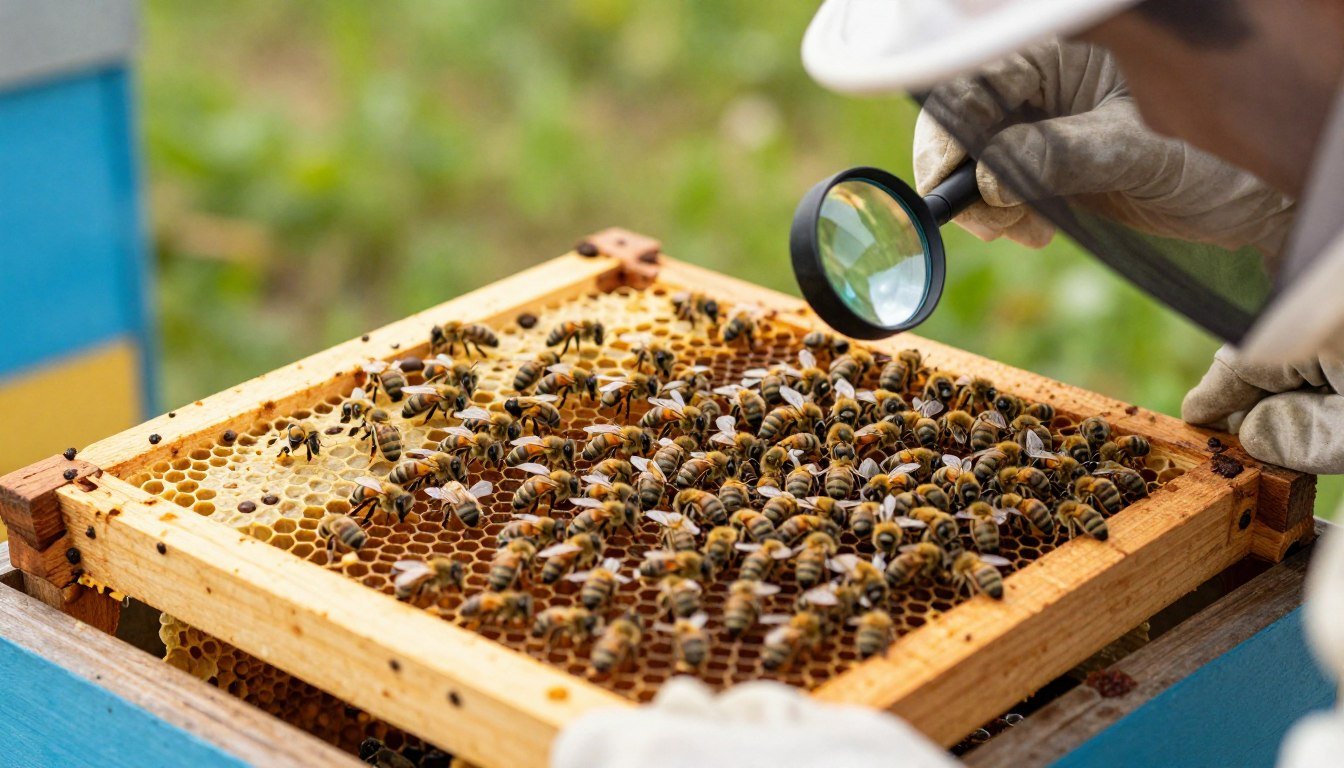
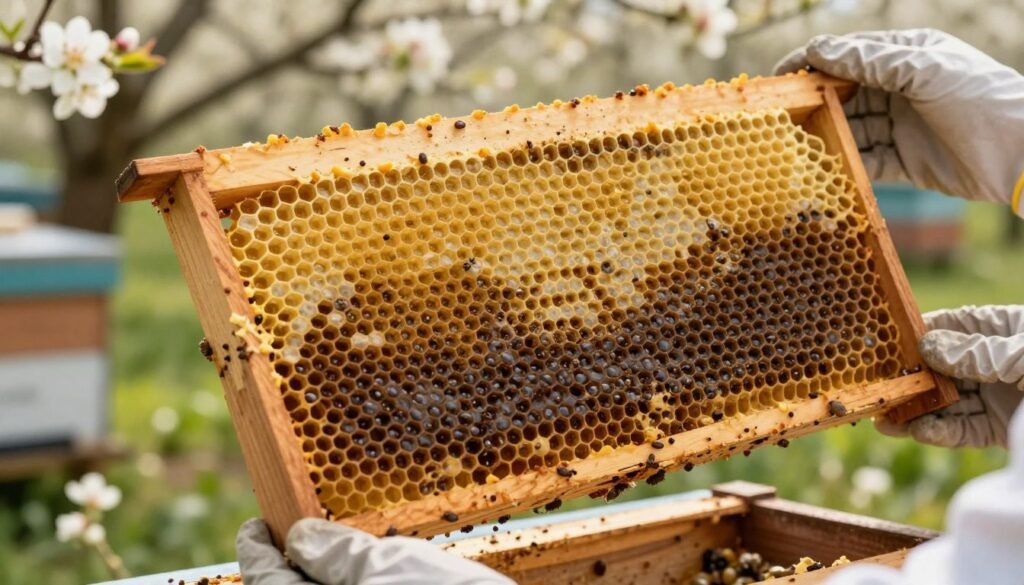
Choose a single, consistent frame that shows a solid pattern of developing brood. Collecting adult nurse bees from that area gives a repeatable snapshot of infestation levels in the colony. Aim for frames where worker bees cluster and avoid disturbing the queen.
Why Nurse Bees Matter
Nurse bees spend long hours inside capped cells caring for larvae. That close contact makes them the main hosts during the travelling stage of varroa and the most accurate indicator of colony health.
Research supports using nurse populations for reliable counts. When you pull bees from the right spot, your wash or sugar test reflects true varroa levels.
Locating Capped Brood
Look for a frame with a dense cluster of capped cells and heavy nurse activity. A solid pattern reduces sampling error and targets adult bees attending brood.
Always scan for the queen before collecting your sample. Keeping her out of the jar prevents skewed counts and protects the hive.
- Pick frames with continuous capped areas.
- Target nurse clusters near the center brood nest.
- Check queen presence and remove her from the work area.
For more guidance on timing and monitoring techniques, see varroa monitoring guidance and read about the best time to test.
Essential Tools for Accurate Hive Sampling
Accurate sampling starts with the right tools laid out and ready at the hive.
Screened bottom boards let dislodged varroa fall through mesh so you can track natural drop. A thin coating of petroleum gel on the screen makes counts easier by catching mites without harming bees.
Pack a sturdy hive tool, a clean measuring cup for bees, and a clear counting method for the board. Clean equipment improves repeatability and helps set treatment thresholds.
- Use the screened board as a noninvasive baseline over a set time period.
- Measure a repeatable number of bees when you perform a wash; this aids comparison.
- Keep records of counts so treatment timing matches colony needs.
Before work, verify queen safety and hive stability. For guidance on reconnaissance sampling and bee counts, see a practical guide on reconnaissance sampling and a note on how many bees to use in an alcohol wash at bee count recommendations.
Executing the Alcohol Wash Method
A proper alcohol wash pairs a consistent bee count with firm technique for precise results.
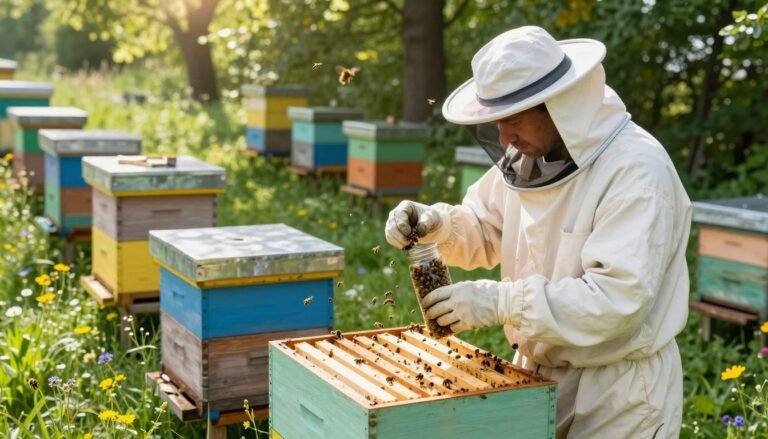
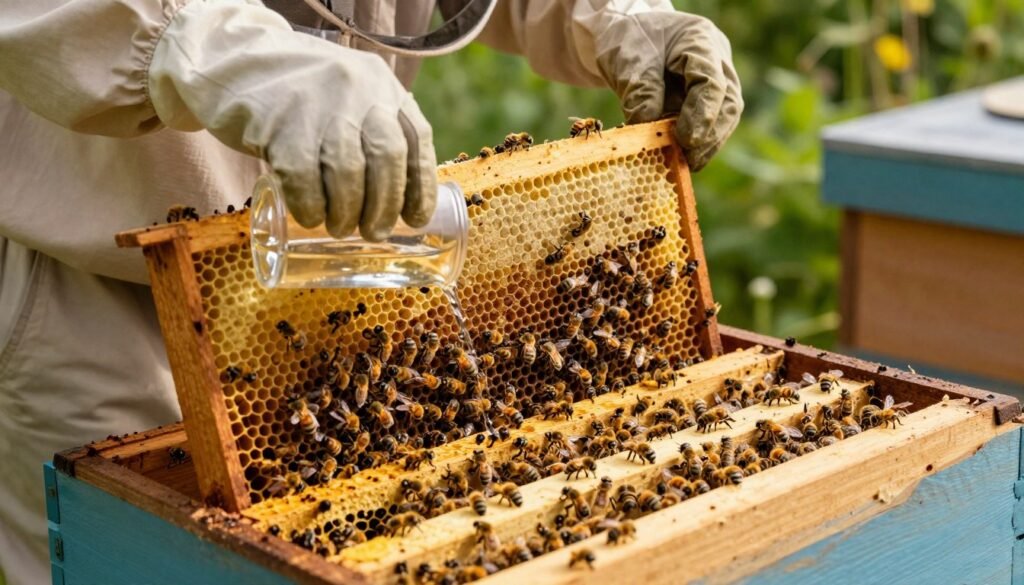
Collecting the bees: Use a 1/4 cup measuring cup to take about 200 (±25) adult bees from a capped area of the hive. Keep the queen out of the jar before sealing.
Washing: Add enough alcohol to cover the bees, then shake the sealed jar vigorously for at least one minute. This dislodges varroa and clears the cluster for counting.
Calculating Percent Infestation
Pour the liquid through a fine filter and count the mites. Divide the raw number by two to express mites per 100 bees. That percent guides treatment decisions.
- 200 bees in a 1/4 cup gives repeatable results.
- Shake ≥1 minute to free attached varroa.
- Use the percent value to compare levels across colonies and time.
| Step | Action | Outcome |
|---|---|---|
| Collect | 200 (±25) adult bees in 1/4 cup | Standardized sample |
| Wash | Cover with alcohol; shake ≥1 min | Dislodged varroa in liquid |
| Count | Filter and tally mites | Raw number for calculation |
| Calculate | Divide mites by 2 for mites per 100 bees | Percent infestation used for treatment |
Research supports this alcohol wash as a reliable method; see a practical review of refining the mite wash and guidance on how to read an alcohol wash mite.
Performing the Powdered Sugar Shake
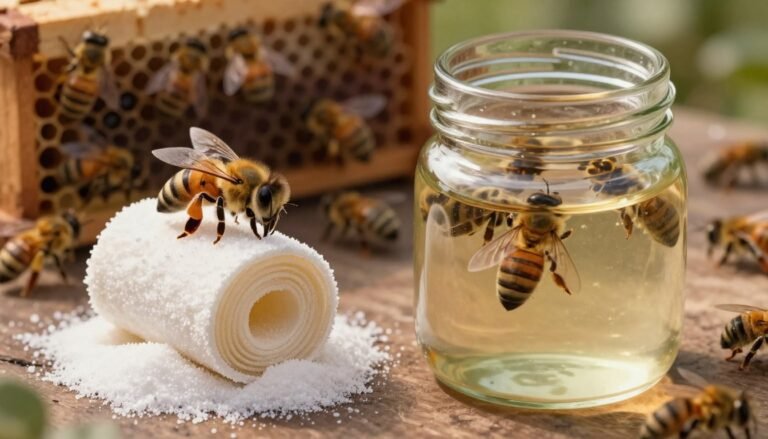
A powdered sugar shake gives a nonlethal way to dislodge varroa from adult bees while keeping the colony intact.
Preparing the Sample
Collect about a 1/4 cup of active adult bees from a consistent area of the frame. Keep the queen out of the container before you seal it.
Use a mesh lid or a jar with ventilation. Add 1–2 tablespoons of powdered sugar through the mesh so sugar coats the bees and encourages mites to release.
Shaking and Counting
Shake the jar for one minute, then let it rest one minute. Shake again for another minute.
Turn the jar over a white board or tray and count the number of fallen particles that are varroa. Calculate mites per 100 bees from that count to compare levels across colonies.
- The powdered sugar shake is noninvasive and preserves bee survival.
- Return the bees to the hive after testing to maintain colony strength.
- For alternatives and further guidance, read a practical sugar-roll guide or check post-treatment count procedures.
Sugar-roll test guidance and post-treatment count notes at post-treatment varroa mite count help interpret results and plan monitoring frequency.
Interpreting Your Mite Count Results
A clear interpretation of your count turns data into timely action for each hive.
Hive Florence returned 2.333 mites per 100 bees, placing it in the precautionary 2–3% range. That level signals a need for a targeted treatment aimed at protecting the brood box and adult population.
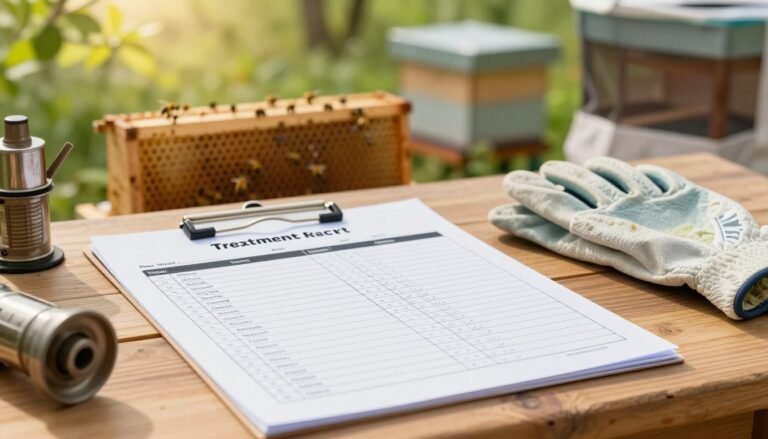
Use the percent value from your wash or sugar method and compare it with established thresholds. Keep a written log of each count, treatment applied, and follow-up number. Consistent records let you judge which methods reduce population fastest.

- Note the count and date, hive location, and queen status.
- Act when levels enter the precaution range; choose a targeted treatment that fits your IPM plan.
- Repeat the count after treatment to confirm a drop in population.
For deeper guidance on thresholds and reading results, consult an understanding mite counts resource and a review of apiary productivity.
Conclusion
Simple, repeatable checks on adult bees reveal trends that protect colony health. Regular monitoring of varroa in each hive gives clear results that guide timely action.
Use consistent methods and record counts so you can compare visits and spot rising levels early. Accurate data makes management choices clearer and reduces risk.
When your results show risk, act with targeted treatments and IPM steps to shield the colony. Ongoing research supports combining cultural and genetic tools with chemical options when needed.
Learn more about refining your approach in this review on re-evaluating varroa monitoring. Keep testing, keep records, and keep your hives strong.
FAQ
What part of the hive gives the most reliable mite count?
Sample adult nurse bees from frames with open or recently capped brood near the brood nest. Nurses spend time on developing brood and typically carry the highest varroa load, which yields a more representative infestation estimate than bees from honey frames or outer combs.
How many bees should I collect for an alcohol wash?
Aim for about 300 bees per sample (roughly a cup). This number balances accuracy and practicality: it smooths out variability between small samples and keeps the alcohol wash manageable in common lab or field containers.
Where exactly should I take the bees on a frame?
Remove bees from the central brood area, targeting frames with nurse activity and capped brood. Gently brush or shake bees into a mesh container so you capture a mix of young in-hive workers rather than foragers from the entrance.
When is the best time of season to monitor varroa levels?
Monitor in spring after population buildup, mid-summer at peak brood rearing, and again in fall before winter preparations. These checkpoints help time treatments and assess cumulative load before colony decline or winter stress.
How do I calculate percent infestation from an alcohol wash?
After washing, count the number of mites recovered and divide by the number of bees sampled, then multiply by 100. For example, 15 mites from 300 bees = 5% infestation. Compare this to treatment thresholds used in your region.
Can I use powdered sugar instead of alcohol, and how does it compare?
Yes. A powdered sugar shake is nonlethal and works well in the field. It typically recovers fewer mites than alcohol, so interpret counts cautiously. Use consistent method and timing when tracking trends over time.
What equipment do I need for accurate sampling?
Essential items include a soft brush or bee escape, a collecting cup or jar with a mesh lid, 70–90% isopropyl alcohol for washes (or powdered sugar for sugar shakes), a counting tray or white paper, and a notebook or digital log for results.
How often should I sample each colony?
Sample at least three times per season—spring, mid-summer, and fall—or more frequently if mites are rising or after treatment. Regular monitoring helps identify trends and assess treatment efficacy.
What threshold should trigger treatment decisions?
Thresholds vary by region and management goals. Common action levels are roughly 2–3% mites on a sample during summer for integrated pest management. Consult local extension services for specific guidance tailored to your area and operations.
How do I reduce sampling error when counting mites?
Standardize your protocol: sample the same colony location (nurse bees), use consistent sample sizes, perform counts at similar times of day, and record environmental or colony conditions. Repeat sampling if results seem inconsistent.
Can honey presence or frame position affect results?
Yes. Foragers drinking nectar and bees on honey frames usually show lower varroa loads. Sampling near the brood nest minimizes bias from foragers and provides a truer picture of reproductive mite pressure.
Are there safety or legal considerations using alcohol in the field?
Use isopropyl alcohol responsibly—keep containers sealed, follow local transport rules, and avoid spills. Use gloves and eye protection. Dispose of used alcohol and bee remains following local waste guidelines.
How should I record and track mite counts across multiple colonies?
Keep a standardized log with colony ID, date, method used, sample size, mite count, percent infestation, and recent treatments. Consistent records let you compare colonies and evaluate treatment success over time.
What do I do if counts are high after treatment?
Verify method and sample timing, then consider retreatment if counts exceed recommended thresholds. Rotate treatment types to limit resistance, and combine chemical and cultural controls like drone brood removal and powdered sugar dusting where appropriate.