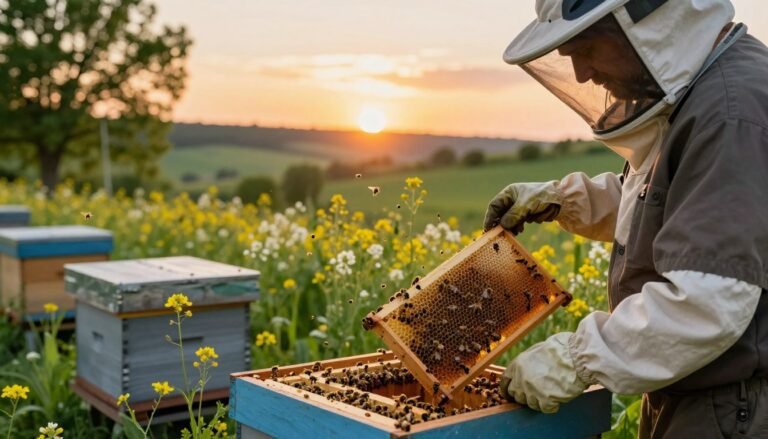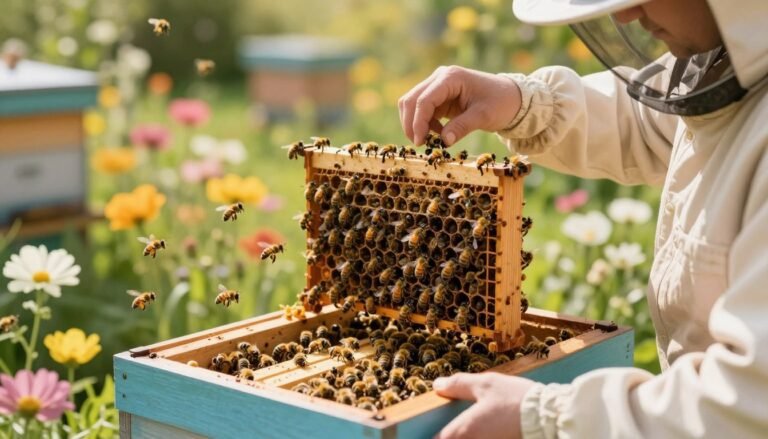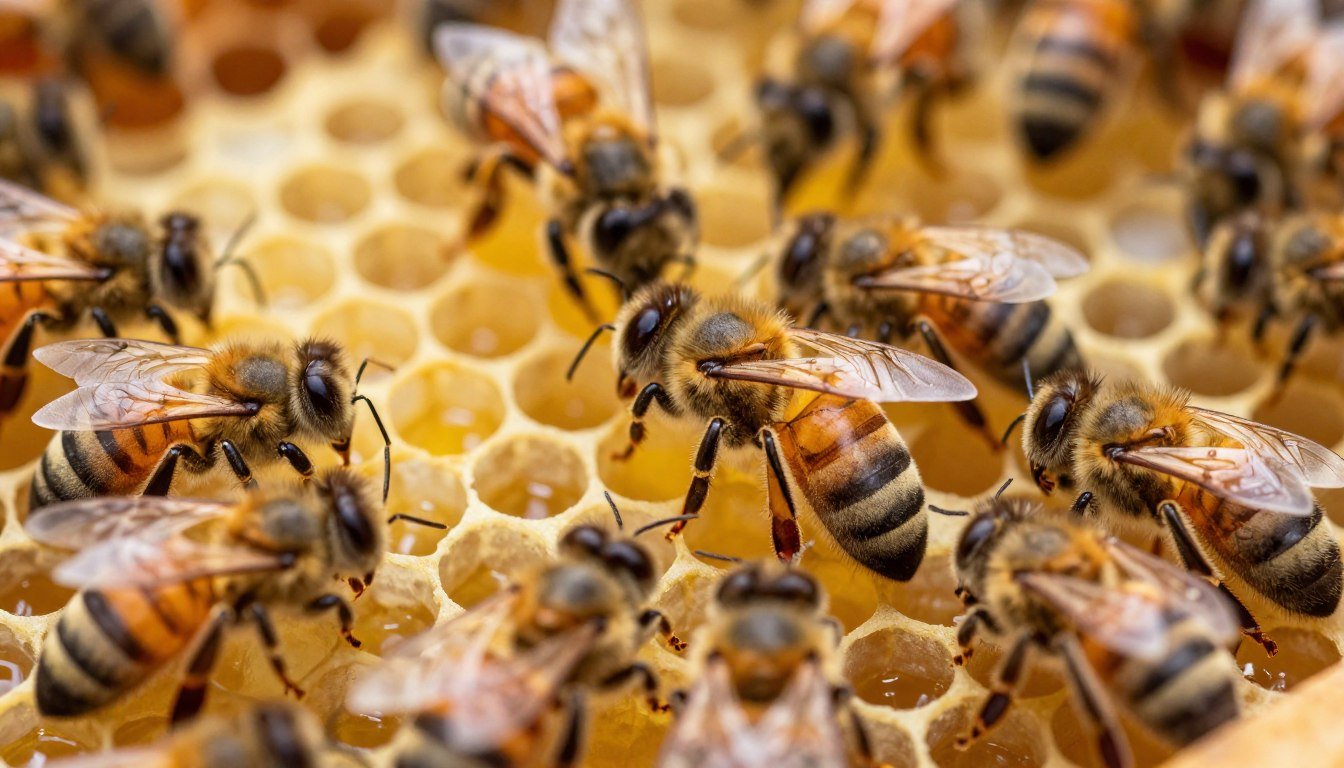
Understanding how a new leader appears helps any beekeeper stay ahead of swarms and maintain a healthy colony. Honey bees evolved about 300,000 years ago, and that long history shaped complex behavior around queen replacement.
When an old queen is removed or fades, workers raise a successor. Spotting the early cues takes calm observation. Watch brood patterns, flight activity, and worker movement across frames.
Each day of careful checks yields clear data on whether a virgin queen has emerged. Handling the old queen with care during inspections reduces harm and helps the new leader assert control without undue stress.
Key Takeaways
- Learn simple visual cues to monitor brood and flight activity.
- Record daily observations to track changes in colony behavior.
- Manage the old queen carefully during transition periods.
- A calm, steady approach lowers risk of swarm events.
- Understanding bee biology improves decision-making as the new leader settles.
Understanding the Queen Development Cycle
Queen development follows a precise schedule from egg to emergence that spans just over two weeks. This section explains that timeline and what to watch for during inspections.
Egg to Larva
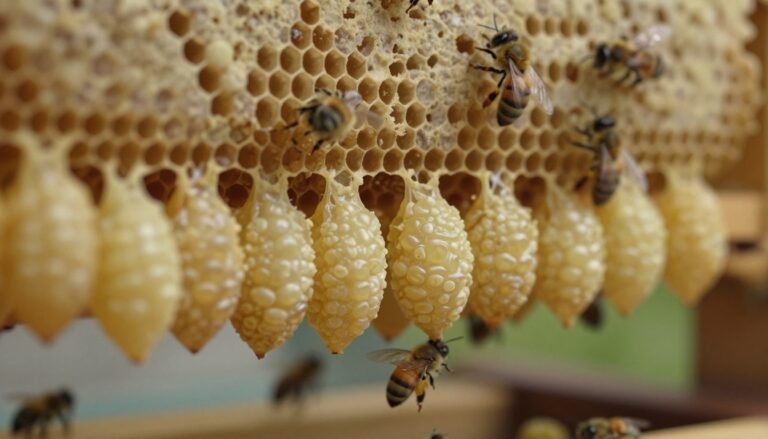
The process begins with a single egg that spends three days before hatching. Workers feed the chosen larva royal jelly during its six-day larval stage. After those first nine days, the workers cap the specialized cell to begin transformation.
Pupation and Emergence
Pupation takes seven days. During this time, worker bees guard the capped cells and manage colony stores to support development. At day 16 an eclosed new leader appears ready for mating flights.
Key points to track:
- The full development takes exactly 16 days from egg to emergence.
- A sealed queen cell marks the start of the pupal stage.
- Drones must be present later for successful mating of virgin queens.
“Timing is everything: tracking days gives beekeepers a solid way to predict emergence.”
Recognizing Signs of a Virgin Queen in the Hive
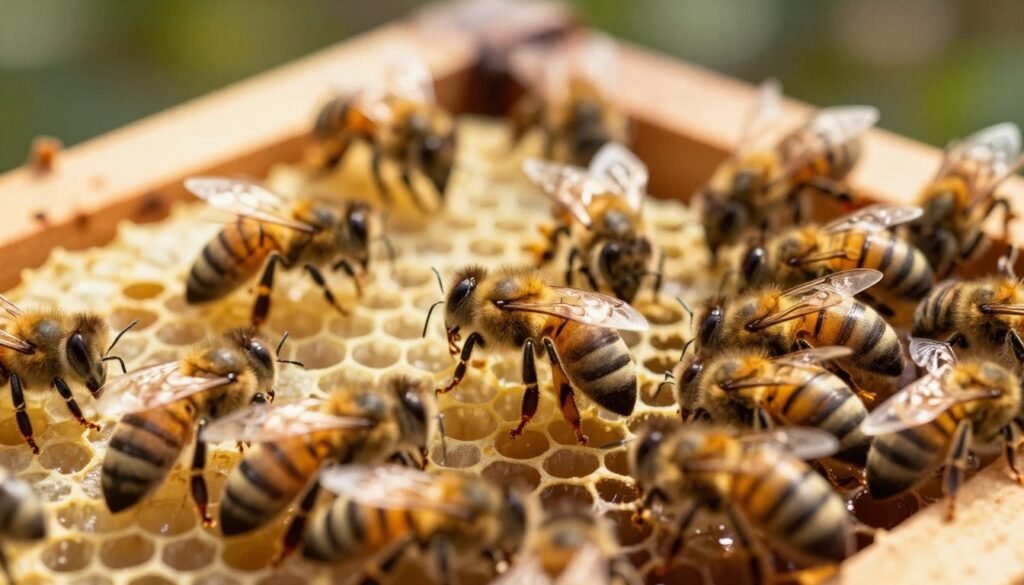
A newly hatched leader often moves quickly and hides among workers, making detection tricky.
A new queen is typically smaller and more skittish than a mated one. She rarely travels with a guard, so she blends into busy frames and is easy to miss.
Watch how workers behave around certain cells. Gentle inspection over several days reveals subtle changes. Worker attention, brief escorts, or groups clustering near a capped cell can point to presence of a new queen.
Practical checks: inspect your hives once a week. Note brood pattern, drone activity, and stores. Track progress across a few weeks to allow the colony to accept the new queen.
“Patience and steady observations matter more than hunting for one insect during a single inspection.”
- Small size and quick movement make spotting difficult.
- Worker interactions are one of the clearest clues.
- Drones and other bees influence social dynamics while mating takes place over days and weeks.
Visual Cues for Identifying a New Queen
Newly emerged leaders move faster and tuck into comb spaces where they are hard to follow. Watch for speed and small size on busy frames. These traits separate a new queen from drones and workers.
Size and agility differences
Size and Agility Differences
A new queen is often noticeably smaller and quicker than a mature queen. She darts across comb and slips between bees, so she rarely stays in plain sight.
Michael Bush advises against hunting for a freshly hatched individual because she is reclusive. Frequent checks can stress the colony and make hiding behavior worse.
- Motion: rapid movement on central frames rather than slow, deliberate steps.
- Worker response: clusters or escorts hint at a presence even when you cannot see her.
- Frame checks: inspect methodically and watch comb edges where she likes to slip away.
“Let the colony settle; careful observation beats aggressive searching.”
While you wait, manage stores and keep workers healthy. For tips on marking and later identification, consult this marking guide. If you worry about swarm preparation at these times, see this swarm prep post.
Behavioral Differences Between Virgins and Mated Queens
A queen’s status often shows in small, clear behaviors that any beekeeper can note.
One major contrast is calm versus flighty movement. An untested female is skittish and may fly if you disturb the hive too much. A mated queen moves slowly and stays near brood. She is often flanked by an informal guard.
Watch worker interactions closely. Workers cluster, escort, or form a guard around a settled ruler. With an untested ruler, escorts are scarce and worker responses are nervous.
“Observation, not panic, yields the clearest reading of colony behavior.”
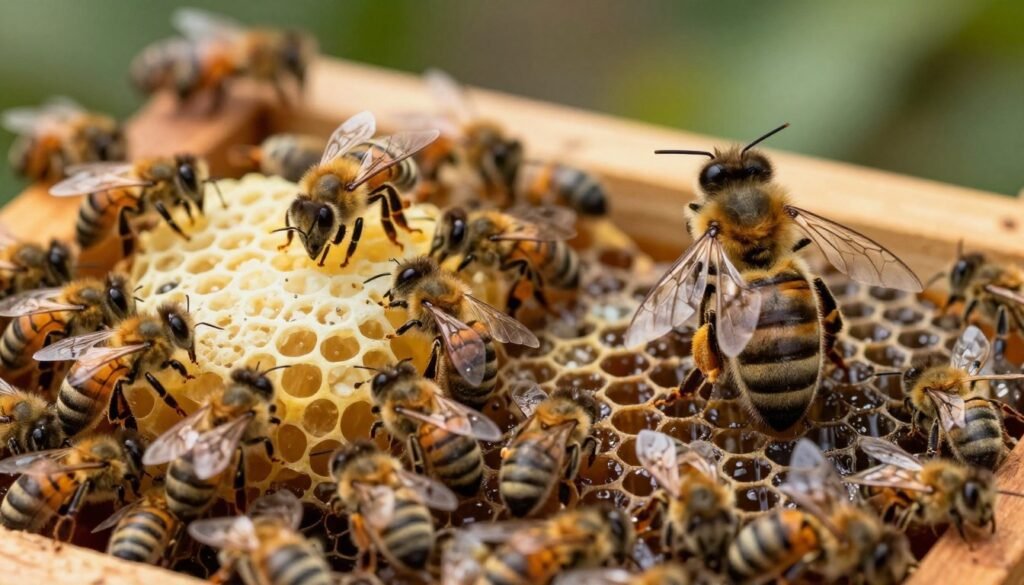
- Flight response: higher for untested females.
- Worker escort: common for mated rulers, rare for newcomers.
- Drones and stores: their activity shifts as stability returns after mating.
| Behavior | Untested Female | Mated Ruler |
|---|---|---|
| Movement | Fast, skittish | Slow, deliberate |
| Worker Response | Nervous, minimal escort | Clustered, guard formation |
| Hive Stability | Higher agitation | Calmer, steady stores |
The Role of Weather in Mating Success
The early adult days for a queen depend heavily on suitable weather for successful mating. Warm, calm conditions let her fly, meet drones, and return fertile to the hive.
Temperature requirements
Temperature Requirements
Successful mating most often occurs when daytime temperatures reach the high teens Celsius and winds stay light. Sunny, settled days create activity among drones and workers, expanding the window for a mating flight.
Impact of prolonged rain
Impact of Prolonged Rain
Extended poor weather can be critical. In 2017, June’s heavy rains in Fife delayed many mating flights and left some queens unable to complete mating for weeks.
“Three weeks of bad weather can push a colony past its mating window and risk poor egg production.”
Practical advice: monitor forecasts a week at a time. If a couple of weeks look wet, expect delays and watch for changes in worker and drone activity once clear days return.
Managing Colony Swarming During the Transition
Urban apiaries often need proactive moves to stop colonies from breaking away during transitions. Managing queen cells closely helps prevent an unexpected swarm and keeps brood production on track.
Practical steps: inspect frames for multiple queen cells and act quickly when you find them. Many beekeepers break down surplus cells to suppress swarming, but that must be done carefully to avoid stressing the bees.
Dunc moved the old queen into a nuc to reduce swarming pressure in his yard. Splitting a hive into nucs gives workers space and keeps resources balanced while the new female completes mating flights.
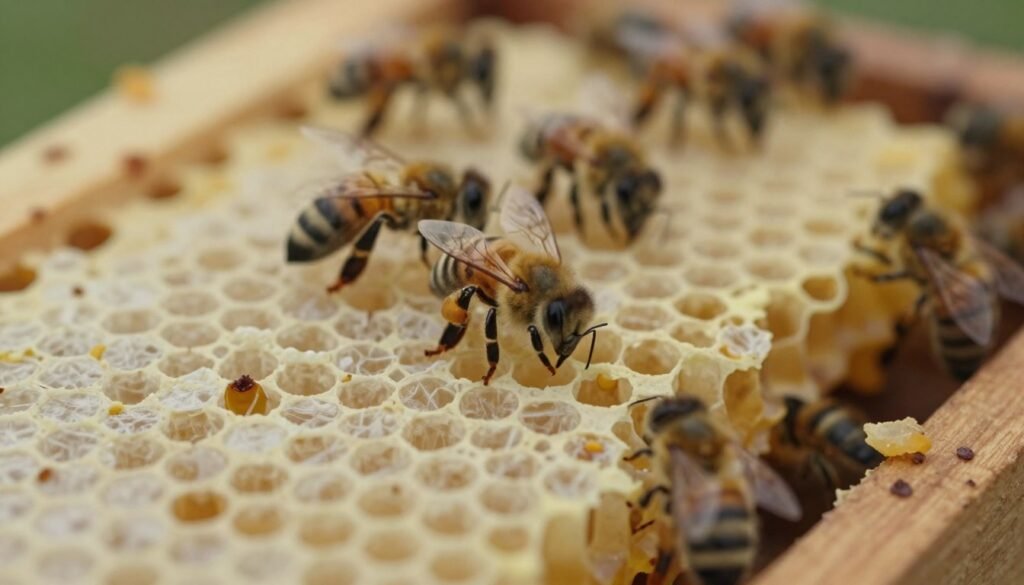
- Watch for many queen cells — multiple cells often mean the colony is preparing to swarm.
- Use nucs to split and stabilize the workforce without losing brood or stores.
- Targeted removal of extra cells can delay swarming, but combine that with splits when needed.
“Controlling queen cells lets the beekeeper shape colony outcome and lower swarm risk.”
For deeper guidance on managing buildup and declines, consult this colony buildup guide. If you wonder about acceptance and rejection during changes, see why bees reject a queen.
Why You Should Avoid Frequent Hive Inspections
Frequent inspections often do more harm than good during sensitive brood transitions.
Opening boxes too often disturbs workers and risks upsetting developing queen cells. Moving frames can flush a newly emerged female and send her on an unwanted flight. Michael Bush advises against hunting for a new ruler because she hides well among bees and comb.
Check once a week to track progress and keep stress low. A light look the day after emergence confirms presence without repeated disruption.
If you must inspect, work early or late when foragers are home. That reduces flight risk and keeps the colony calmer.
Consider splits or a nuc to relieve pressure instead of constant frame checks. Nucs let you manage resources and lower swarm risk while leaving the main stack largely untouched.
“Let the colony deal with its cells and social signals; careful, limited checks protect long-term stability.”
For a practical routine on timing and technique, see this inspect a beehive guide that matches a weekly approach.
Monitoring Hive Entrance Activity
A calm watch at the entrance reveals much about brood development without lifting a cover.
Observe returning bees for pollen loads. Frequent pollen return shows foragers are provisioning stores and that the colony is active. Low pollen with frantic traffic can mean disruption inside.
Look from a short distance for steady traffic and direct flights. Note how many workers come back with bright pollen pellets. This is an easy, non-intrusive signal that eggs are likely being laid on central frames.
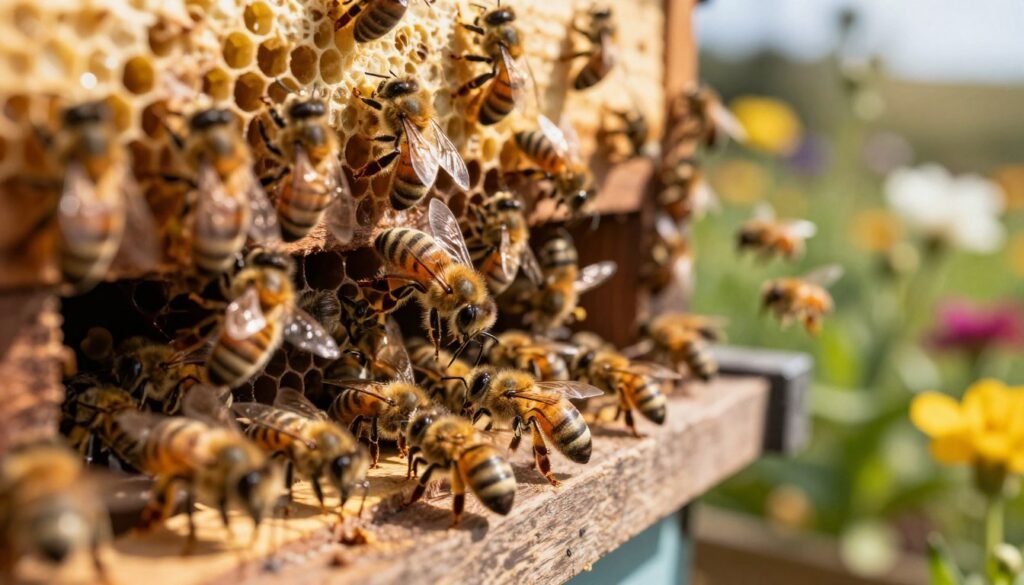
Check the entrance at different times of day for a clear pattern. Polished cells on middle frames are another strong clue that workers expect the queen to lay soon. If you cannot open the stack, these outside cues guide timing for light inspections.
- Watch for steady pollen return as proof of a productive colony.
- Use entrance observations instead of frequent internal checks.
- Polished cells on central frames hint that laying will begin or has begun.
“A few minutes watching the front often beats a rushed frame check.”
For practical tips on where to stand and what to log, see watch the entrance. If you need to manage introductions later, consider options like a queen cage to reduce disturbance.
Assessing the Success of Mating Flights
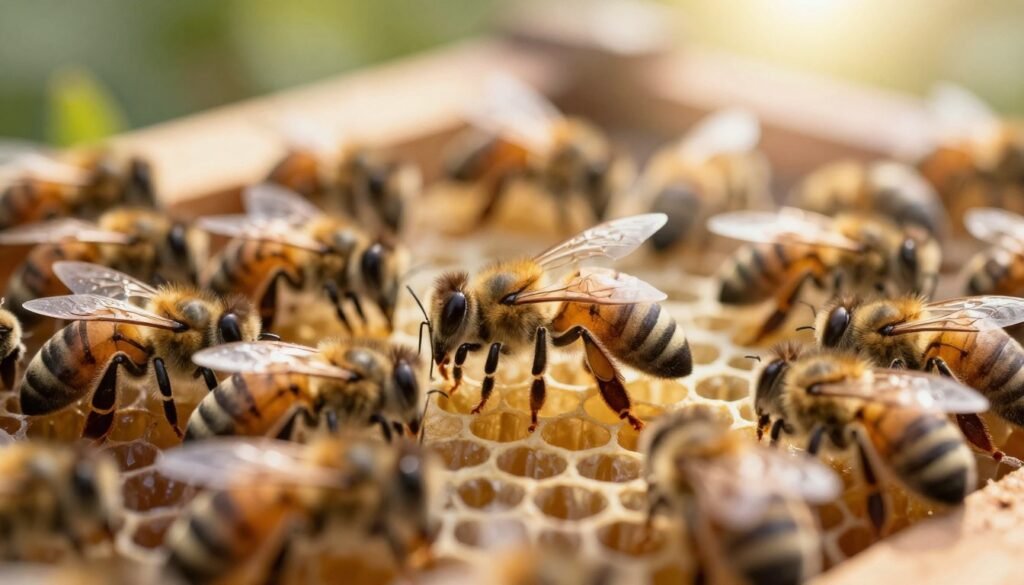
The surest proof that a new queen completed mating is steady egg-laying on central frames.
Wait the first week: the female needs about 5–6 days after emergence to reach sexual maturity. During that time she prepares for mating flights and the colony settles around her.
Under good conditions, expect a full cycle — emergence, mating, and laying — to take roughly 23–25 days. If the female fails to return from her flight, eggs will be absent and workers may start new queen cells.
Check for eggs across middle frames. Finding single eggs in neat rows is the clearest sign a mated queen has taken up laying duties. Calm worker behavior and steady brood patterns support that conclusion.
- Allow time after emergence; do not hunt for the insect itself.
- Look for eggs on central frames, not just scattered brood.
- Monitor entrance activity and worker calmness as supporting cues.
For more on mating flight timing and best practices, read this detailed post on mating flights and a practical guide to rearing in the U.S. at queen rearing basics.
“Patience after emergence gives the clearest, least disruptive evidence that mating succeeded.”
Dealing with Potential Queenless Colonies
A colony left without leadership often shifts into emergency rearing to produce a new queen.
Act quickly but calmly. If frames show no eggs and workers seem restless, check for capped cells. These cells are the colony’s immediate response and may contain viable candidates.
One practical move is to transfer capped cells into a nuc. Dunc used this approach to boost the odds that a new queen would survive and return to laying. A small nuc gives developing females room and devoted workers to tend them.
Workers will normally select very young larvae to raise as replacements. Monitor frames for eggs after mating season passes; steady egg-laying is the clearest sign that a mated queen has taken over.
- If the colony remains queenless, unite it with another hive or introduce a new queen.
- Support nucs with food and attention so workers can care for brood properly.
- Handle swarm cells carefully — they can be the colony’s best chance at producing a viable ruler.
“Give colonies structured support rather than frequent disruption; measured action preserves strength.”
Patience During the Mating Window
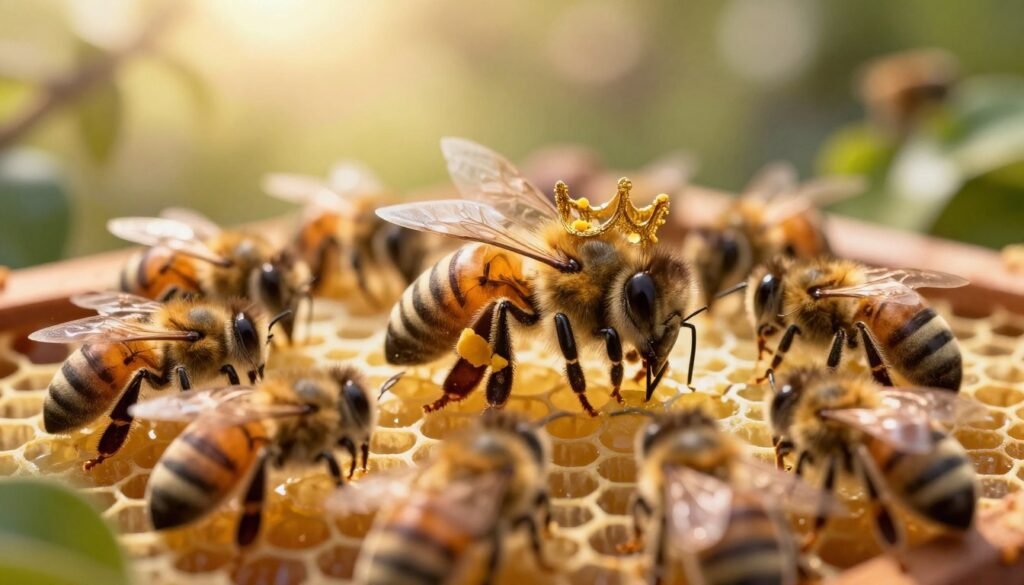
After emergence, the next few weeks are a waiting period that rewards restraint. The mating window usually opens about 5–6 days after emergence and can remain open for 3–4 weeks, depending on weather.
Good weather, calm winds, and warm days let the female complete her mating flight. Poor conditions stretch the time it takes for a mated queen to start laying and can push the process well beyond a couple of weeks.
Do not rush inspections. Repeated checks stress workers and may trigger unwanted behavior. Give the colony time, watch entrance traffic, and log progress by days and weeks rather than by hourly checks.
- Patience is essential: the queen needs the right weather to fly and mate.
- Expect delays; mating often takes longer than many beekeepers plan.
- Maintain calm; support the colony rather than forcing outcomes.
“Waiting for the mating flight is a standard part of good beekeeping.”
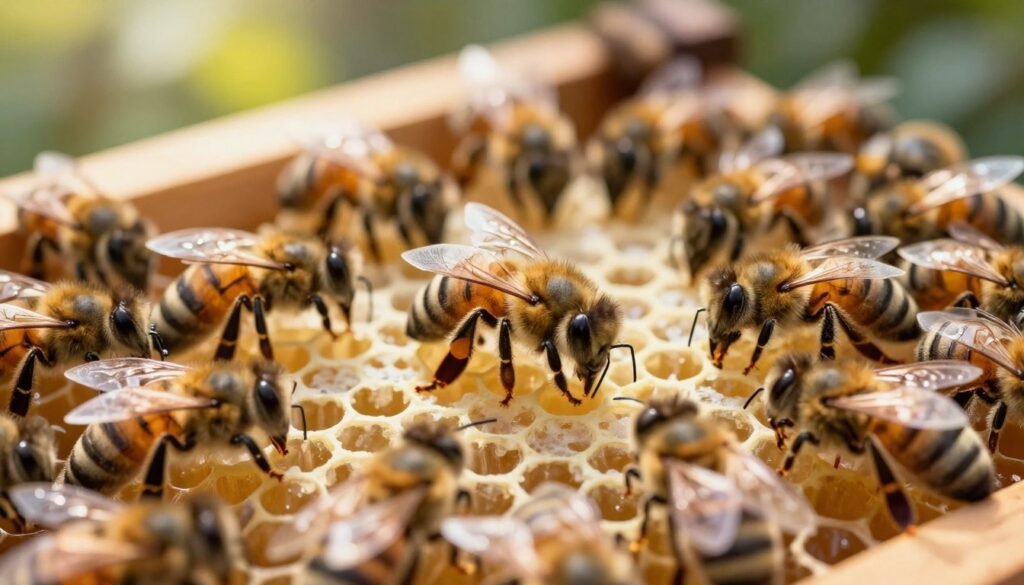
| Stage | Typical Time | What to Watch |
|---|---|---|
| Pre-flight | 5–6 days after emergence | Worker calm, drone presence |
| Mating window | 3–4 weeks | Weather windows, flight days |
| Post-mating | 1–2 weeks to lay | Eggs on central frames, steady brood |
For advice on keeping cool during this waiting period, see Keep Calm, Patience.
Conclusion
Final point: good beekeeping asks for patience and calm. Honey bees evolved over 300,000 years and largely manage reproduction and swarm cycles on their own.
Give the colony time after emergence and avoid frequent box openings. Watching the hive entrance lets you monitor progress without needless disturbance.
Keep the Keep Calm spirit from 1939 in mind during busy season. From my yards, I’ ve seen that the best course is often to rest, observe, and consult prior posts when extra action seems necessary.
FAQ
How can I tell if a new queen has emerged from a queen cell?
Look for torn or empty queen cells on frame faces, clustered workers near the cell, and brief periods when brood care shifts. Newly emerged queens often move quickly across comb and may spar with worker bees. Check frames gently; fresh nectar and pollen around an empty cell often mean emergence occurred within the last day or two.
What are the stages from egg to adult queen and how long do they take?
Queen development takes about 16 days: three days as an egg, five days as a larva with heavy royal jelly feeding, then roughly eight days of pupation. Timing can vary a day or two depending on colony health and temperature.
What should I expect during pupation and emergence of a queen?
Pupae form inside sealed queen cells. As emergence approaches, the cell cap often shows a clean seam or hole. When the queen emerges, she may chew out aggressively and then rest in the hive for a day or two before taking any action.
What visual cues indicate a newly emerged queen on frames?
New queens appear slimmer than established queens, with a lighter and sometimes slightly fuzzy abdomen. They move more quickly and may be escorted by attending workers. You might spot them near recently sealed queen cells or along brood comb edges.
How do size and agility differ between new and mated queens?
Newly emerged queens tend to be leaner and more agile, darting across comb. After mating, queens fill out with eggs and appear more robust and deliberate. A mated queen’s abdomen often looks fuller when she begins laying extensively.
How do behavior patterns differ between virgins and mated queens?
Virgins are exploratory and may fight other queens or attempt to fly out for mating. Mated queens focus on egg laying and move steadily across comb. Worker interactions differ too—nurses may cluster around a virgin more, while they quickly begin brood care once eggs appear.
What weather conditions affect successful mating flights?
Warm, calm, and sunny days with temperatures above roughly 60–65°F favor mating flights. Light winds and low cloud cover improve drone flight activity and queen navigation. Ideal windows often fall within a week or two after emergence.
How does prolonged rain influence mating chances?
Extended wet weather delays mating flights and reduces drone availability. Queens may wait several extra days to two weeks for suitable conditions. Repeated poor weather increases the risk of unmated queens and can lead to failed colony requeening.
How can I manage swarming risk while a new queen is developing?
Reduce congestion by adding space, moving honey frames, or creating a split or nuc. Regularly inspect for multiple queen cells and remove excess cells if you intend to keep the original queen. Provide good ventilation and avoid drastic disturbance during the transition.
Why should I avoid frequent hive inspections during queen transition?
Repeated disturbance stresses workers and can interrupt queen emergence or mating flights. It also cools brood and may prompt swarming. Limit inspections to quick checks focused on queen cells, stores, and evidence of emergence.
What entrance activity suggests a queen has completed mating?
Look for steady worker traffic, returning drones earlier in the day, and reduced circling at the entrance. A mated queen’s presence won’t change entrance traffic much, but the colony will resume normal foraging patterns within a few days.
How do I know if mating flights succeeded and egg laying has begun?
Fresh, single eggs in cells are the clearest sign. Check brood frames 7–10 days after emergence; tiny larvae or consistent egg pattern show success. Uneven or absent eggs suggest the queen may be unmated or delayed.
What are the immediate steps if I suspect a colony is queenless?
Search thoroughly for queen cells and any sign of a recent emergence. If none, consider introducing a mated queen or a frame with eggs and young larvae to encourage emergency rearing. Another option is to unite the colony with a strong hive using the newspaper method.
How long should I wait during the mating window before taking action?
Allow at least two to three weeks after emergence for mating and initial egg laying, accounting for occasional weather delays. If no eggs appear after three weeks, plan to requeen or combine the colony to avoid prolonged queenlessness.
Can I use nucs or purchased mated queens to reduce risk during transitions?
Yes. Introducing a mated queen or creating nucs with emerging brood shortens vulnerability and lowers swarming risk. Commercial suppliers like Mann Lake and Betterbee offer mated queens; follow their acclimation guidelines to improve acceptance.