Randy Oliver brings over 50 years of experience to modern apiculture and urges a science-based view. He stresses that to keep bees today, we must study evolutionary biology and focus on the true health of the honey bee.
The challenge lies in how the mite, the virus, and the bee interact. Many colony losses happen when others ignore population dynamics, brood cycles, and queen quality.
This short guide frames professional steps to support productive, resilient colonies without routine chemical treatment. We highlight practical ideas like brood breaks and genetic selection to build mite resistance and help bee colonies survive the winter.
Key Takeaways
- Understand population dynamics: knowing your stock and brood patterns is essential.
- Focus on bee health: queen quality, wax hygiene, and spring buildup matter.
- Use evolutionary tools: selective breeding and natural selection aid resilience.
- Apply practical steps: timed brood breaks and hive practices reduce pest pressure.
- Think long term: the goal is resilient colonies that survive winter without heavy treatment.
Understanding the Varroa Problem
Over recent decades, a viral-mite partnership has reshaped the survival landscape for honey bees. This complex is now a leading cause of colony decline in modern apiaries.
The virus vector
The Deformed Wing Virus exploits the mite as a carrier, causing severe developmental harm to worker brood. When a colony collapses, it releases a wave of parasites that quickly spread among nearby hives.
Coevolution dynamics
When the parasite first arrived, wild stocks suffered heavy losses. A few survivor colonies carried resistance genes that now form the basis of long-term adaptation.
But unwittingly restocking with non-resistant colonies fuels the problem. High densities of susceptible colonies select for more virulent virus-parasite strains and keep pressure high year after year.
- Key point: the virus and parasite act as a unit, not independent threats.
- Practical note: reducing sources of susceptible stock limits selection for virulence.
To learn practical, science-based guidelines, consult this varroa guide. Progress depends on stopping the conditions that let the virus and parasite thrive together.
Debunking Myths in Modern Beekeeping
Misinformation has shaped how people think we should keep bees. Many claims mix belief with limited biology. That leads to poor choices about hive care.
Kerry Clark urged respect on both sides of the debate and noted that each camp often lacks full scientific context. Honest discussion helps everyone focus on colony health.
Some myths and facts are clear:
- The idea that honey bees face imminent extinction is not supported by global colony counts.
- “Natural” beekeeping is not automatically simple; apiaries create artificial conditions that change selection pressure.
- Synthetic treatments are not the only path to healthy hives, but ignoring treatment without breeding resistant stock is risky.
“Both sides of the discussion need to check facts and prioritize bee health.”
| Myth | Reality | Practical action |
|---|---|---|
| Honey bees are near extinction | Managed colonies have grown globally | Assess local colony health, not headlines |
| Natural is always best | Apiaries alter natural selection | Select resistant stock and monitor brood |
| Treatments are the only solution | Chemicals can build up in wax | Use targeted options and rotation |
| Withhold treatment; success will follow | Without selection, colonies often fail | Combine selection, monitoring, and practice |
To read one thoughtful take on the broader debate, see the treatment-free debate. Evaluate practices by real hive health, not tradition or ideology.
The Role of Evolution in Colony Health
Natural selection quietly sorts honey bee populations each season, rewarding resilience and culling weakness.
Since 2006, industry losses have risen sharply. Many experts point to built-up chemical residues in hives as a major factor, not just mites or quick fixes.
Allowing adaptation matters. When we prop up weak colonies, we slow the rise of genetic resistance. That delays a healthy, resilient population of bees.
Every beekeeper plays a part. Choices about stock, treatments, and hive practices shape which traits persist across years.
- Protecting only strong queens and hives speeds resistance.
- Reducing synthetic residues supports natural selection.
- Monitoring brood and population keeps decisions data-driven.
| Pressure | Short-term result | Long-term effect |
|---|---|---|
| Synthetic residues | Temporary survival | Slowed resistance development |
| Natural selection | Loss of weak colonies | Stronger, adapted stock |
| Active selection by beekeepers | Faster genetic improvement | More resilient colonies |
“Align your practices with biology to build lasting hive health.”
Varroa Management for Treatment-Free Beekeepers
Running an apiary without routine chemicals requires deliberate choices about stock, splits, and close monitoring.
Treatment-free beekeeping is not simply avoiding products. It is an active program to build resistance in your bee colonies.
Many who claim a hands-off approach find colonies die in two to three years unless they are isolated. Be prepared to test methods and accept that some hives will fail.
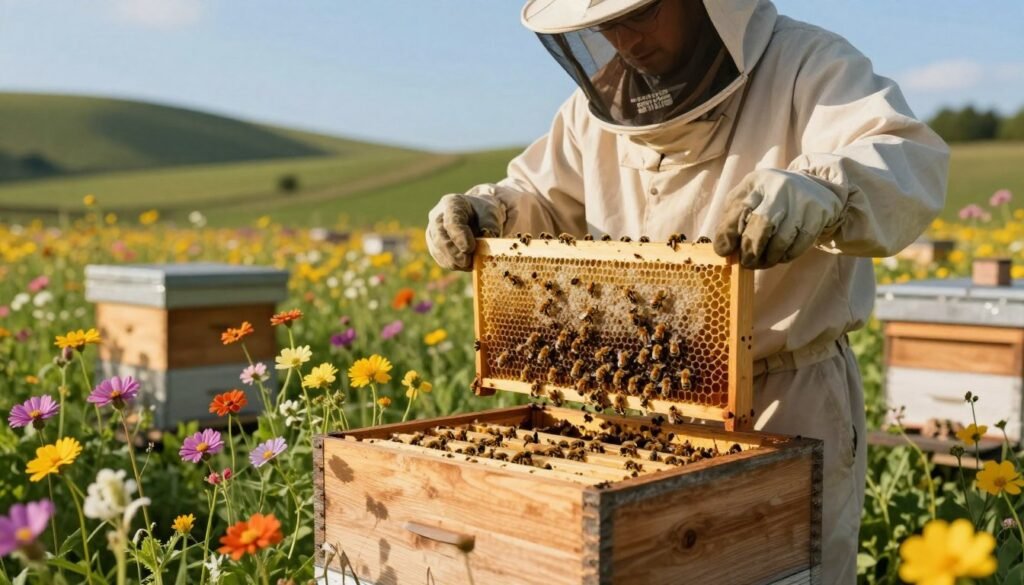
Success depends on two linked strategies: genetic selection and tight hive practices.
- Keep survivors and split them to spread tolerant stock across the yard.
- Monitor brood and adult population closely and act on data, not hope.
- Use non-chemical techniques—timed breaks, queen management, and careful inspection—to reduce pest pressure.
“This path requires commitment and a willingness to accept losses as part of building stronger colonies.”
If you want practical, stepwise guidance on treatment-free methods, read this practical guide at treatment-free beekeeping. Every beekeeper must decide if the risks align with their goals and resources.
Assessing Mite Levels in Your Hives
Counting mites gives a clear snapshot of a colony’s risk and helps guide timely action. Regular checks are the only reliable way to know what is happening inside your hive. Accurate sampling informs choices about queen selection, splits, and other steps to build resistance.
Sugar Shake Method
The sugar shake is popular because it spares the bees. Collect roughly 300 worker bees — about a half cup — and follow the simple shake steps to dislodge mites.
Pros: nonlethal, repeatable, and good for tracking a colony over the year. Take care not to include the queen when you gather your sample.
Alcohol Wash Technique
An alcohol wash gives a highly accurate count and can be done at the apiary without freezing. The Oregon State University Honeybee Lab recommends the 300-bee sample for a statistically valid result.
A threshold above 5% means the colony faces significant collapse risk and you must decide how to act to save the bees. Keep clear records of every test so you can watch trends in mite pressure and colony health.
See an alcohol wash guide for step-by-step instructions and safety tips.
The Reality of Mite Bombs and Drifting Bees
A collapsing hive can become a short-lived source of heavy mite spread when its bees drift or get robbed. This happens when many mites leave a failing colony and hitch rides on nearby bees.
In cold northern winters, late-season foraging slows and the risk drops. In warmer climates, however, active bees keep moving and mites can spread across several hives in a yard.
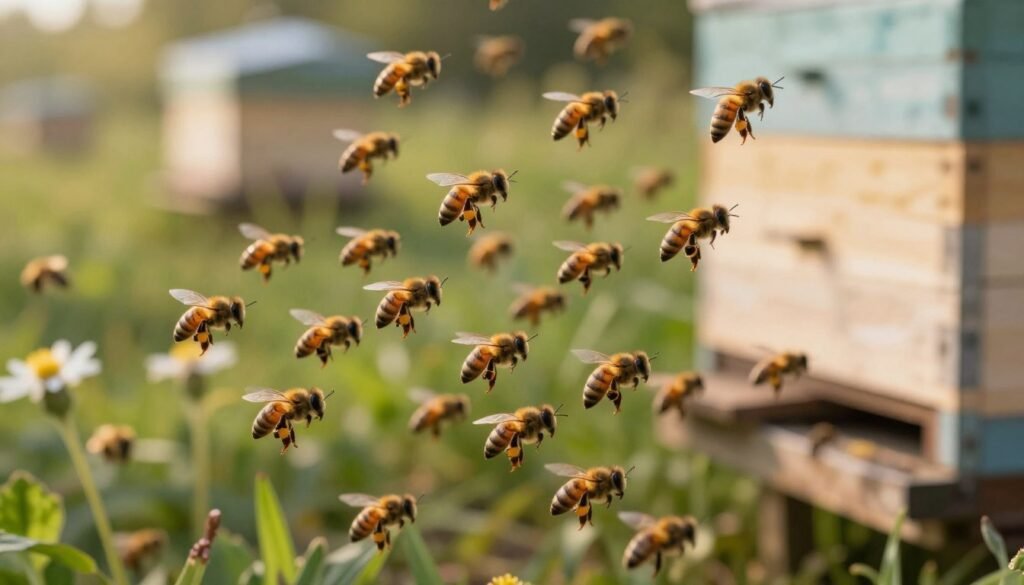
Every beekeeper has a duty to monitor mite levels so colonies do not become infestation sources. Blaming neighbors rarely fixes the problem and can distract from real issues like weak stock or poor brood care.
Feral colonies pose a theoretical risk too, yet they seldom face the same scrutiny. The sensible approach is local: track counts, act when thresholds rise, and prevent collapse that fuels spread.
“Keep your own hives healthy; controlling mites at home removes most arguments about harm to others.”
- Watch adult population and brood closely.
- Record tests and trends every season.
- Respond early to reduce risk to the yard and the wider community.
Selecting Resilient Bee Stock
Local survivor bees often carry traits that help them handle mites and local winters.
Start by seeking swarms that have already proven they can live in your area. These bees bring natural resistance and reduce the time you spend rescuing weak hives.
If wild swarms are unavailable, buy from breeders who specialize in mite resistance and low-treatment stock. Avoid commercial packages and many nucs that come from heavily treated lines; they often fail when treatments stop.
Sourcing Local Swarms
Prioritize traits that support survival over short-term honey yield. Look for strong brood patterns, calm temperament, and steady winter weight.
- Survivor origin: best first choice.
- Specialist breeders: second option.
- Commercial packs: use with caution.
| Source | Pros | Cons |
|---|---|---|
| Local swarms | Adapted to area; resilient | Variable genetics; may require inspection |
| Specialist breeders | Selected for mite resistance | Limited availability; higher cost |
| Commercial packages | Easy to obtain | Often from treated stock; poor long-term fit |
“Build an apiary from survivors and accept that a few colonies may fail as the population adapts.”
Implementing Brood Breaks for Natural Control
Timed breaks in laying create a biological gap that hurts mite reproduction and helps colonies recover.
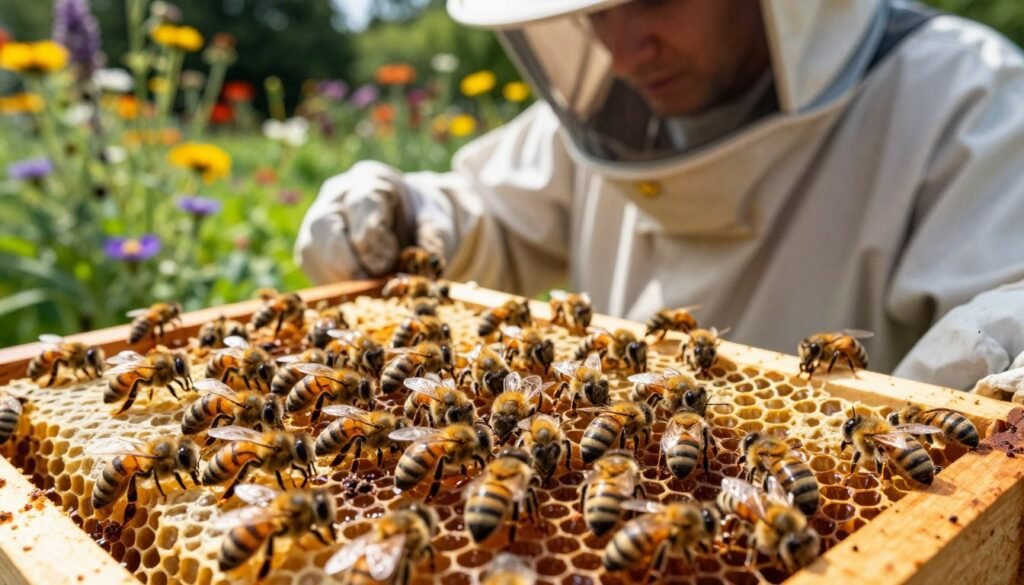
About 80% of the mites in a hive live inside capped brood. Reducing capped cells disrupts their life cycle and drops population pressure on your bees.
A brood break can be done by briefly removing the queen, caging her, or using a split. Short pauses in egg laying expose mites and let natural controls catch up.
- Time the break so most brood has emerged; this maximizes mite exposure.
- Watch colony weight, pollen stores, and adult bee behavior during the pause.
- Use breaks alongside selective breeding to build long‑term resistance.
The method suits many treatment‑free approaches but also fits mixed programs that use minimal treatments. Learn brood timing and track results to improve hive health over the years.
| Action | Purpose | When to use |
|---|---|---|
| Queen removal/caging | Stop egg laying temporarily | Before major nectar flows or in late summer |
| Artificial split | Create a broodless unit and spread survivors | When colony has surplus population |
| Timed inspection | Confirm brood cycle and mite exposure | Weekly during break |
Track outcomes and integrate this technique into wider plans to boost apiary productivity. Read more about improving apiary productivity.
Utilizing Screened Bottom Boards
Screened bottoms serve as both a passive control and an early-warning sensor for colony health.
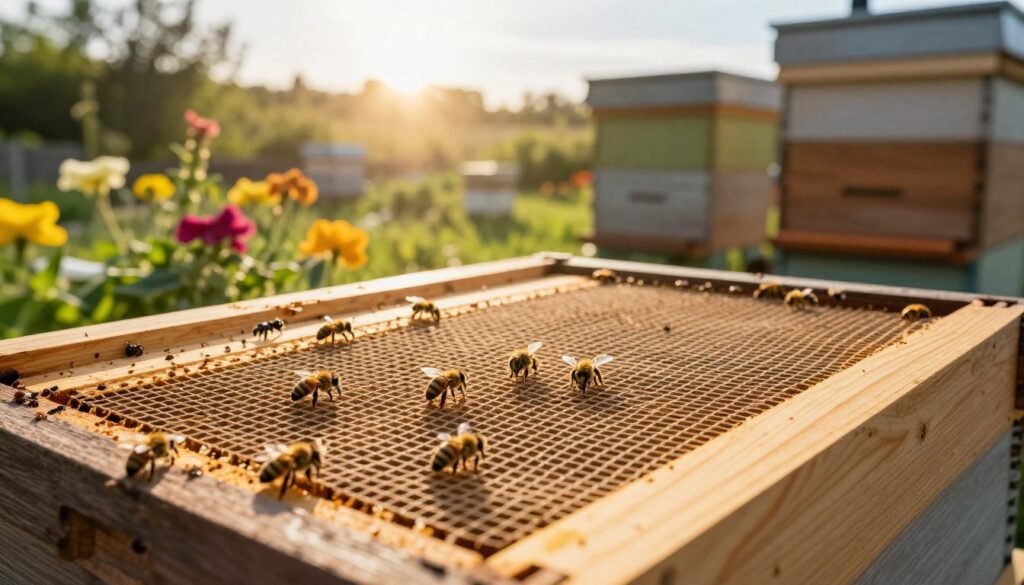
These simple boards let mites fall through the hive and reduce the chance they climb back into the brood area.
They are not a complete solution alone. Use screened floors as one part of an integrated plan that includes queen selection and timed brood breaks.
- They help monitor the natural mite drop so you can track hive trends over time.
- Proper installation and routine cleaning stop ants, mice, or other pests from entering the hive.
- Better ventilation in hot months supports brood health and honey production.
| Benefit | How it helps | When to use |
|---|---|---|
| Mite reduction | Allows fallen mites to drop away | All season, with checks |
| Monitoring | Gives counts for trend data | Weekly or monthly |
| Ventilation | Improves hive airflow and brood conditions | Summer and humid periods |
Many beekeepers find combining screened bottoms with other nonchemical methods boosts colony resilience. Invest in quality boards and make them part of a long-term plan to protect your honey bee stock.
The Importance of Proper Nutrition
Supplying natural pollen during brood rearing boosts bee health across the season.
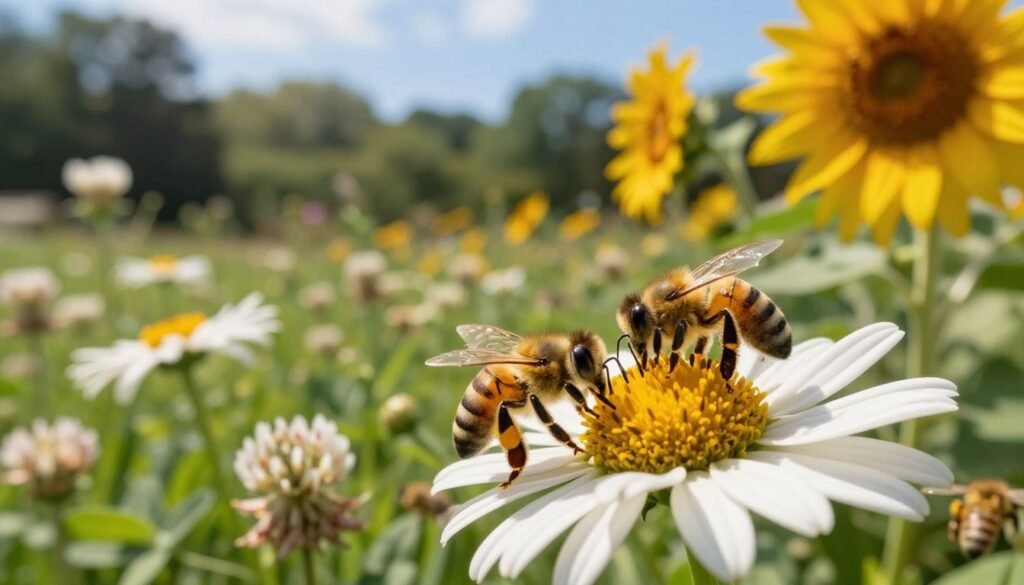
Feeding Natural Pollen
Proper nutrition is essential to raise robust winter bees that survive cold months. High-quality, natural pollen supports fat bodies and brood food glands in young workers.
Bees consume pollen right after emerging. That early meal shapes immunity and long-life physiology. Studies show well-fed colonies tolerate nosema and other stressors better without routine treatments.
Protect pollen from weather by using simple feeders. A modified soda bottle in the yard gives easy access and keeps stores dry. Check supplies during dearths and supplement only with real pollen when possible.
| Nutrition Action | Benefit | When to Use |
|---|---|---|
| Feed natural pollen | Improves brood development and winter survival | Spring and late summer |
| Use protected feeders | Reduces spoilage and waste | Dry, exposed yards |
| Monitor stores | Prevents mid-season shortages | Every inspection |
“A well-fed colony is a strong colony.”
Managing Winter Bees for Survival
Winter survival begins months earlier when the colony rears long-lived workers with ample fat stores. Summer bees live only 4–6 weeks, while true winter bees can persist 4–6 months or longer. These winter bees have larger fat bodies and enlarged food glands that sustain the hive through the dearth.
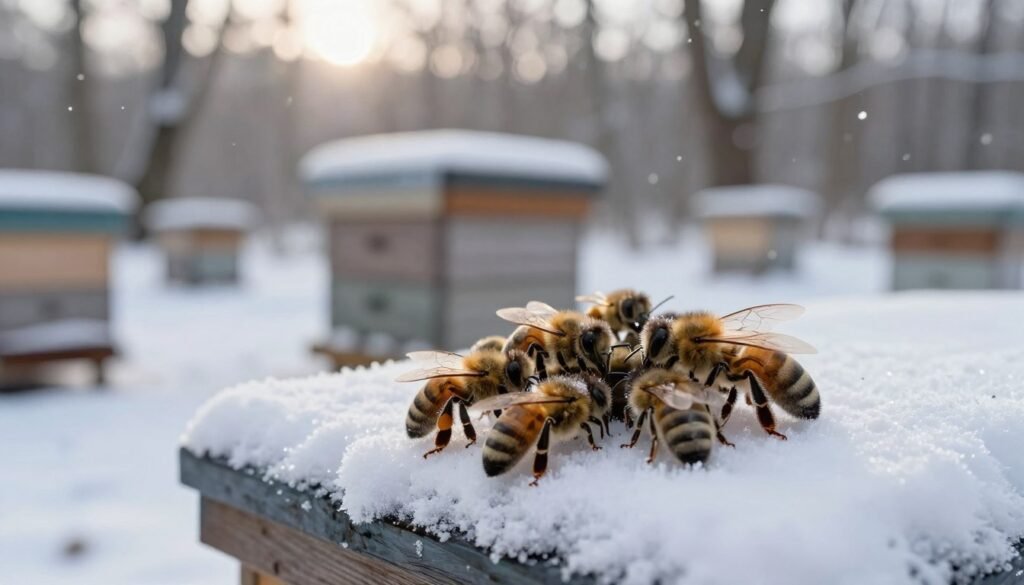
If the bees that raise the winter generation are weakened by a high mite load, the resulting winter bee will be compromised. A colony that goes into cold months with heavy mite pressure is far less likely to make it to spring, regardless of treatment choices.
Practical steps: ensure late-summer brood quality, check stores, and monitor mite counts through autumn. Prepare hives so they enter winter strong and well-fed. A healthy round of late-season rearing is one of the best investments in long-term resistance across your apiary.
“Successful wintering is the ultimate test of your beekeeping and the resilience of the bees you keep.”
- Inspect brood quality in late summer.
- Address high mite counts well before the dearth.
- Confirm adequate honey and pollen stores.
Evaluating Organic Treatment Options
Not all natural treatments behave the same; timing and temperature shape their safety and effect.
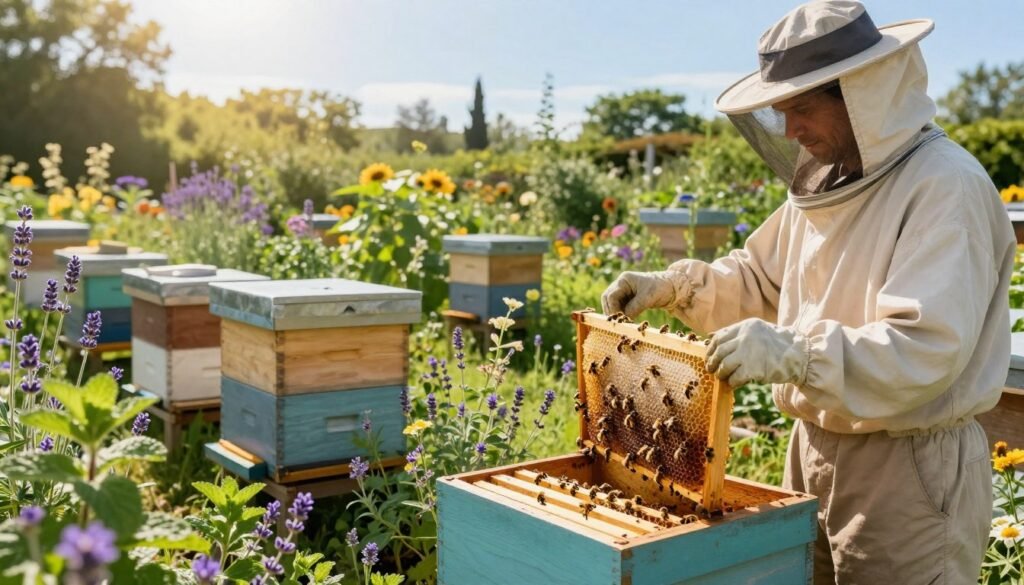
Formic acid applications
Mite Away Quick Strips use formic acid and work well in many yards. They must not be used when daytime temperatures climb above 85°F.
Formic penetrates capped brood and can reduce mite loads quickly. Use careful placement and follow label directions to avoid queen harm.
Oxalic acid vaporization
Oxalic acid vapor is most effective when there is little or no brood, typically late autumn or early winter.
This method delivers a strong drop in mites but has limited effect if many larvae are present. Apply only when counts warrant and follow safety steps to protect the operator and the bees.
Thymol strips
Api Life Var thymol strips claim high efficacy—often cited up to 95%—and can be used in warmer conditions, even up to about 95°F.
Thymol requires repeated applications and close monitoring to avoid hive stress. It suits hives that need a softer, botanical option during warm spells.
“Even organic options are corrosive poisons; use them judiciously and only when mite counts indicate a clear need.”
- Organic acids and thymol are softer alternatives to synthetics but are not benign.
- Understand temperature limits, brood status, and label rules before use.
- Combine selective use of treatments with breeding and hive practices to build long-term resistance in your colonies.
Avoiding Synthetic Chemical Dependence
Synthetic residues in hive wax can quietly erode long-term colony health.
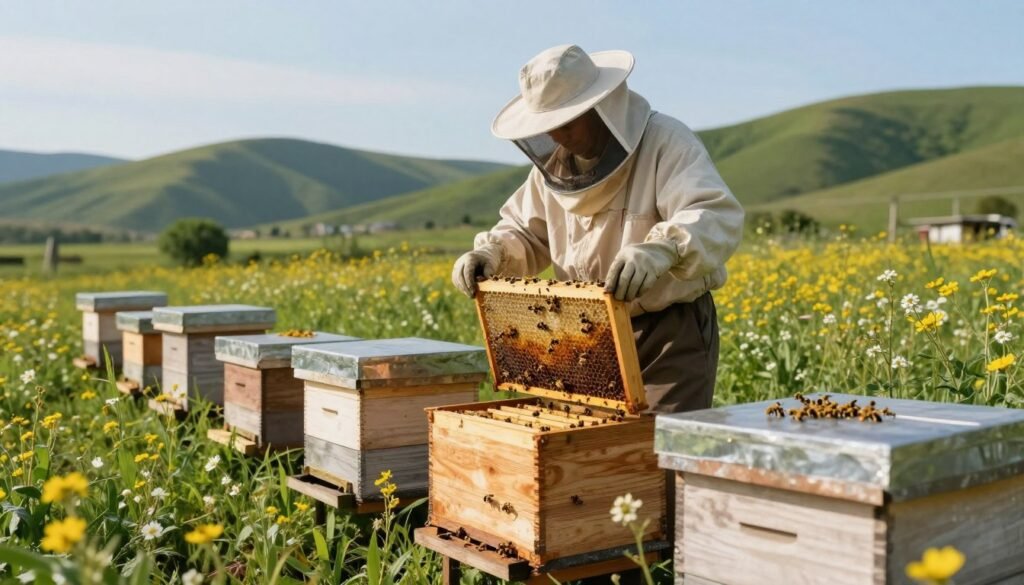
Many synthetic strips embed chemicals in plastic that persist in comb. Over time, these toxins accumulate and may taint commercial beeswax and honey.
Products such as BetterComb can contaminate the pure wax supply and harm market value. They also push mites toward pesticide resistance by constant low-dose exposure.
- Residues build up in wax and brood comb.
- Continuous exposure favors resistant mite populations.
- Contaminated wax undermines pure honey and wax markets.
| Issue | Impact | Action |
|---|---|---|
| Plastic-embedded chemicals | Wax contamination | Use natural wax sources |
| Chronic exposure | Rising resistance | Limit synthetic treatments |
| Synthetic wax products | Market contamination | Reject BetterComb-like items |
Many beekeepers find colony health improves when they minimize synthetic use and favor organic options. Learn more in a detailed synthetic miticides review and consider targeted alternatives such as an oxalic acid vaporizer guide.
“Avoiding unnecessary chemicals supports natural resistance and preserves hive products.”
Ethical Responsibilities of the Beekeeper
An ethical beekeeper treats each hive as livestock that deserves consistent oversight.
Good animal husbandry means regular checks and action when pests or disease appear. The Grass Roots Farmer’s Cooperative stresses that controlling external parasites is part of that duty.
Failing to identify and control American Foul Brood is a real threat to the industry. This disease spreads fast and is the reason many areas have inspection programs.
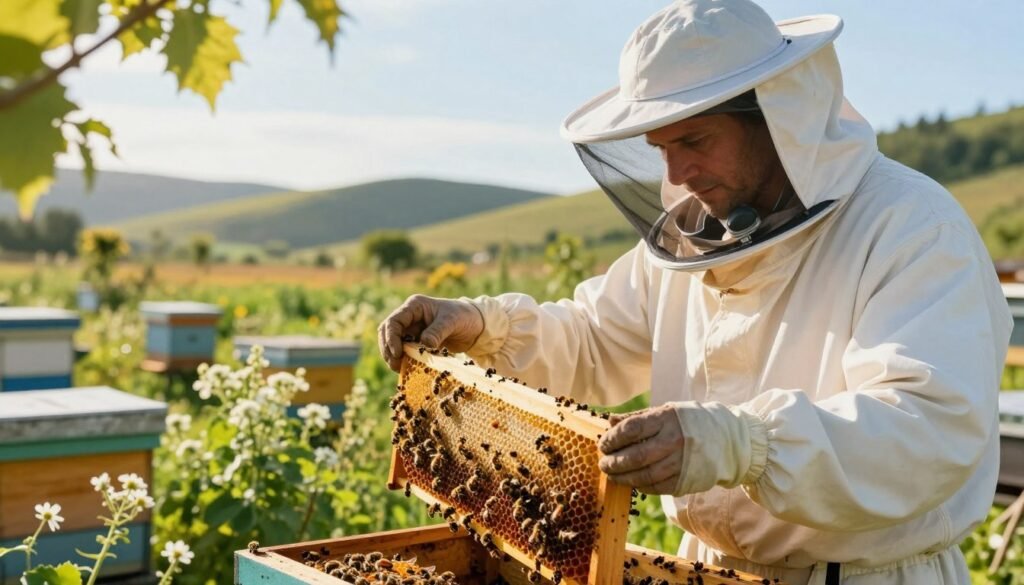
- Monitor hives and record counts of mites and other signs.
- Keep weak colonies isolated and consider requeening or humane removal.
- Respond quickly to contagious disease to avoid wider spread.
Be a good neighbor. Respectful dialogue matters when practices differ. Blame wastes time and distracts from solutions.
“By taking responsibility for your apiary, you protect honey, stock, and the whole community.”
Learn sound testing and follow-up steps in a post-treatment mite checks guide and a detailed scientific review.
Future Outlook for Sustainable Apiaries
Sustainable apiaries will stem from combining careful observation with patient breeding. Small, steady changes in how we care for stock can shift outcomes over time.
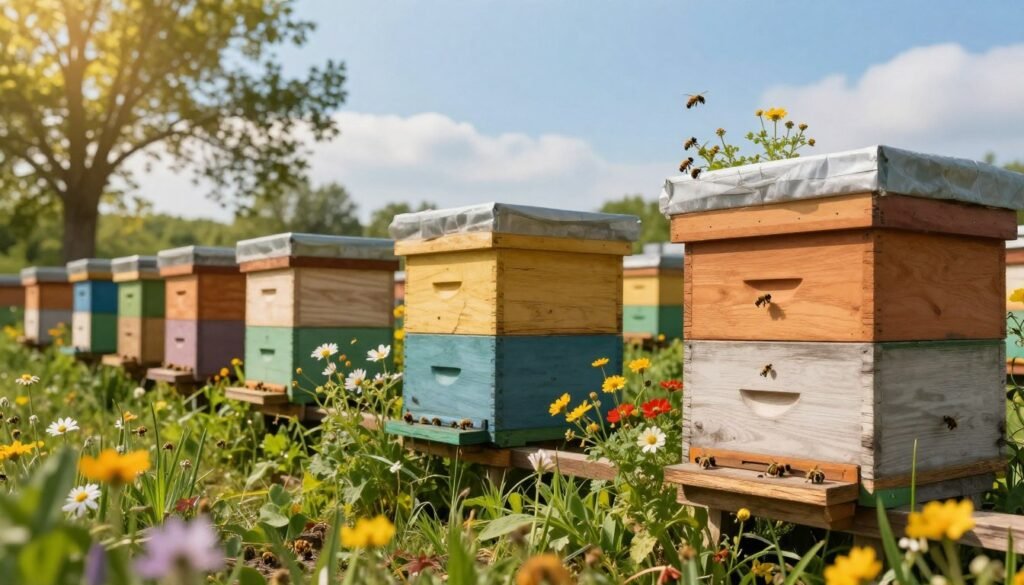
Research into how bees, mites, and viruses interact is improving each year. That work helps growers choose queens and hive practices that build long-term resistance.
The move toward organic and low‑chemical methods reduces environmental toxins and supports cleaner honey and healthier hives.
- Keep clear records of counts and treatments to spot trends.
- Favor survivor stock and selective breeding to strengthen a colony over generations.
- Share results with other growers so useful techniques spread fast.
Every beekeeper has a role: experiment responsibly, report findings, and help the community adopt what works. Over time, these choices will raise resilience across yards and landscapes.
“Optimism backed by science, patience, and shared data is the best path to sustainable, resilient apiaries.”
Conclusion
Sustained colony health is built by blending biology, time, and careful choices.
Watch your hives and record trends in colony size and mites. Regular checks let you spot trouble early and act with data, not guesswork.
Whether you pursue treatment free beekeeping, use organic options, or mix approaches, the aim is the same: strong, productive colonies. Good nutrition, selective breeding, and timely hive work reduce mite pressure and improve winter survival.
Take responsibility for your hives and share what you learn. Over time, patient effort across yards will raise resilience in colonies and protect the wider community.