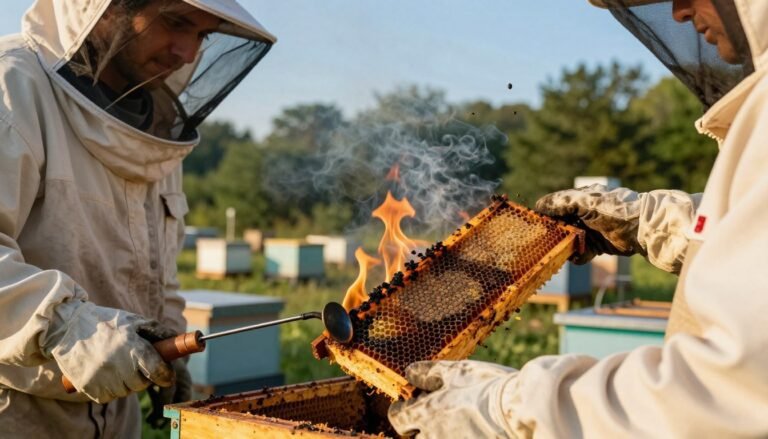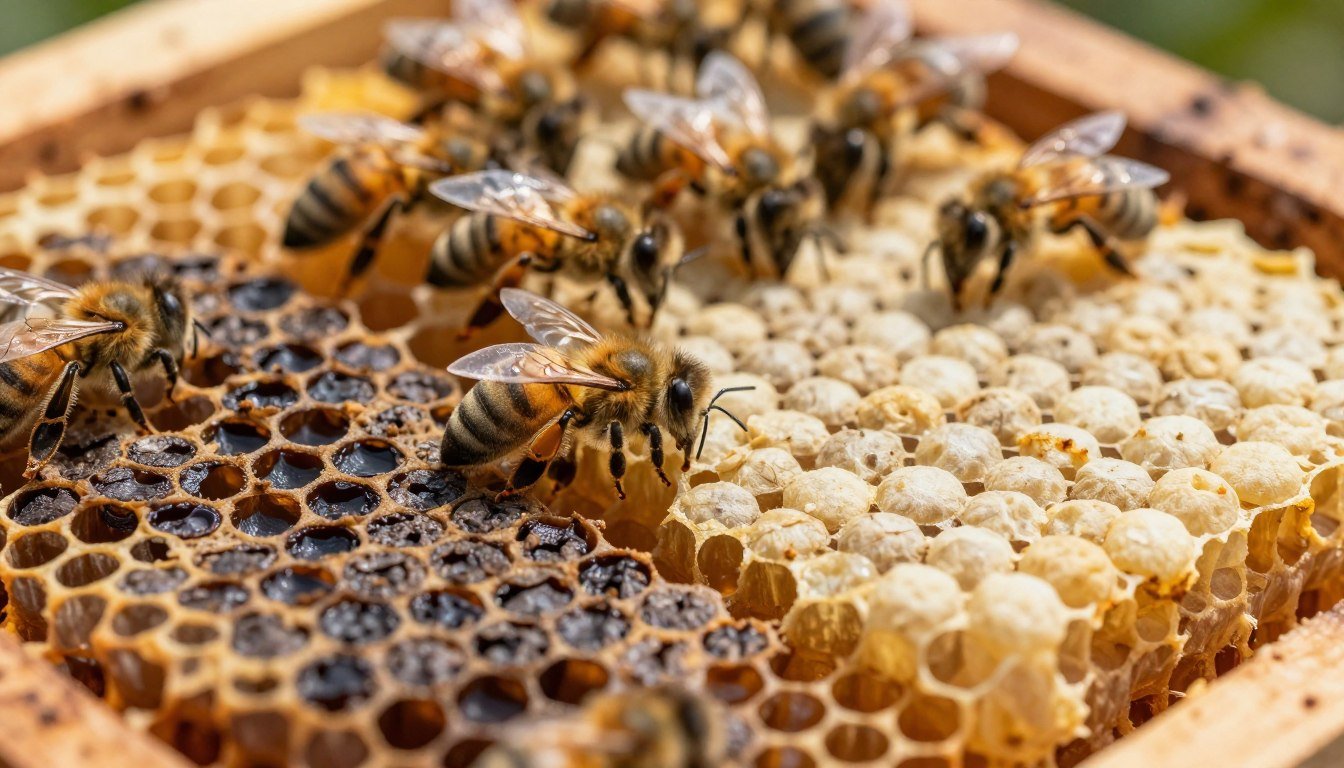
Inspecting the capped area on a frame is one of the fastest ways a beekeeper can assess colony health. A clear, uniform pattern of sealed cells usually signals a productive queen and steady larval development.
By contrast, depressions or holes in the wax often point to infection or pests. Conditions like american foulbrood and chalkbrood create visible changes in the comb that demand quick action.
Good brood pattern looks solid across the frame with most cells filled by eggs, larva, or capped brood. Spotty coverage or irregular caps can indicate a failing queen, mite pressure, or brood diseases that reduce colony productivity.
Every U.S. beekeeper should learn these visual cues. For more on evaluating a brood pattern and what to look for during inspections, consult this practical guide from PerfectBee: inspecting and understanding the brood pattern.
Key Takeaways
- Uniform, convex caps usually mean strong colony health and queen performance.
- Depressed or perforated wax can signal american foulbrood, chalkbrood, or mite damage.
- Check frames for a consistent pattern of eggs, larva, and sealed cells each inspection.
- Early detection of abnormal caps helps prevent hive-wide infection.
- Regular monitoring supports better honey yields and long-term colony health.
Understanding Sunken Cappings vs Healthy Brood Cappings
Irregular sealing across frames can signal problems ranging from nutrition gaps to parasitic pressure.
Beekeepers should learn to read a tight, compact pattern of sealed cells as a sign of a productive queen and steady larval development.
Conversely, a shotgun-like spread of capped and empty cells often points to issues. According to The Bee Supply, a failing queen produces a spotty pattern across every frame because she may be running out of sperm.
Varroa mite infestations make matters worse: bees remove infected larvae and leave gaps that break the comb’s uniform look. Poor nutrition or low pollen can also trigger brood cannibalism, creating a similar appearance.
“Distinguishing seasonal declines from disease-related changes is essential for effective hive management.”
- Note seasonal slowdowns—queens sometimes reduce laying in late summer.
- Check for varroa as a common cause of spotty larvae removal.
- Use targeted resources to confirm causes, such as guidance on sunken or perforated caps and tips to prevent chalkbrood.
Visual Indicators of a Healthy Brood Pattern
Inspecting the center cells of a frame gives the fastest clue about a queen’s laying rhythm and larval development.
Characteristics of uniform cappings
According to The Bee Supply, a good brood pattern shows about 90% or more capped cells in the middle area of a frame. Look for slightly convex, even wax covers that hide pearly white larvae. These consistent cappings protect developing larvae and reflect steady egg laying by the queen.
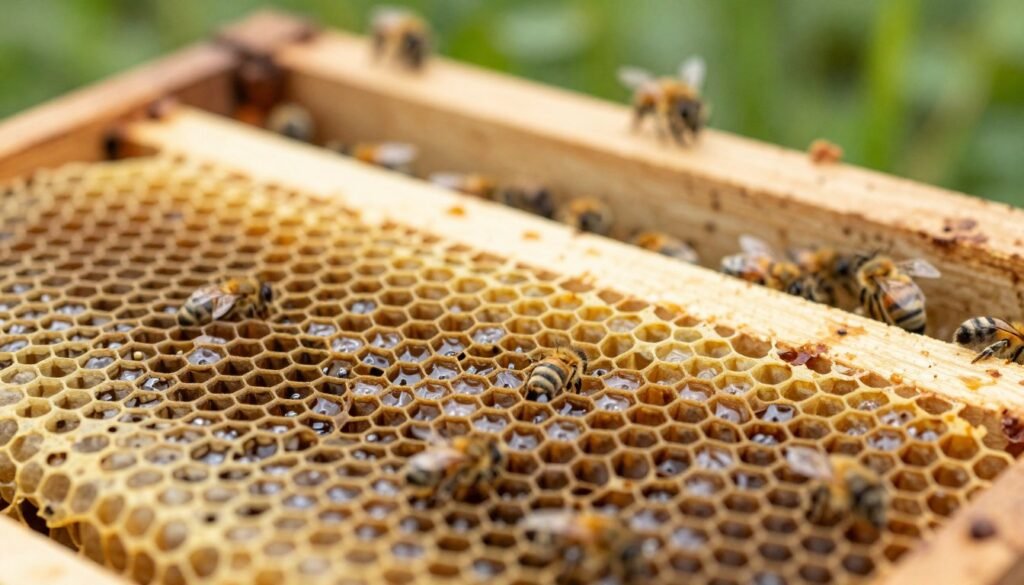
A shotgun-like spread of capped and open cells often means the queen is not laying evenly or that removal is taking place. Rapid colony growth can create temporary gaps when the queen lays around honey or pollen stores. Also, hygienic bees may uncap cells to remove diseased pupae, which can mimic a poor pattern.
- Check larvae color: pearly white indicates normal development.
- Focus on frames: isolated spotty frames during expansion are not always pathological.
- When unsure: compare multiple frames and consult a diagnostic guide like identifying chilled brood.
Identifying Pathogens Behind Sunken Cappings
When caps look irregular, the cause may be bacterial, fungal, or viral — each with distinct signs. A careful, calm inspection of frames helps separate normal gaps from serious infection.
American Foulbrood Symptoms
American foulbrood is caused by Paenibacillus larvae and is one of the most destructive diseases for a hive. Look for perforated, depressed cell covers and a strong, foul odor.
The standard ropiness test can confirm suspicion: probe a dead larva with a twig and see if it strings out about 3/4 inch. Infected equipment often must be destroyed. For official guidance on handling confirmed cases, see american foulbrood advice.
Chalkbrood and Mummies
Chalkbrood is fungal and turns larvae into hard, white or black mummies. These fragments may appear at the hive entrance or on frames.
Chalk-like mummies are brittle. Remove affected comb and improve ventilation and nutrition to reduce recurrence. Good apiary hygiene slows spread and protects colony health.
Sacbrood and Viral Infections
Sacbrood virus stops larvae from pupating; affected larvae lie on their backs in a canoe shape. When pulled, the contents may look baggy or liquid.
European foulbrood, caused by Melissococcus plutonius, often shows younger larvae that look yellow or melted inside cells. Prompt diagnosis helps beekeepers decide whether to replace comb. Read more about when to discard comb after disease at comb disposal guidance.
- Quick checks: smell, ropiness, mummified larvae, and larval posture give strong clues.
- Act fast: early identification protects the queen, colony, and surrounding hives.
Distinguishing Between Disease and Normal Hive Behavior
Gaps in the comb can mean anything from wax moth damage to useful hygienic behavior by the colony.
Bald brood results when the wax moth Galleria mellonella tunnels through frames. The larvae chew channels and often trigger straight-row uncapping as bees respond to the damage.
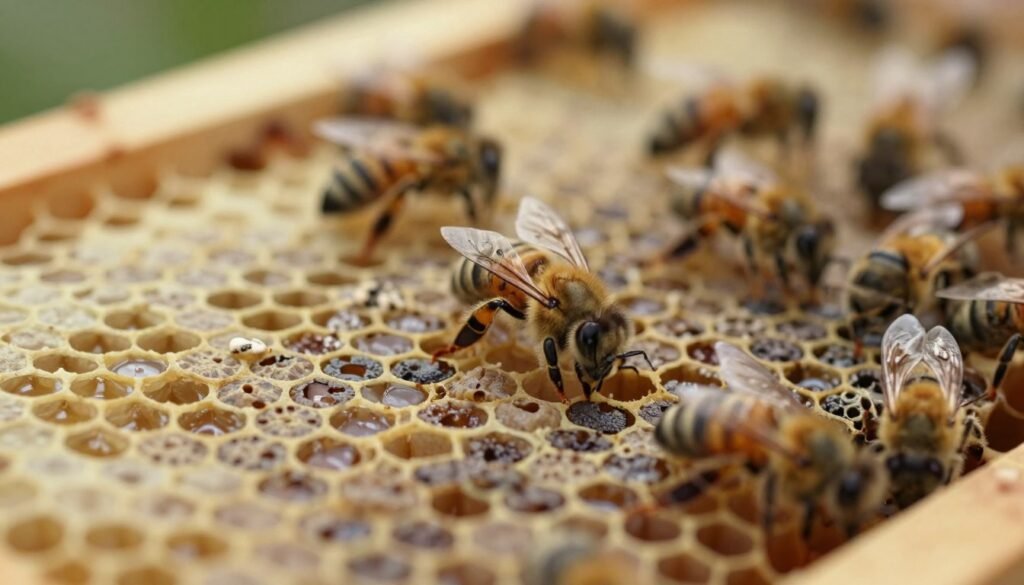
Hygienic behavior is different and beneficial. Bees will uncap and remove diseased or mite-infested pupae, leaving irregular, messy gaps rather than neat rows.
Key distinctions for beekeepers
- Bald brood: straight lines of opened cells and visible tunneling from wax moth larvae.
- Hygienic removal: random uncapping and chewed-down pupae as a colony defense trait.
- Parasitic Mite Syndrome (PMS): heavy varroa infestations plus viruses make a chaotic, spotty pattern and dying larvae in cells.
Colonies with PMS may even mimic european foulbrood symptoms. The queen can struggle to keep up when mites and viruses reduce brood survival.
Prevention is practical: keep frames clean, provide good ventilation, and maintain strong colonies so bees can express hygienic traits. For a full diagnostic checklist, see our brood conditions guide.
Diagnostic Techniques for Hive Inspection
A calm, methodical frame-by-frame check is the quickest way to spot early signs of disease or stress.
Begin each inspection at the same hive position and move steadily across frames. Watch for changes in texture, color, and the uniformity of brood cells. Regular monitoring of these details is the most effective proactive measure for colony health.
If american foulbrood is suspected, contact your state apiary inspector before taking action. Many states require confirmation prior to destruction of infected equipment.
The “shook swarm” technique helps manage european foulbrood: shake adult bees onto new foundation and discard old comb. This reduces contaminated comb and gives the colony a fresh start.
Be aware of rarer threats. Stonebrood from Aspergillus makes hard mummies with colored spores. Black Queen Cell Virus kills developing queens and can leave dark, oily-looking cell walls.
- Systematic checks: inspect each frame and record symptoms.
- Early action: catches infections before the colony declines.
- Repair and replacement: damaged boxes or comb may need service; see repair damaged hive boxes.
Conclusion
A quick, focused scan of frames at each inspection saves time and protects colony productivity.
Beekeepers should watch the overall pattern in capped cells, track the queen’s laying rhythm, and note any signs of disease such as american foulbrood. Regular checks catch varroa and other mite issues early and protect larvae and adult bees.
Use trusted resources, like the honey bee disease guide, and expand apiary skills with practical advice such as apiary expansion tips. Strong colonies, clean foundation, and steady inspection routines are the best defense for hive health and honey production.
FAQ
What are the key visual differences between sunken cappings and normal sealed brood?
Normal sealed brood shows slightly domed, waxy cell covers with a uniform color and tight fit. When cappings appear depressed, thin, or perforated, it often indicates that larvae have died or were removed. Inspect surrounding frames for spotty brood pattern, open cells, or scattered pollen to help determine if the issue is disease, mite damage, or hygienic behavior.
How can I tell if a poor brood pattern is due to the queen or a disease?
A failing queen typically produces widely spaced eggs and irregular brood placement across many frames. Disease often produces localized clusters of abnormal cells, discolored larval remains, or unusual odors. Check for signs of American foulbrood, European foulbrood, chalkbrood mummies, and Varroa mite levels to differentiate causes.
What are the classic signs of American foulbrood on comb and frames?
American foulbrood produces sunken, darkened cell caps, sticky ropy larval remains when probed, and scattered patchy capped brood. You may also find hard, brownish “scale” on cell bottoms and a foul odor. If suspected, follow state regulations and consider destroying or professionally treating the colony.
How does chalkbrood present in the hive, and what should be checked?
Chalkbrood turns larvae into dry, white or gray mummies that can appear in cells or fall to the bottom board. Inspect capped and uncapped cells for mummified remains and check ventilation, brood nest temperature, and queen performance; weak colonies and cool, damp conditions worsen chalkbrood.
Can hygienic behavior cause depressed caps and open cells without disease?
Yes. Hygienic bees detect and remove diseased or dead larvae, leaving open or slightly sunken caps and exposed cells. Look for clean cell edges, live bees actively uncapping, and an overall absence of offensive odors to distinguish this from active infection.
What diagnostic steps should be taken during a hive inspection to identify problems?
Systematically inspect frames from the center outward, note brood pattern, cap appearance, and presence of larvae or mummies. Use a magnifier for fine details, perform a ropiness test if foulbrood is suspected, monitor Varroa counts with sticky boards or sugar rolls, and record queen status and pollen stores.
How do Varroa mites and viral infections affect brood appearance?
Varroa can weaken larvae and transmit viruses that cause irregular brood, spotty capped cells, and increased mortality. You may see shortened abdomens, discolored pupae, or higher numbers of uncapped cells. Regular mite monitoring and timely treatment reduce these impacts.
When should a beekeeper sample for lab testing, and what samples are useful?
Send samples when you observe unexplained dead brood, consistent abnormal cappings, or odors suggesting foulbrood. Useful samples include affected comb sections with capped cells, larval remains, and scraped material from cell bottoms. Follow local extension service guidance for safe transport and submission.
Are there non-disease reasons for spotty brood patterns and depressed caps?
Yes. Cold snaps, poor nutrition, robbing, pesticide exposure, and queen age or poor laying pattern can all create spotty brood and irregular caps. Evaluate recent weather, forage availability, hive weight, and nearby agricultural sprays before assuming infection.
What immediate actions should I take if I suspect American foulbrood or severe infection?
Isolate the colony, avoid moving frames between hives, and contact your state apiarist or local beekeeping association. Many regions require official testing and mandate specific disposal or treatment methods, including incineration or professional antibiotic and management protocols.