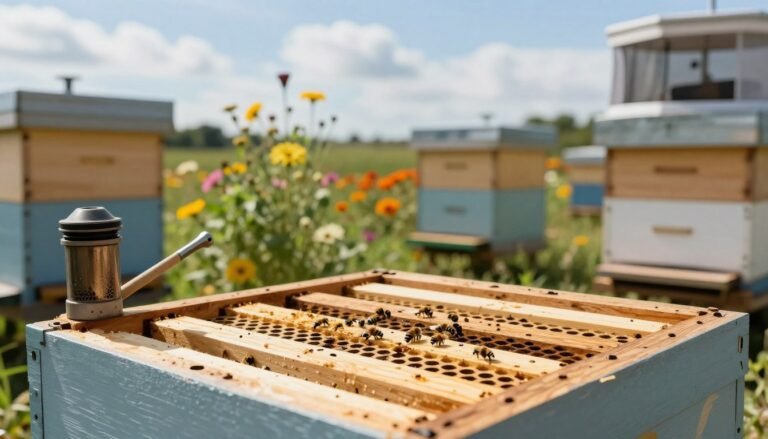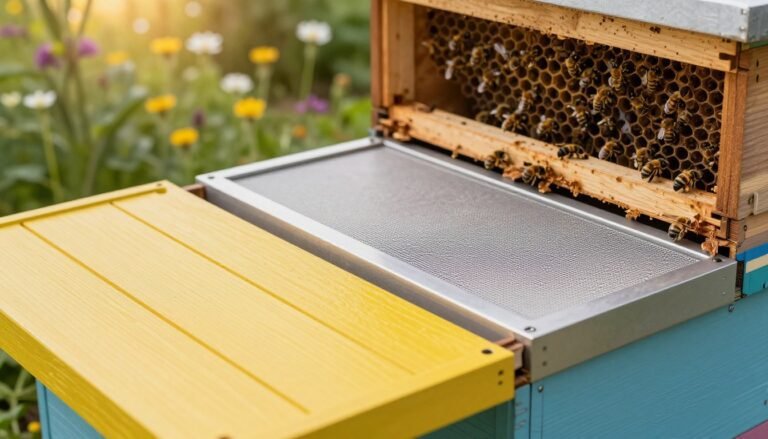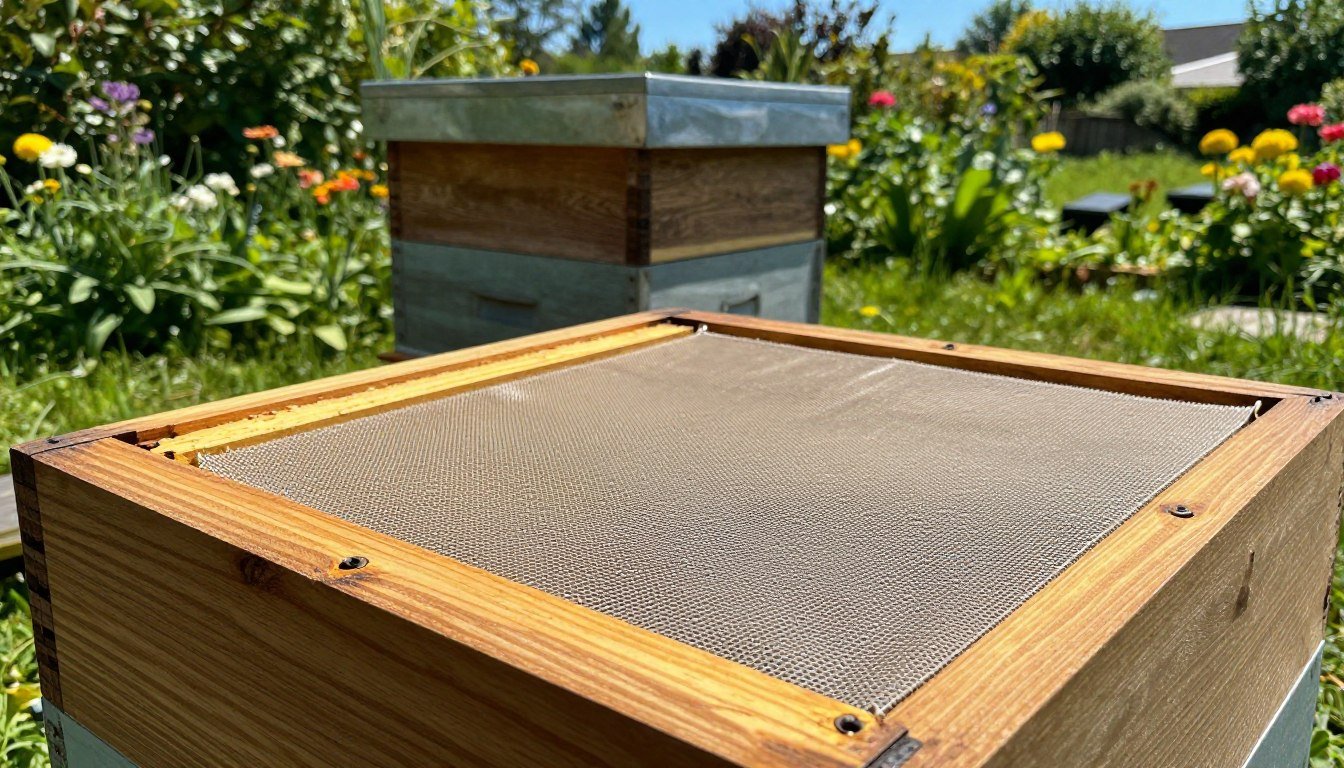
Choosing the right base for your hive shapes colony health. New beekeepers face a key choice when they set up a Langstroth hive. Picking between a slatted rack vs screened bottom board affects ventilation, pest control, and winter care.
This short guide introduces the main trade-offs and helps you match equipment to your local climate and management style. We focus on how each option influences temperature, moisture, and mite monitoring without overwhelming detail.
Many beekeepers appreciate that a screened bottom board can improve ventilation and aid in tracking Varroa fall. However, cold regions may need different considerations for insulation and moisture control.
Key Takeaways
- Equipment choice directly affects hive airflow and moisture balance.
- One option helps trap and count mites; it also keeps hive debris cleaner.
- Warmer climates often benefit from improved ventilation.
- Colder areas may favor solid support to retain heat.
- Match your selection to local weather and long‑term hive goals.
Understanding Hive Bottom Boards and Racks
Choosing the right base changes how a hive breathes and stays dry. The foundation beneath your boxes affects temperature, moisture, and pest control. Solid bottoms are often cheaper and easier for the average beekeeper to build. That makes them a common choice for hobbyists starting out.
Defining the Equipment
Bottom boards refer to the various base styles used under Langstroth boxes. Some designs are simple solid panels while others include openings or screens. The selected board becomes the physical foundation for the colony and influences airflow and debris removal.
The Importance of Ventilation
Proper ventilation helps bees regulate hive temperature through warm and cool seasons. Good airflow prevents excess moisture that can harm brood and promote mold. Beekeepers in hot regions often seek increased ventilation; in cold areas, some prefer choices that retain warmth.
- Foundation matters: the bottom of the hive supports frames and affects colony stability.
- Climate drives choice: local conditions guide which equipment will work best.
- Start simple: many new beekeepers benefit from basic, easy-to-build options while they learn.
For a deeper look at alternative base designs, see this guide on slatted racks and ideas for quieter stands at noise-reducing hive stands.
The Role of a Slatted Rack in Hive Management
Adding a two‑inch insert between the bottom and the first brood box creates a quiet layer of still air around the brood nest.
This simple piece of equipment matches Langstroth outer dimensions and was developed over 100 years ago to help manage the brood environment. The insert is about two inches deep and fits directly beneath the brood box.
The aligned slats run the same direction as frames so debris falls to the bottom. That orientation also prevents bees from building unwanted comb below the main brood area.
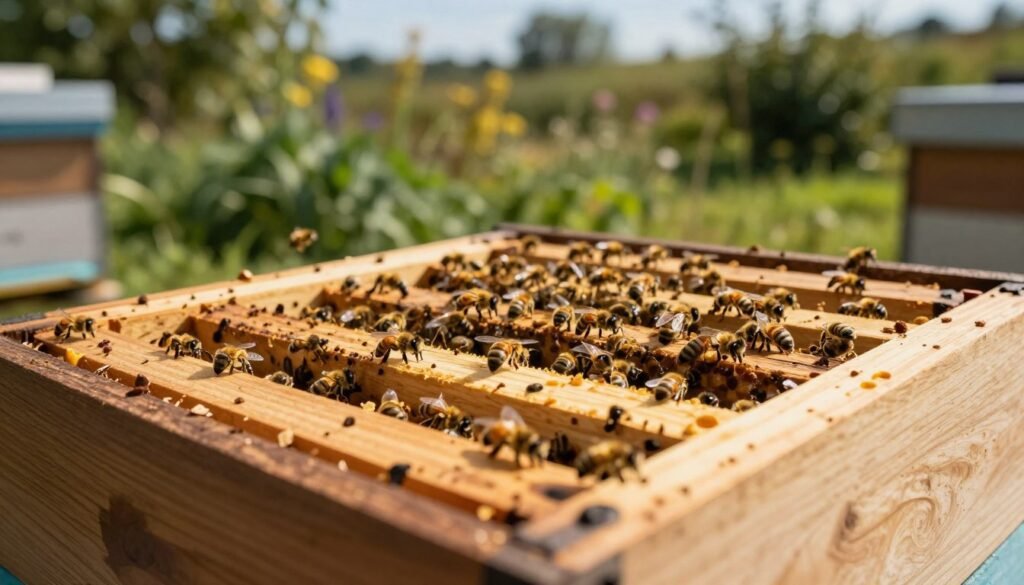
By creating extra space, the rack gives bees a place to gather away from the brood. This can reduce swarming signs and ease colony movement during honey flows in summer.
In winter the dead air space acts as insulation from the drafty entrance. Many keepers use the insert year‑round to improve ventilation and overall comfort for the hive.
Learn more about how this traditional support fits modern management in this detailed guide: what is a slatted rack and why it is.
Benefits of Using a Screened Bottom Board
A mesh floor gives beekeepers a low‑effort way to watch hive health. A screened bottom boards setup improves ventilation and helps manage humidity in warm seasons. That steady air flow can reduce mold and keep brood drier during rainy periods.
Monitoring Hive Health
Watch for mites and debris. Fallen varroa and other debris pass through the screen so you can count mites without opening the hive. This helps you act at the right time and reduces stress on the colony.
Cedar options, like those sold by the PerfectBee Store, provide good insulation while still allowing air movement. In colder areas, a solid bottom may let bees start brood earlier in spring, so many beekeepers swap boards seasonally.
- Mesh floors give constant ventilation and clearer mite tracking.
- Fallen debris can reveal queen health and general activity when paired with a see‑through stand.
- Regular cleaning of the bottom area prevents pest buildup under solid bases.
Comparing Slatted Rack vs Screened Bottom Board Performance
A combined setup often gives the best practical results for modern beekeeping.
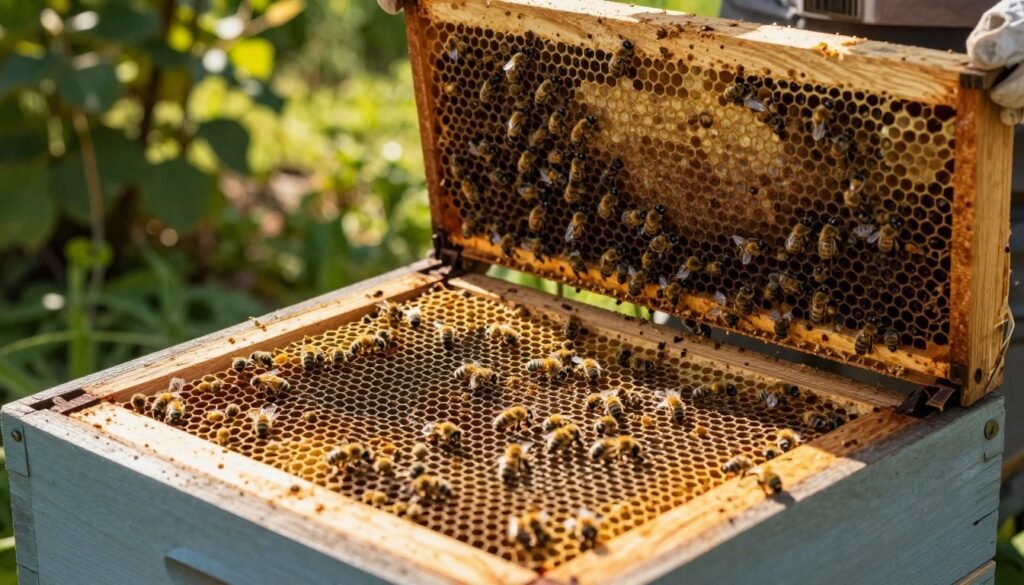
Use together for balanced airflow and clean floors. An insulating air gap under the brood box works with a mesh floor so debris and mites fall away quickly. This pairing keeps the brood nest drier and easier to monitor.
In summer the insert gives bees a cool place to gather. That spreads heat load and cuts back on bearding at the entrance.
- The air space provides winter insulation while still permitting ventilation in warm weather.
- A modern design aligns slats under each frame so debris passes directly through the screen.
- Monitoring from the bottom makes mite counts and queen activity clearer without frequent hive openings.
Practical tip: many keepers swap or modify the solid bottom seasonally, or fit a mesh that can close for cold spells. For details on how an insert benefits a hive, see what is a slatted rack.
Impact of Climate on Equipment Selection
Where you keep hives determines if warmth or ventilation should guide your equipment choice.
Cold Climate Considerations
In very cold areas, a solid bottom board often helps retain heat and reduce drafts that stress the colony.
Keeping the entrance small and using insulating paints or wraps can encourage the queen to start brood earlier in spring. A tighter base also slows heat loss and reduces condensation that can harm brood.
Managing Summer Heat
Warm regions benefit from more airflow. A screened bottom or mesh floor improves ventilation and helps keep the hive from becoming stuffy on hot days.
Good circulation lowers humidity, reduces mold risk, and gives bees an easier time regulating the brood nest. Placing hives in partial shade or adjusting the entrance can also lower internal temperatures during peak heat.
- Climate dictates whether insulation or airflow is your priority.
- An air gap under the first box works as a thermal buffer year‑round.
- Adjust equipment seasonally so your bees thrive despite shifting weather.
For a practical comparison of mesh versus solid options see screen vs solid recommendations, and for ways to improve insulation, read tips on hive painting for better insulation.
Managing Pests and Debris in Your Apiary
Pest control under a hive starts with understanding how debris moves and where insects can enter.
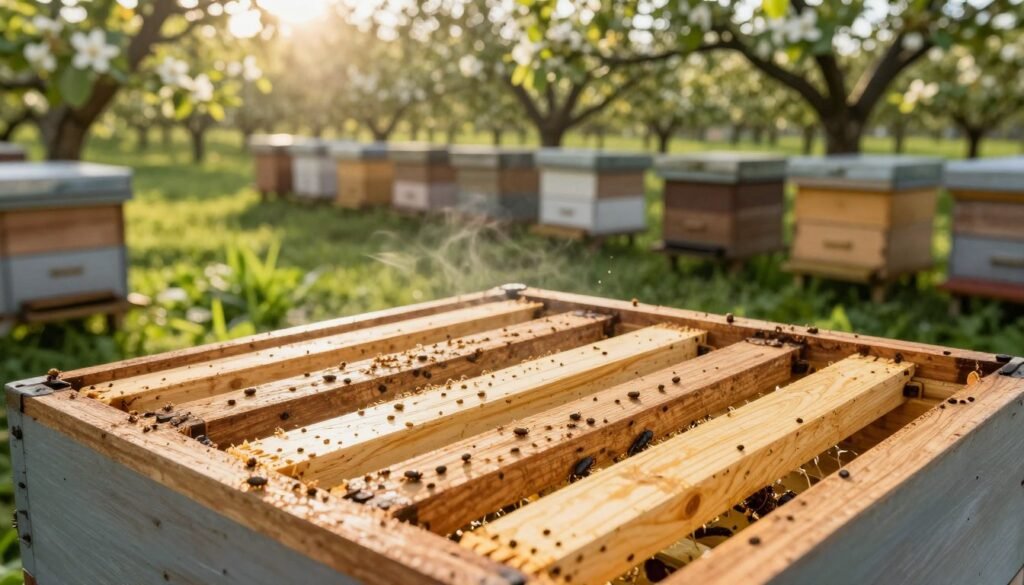
Mesh floors let detritus fall away, which helps you track mites and keeps bees cleaner. But an open screen can also give ants and small pests a hidden entrance.
Solid boards collect wax, pollen and hive trash. Left unchecked, that buildup attracts ants and makes inspections harder.
Some keepers treat posts and the ground beneath hives to deter invaders. Treating the stand can stop ants and beetles before they reach the entrance.
The slatted insert helps debris drop directly under the frames so the lower panel stays neater. Combine the insert with a mesh floor and you get both clean floors and easy monitoring.
Routine checks matter: look under the hive regularly, clean accumulated trash, and act when you see signs of pests or rising mite counts. For detailed mite monitoring and control read this monitoring and control guide.
If mice or other larger pests are a concern, consider protective guards. See recommended mouse guard options to keep critters out while you focus on hive care.
Best Practices for New Beekeepers
Start small: practical experience beats heavy spending when you’re learning to keep bees.
Begin with one or two hives. Limit early expenses until you gain hands‑on skills. Practical work teaches more than catalogs or forums.
Test different bottom boards and a simple screen on a second hive so you can compare results in your climate. This low‑cost trial shows how local sun, shade, and pests affect moisture and mite counts.
- Start small and add a mix of equipment to learn what fits your place.
- Invest in one of each type to judge performance across spring, summer, and winter.
- Watch frames, entrance activity, and fallen mites regularly to guide changes.
- A slatted rack can improve brood comfort; try it before committing to many hives.
Observe through the year. Adjust your setup as you learn. For practical hive fittings and entrance sizing, see recommended entrance reducer options.
Conclusion
A small change under the brood boxes can yield big gains in colony health.
Choosing between a slatted rack and a screened bottom boards is a fundamental decision that affects ventilation, pest control, and winter warmth for your hive. Both options offer clear advantages: improved airflow, easier mite monitoring, and better temperature balance for your bees.
New beekeeping practitioners should test setups in their local climate and watch results closely. Consistent monitoring of mite fall, entrance activity, and brood health remains the best way to decide which system fits your apiary.
For details on how an insert works with modern hives, see what is a slatted rack. We hope this guide helps you choose the right gear for your bee colonies.
FAQ
What are the main differences between a slatted rack and a screened bottom board?
A slatted rack creates a gap beneath the brood nest to improve airflow and give bees a crawl space, while a screened bottom board uses mesh to allow debris and mites to fall out of the hive. The rack focuses on internal circulation and brood insulation; the mesh board emphasizes ventilation and varroa monitoring. Both affect wintering, summer cooling, and hive hygiene, so choose based on climate and management goals.
How does a bottom modification affect hive ventilation and brood health?
Altering the base changes airflow through the boxes and across frames. Increased air movement reduces moisture and helps brood nest regulation, lowering mold risk and improving brood development. However, too much draft can chill young bees in early spring or winter, so balance ventilation with insulation and entrance management.
Can adding a rack or mesh panel help control varroa mites?
A screened design aids passive mite drop by letting fallen mites exit the hive and provides a way to monitor mite levels using a sticky board. It does not replace active treatments like oxalic acid, amitraz, or formic acid, but it complements integrated pest management and gives beekeepers actionable data on mite trends.
Will these modifications change honey production or colony strength?
Properly used, they have minimal direct impact on honey yield. Better ventilation and reduced moisture can improve brood rearing and forager health, which supports colony strength. Poorly chosen or improperly installed devices, especially in cold months, can stress colonies and reduce productivity.
How should I use these tools in cold climates to protect my bees?
In cold regions, reduce exposed mesh area or partially block openings to keep brood warm while preventing condensation. Many beekeepers remove full mesh during deep winter or add insulation above the top box. Monitor colony behavior and food stores, and make incremental changes rather than permanent alterations before winter arrives.
What about summer management—do these modifications help with heat?
Increased ventilation eases heat stress during hot weather by improving air exchange and reducing humidity. Allowing some uncovered airflow and adjusting entrance size can help foragers work efficiently. Ensure shading and water sources are available to further mitigate heat impacts.
How do I monitor hive health when using a screened bottom-style modification?
Place a sticky board or collection tray under the mesh to quantify mite drop and debris. Check regularly—weekly or biweekly—during peak season. Track counts over time to spot trends and decide on treatments. Also inspect frames for brood patterns, queen laying, and honey stores during routine checks.
Are there installation best practices for these components?
Level the hive and center the device so frames sit squarely above. Maintain an inch or two of crawl space if using a slatted gap to allow bees to move; if using mesh, ensure the screen is tight and supported. Keep entrances clear and align posts or supports to avoid crushing bees during inspections.
Will these devices increase pests or debris problems around the apiary?
Screened styles encourage debris to fall away from the nest, reducing buildup inside the hive, but they can create a small accumulation under the hive that attracts ants or small scavengers. Keep the area clean, use landing boards or trays, and inspect the ground regularly to reduce secondary pest issues.
What should new beekeepers prioritize when choosing between these options?
Beginners should focus on local climate, ease of inspections, and integrated pest strategies. In warmer areas, enhanced ventilation often helps. In colder zones, consider partial closures or removable panels. Attend local beekeeping club meetings and follow USDA and state extension recommendations to match equipment to regional needs.
How deep should the gap be if I use a slatted-style support under the brood box?
A crawl space of about 1 to 2 inches typically provides enough room for air movement and bee traffic without creating excessive draft. Exact depth depends on hive design and local weather; adjust incrementally and observe colony response.
Do major brands offer compatible models for most hives?
Yes. Companies like Mann Lake, Dadant, and Betterbee sell various bases, mesh inserts, and racks designed to fit Langstroth equipment. Check dimensions and mounting options before buying to ensure compatibility with your boxes and frames.
How often should I inspect or clean the area below a screened modification?
Inspect monthly during active season and before winter. Remove accumulated debris and replace sticky boards after monitoring sessions. Routine checks prevent buildup that can harbor disease or attract predators and help you track mite trends more accurately.