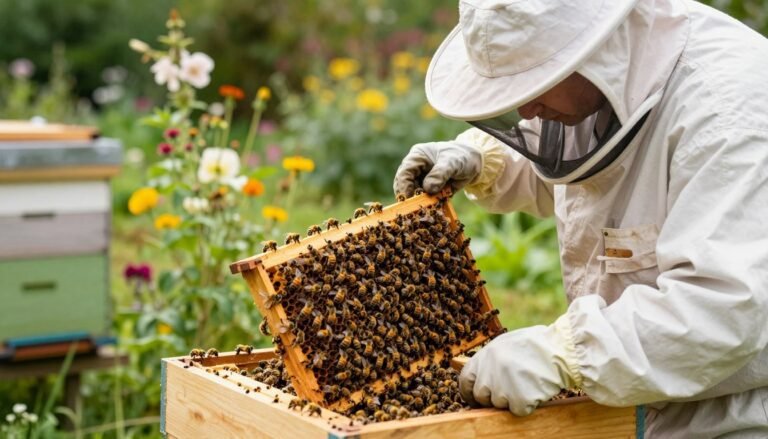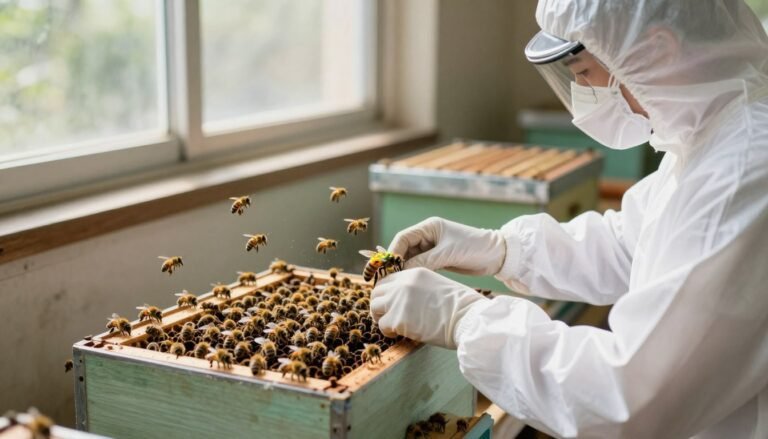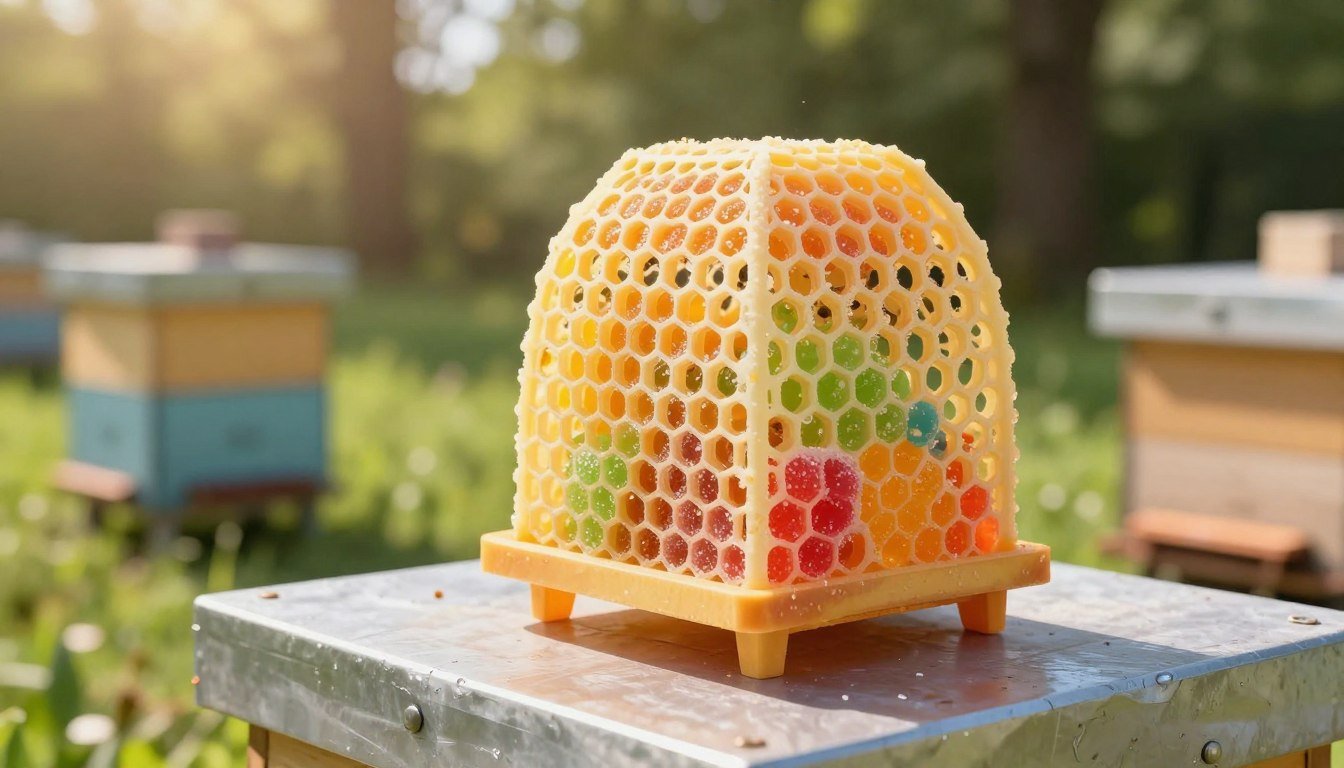
The queen cage candy plug is a timed-release tool used during the safe introduction of a new queen into an established colony.
The candy plug acts as a slow barrier that gives pheromones time to spread and calm worker bees. Research by Thomas E. Sprenger and Robert Brodschneider supports controlled introductions and highlights drone congregation and mating reliability in managed environments.
Using a well-designed professional queen cage with a sliding gate and a discover plastic feeder plug can raise success rates to as high as 85 percent. Proper beekeeping knowledge helps beekeepers time the release and protect the new queen during transport.
Practical setups include secure attachment to brood frames, corrosion-resistant mesh for feeding and laying, and a push-in pin mount for easy inspections. For a selection of tested models and details, see our guide on best queen cages for introduction.
Key Takeaways
- Timed release matters: the candy plug creates a mandatory buffer for pheromone harmonizing.
- High success: slow-release systems can reach about 85% acceptance.
- Design counts: sliding gates, mesh, and durable materials protect the bee during transport.
- Good technique: proper beekeeping knowledge reduces rejection risk.
- Controlled release: leave the device in place several days to allow acceptance before removal.
Understanding the Queen Cage Candy Plug How It Works
The soft sugar stopper functions as a living timer, delaying release until workers permit entry.
The device holds the new breeder inside a secure enclosure while workers sample her scent. Bees must chew through the sugar barrier, which forces a gradual, natural opening and helps the colony accept the newcomer.
This controlled delay gives pheromones time to spread and lets workers grow familiar with the new female before direct contact. That reduces the risk of aggression and improves acceptance rates.
The sliding release mechanism provides predictable timing. Beekeepers can rely on this method to protect the valuable insect during transport and installation while the hive stabilizes.
| Feature | Purpose | Benefit |
|---|---|---|
| Sugar barrier | Creates timed delay | Improves acceptance by scent familiarization |
| Sliding release | Allows controlled opening | Minimizes attack risk |
| Protective enclosure | Shields during transport | Safeguards breeding stock |
For technical guidance and frequently asked questions on introduction devices, see this detailed introduction FAQ.
The Biological Purpose of the Candy Barrier
A timed sugar barrier buys critical days for pheromone signals to spread through the hive.
The delay is biological, not mechanical. Research by Gloria DeGrandi-Hoffman and Judith Hooper shows that volatile compounds shape acceptance of a new female. Those chemicals need time to permeate frames and brood before workers allow direct contact.
Immediate introduction often triggers a defensive balling response where workers can injure or overheat the new queen bee. The sugar stopper creates a 2-to-3-day buffer that reduces that risk.
The Role of Instinctive Behavior
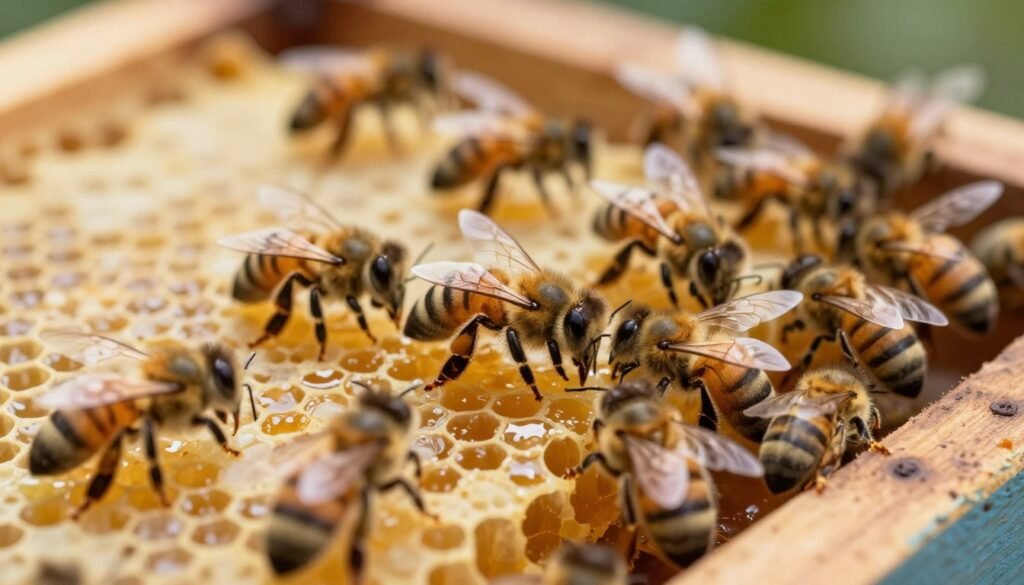
Worker bees follow strong instincts. Sugar draws attention away from aggression and toward feeding.
This change in behavior helps scent sampling become the primary activity. Over a few days, worker recognition of the queen’s pheromones increases, lowering attack responses.
Preventing Aggressive Balling
The barrier also prevents the queen from leaving the cage exit until the colony accepts her chemical signature. Beekeepers must respect this timeline to avoid premature release and loss.
Standard practice in modern beekeeping uses this delayed-release approach to protect valuable breeding stock. For more technical FAQs on introduction devices see this introduction FAQ and a discussion of rejection factors at why bees reject a queen.
Mechanics of Controlled Queen Release
Controlled release depends on the hive’s behavior rather than any mechanical timer.
The mechanics rely on workers chewing a sugar barrier to form an exit. This means the new queen cannot free herself and must wait until resident bees permit access.
Using a professional queen cage or a plastic queen cage with a queen cage sliding gate gives the beekeeper precise control during introduction. The plastic design with a sliding gate feeder or gate feeder plug keeps the breeder safe while pheromones diffuse through the barrier.
“Release is a social process: the colony decides when contact is safe by removing the stopper.”
| Component | Role | Benefit |
|---|---|---|
| Sugar barrier | Timed delay | Allows scent diffusion and lowers aggression |
| Cage sliding gate | Controlled exit | Gives beekeeper management during introduction |
| Plastic barrier | Physical protection | Durable during transport and installation |
Practical point: rely on worker activity to trigger release, and inspect only after a safe window. This approach protects honey stocks and preserves colony stability during transfer.
Pheromone Diffusion and Colony Acceptance
Gradual scent exchange is the key step that lets resident workers shift from rejection to recognition. Honey bee colonies depend on chemical signals to tell friend from foe. This process is fast in airflow but slow enough across comb to avoid sudden aggression.
Chemical Signaling Dynamics
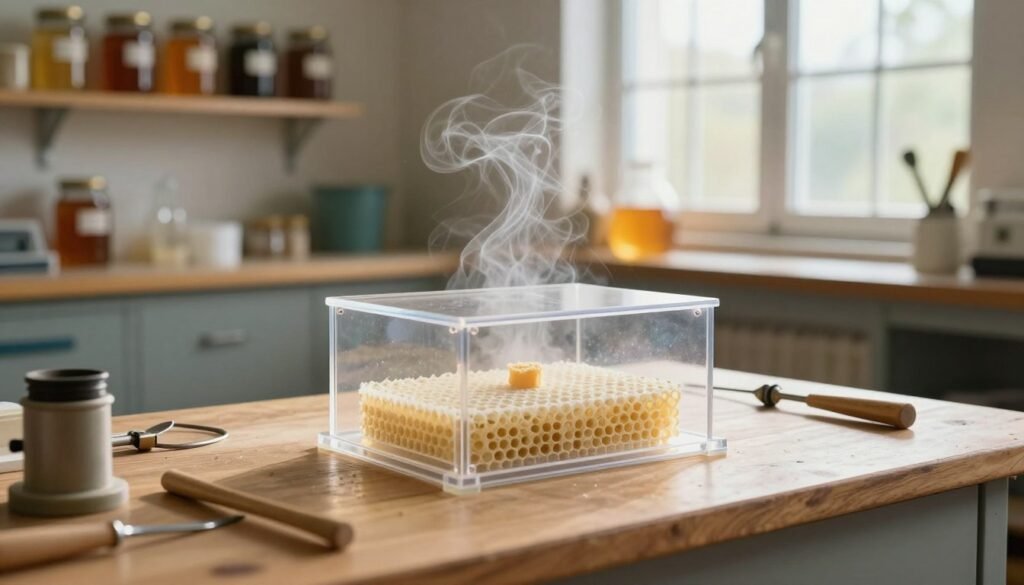
Pheromone diffusion is the primary method by which a queen bee communicates presence to her colony. While the new breeder remains protected inside a small device, her pheromones pass through the mesh and mingle with the hive scent profile.
This steady exposure reduces hostile responses and encourages workers to feed and groom rather than attack. Successful queen bees are those whose chemical signature blends well with existing colony odors.
- The mesh allows exchange while preventing harm to the newcomer.
- Beekeepers rely on this natural chemistry during introduction to avoid violent rejection.
- Monitoring scent diffusion helps predict acceptance before full release.
Protecting High-Value Genetic Resources
High-value breeder preservation depends on secure transport and controlled exposure during the first days in a new hive.
Breeding stock represents a major investment for any apiary. Using a professional queen cage and a reliable candy plug system reduces the risk of loss during introduction.
The cage mesh offers physical protection while allowing chemical exchange. This balance lets the colony sample scent without harming the newcomer. A plastic queen cage with a cage sliding gate and a sliding gate feeder keeps the breeder safe during transit.
For large operations, features like a gate feeder plug or feeder plug discover are essential to maintain the integrity of bee transport colony logistics. Related products professional lines include discover plastic queen tools that aid viability during handling.
Standard protocol protects honey producers by lowering rejection risk and preserving genetics. For practical setup guidance and site preparation, see our beehive installation guide at beehive installation.
Nutritional Benefits During Transport
Transport nutrition keeps the breeder active and reduces stress while attendants care for her en route.
The small sugar block inside a transport cage supplies quick carbohydrates and moisture to traveling bees. This steady energy helps maintain body temperature and flight muscle readiness after release.
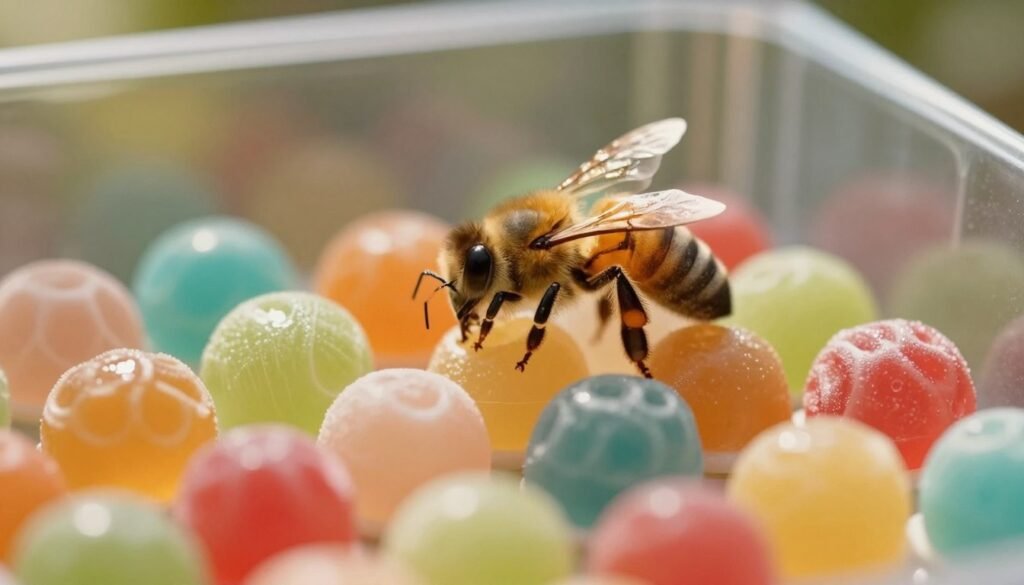
Beyond timing, the sweet stopper serves as a food source for attendants. Properly stocked queen cage systems let workers feed the breeder and themselves during long moves.
Good practice: beekeepers should use high-quality sugar mixes and check stock before shipment to avoid dehydration or energy loss that lowers survival and laying potential.
| Benefit | Role | Outcome |
|---|---|---|
| Carbohydrates | Immediate energy | Maintains activity and egg-laying readiness |
| Hydration | Moisture source | Prevents desiccation during transit |
| Dual-purpose barrier | Timing and food | Safe, sustained introduction |
| Quality control | Beekeeper prep | Higher acceptance and colony stability |
For technical guidance on transport nutrition and handling, see this transport nutrition FAQ.
Establishing the Correct Introduction Timeline
Timing the release of a new breeder is a decisive factor for acceptance in an established hive.
Standard release windows usually range from one to three days. This span gives worker bees time to sample scent and build tolerance. Most experienced beekeepers plan for a 48-hour average, then adjust for specific conditions.
Standard Release Windows
The usual window of 1–3 days balances safety with speed. A shorter window may risk rejection. A longer delay can stress the newcomer and attendants.
Factors Influencing Consumption Speed
Several factors change how fast the sugar barrier disappears:
- Hardness of the sugar: firmer mixes slow consumption and extend the delay.
- Colony activity: strong, active workers clear the barrier faster than a weak cluster.
- Weather and honey stores: hungry or active colonies may chew sooner; heavy honey flow can slow interest.
Avoid early checks. Premature inspection can trigger aggression and harm the new queen bee. Trust the natural pace and inspect only after the expected release window has passed.
“Patience during introduction is the best tool a beekeeper has to protect genetics and colony stability.”
Monitoring Hive Progress After Installation
Successful integration is confirmed by brood, not by noise at the entrance.
Wait three to five days after introduction before opening frames. During this window, minimal disturbance protects the new female and keeps the colony calm.
Use a professional queen cage with a queen cage sliding feature or a sturdy plastic queen holder to reduce handling. These tools let beekeepers install without extra agitation.
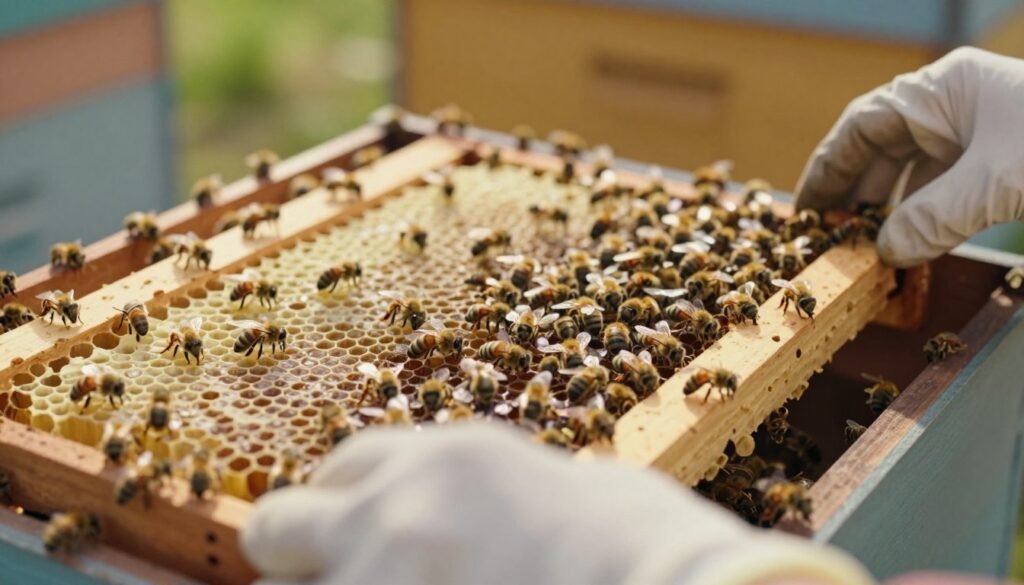
- Look for fresh eggs and tiny white larvae — these are the only clear signs the release succeeded and the queen is laying.
- Spot checks at 3–5 days are ideal; avoid earlier inspections that can trigger aggression.
- Note honey stores and general bee activity to judge colony health after introduction.
“Patience during the first days preserves genetics and colony stability.”
For a step-by-step installer guide, consult the package installation checklist. For seasonal follow-up tasks after release, see our seasonal tasks calendar.
Managing Potential Introduction Failures
Sometimes the planned delay fails and the introduced breeder remains trapped past the expected window. If the device has not opened by day five, the beekeeper must step in to prevent harm and lost laying potential.
Manual Intervention Procedures
Stay calm and move with purpose. Use a hive tool or gloved hand to expose the plastic tab and gently remove the soft barrier. If you use your hand, be steady: three precise motions are safer than one quick pull.
Hold the queen cage close to the frames while you lift the stopper. This gives the queen bee a chance to walk out naturally and lowers rejection risk. Keep hands steady and avoid jolts that alarm workers.
- Check by day five: intervene if workers have not removed the barrier.
- Use gentle control: pull the tab or scrape away sugar with a hive tool.
- Hand placement: hold the device near comb so the breeder can step onto wax.

“Calm, precise manual release protects genetics and preserves colony stability.”
Best Practices for Successful Queen Integration
A calm, methodical installation gives resident workers time to sample scent and change behavior gradually.
Use a professional queen cage and a plastic queen cage with a reliable cup and a sliding gate. These tools protect the new breeder during queen bee transport and make the introduction predictable.
Trust the sugar delay. Let the soft barrier act as a timed buffer so pheromones can spread and reduce aggression. Check the device by day five; if workers have not cleared the opening, perform a gentle manual release.

Keep the barrier moist and reachable. A slightly damp sugar block doubles as food during transit and helps attendants remain active for feeding and grooming. Use a gate feeder plug or sliding gate feeder to manage feeding access.
- Follow the five-day inspection limit and intervene gently if needed.
- Use discover plastic queen accessories and feeder plug discover tools for safe handling.
- Rely on tested related products professional lines to improve acceptance and honey production.
“Patience and the right equipment are the best safeguards for new introductions.”
Conclusion
A simple, plastic introduction tool converts social chemistry into a reliable acceptance window.
The method protects valuable stock by using resident behavior and scent exchange to reduce aggression. Proper use of this plastic device turns a high‑risk transfer into a predictable, biological success.
Prioritize the colony’s timeline and allow pheromones to diffuse before expecting full acceptance. If the timed barrier fails after several days, careful manual intervention is the correct remedy to preserve health and laying potential.
Consistent application of these practices will raise acceptance rates and strengthen apiary productivity. For a deeper procedural overview, see the queen introduction guide.
FAQ
What is a plastic queen cage with a sugar feeder and why do beekeepers use it?
A plastic transport device holds a new reproductive female safely while workers adjust. The small sugar feeder inside supplies energy during transit and provides a predictable delay before workers can access the reproductive female, which helps reduce immediate aggression and gives time for pheromone blending with the host colony.
How does the sugar barrier create a controlled release timeline?
The sugar plug acts as a temporary physical barrier that bees consume over a span of days. Consumption pace depends on temperature, colony activity, and worker population. This timed barrier allows the resident colony to detect and accept pheromones gradually, lowering the chance of rejection.
Why is gradual introduction important for colony acceptance?
Slow exposure to the introduced female’s scent lets worker bees assimilate her pheromones into the hive odor profile. This reduced shock to nest recognition systems leads to calmer interactions and increases the probability that the colony will accept her as their leader.
What biological behaviors influence acceptance or aggression during introduction?
Instinctive nest-guarding and recognition drive responses. Guard workers check unfamiliar insects and may act defensively. If pheromone blending is slow, workers may exhibit balling or aggressive handling. A timed sugar barrier helps mitigate these instinctive responses.
How long does the sugar feeder typically take to be consumed?
Under normal conditions the sugar feeder dissolves in about three to seven days. Warmer weather and higher activity can shorten that window, while cool or weak colonies may take longer. Monitor the hive to confirm progress rather than relying on a single time estimate.
What should I watch for after installing the device in a hive?
Look for calm worker movement around the device, consistent food flow into the hive, and minimal aggression toward the enclosure. Check frames for reduced feeding disturbance and confirm that the device remains securely seated. Avoid opening the hive frequently, which can disrupt acceptance.
What steps can I take if the colony attacks the introduced female?
If you observe clear aggression, remove the device and relocate the introduced female to a safe holding box if possible. Reassess colony strength, try a different timing, or use a queen introduction method with a longer delay. Manual intervention should be cautious to avoid harming the reproductive female or escalating worker aggression.
Can the device protect genetics during transport and sales?
Yes. The rigid plastic design provides physical protection and stable feeding during shipping. It prevents crushing and allows sellers and buyers to move high-value stock with lower risk of handling damage or starvation en route.
Are there best practices for placing the device inside a nuc or full colony?
Place the device central to brood and attendants where worker contact will be steady but not overcrowded. Ensure frames are spaced normally and that the device’s entrance faces downward or toward the center to limit direct exposure to guards. Keep installation during warm, calm weather to encourage rapid but steady feed consumption.
What alternatives exist if the timed feeder approach fails in a particular apiary?
Alternatives include using a longer-delay introduction box, employing the newspaper method, introducing during a nectar flow when workers are busier, or timing introductions when the colony is queenless and actively seeking a leader. Each approach changes social dynamics and may improve acceptance in difficult colonies.