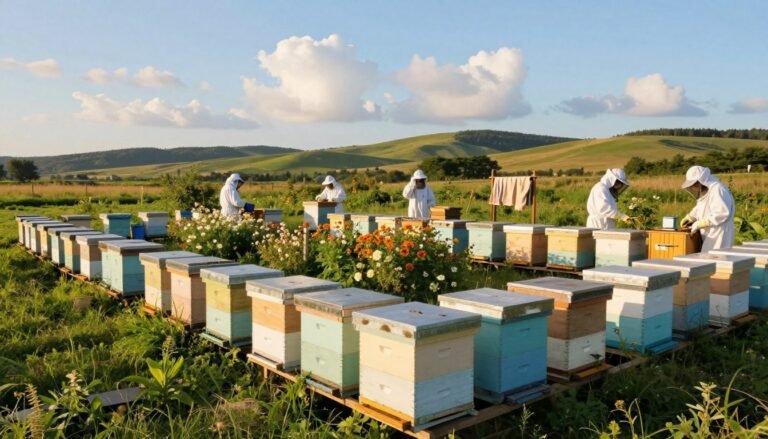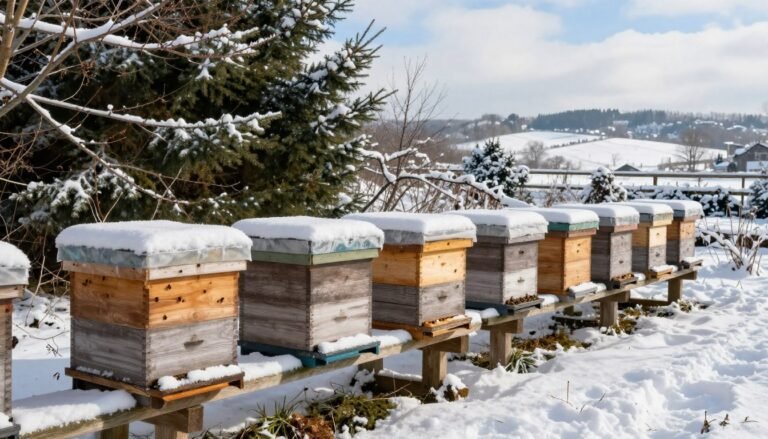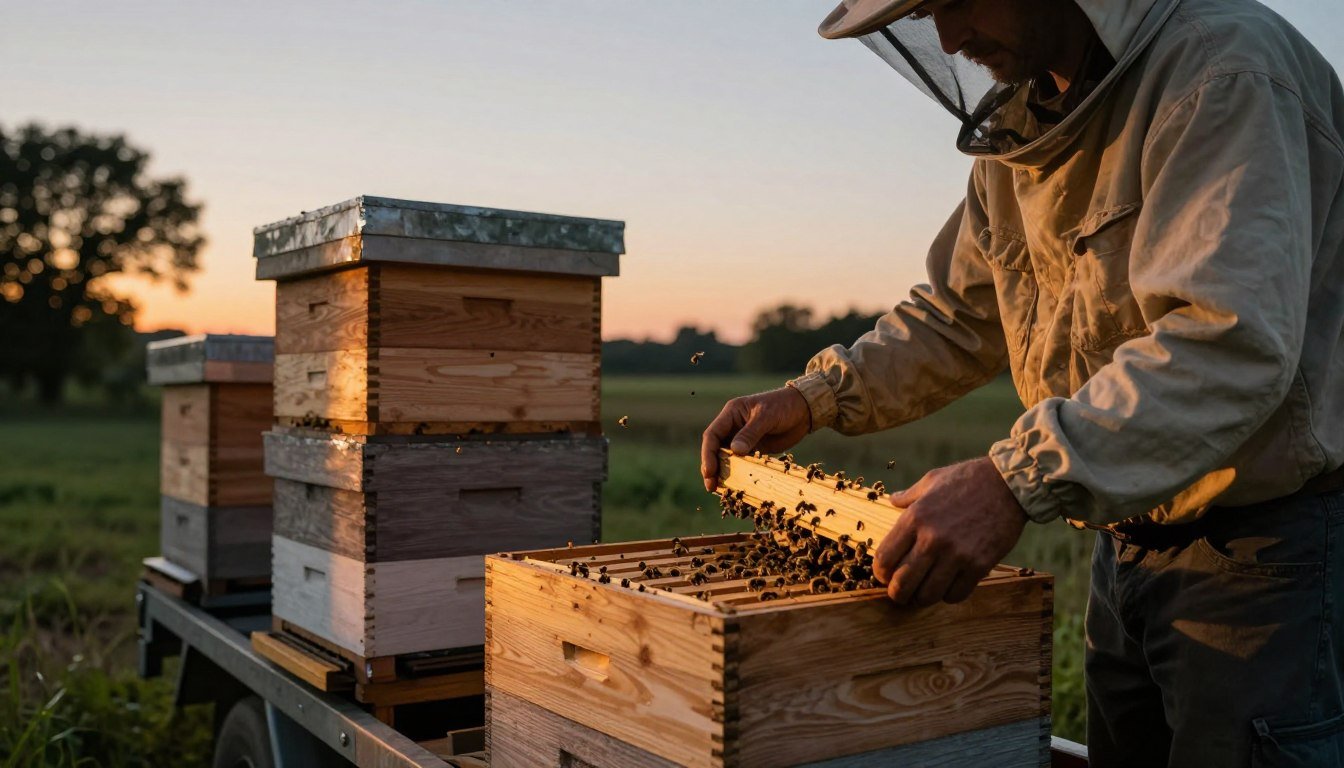
Night transfers are the safest way to move colonies. Beekeepers schedule work when bees rest and temperatures drop. This reduces flight risk and lowers stress on the colony.
Careful planning makes the difference between a smooth transfer and lost productivity. A reliable truck and a professional beekeeper keep frames level and colonies ventilated. Grower coordination ensures the right location and timing during the season.
Weather and timing shape each operation. Entrances may be screened and pallets used to secure boxes on the trailer. Proper handling helps protect honey bees and supports crop pollination services that deserve fair pay.
Moving bees is demanding work that affects daily yields. Minimize colony disturbance, monitor conditions, and allow a calm reorientation period after arrival. For large operations, follow standard methods and safety steps like those in this guide on large-scale hive transport. Learn best practices on moving bees between apiaries.
Key Takeaways
- Night transfers reduce bee activity and stress, improving safety.
- Professional beekeeping and a reliable truck are essential.
- Coordinate timing and location with growers to protect yields.
- Watch weather and allow calm reorientation after the move.
- Proper prep and handling safeguard colony health and honey production.
Assessing Hive Strength and Readiness
A reliable pre-move evaluation reveals which colonies will perform best in the field. This quick check saves time and protects pollination outcomes. Inspect each hive calmly and use consistent criteria.
Evaluating Population Density
When the top is opened, a strong hive will brim with bees and blanket six to eight combs. Count combs with brood; at least five combs with brood signals a strong colony.
Young, uncapped brood shows a motivated workforce ready to collect pollen. Older brood with wax cappings indicates stability and maturity.
Checking Food Stores
Open the boxes to confirm ample food for the season. A professional beekeeper must ensure sugar or honey reserves match the expected demand.
“Inspecting brood, entrance activity, and food levels is the most reliable way to predict survival after transit.”
| Check | Good Sign | Action |
|---|---|---|
| Population | 6–8 combs partially covered by bees | Approve for placement |
| Brood | 5+ combs with mixed-aged brood | Proceed with move |
| Food | Honey or sugar stores visible in boxes | Supplement if low |
| Entrance | Active, controlled traffic | Clear debris; re-evaluate |
For deeper training on brood assessment, consult the master beekeeper lecture notes. Use a seasonal beekeeping checklist to track food and population levels.
Strategic Timing for Overnight Pollination Moves
Choosing the right time to transfer bees makes the job safer and quicker. Many teams find the morning or cool night hours reduce flight and calm colonies. Bruce Bowen demonstrated this when he staged 818 hives onto three trucks for a long trip to California.
Move hives after a crop begins to bloom so bees focus on the target and not on weeds. Keep groups about 500 feet apart so the whole field sits inside the bees’ foraging range.
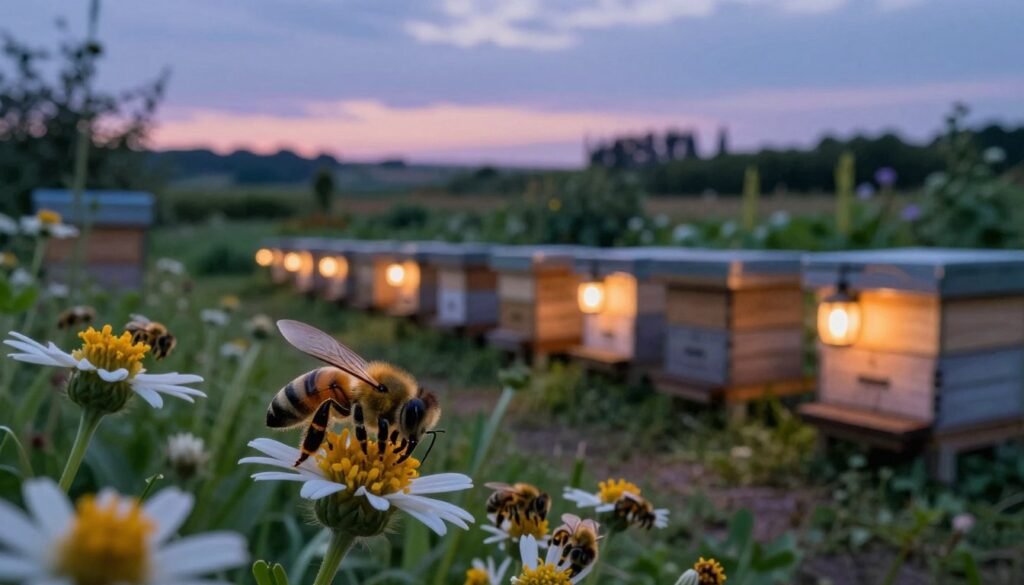
Good coordination with the grower ensures the vehicle can reach the place with minimal delay. A well-organized beekeeper can place each unit in mere minutes, saving hours across many miles.
“Even a bit of planning can save hours of work when transporting colonies across many miles.”
| Factor | Recommended Action | Why it matters |
|---|---|---|
| Time of day | Morning or cool night | Limits bee flight and reduces stress |
| Distance between groups | ~500 feet | Ensures field-wide coverage |
| Weather | Avoid rain or extreme heat | Protects colony health and foraging |
| Grower access | Confirm vehicle route | Saves hours and prevents delays |
For practical transport tips and small-scale strategies, see this article on transporting and moving bees and a guide to small-space beekeeping strategies.
Essential Equipment for Loading Hives for Overnight Pollination Moves
A solid kit of tools makes each transfer steadier and safer. A single 10-frame deep hive averages about 60 to 75 pounds, so every truck must carry tools to lift and secure heavy boxes. Beekeepers should plan the way boxes are stacked and tied down to prevent shifting on the road.
Securing Entrances and Ventilation
Control of the entrance dictates whether bees remain calm inside their hive during transit. Use netting or window-style screening to allow air while keeping bees contained.
Ventilation matters at stops. If the vehicle sits on the road or in heat, extra air prevents overheating and stress. A strap across the top secures the lid to the base and helps keep a tight load.
“Screened entrances and a tight, strapped load make the difference between safe arrival and a messy case on the trailer.”
| Equipment | Purpose | Recommended Practice |
|---|---|---|
| Screening/netting | Airflow at entrance | Window-type screens; allow air and containment |
| Straps and ratchets | Stabilize top and boxes | Cross-strap each hive; check tension before road travel |
| Spacing blocks | Maintain distance | 1–2 feet between units for ventilation and safety |
| Lift tools | Handle 60–75 lb loads | Use two-person lift or mechanical jack on truck |
For a practical primer on vehicle prep and secure transport, review this guide to beehive transportation basics.
Best Practices for Loading Hives
A trained crew and clear roles turn a long day into a fast, safe operation. Stage tools and straps at truck level so each load moves without hesitation. Assign one person to watch the entrance while others lift and place boxes on the trailer.
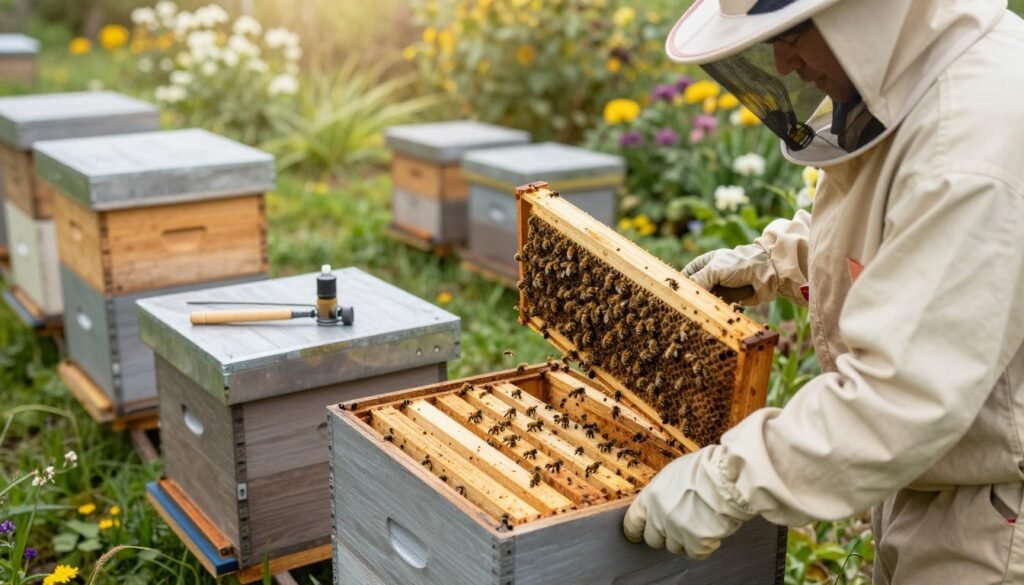
Pick cooler morning hours as Scott Svab recommends to avoid overheating the colony. Early morning or late evening also works when you need to get nuc boxes; bees are inside and calm.
Use a smoker to nudge bees back before you secure the entrance. Keep ventilation open even when the vehicle sits for hours. A well-cut strap across the top prevents shifting during long miles.
With a practiced team, loading twenty bee hives in under fifteen minutes is possible. Plan the exact place to set each unit at the new location. That small bit of prep saves hours and reduces stress on the bee and beekeeper.
“Simple habits—strap, screen, and check—make every hive transfer smoother.”
- Stage gear by the truck and assign clear roles.
- Time pickups for cooler parts of the day.
- Maintain ventilation and secure straps during transit.
- Plan placement at the destination to save minutes on arrival.
For rental options and placement planning, review guidance on renting bees for pollination services.
Managing Environmental Factors During Transit
Controlling temperature and humidity during transit is essential to protect colony health. Hot, wet conditions can make bees restless and hard to manage. Cool, steady air reduces stress and keeps the queen and workers stable.
Handling Humidity and Temperature
High humidity often makes bees aggressive and reduces the effect of smoke. In warm weather, proper ventilation prevents heat build-up inside each hive.
Check the vehicle climate before loading. Use screened entrances to keep air moving while containing the colony. If moisture is heavy, delay moves when possible or use desiccant packs in transit boxes.
Mitigating Bee Aggression
Night work can be risky because bees crawl and find gaps. Always wear full protective gear at night and in the early morning.
Synthetic queen pheromone can calm a colony and help with reorientation after a transfer. Manage the hive entrance to control airflow and limit escape attempts.
“Every case of aggression during a move is a reminder to prioritize safety and proper handling techniques.”
| Factor | Risk | Control | Why it matters |
|---|---|---|---|
| Humidity | Increased aggression; reduced smoke effect | Improve ventilation; use desiccants if needed | Maintains worker calm and queen safety |
| Temperature | Overheating in vehicle heat | Shade, air flow, stop-start cooling | Prevents colony stress and brood damage |
| Night handling | Bees crawl; sting risk to crew | Full PPE; close gaps; slow, steady work | Protects beekeepers and limits colony disturbance |
| Distance & weather | Long trips in bad weather increase stress | Plan route; monitor forecasts; rest stops | Reduces mortality and preserves pollination value |
For detailed strategies on long runs, see these transport tips at long-distance transport tips. If you expect wet conditions, review best practices on managing hives in wet climates.
Ensuring Safety and Compliance During Transport
Every transport run must follow strict checks to protect bees and meet legal rules.
Bruce Bowen and Pat Ray proved scale matters when they staged 818 hives onto three trucks for the California almond season. Crews must document time and distance so colonies arrive in good condition.
Trucks need an agricultural inspection before crossing state lines. Inspectors look for insects, dirt, and grass seeds. Growers must give beekeepers 24–48 hour notice before applying pesticides.
Secure stacking is essential. Netting stabilizes the entire stack and a strap across the top ties boxes to the pallet. Proper ventilation prevents heat stress and keeps honey bees healthy during long trips.
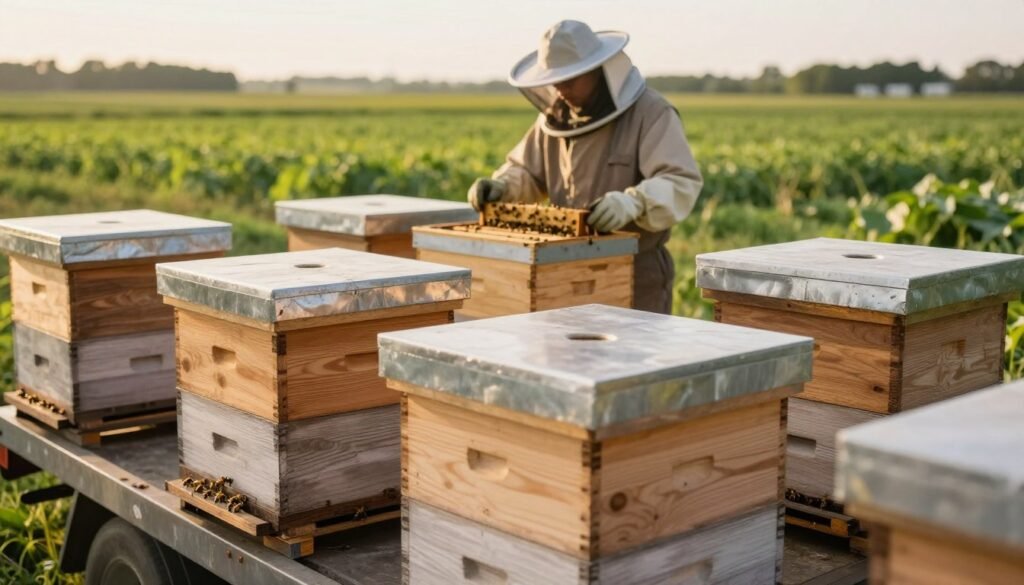
Park away from other trucks when you stop on the road and follow local regulations. Record weather, route, and stops. A trained beekeeper who plans placement at the new location reduces risk and saves minutes on arrival.
“Safety steps and clear documentation protect the colony and the public.”
For practical prep and small-scale tips, review this backyard beekeeping guide.
Conclusion
A year plan and clear crew roles turn complex transfers into routine work. Meticulous scheduling and an understanding of bee biology keep colonies resilient during transit.
Coordination between growers and beekeepers remains the most important factor in achieving strong crop results. Safety protocols, like proper ventilation and secure entrances, protect both bees and handlers.
Investing in the right equipment and timing moves correctly leads to more efficient, profitable services. Learn more about recognizing stress and swarm risk with this short guide on swarm signs.
The hard work of beekeepers and the resilience of honey bees sustain our food systems and pay dividends all year.
FAQ
What is the best time to move bee colonies for overnight pollination?
Move bee colonies late at night or very early morning when most foragers are inside the hive. Cooler temperatures calm bees and reduce drift. Avoid moves during heavy rain, high winds, or extreme heat. Plan trips so bees reach the new site early in the morning, allowing them to orient before the workday begins.
How do I assess hive strength and readiness before transport?
Inspect colonies a day or two before a move. Look for a solid population of adult bees, a laying queen, and adequate brood pattern. Check food stores—honey and pollen—and add supplemental feed if stores are low. Strong, healthy colonies tolerate stress better during transit and at the pollination site.
What signs indicate sufficient population density in a colony?
A dense cluster of bees on frames, full brood frames, and active nurse bees are good signs. If frames look sparse or the queen has stopped laying, the colony lacks the workforce needed for pollination. Consider combining weak colonies or replacing them before a move.
How much food should I provide before moving colonies overnight?
Ensure at least a few pounds of honey or a protein/pollen supplement and a sugar syrup feed if necessary. Provide enough to cover the trip and the first 24–48 hours post-move. Bees can be stressed by transport; adequate reserves reduce hunger-driven foraging immediately after placement.
How should I secure hive entrances and ventilation for transport?
Reduce entrance size with entrance reducers to prevent robbing and limit bee escape. Provide cross-ventilation to prevent heat buildup—use screened bottom boards or vent holes covered with hardware cloth. Secure lids and inner covers with straps or rope and add padding to prevent shifting.
What equipment is essential for loading and hauling colonies overnight?
Use a vehicle or trailer with a stable, level floor and good ventilation. Bring ratchet straps, hive stands, entrance reducers, screened vents, feed jars, and protective gear. A loading ramp, pallet jack, or lift helps for heavy loads. Ensure the truck or trailer allows airflow while keeping bees contained.
How do I manage humidity and temperature during transit?
Monitor weather and avoid moving bees in extreme heat or humidity. Provide ventilation to reduce heat buildup; open screened areas slightly while keeping bees secure. If temperatures drop, minimize trip time and avoid exposing colonies to drafts at stops. Plan travel times to avoid midday heat.
What steps reduce bee aggression during and after a move?
Use smoke sparingly at loading if needed and keep noise and sudden motions to a minimum. Limit colony disturbances and avoid crushing bees when stacking. After placement, leave colonies closed for a few hours to let bees settle, then open entrances gradually with reducers in place.
Are there distance or time limits I should follow when moving hives overnight?
Shorter trips reduce stress; aim to minimize travel time where possible. For long hauls, provide adequate ventilation and avoid overnight stops that expose colonies to temperature swings. Comply with state and federal regulations regarding movement distances for disease control and transport permits.
What safety and compliance measures must be followed during transport?
Secure all colonies to prevent shifting on the road. Carry required permits and health certifications for interstate moves. Follow Department of Transportation rules for vehicle loads and state agriculture department guidelines to prevent pest and disease spread. Wear proper PPE when handling colonies.
How should I position and secure boxes on the truck or trailer?
Stack boxes evenly on pallets or skids and strap them firmly with ratchet straps. Place heavier colonies on the bottom and center the load to maintain vehicle stability. Use non-slip mats and corner protectors to prevent movement and crushing during sudden stops.
How long should colonies rest before being opened at the pollination site?
Allow colonies to rest and acclimate for several hours after arrival. Keep entrances reduced and closed if needed for the first few hours to let bees reorient. Gradually open colonies the following morning so foragers can orient to the new location.
What should I do if a hive shows signs of disease before a move?
Do not move colonies with suspected contagious diseases. Isolate and treat affected hives according to state apiarist guidance or veterinary advice. Moving diseased colonies risks spreading pathogens and can lead to quarantine or fines.
How can I minimize forager drift after placing colonies at a new location?
Rotate hive orientation and change the color or landmarks near entrances when feasible. Place colonies with a bit of distance between apiaries and use entrance reducers for the first days. Strong site fidelity develops if bees are allowed to orient before heavy foraging starts.
What documentation should accompany colonies during interstate moves?
Carry health inspection certificates, permits from the receiving state, and any required shipping manifests. Some states require advance notification. Keep records of colony origin, number of colonies, and pesticide exposure history to ensure compliance with pollination contracts and regulations.