The alcohol wash is a simple, reliable method to check varroa mites in your apiary. It gives clear information that helps you set treatment timing and record how well a treatment worked.
Monitoring mite levels keeps your honey bee colonies healthy and strong. Using the correct number of bees to sample yields meaningful results that guide management choices.
This short guide explains the ideal count to test, the step-by-step method, and tips to keep readings consistent. Follow a steady routine to track trends and protect your hive from rising varroa mite pressure.
Key Takeaways
- Alcohol wash provides accurate data on infestation rates.
- Choose the right number of bees to get reliable mite counts.
- Record results to measure treatment effectiveness over time.
- Consistent technique improves comparisons between checks.
- Timely action based on levels protects colony health.
The Importance of Varroa Mite Monitoring
Regular checks of varroa presence let you catch rising infestations before they overwhelm a hive.
Perform monitoring before and after any chemical treatment to verify results. Post-treatment evaluation at 21 days after the treatment ends gives a clear measure of efficacy. This interval matches brood turnover and reveals residual mites that escaped the initial intervention.
Consistent mite monitoring prevents sudden spikes in counts that can lead to colony collapse. Tracking trends over time helps you decide when another treatment is needed rather than reacting when problems are severe.
- Check before treatment and again 21 days later to compare results.
- Use consistent methods and record data to spot trends.
- Proactive monitoring reduces emergency pesticide use.
| Action | Timing | Purpose |
|---|---|---|
| Pre-treatment check | Before intervention | Establish baseline levels |
| Post-treatment check | 21 days after end | Assess treatment efficacy |
| Routine monitoring | Seasonal cadence | Detect rising mite trends |
For natural control options and follow-up strategies, consider resources on natural remedies for varroa mites to broaden your management choices.
Determining How Many Bees for an Alcohol Wash Sample
Accuracy depends on sampling the portion of the colony where mites concentrate.
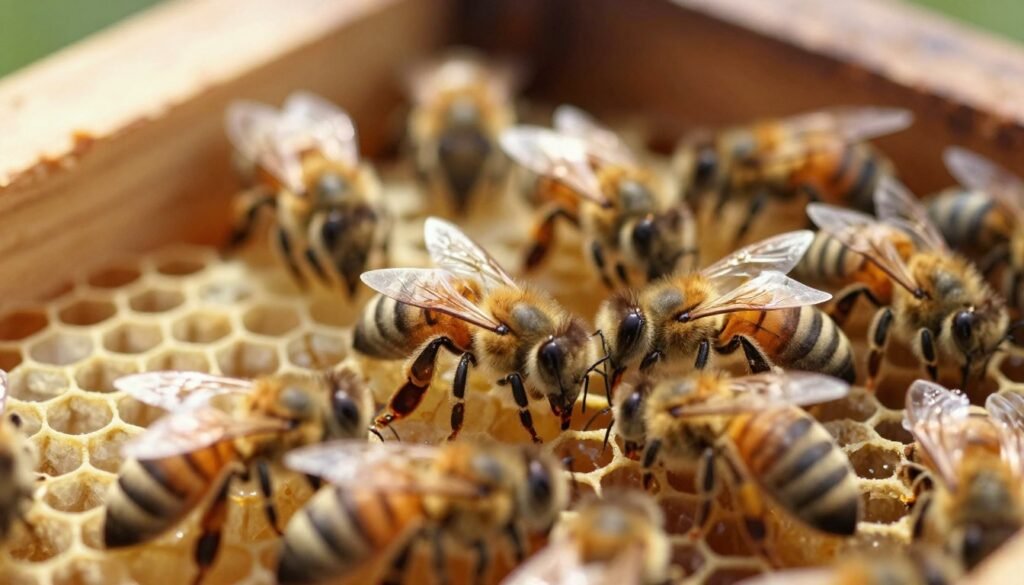
Targeting nurse bees gives the clearest picture of varroa levels. Nurse bees spend most of their time in the brood nest, so they carry more mites than foragers. Aim to collect a consistent bee sample from brood frames to reduce variation between checks.
The Role of Nurse Bees
Most experts recommend collecting approximately 300 bees to reach useful statistical accuracy. A larger pool, such as 300 to 400, reduces random error and improves the reliability of mites per count.
Avoiding False Negatives
Using only 100 bees often gives misleading low counts. That increases the chance of false negatives and delays necessary treatment. Always check the frame for the queen before you shake or scoop a half cup of workers into your container.
- Collect ~300 bees from brood frames.
- Do not include the queen when shaking bees.
- Consistent numbers let you calculate the number mites per sample more precisely.
| Sample Size | Risk | Recommendation |
|---|---|---|
| 100 bees | High risk of false negatives | Avoid for routine checks |
| ~300 bees | Good statistical accuracy | Standard field sample |
| 300–400 bees | Lowest sampling error | Best for precise monitoring |
For a procedural guide and testing tips, consult this monitoring method.
Essential Equipment for Accurate Sampling
Gathering the right gear before you open a hive makes the test reliable and repeatable.
Start with a standard measuring cup. A half-cup tool ensures you collect a consistent volume of workers each time. This consistency reduces variation in mite counts and improves trend tracking.
Choose your preservative carefully. Research by Dr. David de Jong (1982) found that lower concentrations, such as 25%, can still recover mites effectively. Many beekeepers prefer 95% ethyl alcohol, while others use 70% with good results.
Use a sturdy jar that seals with a lid and add a dedicated mesh insert to strain the contents. A mesh lid speeds separation of mites from bees and prevents spills during agitation.
- Keep the measuring cup clean and dry to avoid contamination.
- Have a tight-fitting lid to prevent loss during shaking.
- Designate one jar and lid set to avoid cross-contamination between checks.
| Equipment | Purpose | Tip |
|---|---|---|
| Half-cup measuring cup | Consistent volume collection | Clean and dry before use |
| Sealable jar + lid | Contain agitation and liquid | Use same jar each check |
| Mesh lid | Separate mites from bees | Fine mesh eases counting |
Step by Step Guide to Collecting Your Bee Sample
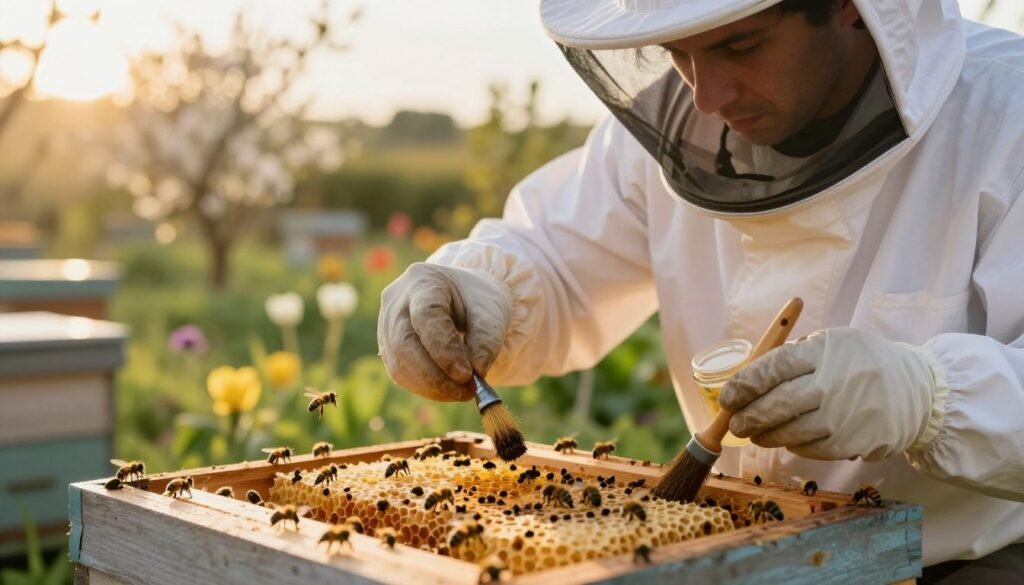
Collecting a consistent portion of workers from the brood nest sets the foundation for reliable mite counts. Gather your jar, measuring cup, and mesh lid before you open the hive.
Selecting the Right Frame
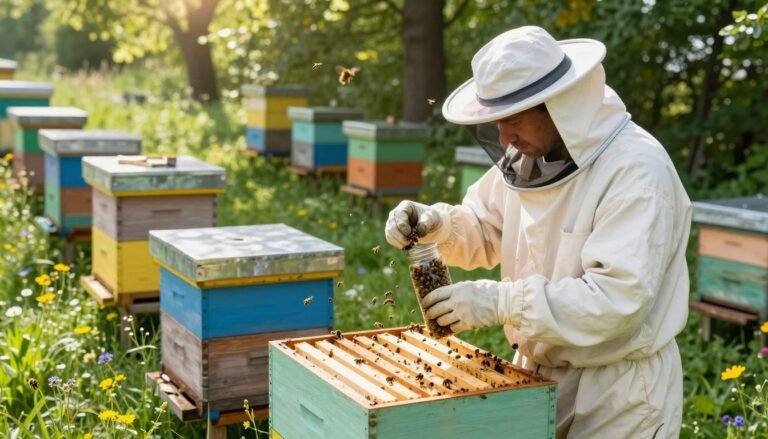
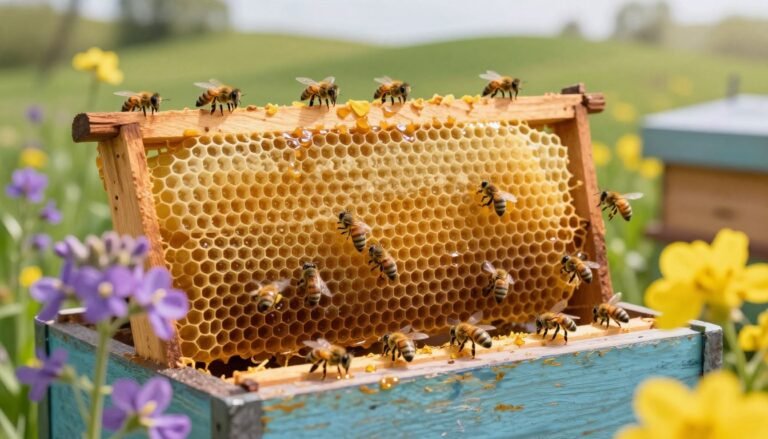
Begin with a frame containing brood. That area holds the highest concentration of nurse bees and will give a representative result.
Check the frame for the queen and avoid dislodging her. If the queen falls into your basin, stop and return her to the hive.
Shaking and Scooping Techniques
Use a firm shake to dislodge workers into your collection basin. The older foragers will usually fly away, leaving the targeted workers behind.
Measure the caught insects using a half cup measuring cup. This helps you reach the correct number bees needed for the test each time.
Agitation Methods
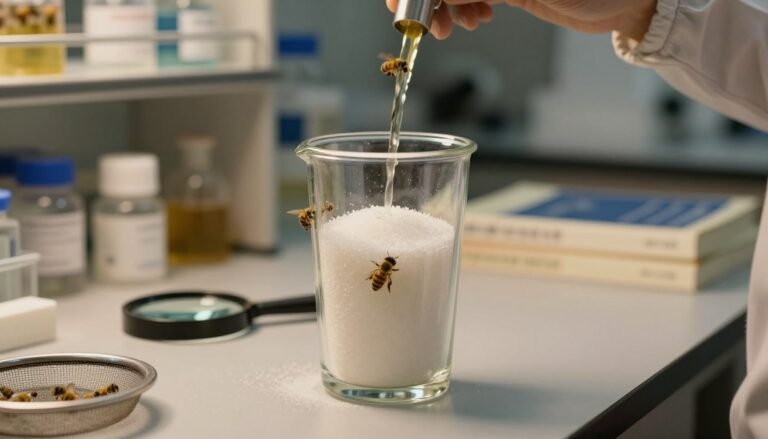
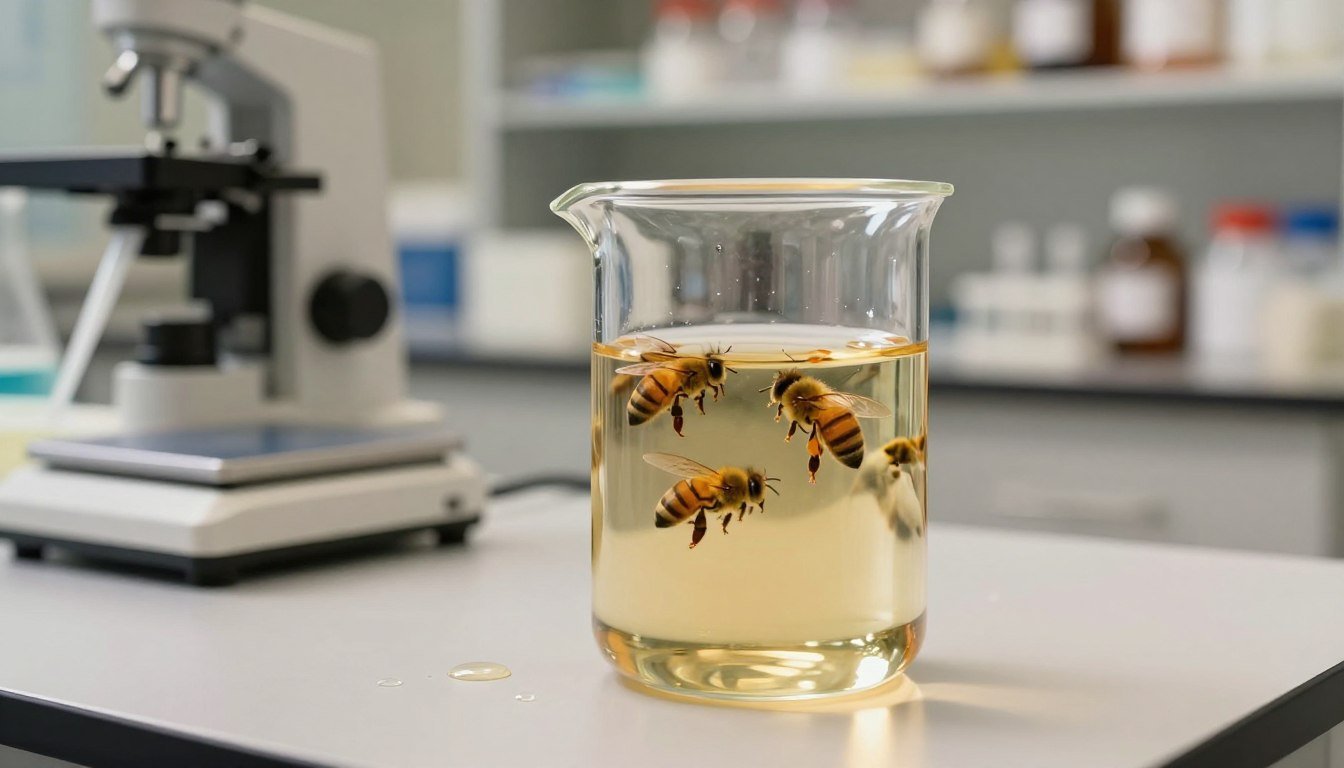
Place the measured workers into the jar and add the chosen preservative. Secure the lid tightly to prevent leaks during shaking.
Agitate the jar for at least 2 minutes—2 to 3 minutes is ideal—to free mites from the bees. After agitation, use the mesh lid to strain the fluid and count mites on a white surface.
- Choose brood frames to capture nurse activity.
- Shake firmly so older individuals fly off before you scoop.
- Use a half cup to standardize the number bees per test.
- Secure the lid and agitate for 2–3 minutes to dislodge mites.
- Strain through mesh into a white container and count mites.
| Step | Action | Tip |
|---|---|---|
| Frame selection | Pick brood frame | Find nurse activity; avoid queen |
| Collection | Shake into basin | Older workers will fly away |
| Measurement | Use half cup measuring cup | Standardize number bees each test |
| Agitation | Seal jar and shake 2–3 minutes | Use mesh to strain and count mites |
For a visual guide to collecting procedures, see this practical note on collecting bees for an alcohol wash.
Interpreting Mite Counts and Treatment Thresholds
Clear interpretation of a jar count turns raw numbers into practical steps. This section shows the math and thresholds beekeepers use to decide on a treatment.
Calculating Infestation Percentages
Use a simple formula to convert your result into a percent. Divide the number mites by 300 and multiply by 100 to get infestation percentage for a typical field sample.
- 1–3% threshold: 3 to 9 mites in 300 bees equals 1–3% infestation.
- Above 3%: beekeepers should consider treatment and consult local extension services.
- If you test only 100 bees, expect a larger margin of error versus a 300 bees test.
- Always record the number mites and date to track trends across the season.
| Number of Mites | Infestation % (300 bees) | Recommended Action |
|---|---|---|
| 0–2 | 0–0.7% | Monitor; no immediate chemical treatment |
| 3–9 | 1–3% | Consider integrated controls; increase monitoring |
| 10+ | 3%+ | Evaluate treatment options and timing |
Good record-keeping and consistent technique improve the value of each test. Proper interpretation of mite levels is a core step in integrated pest management for healthy bee colonies.
Conclusion
A steady testing routine turns raw counts into timely treatment decisions. Regular monitoring with a consistent method gives clear information about varroa mites and colony level risk.
Track the number of mites in each sample so you can act at the right time. Keep your jar and lid in good condition to avoid lost data and false reads.
Protecting brood depends on routine checks and prompt treatment when thresholds rise. Consistent records help beekeepers compare results across the season.
For a practical procedural note on using the alcohol wash method, see this guide: alcohol wash to get a mite.