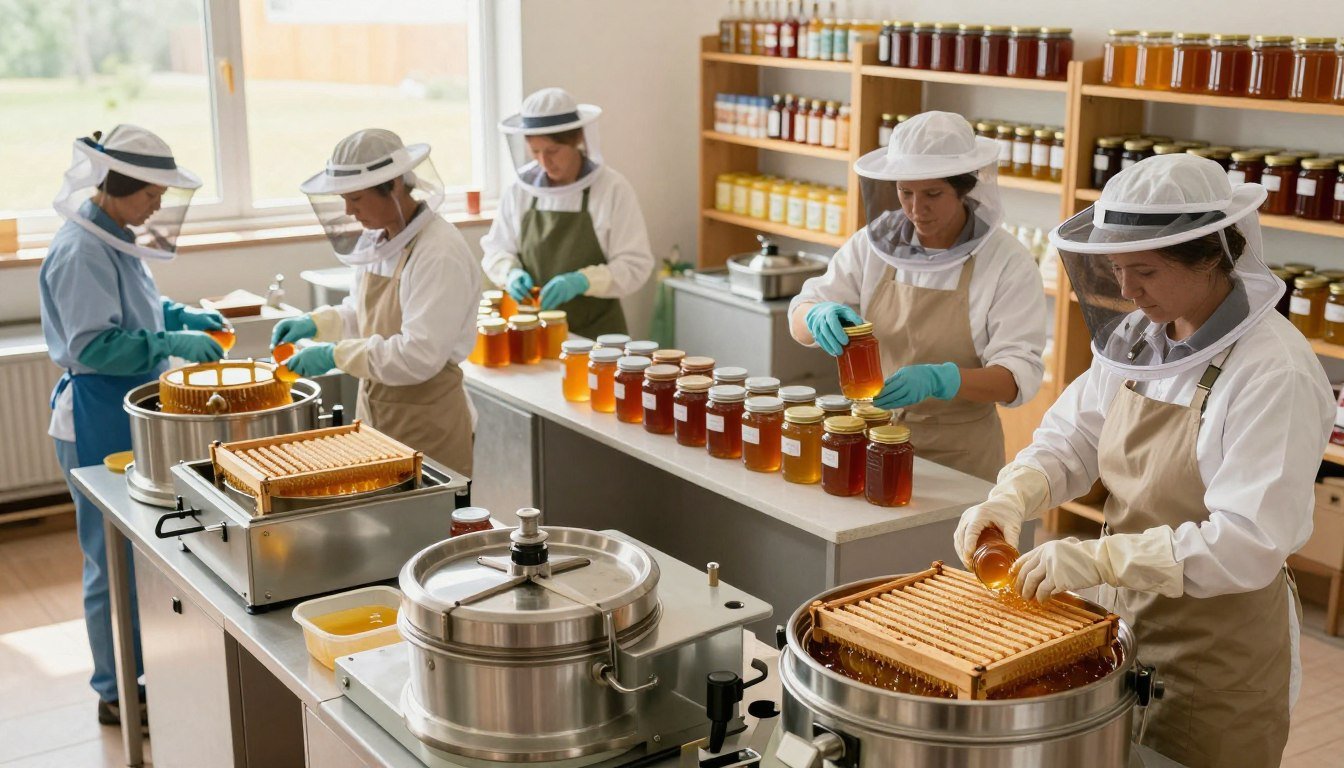
This guide explains the process that turns raw comb into a retail-ready product. The overall process is systematic and practical, so you can plan each step with confidence.
The production path has three clear phases: harvesting, extraction, and bottling. Each step matters to keep the product clean and high in quality.
Good beekeeping keeps the hive healthy while you focus on mechanical extraction. Use the right tools, equipment and a reliable machine to handle frames and packaging as volume grows.
Organizing the workspace helps beekeepers achieve steady results and maintain quality during scaling. Follow this guide to balance colony care with efficient processing and long-term production success.
Key Takeaways
- Understand the three phases: harvest, extraction, bottling.
- Plan each step to protect quality and product integrity.
- Choose proper tools, equipment, and a suitable machine early.
- Keep the hive healthy while you optimize extraction and packaging.
- Organize the space to make production consistent and scalable.
Understanding the Commercial Honey House Workflow for Small Producers
Coordinating apiary care with processing steps is the backbone of turning beehive output into retail-ready jars. Tight coordination between the apiary team and the processing area ensures raw honey stays clean and compliant with local retail laws.
Start with solid beekeeping. Master the basics of hive management before you scale a processing plant. Healthy beehive colonies directly affect annual production and the quality of what you bottle.
Inspections, timely feeding, and disease checks keep bee colonies productive across the season. Those routine tasks protect both volume and the integrity of raw honey.
When you add a machine, increase processing capacity gradually. Integrate equipment while keeping regular beehive inventory and colony health at the center of decisions.
“The transition from field to retail requires attention to both bees and regulations.”
- Manage beehive stocks with regular inspections.
- Ensure raw honey meets market standards before scaling.
- Use equipment to improve throughput while protecting colonies.
Essential Equipment for Efficient Honey Extraction
“Selecting the right extractor saves time and protects product quality.”
A well-chosen set of machines and tools makes extraction safer and faster. Start by assessing your annual yield so you can match capacity to demand.
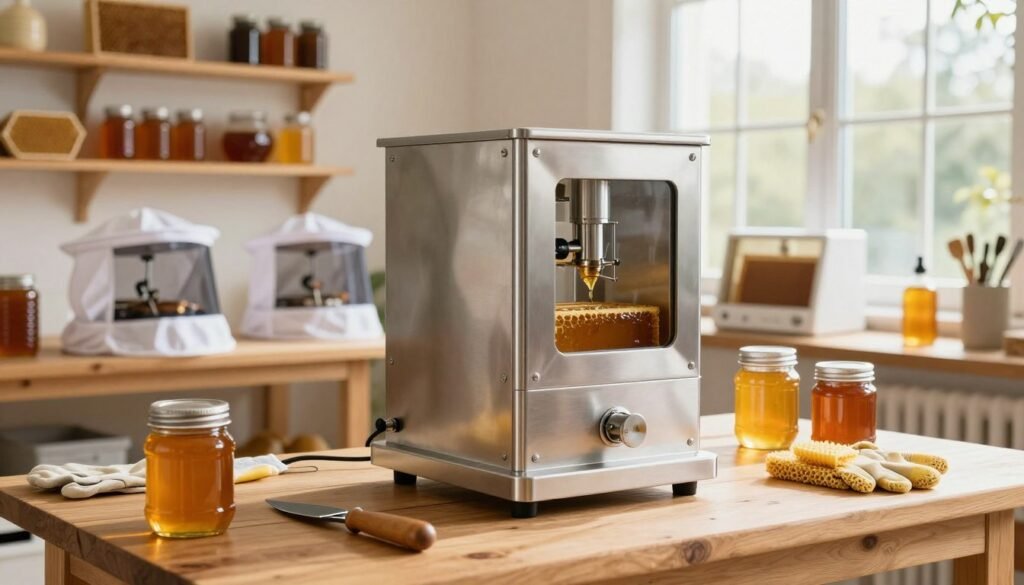
Selecting the Right Extractor
Decide between a manual or electric honey extractor based on crew size and expected volume. A stainless steel extractor resists corrosion and cleans easily.
Match drum size and frame slots to your anticipated load. Capacity matters: larger drums reduce cycles and labor.
Essential Tools for the Honey House
Stock strainers, food-grade buckets, uncapping knives, and sturdy racking. These basic tools speed processing and protect quality during filtration.
- Use durable steel strainers to remove wax and beeswax fragments.
- Choose stainless steel equipment honey pieces where contact hygiene is critical.
- Organize the room so the extractor, machine drains, and filtration stations flow logically.
Preparing Your Apiary for a Successful Harvest
A focused pre-harvest check of each beehive sets the stage for safe, high-quality collection.
Begin with a quick inspection of every hive. Confirm brood patterns, queen activity, and that there are enough stores to carry the colony through winter.
Experienced beekeepers leave sufficient honey in the hive to protect colony survival. This preserves long-term production and reduces winter losses.
- Calm bees with a smoker, then gently brush or shake frames until bee-free before removal.
- Clear frames completely of insects and check combs for pests or disease.
- Sanitize all equipment and tools before processing frames to prevent contamination.
Good preparation reduces stress on the colony and raises product quality. Use practical checklists and reference guides, such as the apiary essentials and modern harvesting methods, to standardize your routine.
Best Practices for Uncapping and Frame Management
Uncapping and careful frame handling set the tone for a fast, clean extraction shift.
Start each session by checking tools and hygiene. Sterilize your uncapping fork and knife uncapping blade before you touch any comb. Clean tools cut down contamination and speed up processing.
Use a high-quality uncapping fork or a heated knife uncapping tool to remove wax caps. Work each side of the frames so honey can flow freely into the extractor.
Handle frames gently to avoid crushing comb. Damaged wax reduces reuse value and complicates filtration. Recycled beeswax is a useful byproduct when you protect comb integrity.
Using Uncapping Forks and Knives
A sharp knife uncapping tool makes large runs faster. The uncapping fork excels at scraping irregular caps and freeing hidden cells. Match technique to frame condition and pace.
“Clean, steady uncapping keeps the extractor moving and preserves comb.”
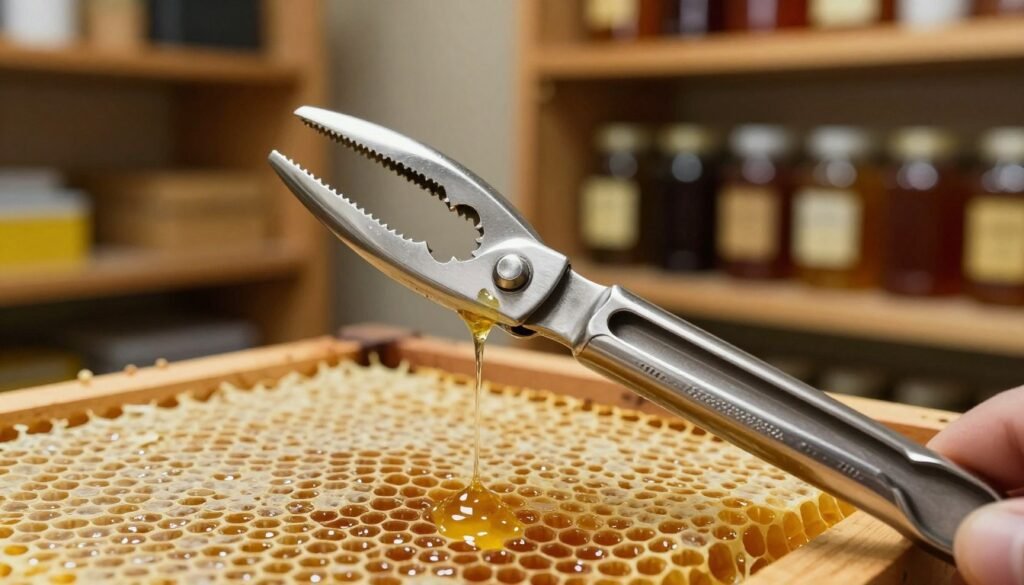
| Tool | Best Use | Care Tip |
|---|---|---|
| Heated knife | Fast, smooth knife uncapping on sealed comb | Wipe between frames to avoid build-up |
| Uncapping fork | Scraping uneven caps and corners | Sterilize before and after use |
| Frame rack | Organize frames pre- and post-extraction | Inspect for damage; repair or recycle wax |
Optimizing the Honey Extraction Process
Good extraction practice reduces waste and keeps your raw product pure from start to finish.
Start with a high-performance honey extractor that fits your expected frames and daily capacity. Match extractor slots and drum size to reduce cycles and speed up processing.
After spinning, transfer the liquid to a food-grade tank and let it settle 24–48 hours. This pause allows air bubbles, bits of wax, and debris to rise to the top.
“The core objective of extraction is separating liquid honey from the wax structure efficiently.”
Follow with proper filtration using stainless steel strainers or mesh filters. Professional-grade machines and maintained tools keep the product pure and ready for filling.
| Step | Best Practice | Benefit |
|---|---|---|
| Extractor selection | Choose capacity-matched, stainless steel extractor | Faster cycles, easier cleaning |
| Settling | Allow 24–48 hours in tank | Removes bubbles and debris |
| Filtration & filling | Use graded filters before filling machine | Cleaner product, smoother bottling |
Maintenance matters: keep equipment, extractor bearings, and tools clean and serviced to preserve efficiency and increase production capacity.
Learn more about selecting the right honey processing equipment and effective beeswax extraction methods to scale safely.
Filtration and Quality Control Techniques
Filtering and testing at each stage prevents spoilage and preserves clarity.
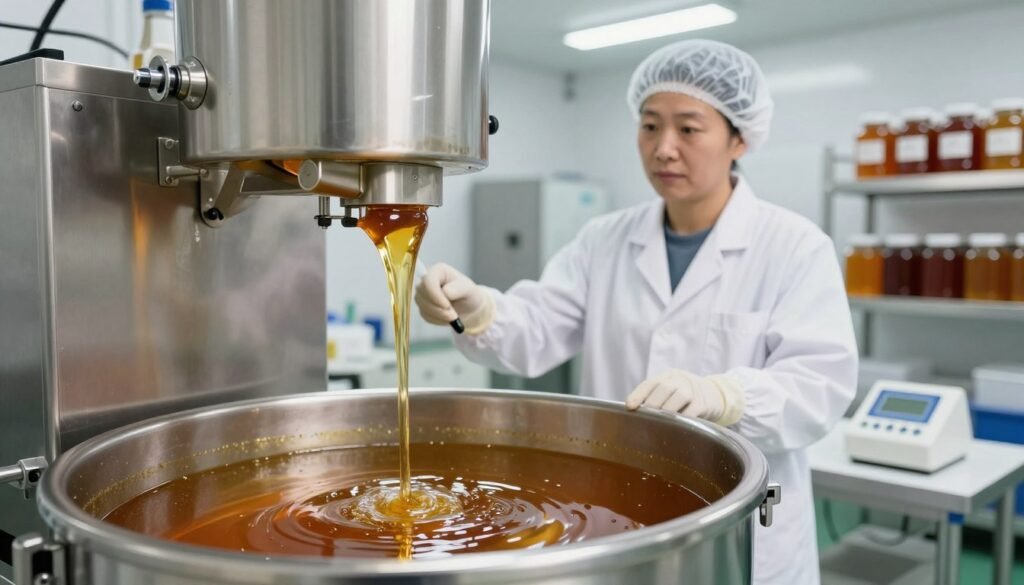
Maintaining purity begins with food-grade processing equipment and careful handling. Use a pipe filter with 100 mesh to remove wax flakes and beeswax particles. A well-tuned filtration line and a dedicated machine keep the liquid clear and free of debris.
Maintaining Purity
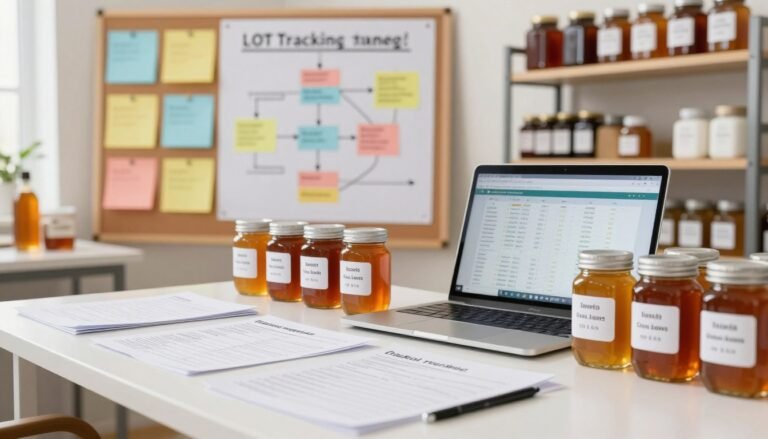
Keep all contact surfaces in stainless steel tanks to avoid off-flavors and contamination. Check for signs of fermentation and off-odors; these indicate moisture or uncapped frames during harvest. Record each batch and every filter change to support traceability and food safety.
Managing Moisture Content
Moisture control is critical. Aim for moisture under 18.6% to extend shelf life and limit fermentation. Use a calibrated meter during processing and before filling.
- Document filtration steps and storage times.
- Use certified food-grade equipment and clean seals regularly.
- Confirm clarity before filling and bottle labeling.
For legal selling guidance and compliance, see how to start selling honey legally.
Navigating Regulatory Compliance and Labeling
A clear compliance plan keeps your jars market-ready and your operation legal.
Meeting state and federal requirements is mandatory if you plan to sell honey at retail. Label rules typically require product name, net weight, contact details, and ingredient listing when blends or flavors are used.
Many states also ask for a food processing license or a cottage food permit. Check your state guidelines early so you can schedule inspections and paperwork without delaying sales.
“Proper packaging and labeling build trust and reduce legal risk.”
- Use a professional labeling machine to apply consistent, compliant labels.
- Keep records of batches, testing, and equipment maintenance.
- Consult your local extension office or state beekeepers association for specifics.
| Requirement | Typical Detail | Why It Matters |
|---|---|---|
| Label content | Product name, net weight, contact info, ingredients | Meets federal and state consumer rules |
| Licensing | Processing license or cottage food permit | Legal sale and local health compliance |
| Packaging | Food-grade jars, tamper-evident seals | Protects product and brand reputation |
Start your compliance checks with state guidance and production resources such as basic requirements for honey producers and consult practical production advice at apiary productivity.
Bottling and Packaging for Retail Success
Bottling is where processing meets presentation; small choices here shape customer perception.
Choosing Food-Grade Containers
Select glass or BPA-free plastic jars with tamper-proof lids to protect quality and extend shelf life. Use consistent bottle sizes to speed weighing and labeling.
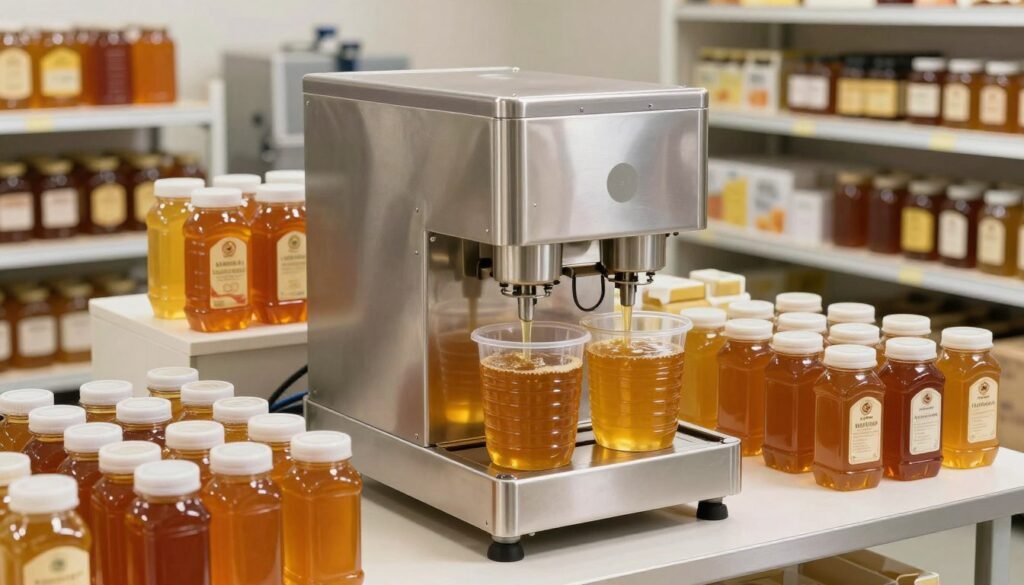
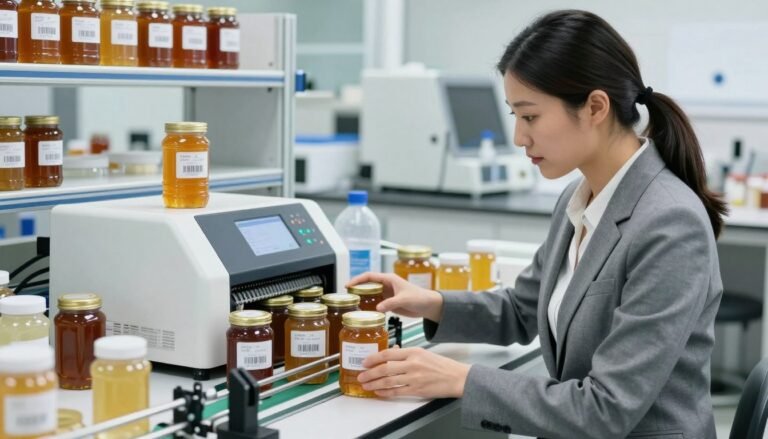
For compact lines, a reliable honey filling machine improves accuracy and increases filling efficiency. A well-tuned automatic filling machine helps maintain consistent weight across jars and cuts labor time.
Opt for stainless steel contact parts and food-grade seals to avoid off-flavors and contamination. Keep the bottling area clean and sterilize equipment between runs to protect product quality.
- Match container type to your brand and shipping needs.
- Invest in a filling machine to scale production and improve consistency.
- Use tamper-evident lids and clear labeling to build trust with buyers.
Learn practical bottling steps in this guide on how to bottle and package honey and consider tank options like those in the best honey bottling tank review to match your production needs.
Scaling Your Operations with Advanced Machinery
When demand grows, matching capacity with reliable processing machines becomes essential.
Benefits of stainless steel equipment: Use 304 stainless steel tanks and contact parts to protect product integrity and simplify cleaning. Stainless steel resists corrosion and reduces off-flavors during filtration and storage.
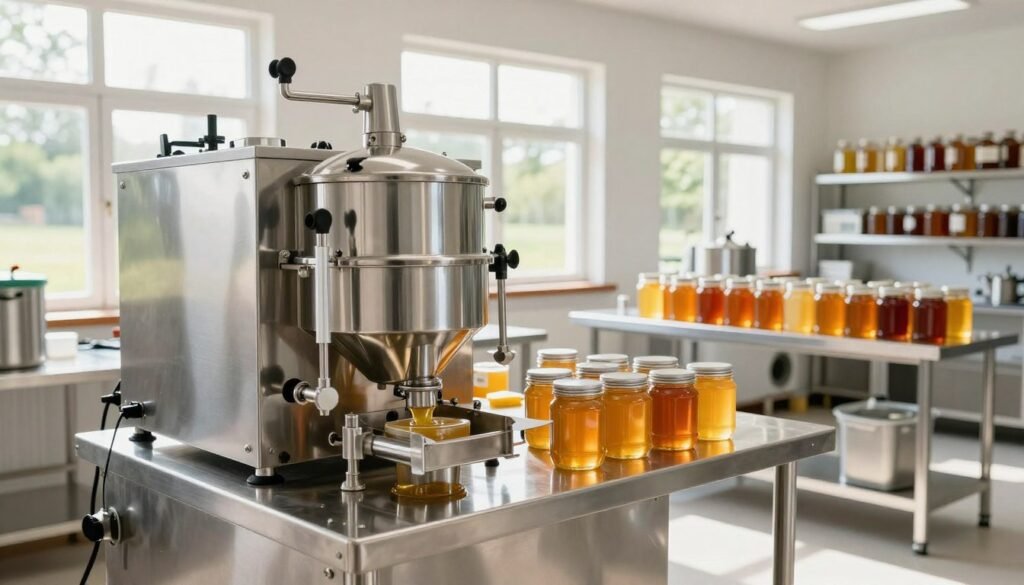
Automating the Filling Process
Automated filling cuts labor and raises consistency. An inline honey filling machine can run 3T/d to 6T/d and hit speeds around six fills per minute. That keeps bottles consistent and lowers downtime.
Increasing Production Capacity
A professional honey processing machine built with 304 stainless can handle 500kg–5T per shift. Combine a high-capacity honey extractor and precise filling machine to scale output without losing quality.
“Invest in durable equipment to protect product purity and boost daily production.”
- Durability: 304 stainless steel extends service life and eases cleaning.
- Efficiency: Automation increases throughput and reduces labor costs.
- Quality: Proper filtration and stainless contact parts keep raw honey pure for bottling.
Explore advanced packaging and quality assurance machinery to plan upgrades and review common options in a detailed FAQ and a practical equipment overview.
Conclusion
strong, A clear closing strategy links daily apiary tasks to long-term goals and better honey quality. Treat each step in the process as a check point. Keep records, test moisture, and confirm clarity before packing.
Focus on beekeeping basics while investing in reliable equipment that aids extraction, processing, and packaging. Consistent care and proper tools help your products meet retail standards and protect brand reputation.
Stay current with labeling and safety rules. With commitment, the right gear, and an emphasis on quality, you can scale production and grow a profitable product line.