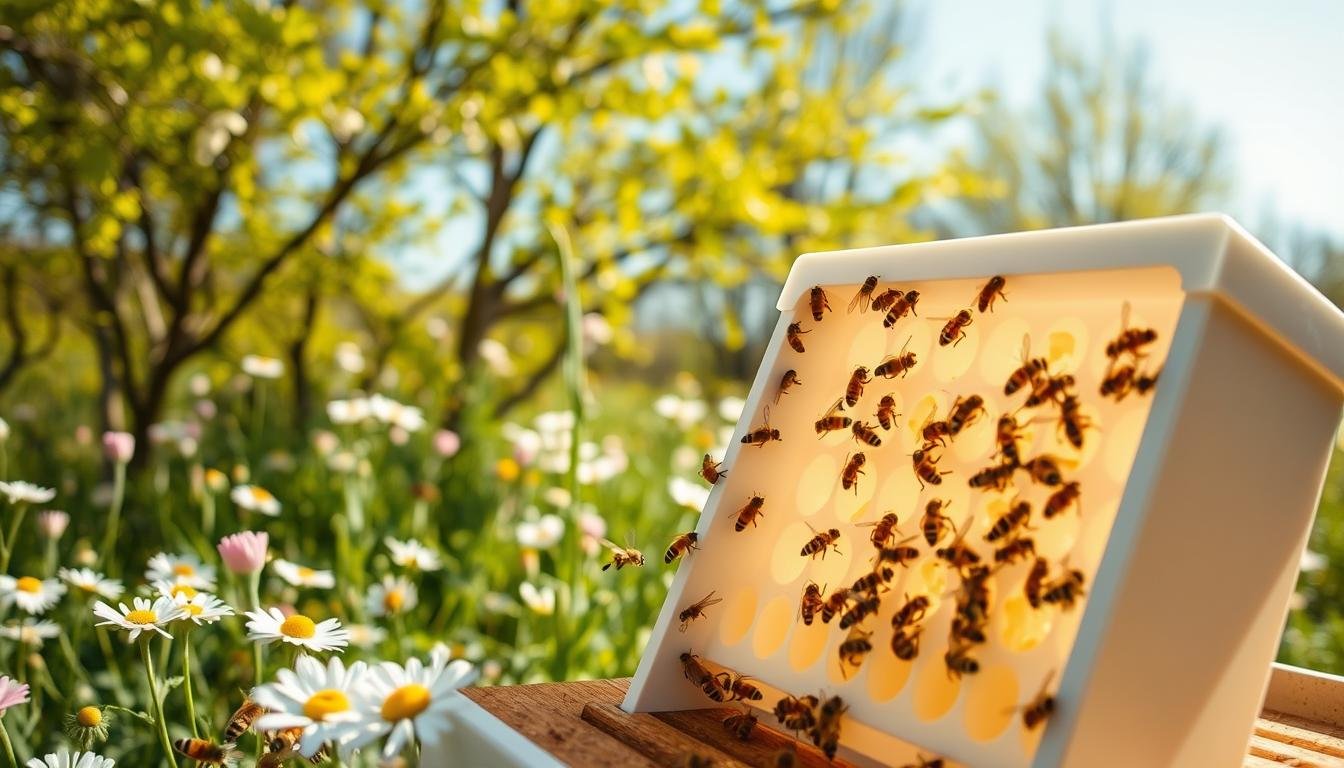
Best Frame Feeder for Spring Buildup

Find the best frame feeder for spring buildup with our expert buyer's guide. Compare top products and choose the perfect feeder for your beehives.

Choosing the right internal feeding unit can speed colony growth in the early season. Foxhound Bee Company makes internal units that fit in a hive and replace a standard frame. These devices let beekeepers keep syrup inside the hive, reduce robbing, and help maintain brood temperature.

Use a 1:1 sugar and water syrup to stimulate the queen and support rapid egg-laying. A well-designed feeding unit includes a secure cap and ladder to prevent drowning and simplifies filling when you need a gallon or more.

Practical tip: put the unit in the top box and reseal the cover to keep nest temperatures steady. If a product page is blocked, or you see a page blocked extension message, try disabling extensions to view specs. Learn more about internal options at Foxhound Bee Company’s guide and expansion tips at Beekeepers Realm.

Key Takeaways

  • Internal feeding units keep syrup inside and cut robbing risk.
  • Use a 1:1 sugar syrup in early season to boost brood rearing.
  • Secure caps and ladders prevent drowning and make refills easy.
  • Place the unit in the top box and seal the cover to protect brood temperature.
  • If a product page is blocked, try disabling extensions to access details.

Understanding the Role of Feeders in Spring Buildup

Providing extra nutrition during cool weather gives a colony the boost it needs. Supplemental feeding fills gaps when nectar is scarce and helps the queen convert that energy into eggs.

The Importance of Supplemental Nutrition

When bees cannot forage due to weather, a steady supply of syrup keeps workers active and nourishes brood care. A 1:1 sugar and water mix mimics nectar and supplies carbs and water in one feed.

How Internal Feeders Support Brood Rearing

Keeping syrup inside the hive stabilizes nest temperature and reduces flights in cold weather. That protection helps young brood develop without interruption.

Internal units also limit robbing and pest access compared to an entrance option. Many beekeepers monitor colonies closely and refill in measured amounts, often in gallons when large stores are needed.

  • Use internal feeding to keep food near the brood nest.
  • Follow the 1:1 syrup ratio to stimulate egg laying.
  • If you hit a page blocked extension, try disabling browser extensions to access full specs and instructions like the internal feeding guide or review alternate feeding methods.

Evaluating the Best Frame Feeder for Spring Buildup Options

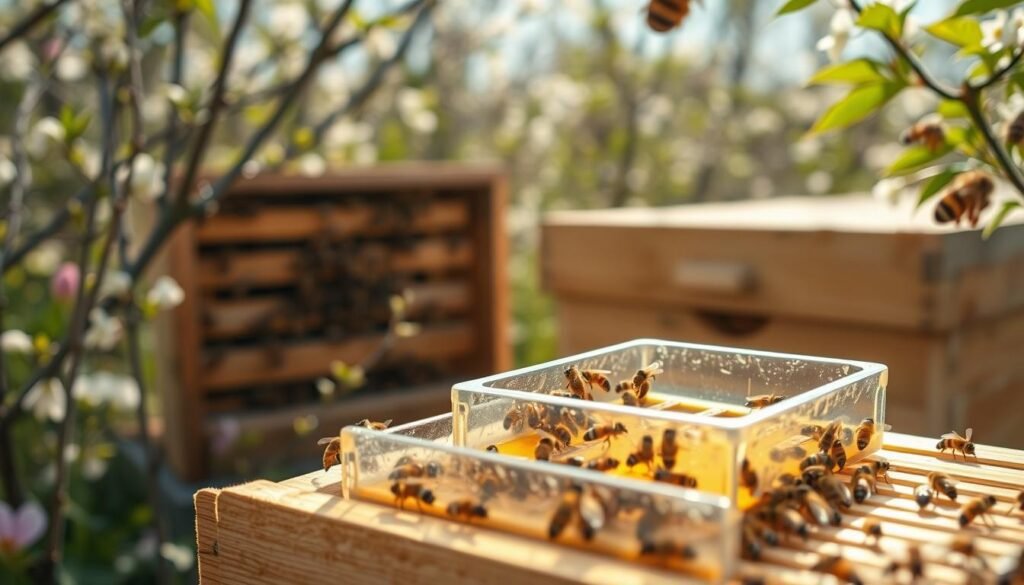
Choosing the right feeding device means balancing capacity, safety, and fit with your hive. A 10-frame top feeder that holds just over 2 gallons of syrup reduces refill trips and suits beekeepers running multiple colonies.
A detailed image of a frame top feeder designed for beekeeping. In the foreground, showcase the frame top feeder filled with a light amber liquid, surrounded by bees busily gathering sustenance. The feeder should be made of clear plastic to highlight its features, with an intricate design allowing for easy monitoring. In the middle ground, depict a well-maintained hive in soft focus, painted in natural wood tones, partially opened to reveal frames teeming with bees. In the background, a bright spring garden with blooming flowers and gentle sunlight filtering through leaves creates a vibrant atmosphere. Use soft, natural lighting to evoke a sense of warmth and productivity, capturing the essence of springtime buildup in a beekeeping environment. The perspective should be slightly angled to focus on the feeder and the hive for depth.

Look for a transparent top so you can check syrup levels without lifting the cover. Modern models use a secure cap and ladder to prevent drowning and keep workers safe while they drink.

Measure your boxes first. A 10-frame top unit (15″ x 13″ x 3″) needs a spacer or medium box to give bees room beneath the feeder. Confirm compatibility before adding items to your online cart.

  • Capacity: 2+ gallons saves time during active feeding.
  • Safety: Cap and ladder systems reduce drownings.
  • Fit: Verify dimensions to match 8- or 10-frame equipment.
FeatureWhy it mattersPractical tip
Transparent topMonitor syrup without disturbing broodCheck level weekly during buildup
Cap & ladderPrevents bees from falling into syrupReplace worn caps to maintain safety
Dimensions (15″ x 13″ x 3″)Needs spacer or medium box under the topMeasure hive before purchase

If a page blocked extension prevents viewing specs, try disabling extensions to access product details. For a catalog of topics and related equipment guidance, visit beekeepersrealm topics.

Key Features to Look for in Internal Hive Feeders

Inspecting a feeder’s core features helps you choose equipment that protects colony health and saves time.

Capacity and Volume Requirements

Large reservoirs cut refill trips. A 10-frame top unit with a 2‑gallon reservoir gives you more time between fills and suits colonies that need gallons of syrup during active feeding.

Safety Mechanisms to Prevent Drowning

Look for a removable cap and an internal ladder. These parts create safe access so bees can drink without falling into syrup.

Material Durability and Ease of Cleaning

Durable polypropylene resists mold and is simple to wash. An easy‑to‑remove insert speeds cleaning and prevents burr comb and fermentation.

“Choose products that balance capacity, safety, and cleanability to keep bees healthy and maintenance low.”

  • Place the unit so it does not block the entrance.
  • Use a 1:1 sugar and water mix in a clean container.
  • If you hit a page blocked extension, try disabling extensions to view full product specs.

For additional comparisons and pros/cons of different feeding options, see feeding FAQs and a guide to hive setup at beehive installation.

Best Practices for Maintaining Your Feeding Equipment

Routine cleaning and small hygiene steps keep feeding units safe and extend their service life.

Preventing mold and fermentation starts with fresh syrup and regular checks. Add a small splash of apple cider vinegar or a labeled additive like Honey Bee Healthy to slow mold growth in the reservoir.

Never top off old syrup with new batches. That mixes yeasts and sugars and speeds fermentation. If you spot cloudiness or a sour smell, remove the unit and clean it immediately.

Simple cleaning routine

  • Daily/weekly: Inspect levels, caps, and ladders so bees can access food without danger.
  • Monthly: Check during cold weather to ensure syrup hasn’t crystallized or become unreachable.
  • Annual deep clean: Wash feeders with hot water to remove residue and pathogens.

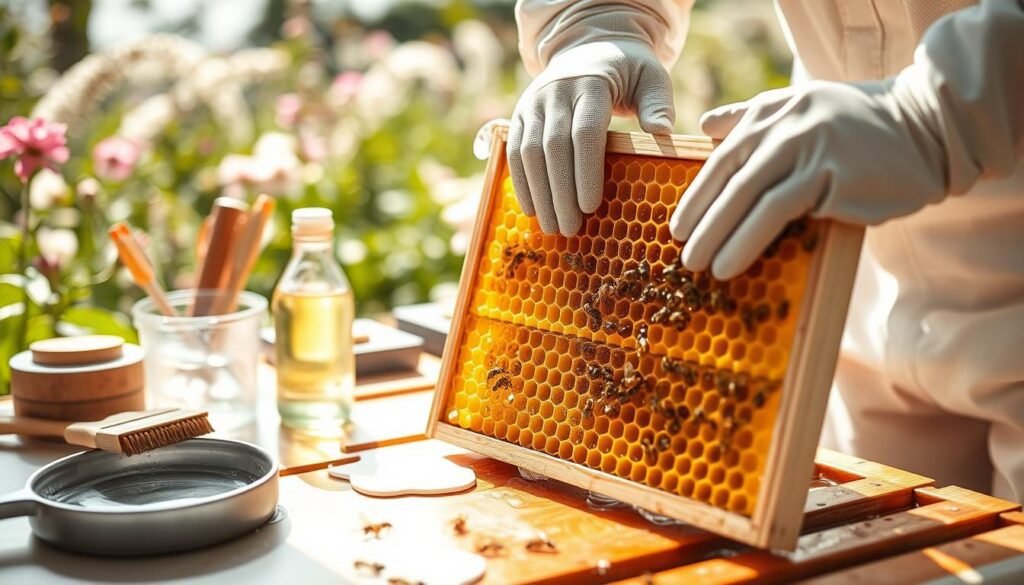
A 2‑gallon top reservoir needs steady monitoring. When you add items to your cart, include a dedicated cleaning brush to remove burr comb and trapped debris.

If a page blocked extension stops you from viewing maintenance instructions, try disabling extensions to access the full guide at Foxhound Bee Company maintenance tips or check equipment buying notes at Beekeepers Realm.
A well-maintained beekeeping frame feeder prominently displayed in the foreground, showcasing pristine, mold-free honeycomb structures filled with golden honey. Surrounding the feeder, a clean, organized workspace featuring tools like brushes, water, and a gentle cleaning solution, indicating best practices for equipment maintenance. In the middle ground, a pair of hands, clad in modest protective gloves, carefully inspecting and wiping down the feeder, emphasizing diligence against mold and fermentation. In the background, a bright, airy outdoor beekeeping setup with blooming flowers and green foliage, suggesting a healthy hive environment. Soft, natural lighting highlights the scene, creating a warm and inviting atmosphere, while a shallow depth of field focuses attention on the feeder and cleaning process, ensuring clarity and professionalism.

Conclusion

Choosing a reliable frame feeder helps your colony grow while saving you time. Use an internal unit to keep syrup near the brood and limit flights during cool weather.

Provide a steady supply of 1:1 sugar syrup and pick feeders with a secure cap and ladder to prevent drownings. A 2‑gallon top option reduces refill trips and suits heavy feeding periods.

Keep equipment clean and inspect frequently. If a product page is blocked by a browser notice, try disabling extensions or visit the guide at Foxhound Bee Company’s feeding guide for details.

FAQ

What types of internal hive feeders work best during spring buildup?

Internal feeders that sit inside the brood chamber and allow bees to access sugar syrup without leaving the cluster work well during early spring. Look for gravity or frame-top style designs that fit standard deep or medium boxes and provide protected access to syrup. Products from manufacturers like Mann Lake and Brushy Mountain offer models designed to reduce robbing and encourage nurse bees to take food into the brood area.

How much syrup should I provide to a colony during early colony expansion?

Start with small volumes and increase as the colony grows. A quart to a gallon of 1:1 sugar syrup per week can support brood rearing without encouraging excess robbing. Monitor intake and reduce feeding when natural nectar flows begin. Use feeders with measured capacities so you can track consumption accurately.

Can I use a top feeder or entrance feeder instead of an inside hive option?

Top and entrance feeders work but carry higher risk of robbing and cooling the cluster during cold spells. Inside-hive feeders keep syrup near brood, which helps nurse bees feed larvae. If you use top or entrance feeders, limit exposure during cool nights and follow good hive management to prevent theft by other colonies.

How do I prevent bees from drowning in syrup?

Choose feeders with built-in float or mesh platforms that give bees a dry landing surface. Adding corks, wooden sticks, or foam floats to open containers creates safe perches. Regularly inspect and clean feeders to maintain these safety features and replace worn or missing floats promptly.

What maintenance steps reduce mold and fermentation in feeding equipment?

Empty and rinse feeders after use, clean with hot water and a mild detergent, and allow full drying before storage. Sterilize periodically with diluted bleach or vinegar solutions when needed. Store feeders in a cool, dry place to prevent residual syrup from fermenting between uses.

Are plastic or metal feeders more durable and hygienic?

Both materials have trade-offs. Food-grade plastic is lightweight and inexpensive but can scratch and harbor residues. Stainless steel resists staining and is easier to sanitize but costs more. Choose non-porous, food-safe materials and inspect regularly for cracks or corrosion that can trap microbes.

How do I fit an internal feeder into a standard Langstroth hive without disrupting brood?

Use feeders that match the dimensions of your boxes or that sit on top of frames without crushing brood. Frame-style feeders replace a single frame and maintain normal hive spacing. Install during calm weather and when many foragers are out to minimize disturbance to nurse bees and brood patterns.

What syrup ratio should I use to encourage brood rearing versus winter stores?

A 1:1 sugar-to-water ratio closely mimics nectar and supports immediate brood rearing. Heavier syrups such as 2:1 are better for building long-term stores in cooler seasons. For spring buildup, stick to 1:1 unless local conditions or a specific management plan dictates otherwise.

How can I reduce robbing when feeding multiple colonies in an apiary?

Feed colonies individually or use internal feeders to limit scent trails. Mask feeding activity by working quickly, closing entrances when possible, and using minimal syrup exposure at hive entrances. Position robbed hives in areas with fewer nearby colonies and maintain strong hive health to deter robbers.

What capacity should I choose for a feeder if I manage several hives?

Select feeder sizes that match colony needs and your maintenance schedule. For frequent checks, smaller 1–2 quart feeders let you top off often. For less frequent visits, gallon-size or multi-gallon reservoirs reduce labor. Ensure the feeder sits safely in the brood box and that you can remove it without disturbing the queen.

Can I use water in the same internal feeder for hot weather hydration?

Avoid mixing water and syrup in the same internal device. Use separate water sources or dedicated water feeders. Syrup can ferment when diluted and will not provide adequate hydration. Providing fresh water near the hive encourages cooling and foraging without risking contamination.

How often should I inspect internal feeders during the spring build-up?

Inspect feeders weekly during active buildup to check syrup levels, cleanliness, and signs of fermentation or mold. More frequent checks help detect robbing or equipment failure early. Always perform inspections in warm daylight when most foragers are out to reduce disruption.

What features improve ease of cleaning and reduce contamination?

Smooth, non-porous surfaces, removable lids, and few crevices make cleaning easier. Stainless steel or molded food-grade plastic with rounded corners resists residue buildup. Choose feeders with parts that disassemble without tools so you can rinse, scrub, and fully dry components between feedings.

Are pre-made commercial models better than DIY options?

Commercial feeders from established beekeeping suppliers often include proven safety features and standardized sizing that fit common hives. DIY solutions can work if built with food-safe materials and proper design, but they may lack tested anti-drowning and anti-robbery features. Weigh cost, convenience, and long-term durability when deciding.
Share on Social Media