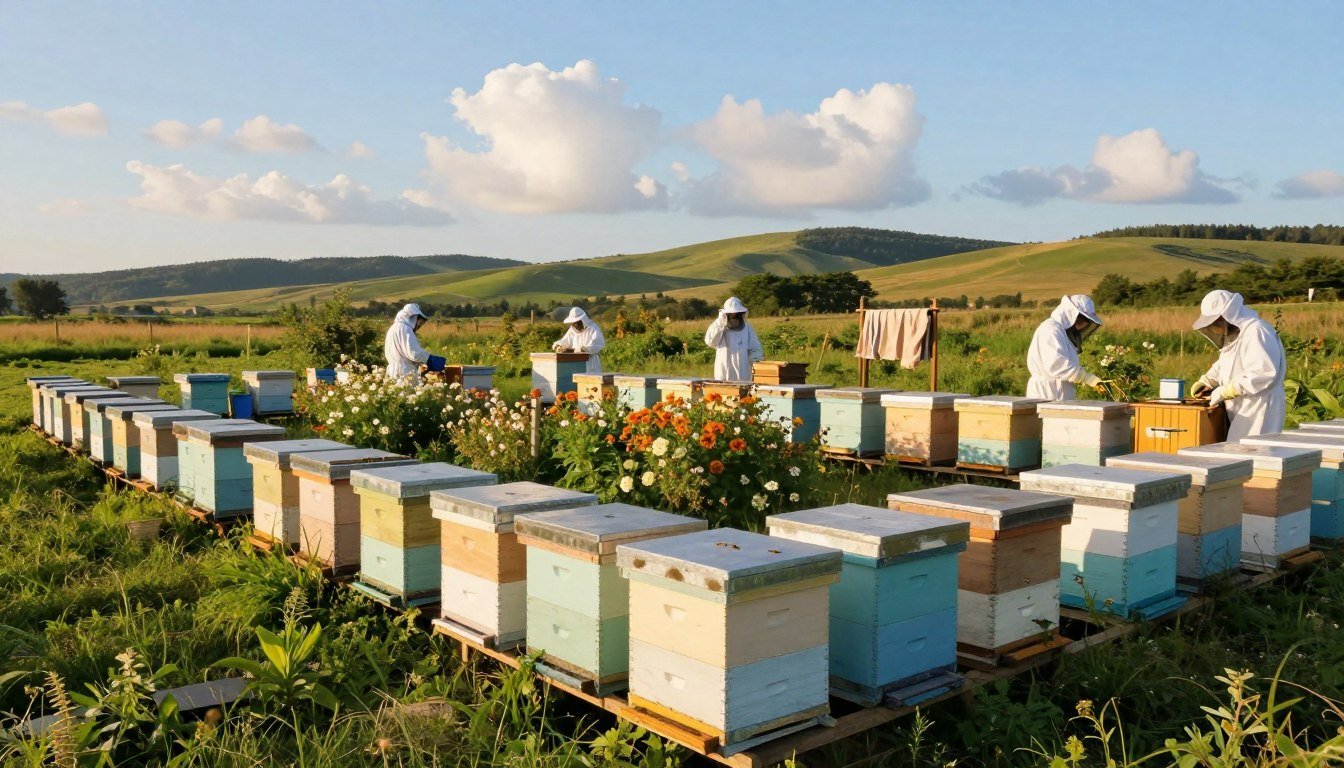
Effective staging and site setup make or break a season. In the United States, roughly 2.7 million commercial honey bee colonies move with transport operations. Migratory operations boost yields to about 50–60 kg per colony per year versus stationary averages.
Planning centers on secure layouts, reliable posts and wire, and a stout fence to deter threats like the black bear. Proper placement of hives and access to plants and flowers supports strong foraging and colony health during transit and bloom cycles.
Professional beekeepers must also stage resources: food, frames, and water sources help reduce stress and mortality during moves. Inspect frames early to confirm a healthy queen and prepare the hive for the upcoming season and transport.
For evidence-based staging methodology and route planning, see this research summary and a practical layout guide at beekeepersrealm.
Key Takeaways
- Plan sites to protect the queen and workers with sturdy fence, posts, and wire.
- Maintain food and water reserves to keep colonies strong through transit and blooms.
- Inspect frames to confirm queen health before moving hives.
- Design layouts that give bees easy access to plants and flowers during the season.
- Use evidence-based transport and staging protocols to cut in-transit losses.
Strategic Site Selection for Migratory Operations
Prioritize plots with staggered flowering to keep nectar and pollen available across the season. Choose locations that blend diverse plants and reliable water to sustain colonies through peaks and lulls. In Atlantic Canada, keeping ten to thirty hives per bee yard balances productivity and manageable density.
Evaluating Floral Resources
Map nearby flowers and crops to confirm continuous bloom. Aim for varieties that offer both nectar and pollen across early, mid, and late season.
Collaboration with farmers can open access to unused fields that supply steady forage while giving room for trucks at night.
Access and Terrain Requirements
Pick relatively flat areas or use pavers and retaining blocks to level hives. Partial shade helps hives regulate temperature on hot days.
Keep a clean, shallow water source within 500 meters to support colony health during dry spells.
- Space: At least one meter between hives to reduce drifting and ease frame work.
- Protection: Durable fence with posts and wire deters bears and vandalism.
- Access: Easy night access for heavy trucks reduces transit stress; see best hive placement for placement tips.
Essential Infrastructure for Bee Yard Staging Sites for Migratory Crews
Protective fencing and palletized handling reduce stress on colonies and speed nightly moves. A reliable perimeter fence with sturdy posts and good insulators is the first line of defense against wildlife such as a bear.
Many beekeepers now use solar-powered electric chargers when remote power is unavailable. Properly grounded fence wire is critical; it ensures an effective shock and keeps hives safe.
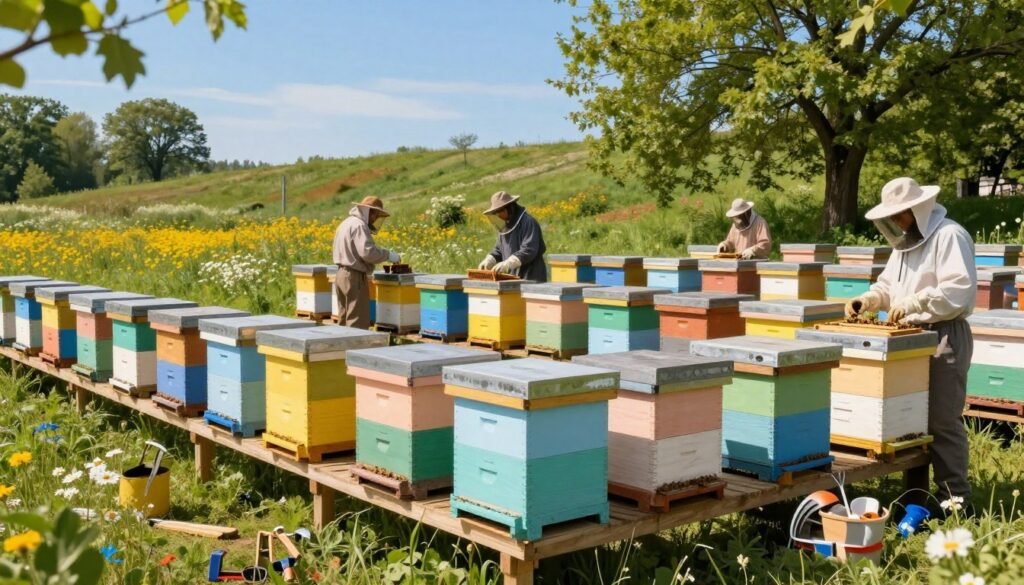
Commercial operations group hives on pallets so a forklift can shift several colonies at once. This saves time and limits disturbance during transport.
Plan space to give each hive room to reduce drifting and ease inspections. Install quality posts, insulators, and access points that match the crops and bloom patterns the colonies will service.
- Solar chargers: keep fences active off-grid.
- Pallets: speed moves and protect colony health.
- Grounding: essential for effective fence performance.
For quieter field setups and improved hive handling, consider using noise-reducing hive stands to reduce disturbance during routine work.
Managing Hive Density and Forage Resources
A balanced density of hives keeps forage pressure manageable and supports steady growth through bloom. Place hives so each colony can access nectar and pollen without heavy overlap. Overcrowding reduces honey yields and weakens overall health.
Balancing Competition and Productivity
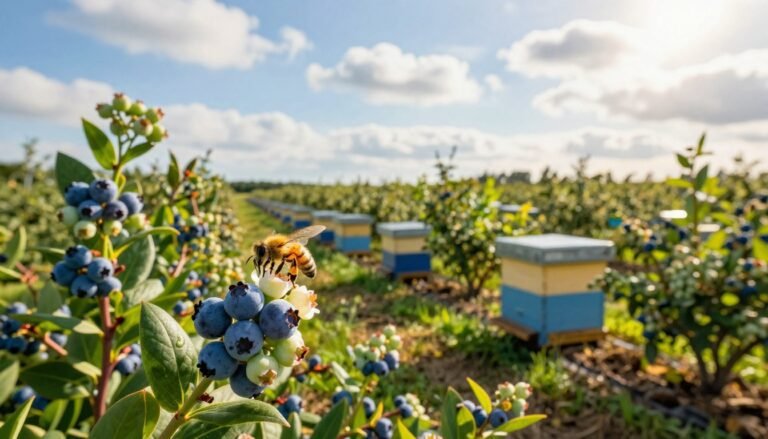
Match the number of hives per acre to the crop. Apple, cherry, and pear often need 1–2 strong hives per acre. Blueberries may require 2–6 hives per acre depending on floral density.
Monitor frames and the queen regularly. If brood or stores lag, reduce local density or add supplemental food to support colony development.
- Adjust numbers: work with farmers to set hives per acre that fit crops and conditions.
- Protect resources: a secure fence and sturdy posts help prevent bear disturbance and reduce stress.
- Check growth: frame inspections reveal if colonies are keeping pace through the season.
Tip: When natural nectar and pollen fall short, provide feed early to avoid brood loss. For guidance on boosting population, see boost colony population naturally.
Logistics of Transport and Nighttime Movement
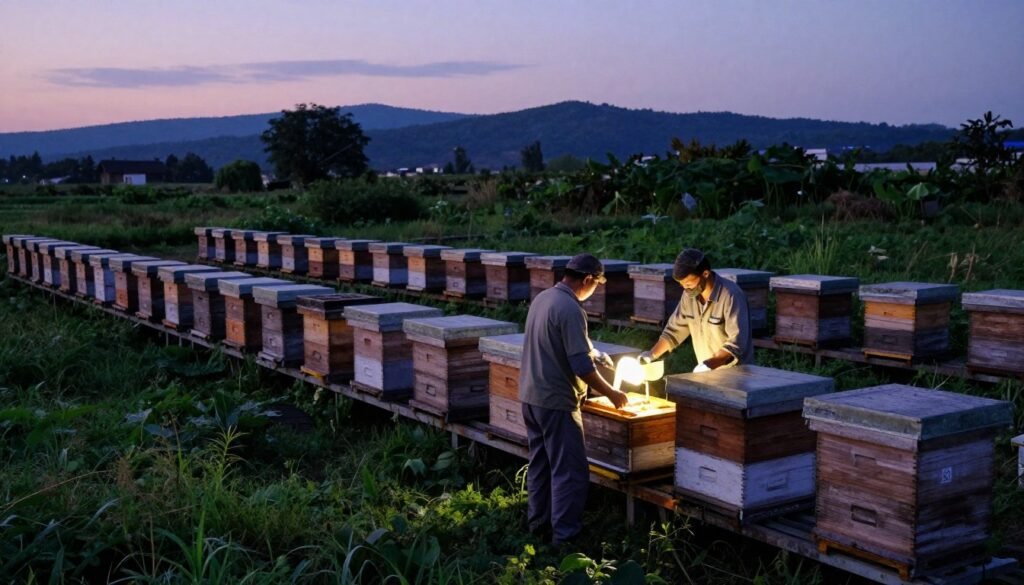
Night moves keep foragers inside the colony and make loading faster and safer. Teams load hives after dusk to reduce flight losses and shorten truck time. This practice also lowers noise and disturbance during handling.
Ventilation and Cooling Protocols
Proper airflow is critical while hives ride on the road. Tens of thousands of bees clustered can generate lethal heat if venting is poor.
Open mesh entrances, breathable straps, and cross-vent panels help keep temperatures down. Provide access to water at the destination so workers can fan and cool the colony.
“Adequate ventilation during transport prevents heat-related mortality and preserves colony health.”
Reorientation and Recovery
After arrival, give hives time to reorient to local landmarks. Place hives with afternoon shade when possible to ease thermal stress.
Coordinate with farmers to time moves for peak bloom and nectar flow. A secure fence and sturdy posts should be ready at the new yard to deter a hungry bear and protect resources.
For evidence-based staging methodology, review this research summary.
Protecting Colonies from Wildlife and Environmental Threats
A resilient perimeter and shady placement cut wildlife damage and heat stress to colonies. In western North Carolina, black bears often destroy equipment and scatter hives while seeking honey.
Install a robust electric fence with sturdy posts and good wire around the entire bee yard. Grounding the system and using quality insulators keeps predators out and reduces repeated breaches.
Regular health inspections are critical. A Spanish study showed that large-scale moves raise disease risks. Inspect frames, check the queen, and act quickly on signs of pests or pathogens.
“Consistent monitoring lets beekeepers spot threats before they cause major losses.”
- Choose sites with natural shade and wind breaks to limit heat or cold stress.
- Keep the area clean and remove debris to avoid attracting pests.
- Work with farmers to prevent toxic chemical exposure during bloom.
| Threat | Defense | Action |
|---|---|---|
| Bear and wildlife | Electric fence, posts, wire | Perimeter checks nightly |
| Heat or wind | Shade, windbreaks | Place hives with afternoon shade |
| Disease spread | Inspections, managed hives per yard | Reduce density; isolate sick colonies |
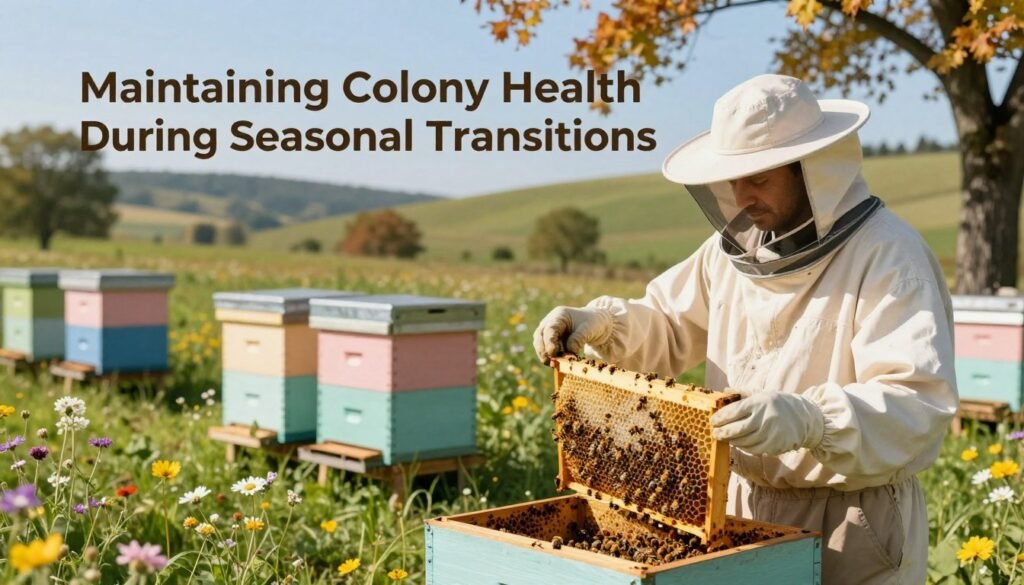
Maintaining Colony Health During Seasonal Transitions
Seasonal shifts demand swift, targeted actions to keep colonies productive through early blooms.
Start buildup early. For almond pollination, aim to have hives with at least eight frames of bees by January. Many beekeepers begin management in October to encourage steady growth.
Provide supplemental pollen and sugar syrup to accelerate brood rearing. Feed in small, regular doses so the queen can sustain high laying rates.
Inspect frames often. Short, routine checks reveal brood pattern, stores, and queen performance. Track the number of bees and add boxes or resources when growth stalls.
Keep the bee yard in top condition. Give colonies clean water, shelter from harsh weather, and a secure fence with sturdy posts and wire to deter a bear during moves and recovery.
Every day counts. Timely management helps colonies adapt to changing flowers and nectar across the season. Work with farmers to align moves with peak bloom.
| Task | When | Reason |
|---|---|---|
| Supplemental feeding | Oct–Jan | Boost brood and stores before pollination |
| Frame inspections | Weekly to biweekly | Monitor queen, brood, and disease |
| Water and shelter | Throughout season | Support cooling, foraging, and recovery |
For longer-term planning, review a sustainable apiary plan to align seasonal steps and resources.
Conclusion
Plan early, and tie logistics to daily colony checks to protect yields and long-term success.
Successful operations balance secure fencing, solid infrastructure, and routine queen monitoring. Protect hives from wildlife and give bees steady access to flowers, water, and food.
Good management keeps colonies healthy and supports honey production across the season. Beekeeping teams that align layout, transport, and farmer needs reduce stress and losses.
To get practical guidance on setting up and maintaining these elements, see our getting started guide.
FAQ
What are the top criteria when selecting a staging location for migratory operations?
Choose sites with abundant, diverse flowering sources during the scheduled bloom, reliable water access, and good afternoon shade. Prioritize flat, firm terrain with easy road access for trucks and trailers. Ensure enough space for hive placement, truck maneuvering, and beekeepers to work safely. Consider fencing or bear deterrents where bears or livestock are present.
How do I evaluate floral resources and timing for placement?
Map bloom windows for nearby crops and native plants and match them to your crew’s calendar. Check pollen and nectar availability throughout the season, not just peak bloom. Talk with local farmers about crop rotation and pesticide schedules. Rotate yards to keep colonies close to optimal forage and avoid depleting nearby floral resources.
What access and terrain requirements should I look for?
Look for all-weather roads, level ground for stacking hives, and load-bearing surfaces for equipment. Avoid steep slopes and flood-prone fields. Ensure emergency vehicle access and space for parking, turning, and long trailers. Good cell coverage and proximity to supply stores are practical advantages.
What essential infrastructure supports high-quality staging sites?
Provide clean water sources, shade structures or natural tree cover, and secure perimeters with fencing or electric bear deterrents. Stock basic tools, spare frames, queen excluders, and syrup or fondant for feeding. Lighting for night checks and secure storage for gear and honey extraction equipment helps efficiency.
How should hive density be managed to balance competition and productivity?
Space hives to reduce robbing and disease pressure; avoid cramming too many colonies in a small area. Monitor forage levels and move or reduce colonies if nectar and pollen decline. Use consistent inspection schedules to detect stress from overcrowding and adjust placements as needed to maintain colony health and honey yields.
What logistical steps make transport and nighttime movement safer?
Use roadworthy trailers and secure hives with straps and blocking to prevent shifting. Plan routes that avoid excessive heat and long idle times. Move colonies at night or early morning to reduce orientation losses and traffic conflicts. Coordinate with growers and authorities when crossing public roads or entering private land.
What ventilation and cooling protocols protect colonies during transport and staging?
Ensure adequate airflow through screened bottom boards or vented entrances. Avoid sealing hives completely; provide mesh or small openings to prevent condensation. Park in shaded areas and use reflective tarps or temporary shade to lower hive temperatures. Monitor for signs of heat stress and provide supplemental ventilation or misting if needed.
How long does it take colonies to reorient after being placed at a new site?
Most foragers reorient within two to four days, but complete recovery varies with distance moved, time of day, and available forage. Reduce orientation losses by moving at night and placing hives in consistent alignment. Offer feeders and close monitoring for the first week to detect disoriented foragers or increased drifting.
How can I protect colonies from wildlife and other environmental threats?
Install sturdy fencing, electric bear fences, or elevated stands to deter bears and larger mammals. Use predator guards for small mammals and wasp traps during late summer and fall. Monitor for chemical drift from adjacent fields and cultivate relationships with neighboring farmers to minimize exposure to pesticides.
What practices maintain colony health during seasonal transitions?
Schedule regular inspections to check queens, brood pattern, and stores. Feed supplemental syrup or pollen substitutes when natural forage is scarce. Manage Varroa through timely treatments and drone brood removal. Plan brood breaks or requeening to strengthen genetics and disease resistance before long moves or winter.
How do I coordinate with growers and farmers for optimal site placement?
Communicate planting dates, pesticide application schedules, and bloom forecasts. Get written access agreements that specify hours, parking, and liability. Work with extension services or local beekeeping associations to identify reliable sites and share information about forage conditions across the season.
What equipment and supplies should I carry to staging sites throughout the season?
Carry extra frames, foundation, queen cages, feeders, smoker fuel, first-aid supplies, and routine treatment medications. Bring tools for hive repairs, spare posts and wire for temporary fencing, and materials for shade or water provisioning. Keep records of inspections, treatments, and honey harvests for each site.
How many hives should be placed per acre to avoid forage depletion?
There’s no one-size-fits-all number; adjust density based on local floral abundance and bloom duration. Start conservatively and monitor nectar flows and colony weight. If many colonies share limited resources, reduce numbers or relocate groups to maintain productivity and colony health.
What steps reduce disease spread between staging locations?
Sanitize tools and equipment between yards, avoid sharing frames without inspection, and isolate weak or diseased colonies. Implement a strict Varroa monitoring and treatment schedule. Quarantine new colonies or those returning from other states until you confirm they are healthy.
How do shade and water placement influence colony performance?
Afternoon shade lowers hive temperatures and reduces heat stress, improving forager efficiency. Place water sources near but not directly at hive entrances to prevent congestion. Provide multiple water points during hot periods so colonies can collect without long flights or competition.