How to Prepare Bees for Winter: The Order of Work by Climate
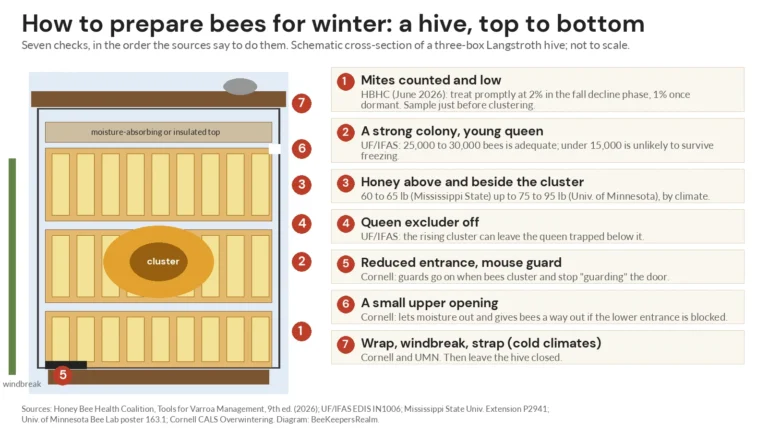
Prepare bees for winter in order: mites first, then colony strength, honey, entrance guards and moisture control, with extension figures for cold, mid-Atlantic, Gulf and Florida climates.


Prepare bees for winter in order: mites first, then colony strength, honey, entrance guards and moisture control, with extension figures for cold, mid-Atlantic, Gulf and Florida climates.
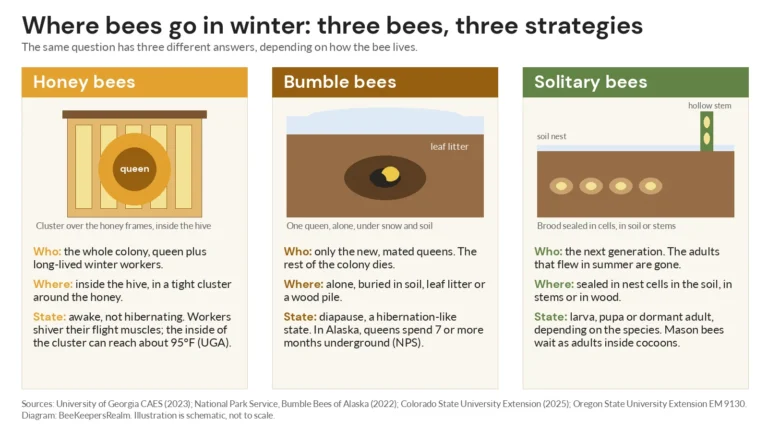
Honey bees stay in the hive, bumble bees survive only as queens buried in soil, and solitary bees wait in sealed nests. One table and cold-climate figures show where each goes.
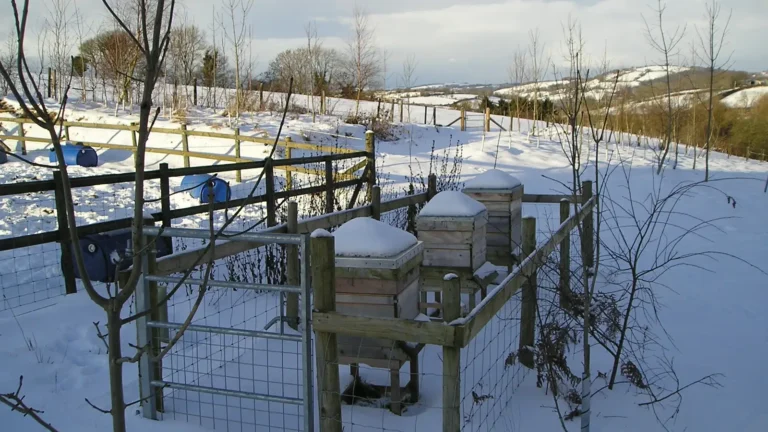
Sellers rate polystyrene and other foam hives at about five times the insulation of a pine box. Here is what USDA and other studies measured, and how the insulated hives sold in the US compare.
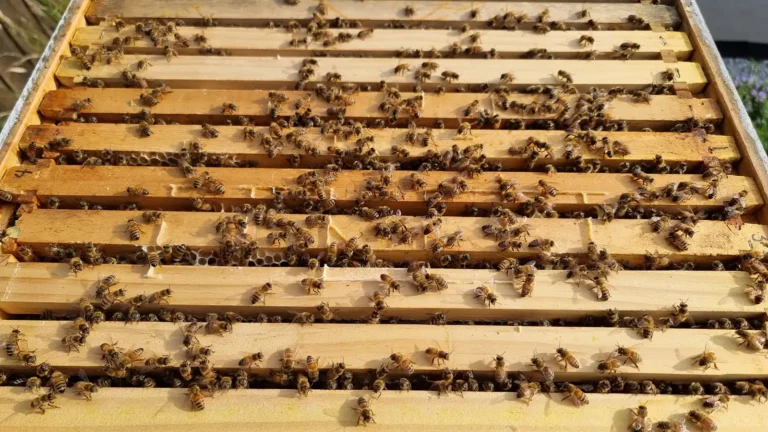
An 8-frame hive is 2.5 in narrower and 11 to 17 lb lighter per full deep. Real weights, which parts fit both widths, and how each width winters up north.
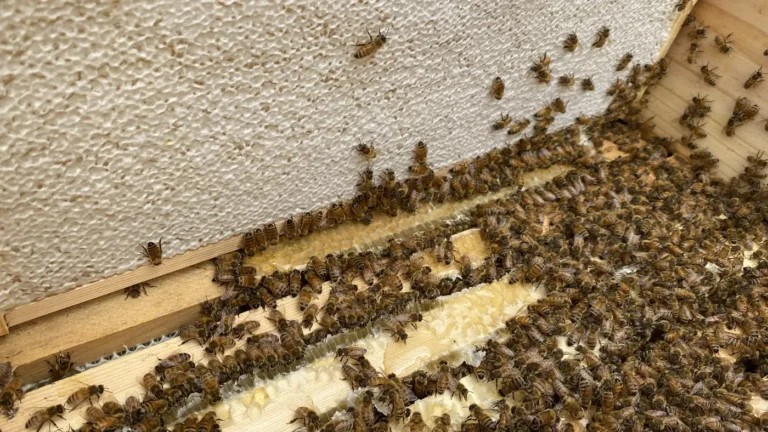
Most colonies need 60 to 100 pounds of honey for winter, depending on climate. How to tell honey weight from hive weight, count frames, heft or weigh a hive, and fix a shortfall.

Bees hanging in the open are usually a swarm that moves on within hours to days; bees using one gap in a wall are a colony that stays. How to tell, who to call, and checked state removal lists.

Missouri has no statewide beehive registration, but the seven Bootheel cotton counties, bees brought in from other states and Kansas City have their own rules. Here is what the statutes and city code actually require.
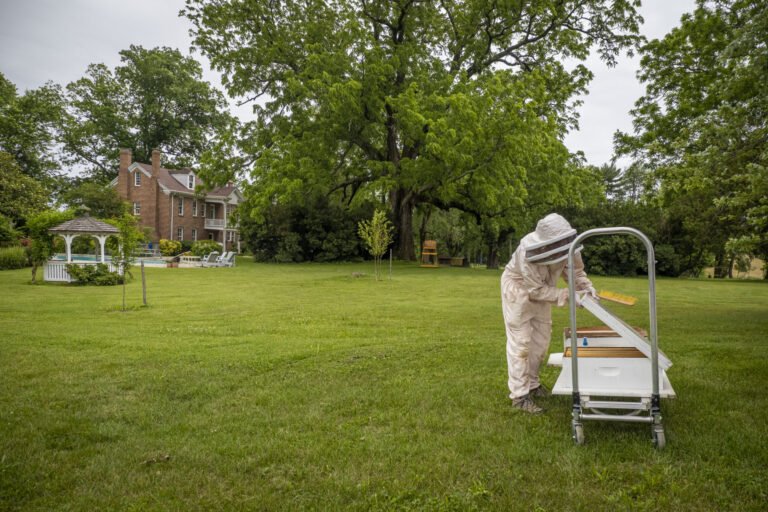
Tennessee requires every beekeeper to register each apiary with the state every three years. What the Apiary Act requires, city rules in Memphis, Knoxville and Chattanooga, and how to sell honey legally.

Medical grade honey is sterile, tested honey sold as FDA-cleared wound dressings. This guide covers the FDA record, over-the-counter use, and what trials show for burns and ulcers.