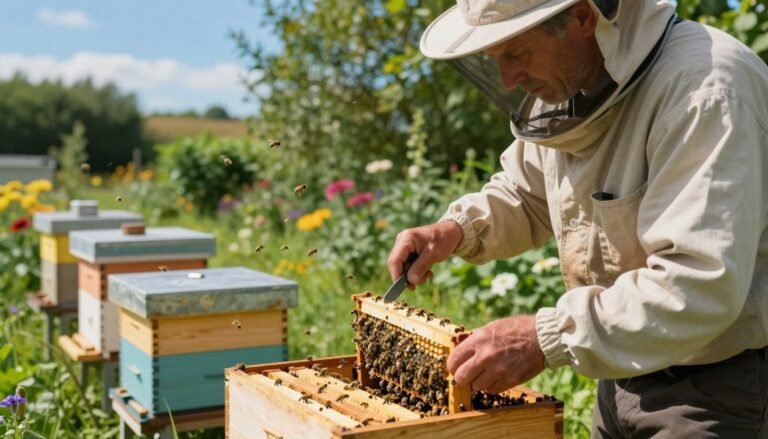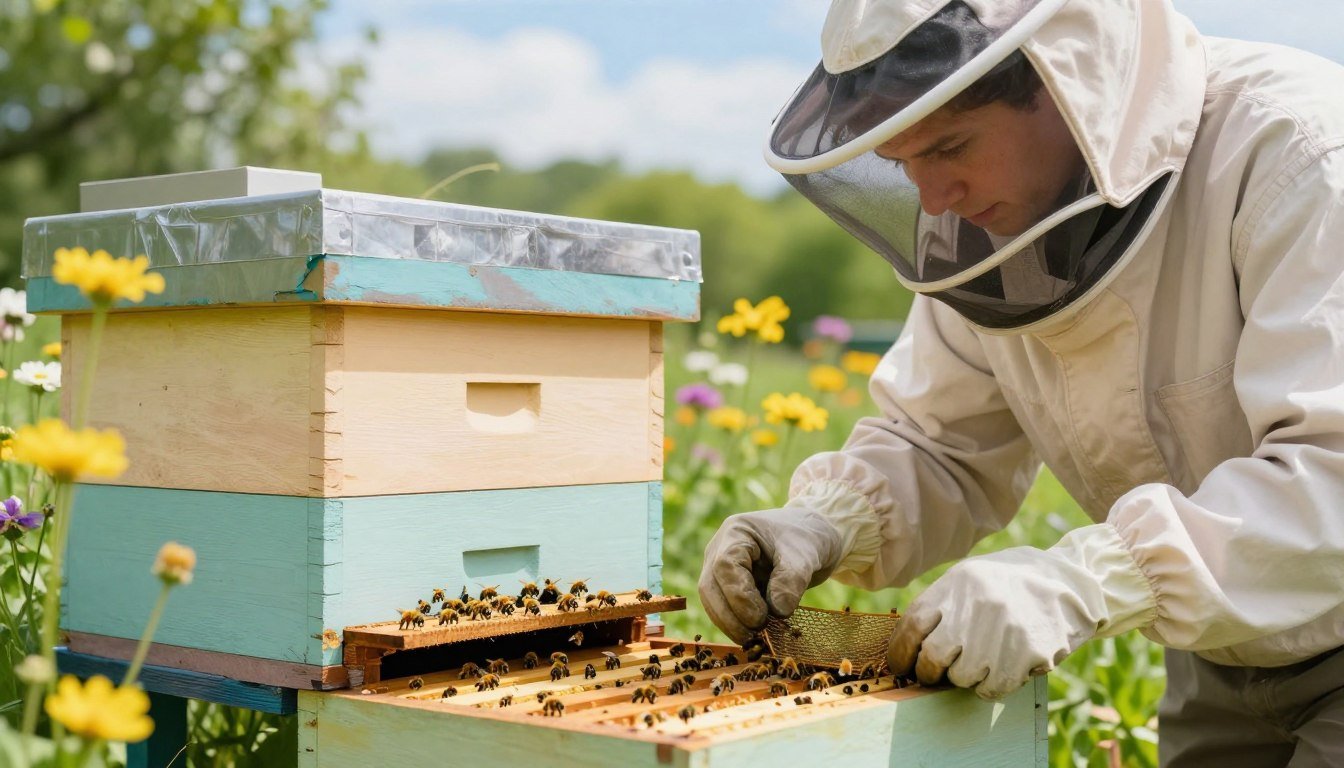
Robbing threatens apiaries when nectar runs low. Nicole Marois noted on May 16, 2025, that invading bees will attack a hive for honey and stores.
Recognizing signs at the entrance helps you act fast. Watch for tense buzzing, dead bees at the landing board, and ragged cappings. A weak colony or a queenless unit often becomes a target.
Effective beekeeping means quick, practical steps. Simple measures at the hive entrance and steady vigilance can save stores and keep colonies viable through a dearth.
For a clear checklist and early-warning cues, see this guide to identify robbing behavior early, and prepare reducers and screens before pressure builds.
Key Takeaways
- Act early: watch entrances for signs of attack.
- Prepare reducers and screens before nectar dearths.
- Keep weak hives reinforced and monitor brood and queen status.
- Limit scent cues during inspections and clean spills promptly.
- Short, calm interventions often stop loss of honey and hive stress.
Understanding the Threat of Robbing
A sudden nectar shortage can spark chaotic fights at hive entrances. During a dearth, hungry bees leave their usual forage and may attack weaker hives to seize honey and stores.
The invaders often kill resident workers and may kill the queen, which can collapse a colony quickly. Wasps and other insects frequently join robbers, increasing stress on defenders.
Key risk factors include weather-driven bloom gaps, spilled syrup, and visible honey scent that draws more activity. Vigilant beekeeping and swift action matter during these periods.
“A single scent trail of honey can turn local foragers into an aggressive mob.”
| Trigger | Impact | Signs |
|---|---|---|
| Weather dearth | Increased raids on stores | Frenzied flights, torn cappings |
| Weak hive | Queen loss, colony collapse | Few defenders, dead bees at entrance |
| Attractants (syrup/honey) | Draws robbing bees and wasps | Lingering honey scent, hovering insects |
For a broader threat overview and practical steps, see this threat overview and guidance on preventing behavior.
How to Protect New Colonies from Robbing
Simple entrance measures often decide whether a hive holds its stores. Small changes at the opening and steady care give bees the best chance during lean months.
The Importance of Hive Strength
Maintaining a strong colony is the top defense. Healthy brood, ample pollen, and regular inspections help resident bees repel robbers.
If a colony looks weak, act fast. A weak hive may lack stores for winter and becomes a target. Reinforce frames, check the queen, and avoid long inside hive disturbances that spill scent.
Seasonal Timing
Many beekeepers fit an entrance reducer between July and September. That smaller opening is easier for defenders to guard during the late summer season and before a nectar dearth.
Combine a reducer with a simple screen at the entrance for added security. Secure supers and pollen stores and schedule changes well ahead of expected shortages. For step-by-step guidance on entrance tools, see this entrance reducer guidance.
Identifying Early Signs of Hive Invasion
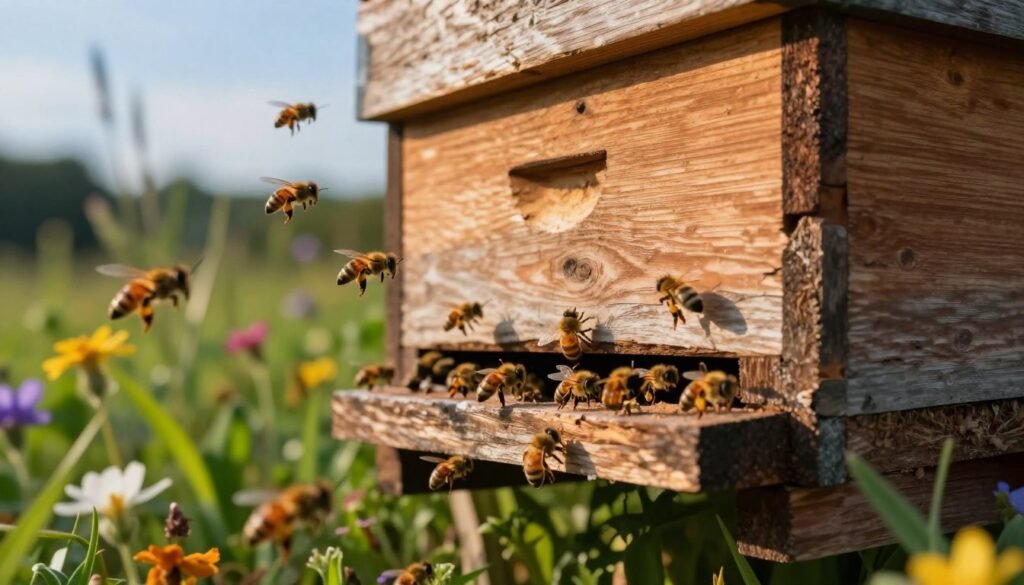
Minute shifts on the landing board reveal danger early. Regular checks of entrance flight patterns give a quick read on colony stress and invader activity.
Observing Defensive Behavior
Watch the landing board for pairs of bees rolling or grappling. This is a clear sign that robbers are probing for openings.
Listen for louder, angry buzzing. Robbing runs make the hive sound different from normal foraging activity.
- Dead bees on the bottom board often mean a sustained attack.
- Robbing bees usually lack pollen on their legs when they enter and leave.
- Wasps and other pests often follow robbers and hang near the entrance.
- Robbers may crawl along cracks, searching for weak seals or cracked frames.
- A severe raid can lead to queen loss, so monitor brood and defender numbers.
Acting fast at the first sign gives the best chance to hold stores and keep the colony strong.
Installing Effective Entrance Protection
A tight, well-designed opening gives hive guards the edge they need during a dearth.
Start with an entrance reducer sized so only one bee passes at a time. A smaller opening helps guards control traffic and lower robbing pressure.
Use a robbing screen for added security. The screen creates a secondary, confusing passage that hides the main opening and slows invaders.
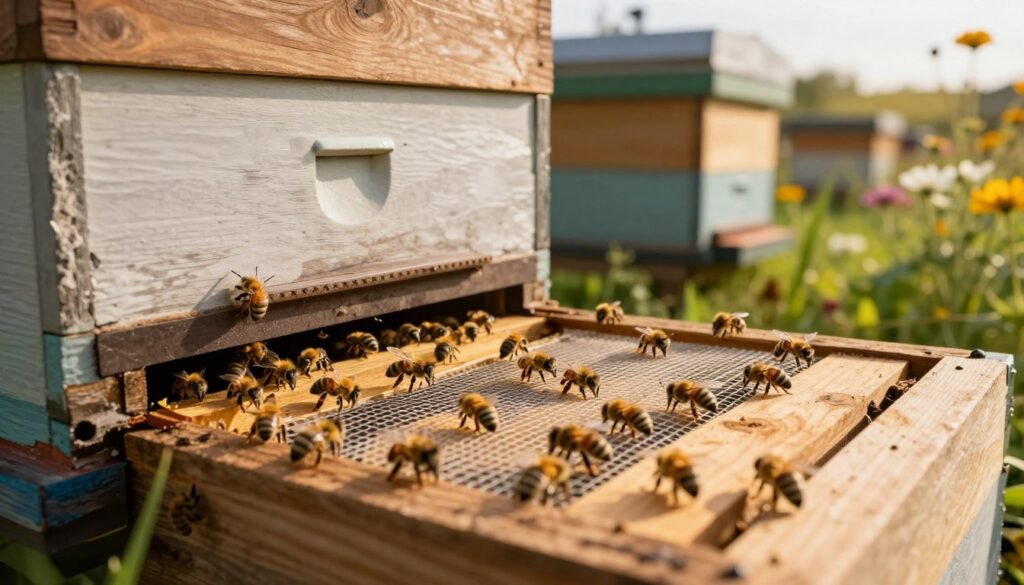
Covering the top box with a wet towel for two or three days masks honey scent and gives the colony time to settle. If spilled syrup is an issue, run a sprinkler near the stands for short bursts; the water washes scent and deters wasps and robbing bees.
- Close extra entrances on multi-box hives so robbers have fewer ways in.
- Keep supers sealed and check that vents do not bypass reducers.
- Balance security with air flow; bees need fresh air even while the opening is small.
For deeper technical guidance and field-tested methods, see this note on robber management.
Managing Colony Health and Queen Vitality
A vigorous queen and steady brood cycle are the backbone of a resilient hive. Healthy bees produce enough workers to serve as guards at the entrance and repel robbing pressure.
Monitor the queen for consistent laying. An irregular pattern leads to gaps in the brood and fewer defenders. Replace or requeen promptly when productivity drops.
Keep varroa levels low. High mite loads weaken a colony and make honey stores attractive to robbers. Regular mite tests and timely treatment preserve bee strength.
- Inspect brood weekly for steady patterns and healthy larvae.
- Test for mites and follow integrated pest management methods.
- Reinforce weak hives by combining or adding frames with brood when necessary.
Strong colonies enter winter with the numbers to defend the hive. Good queen management creates a positive chain reaction: more bees, better guards, and safer honey stores. For detailed rearing and queen management techniques, consult the linked resource.
Best Practices for Supplemental Feeding
Supplemental feeding requires careful steps that limit scent trails and scout traffic. Feed inside the hive or above the inner cover whenever possible. That keeps sugar syrup scent away from the landing board and lowers the chance that outside bees find your stores.
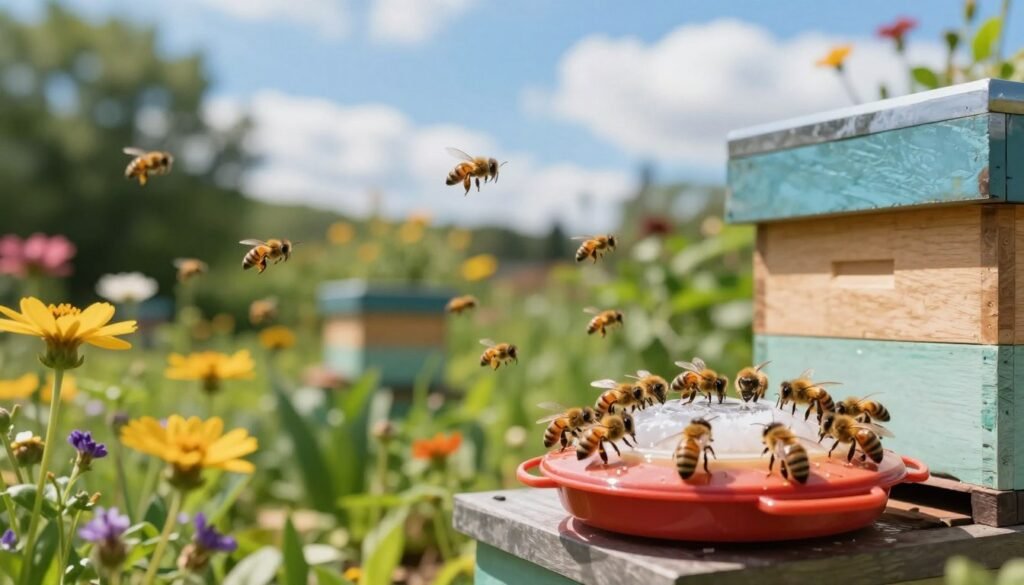
Avoiding Entrance Feeders
Never use a Boardman feeder at the hive entrance. The exposed syrup scent draws attention from nearby bees and wasps. Use internal feeders or a 1‑gallon pail placed under an inner cover for a safer supply of food.
Cleaning Spilled Syrup
Even a few drops attract trouble during a dearth. Clean spills immediately and store frames with honey in sealed containers so scent does not spread across the yard.
Timing Your Feedings
Plan feeding late in the day. Late afternoon or early evening has fewer scouts in flight. That reduces activity at the entrance and gives the colony a quieter time to accept stores.
For practical guides on placement and procedures, see this supplemental feeding tips and further advice on feeding without causing robbing.
Mitigating Risks During Nectar Dearth
Low nectar periods change bee behavior and raise the odds that robbers will target your hives.
Be vigilant. During a dearth, check stands often for altered flight patterns, dead workers, or torn wax cappings. These are clear signs you need to act fast.
Masking scent can buy time. Smearing a small amount of Vicks VapoRub around the entrance often confuses invaders and hides honey aroma.
- Keep entrances reduced in late season and winter so guards can hold the way.
- Provide a water source nearby so foragers need fewer trips out during hard days.
- Seal supers and frames; never leave sugar syrup exposed where scouts can find it.
If you spot fighting — rolling bees, wax pieces, or many corpses — respond quickly. Consider short-term measures and read detailed guidance on preventing robbing during monsoon and how to detect early hive starvation.
Utilizing Proper Equipment and Tools
Right tools reduce scent leaks, slow invaders, and buy defenders time at the board.
Use a wooden robbing screen sized for 8 or 10-frame boxes. The PerfectBee Store offers a model that fits common hives and keeps the hive entrance protected while allowing airflow.
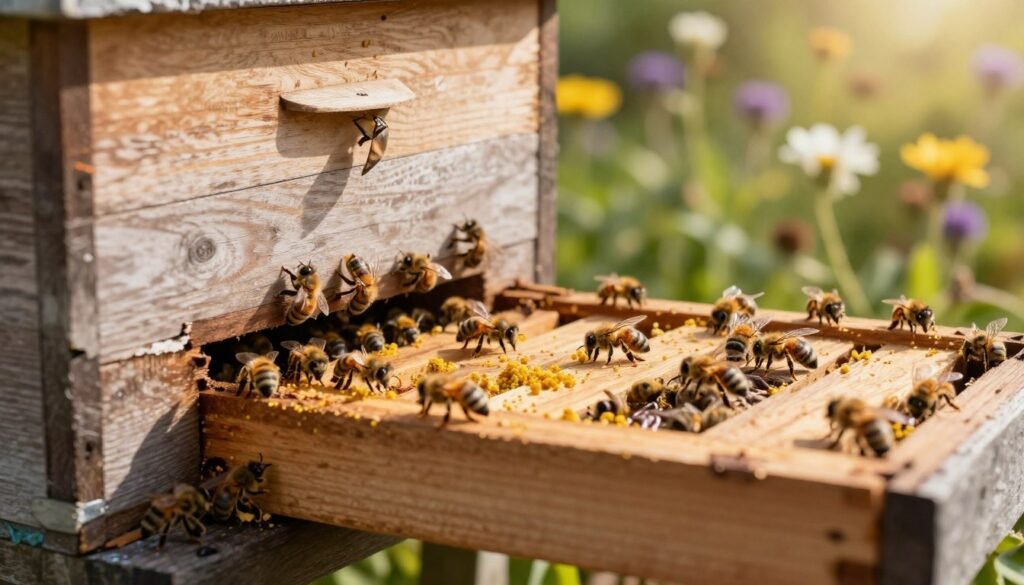
A 1‑gallon feeder pail placed inside the hive keeps sugar syrup away from external scouts. Many beekeepers prefer this feeder because it limits scent spread and lowers outside traffic.
- Stainless steel entrance reducer helps block mice and wasps while keeping guards in control.
- Fit a reducer on every opening when you run multiple boxes to avoid gaps that robbers find.
- Consider a BeeSmart Universal IPM robbing screen for an innovative passage that confuses invaders.
- Store extra frames, feeders, and tools in sealed boxes so honey scent does not draw stray bees.
For a practical look at screen options and field use, read about beehive robbing screens and choose gear that matches your hive set-up.
Conclusion
Small, consistent actions often mean the difference between a thriving hive and loss. Strong hive management, a healthy queen, regular mite checks, and well-timed inspections keep defenders ready when nectar runs low.
Use proper equipment — a snug entrance reducer or a simple screen — and feed inside hive so sugar scent does not draw wasps or other visitors. Quick fixes at the board buy time while you shore up brood and stores.
Beekeeping is seasonal learning. Adjust openings, test feeders, and watch the signs that a colony needs help. For practical alternatives to reducers, review entrance reducer options at entrance reducer alternatives.
FAQ
What are the first steps for securing new bee colonies against robbing?
Start by reducing the hive entrance with an entrance reducer or a robbing screen and place colonies in a sheltered, low-traffic spot. Keep supers off weak hives until they build strength, limit inspections during nectar dearth, and avoid leaving syrup or frames exposed. These measures lower scent signals that attract robber bees and wasps.
How does hive strength affect vulnerability to invaders?
Strong colonies with ample worker numbers and a healthy queen can defend the entrance and repel robbers. Regularly check brood pattern and queen activity, swap poor queens if needed, and avoid splitting a hive during high-risk periods. Robust colonies equal better guards at the entrance.
When is the riskiest time of year for robbing activity?
Robbing peaks during late summer and fall when hives hold heavy stores but nectar flow drops, and during winter warm spells that encourage bee activity. Also watch transitional days in spring and short dearths between blooms. Time feedings and hive moves outside these windows when possible.
What early signs indicate hive invasion or robbing attempts?
Look for frantic bees, increased traffic at the entrance, fights at the landing board, torn wings, and bees carrying white wax. You may also notice sudden loss of stores, displaced frames, or an unusual number of dead bees near the entrance. Catching these signs early helps stop a full-scale raid.
How can I observe defensive behavior without stressing the colony?
Watch from a distance during calm daylight hours. Note whether workers hover nervously, attack intruders, or form a continuous guard cluster. Limit open inspections and use a smoker lightly; heavy disturbance can weaken defenses and raise robbing risk.
Which entrance protection methods work best?
Use an entrance reducer to limit access, and fit a screened bottom or a robbing screen that forces robbers into narrow contact zones where guards can repel them. Temporary mesh traps and candy boards during winter also help. Choose durable hardware from reputable suppliers like Mann Lake or Betterbee.
How do I manage colony health and queen vitality to reduce attacks?
Maintain Varroa control, remove diseased comb, and monitor brood patterns. Replace failing queens or requeen with stock known for defensiveness and productivity. Healthy, well-mated queens support steady worker populations that can defend stores and maintain colony cohesion.
Are entrance feeders safe during high-risk periods?
Avoid entrance feeders when robbing pressure exists. They expose syrup and emit attractant odors that draw robbers and wasps. Use internal top feeders or frame feeders placed inside the brood box during dearths to keep food accessible without broadcasting scent.
What should I do if syrup spills or feeders leak?
Clean up spills immediately with a rag and dilute any residue with water to remove sticky traces. Remove leaking feeders and switch to a closed internal feeder. Prompt cleanup prevents scent trails that recruit robbing bees from neighboring yards.
When is the best time of day for feeding or inspecting colonies?
Feed and inspect in the middle of the day when most foragers are out and temperatures are moderate. Early morning or late evening increases robbing risk because fewer guards are present. Pick calm, sunny days to minimize agitation and scent spread.
How can I reduce risks during a nectar dearth?
Consolidate weak hives with stronger ones if appropriate, remove excess supers from vulnerable colonies, feed internally with winterized syrup, and tighten entrances. Increase water sources nearby to distract foragers and avoid open sugar piles that attract robbers.
What equipment and tools help prevent robberies?
Essential items include entrance reducers, robbing screens, screened bottom boards, internal frame or top feeders, mesh traps, and well-fitting outer covers. Brands like Dadant and Kelley cater to these parts; choose sturdy, weatherproof options and keep spare parts on hand.
How do I handle robbing bees without harming my colonies?
Reduce entrance size, remove exposed honey or leaking feeders, and work calmly to avoid releasing alarm pheromones. Avoid aggressive chemical measures; instead, use physical barriers and colony management. If robbing continues, isolate the affected hive and consult local extension agents or experienced beekeepers for advice.
Should I move hives if robbing persists?
Only move hives as a last resort because relocation stresses bees and can disrupt foraging. If you must, relocate them at least several hundred yards and rotate orientation to confuse returning robber bees. Temporary relocation often helps if local pressure is severe.