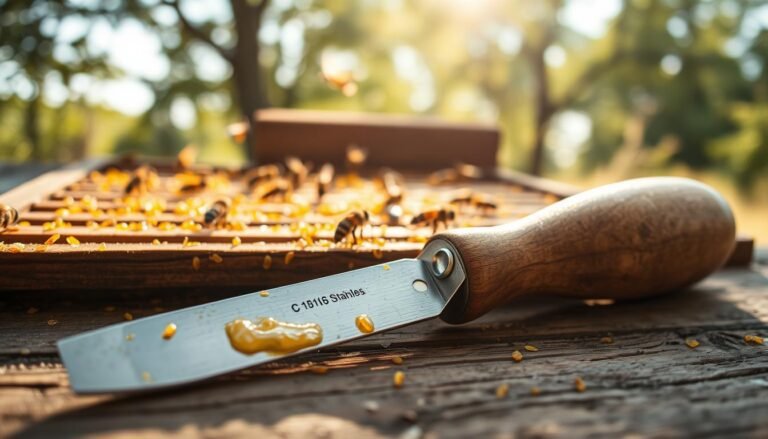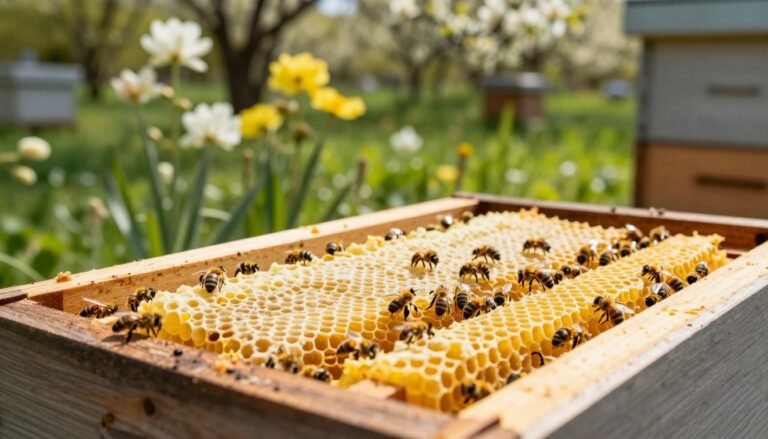
Langstroth hives set the standard for modern beekeeping in the United States. Proper frame care keeps your foundation strong and helps bees store honey well. This short guide focuses on safe handling and clear steps that save you time and expense.
Protecting the foundation is a key task for every beekeeper. Gentle, steady work during inspections preserves the wax and supports healthy brood areas. A clean, intact foundation means better yields and less repair later.
This guide highlights best practices for lifting a frame from a beehive and for assessing damage risk. Follow these tips to keep colonies calm and frames useful for years.
Key Takeaways
- Langstroth hives are common and need routine frame checks.
- Gentle handling preserves foundation and saves money.
- Well-kept frames let bees focus on honey production.
- Inspect at the right time to avoid stress on the colony.
- Small investments in technique extend hive life.
Understanding Your Hive Foundation Types
The foundation you pick directs comb growth and affects maintenance needs. In Langstroth setups, movable frames let bees build wax comb in neat, removable sections. This makes inspections and honey harvest easier.
Plastic vs. wax foundations present clear trade-offs. Plastic is durable and resists wax moth damage, often lasting for years. Wax and beeswax feel more natural to a colony and can speed brood acceptance.
Plastic vs. Wax Foundations
Many beekeepers choose plastic for embossed worker cells and long life. Wax sheets still work well for natural comb but need more care. Cost is a factor; plastic can save money over several seasons.
Foundationless Frame Considerations
Foundationless frames rely on a top bar starter strip in the groove. That strip guides comb so it grows straight between the side bars. Keep the hive level and monitor comb direction to avoid cross combs.
- Pros: Natural comb, lower upfront cost, potential for drone comb as mite control.
- Cons: More frequent checks, careful starter strip placement, and precise leveling required.
For a detailed primer on beehive setups, see this beehive frames guide. If using plastic, read tips about cleaning at clean plastic foundation.
Essential Tools for Beekeeping Success
The right tools turn a tricky inspection into a quick, low-stress task for bees and people. A compact kit helps the beekeeper work efficiently while protecting comb and brood. Dadant and Sons offers deep frames compatible with many types of plastic foundation, a useful option for hobbyists and pros.
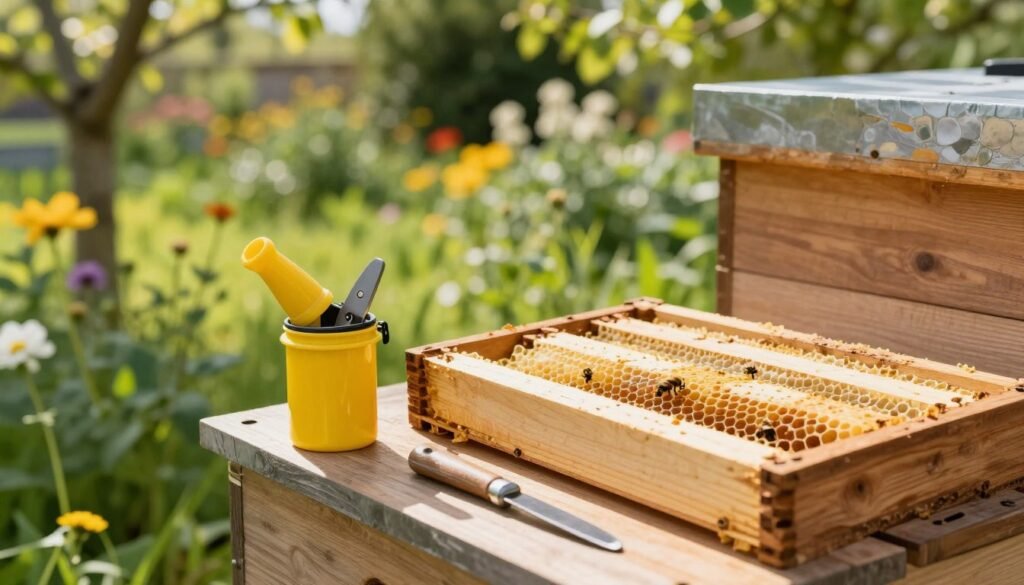
Start with a sturdy hive tool and a frame grip. These items pry and lift without tearing wax or wood. Add wire in deep frames for extra support under heavy brood in summer.
Use plastic foundation (commonly 1/8 inch thick) or beeswax-coated plastic sheets when rapid draw-out and extractor safety matter. Plastic resists mice and wax moths and lowers long-term cost by lasting for years.
Tip: A wooden or plastic starter strip guides comb alignment and reduces cross comb. For a broader tool list, check a trusted guide on essential beekeeping gear at top beekeeping tools, and read about options for propolis-heavy colonies and strong hive tools at best hive tools.
How to Scrape Frames Without Damaging Foundation
Set up your station so each frame moves smoothly from hive to extractor without delay. A clear layout saves time and keeps bees calm.
Preparing Your Workspace
Clean, well-lit, and nearby: place extractor, brush, and uncapping tub within arm’s reach. This reduces handling and prevents honey spills.
Proper Knife and Fork Techniques
Use an uncapping fork for tight spots and an uncapping knife for long strokes. Move tools in steady passes so you remove only wax caps from the cells.
Heated knives are fast, but treat them with care around plastic foundation. If caps start to melt the sheet, switch to a cooler blade or fork.
Handling Deep Frames
Support the top and side when lifting heavy deep frames. Their weight can pull comb away; steady both hands and move straight to the extractor.
- Keep tools clean during the run to avoid wax buildup.
- If a comb rips, stop and use a precise method to limit further damage.
- Read about frame foundation care at frame foundation and uncapping sanitation at capping-scratcher sanitation.
Managing Comb Depth and Variations
Bees commonly thicken comb near the center of a frame, so watch depth closely.
Check comb depth each visit. Uneven draw often shows when nectar flow drops or if the sheet is poorly coated.
Plastic foundation, like Plasticell with 4.9mm cells, tends to guide worker comb into a uniform pattern.
Use a starter strip when you want natural build-out. That method gives bees a groove but depth can still vary.
Support heavy comb with wire or a reinforced bar. This keeps honey-filled comb from pulling away from the bottom bar.
Watch the brood box for empty corners where drone comb can form. Correct placement of strips and occasional re-alignment helps.
- Tip: Mix wax and plastic for trials in your climate.
- Inspect attachment points and repair any holes or loose comb early.
Good comb management makes frame removal safer and keeps the colony productive.
Troubleshooting Common Extraction Challenges
Extraction day often exposes weak spots in comb that need a calm, steady response.
Preventing wax buildup on tools keeps your run quick and reduces tears in the comb. Keep a damp cloth nearby and wipe knives and forks between passes. Regular wiping removes sticky honey and wax that slow progress.
Quick checks and fixes
- If you see damage during spinning, lower extractor speed to prevent further collapse.
- On a warm day, wax becomes soft; handle each frame gently and avoid high RPMs.
- Plastic support lets you spin a bit faster, since the sheet gives extra attachment strength.
- Cut cross combs back into line before placing them in the extractor to avoid jams.
“Clean tools and steady extractor maintenance cut downtime and keep combs intact.”
Final note: inspect every frame for raised sections or weak spots before spinning. For storage tips after harvest, see frame storage and pest prevention.
Best Practices for Wax Capping Recovery
Recovering wax cappings turns a messy byproduct into a practical resource for small operations. After extracting honey, collect cappings in a strainer or uncapping tray so remaining honey drains into a clean jar.
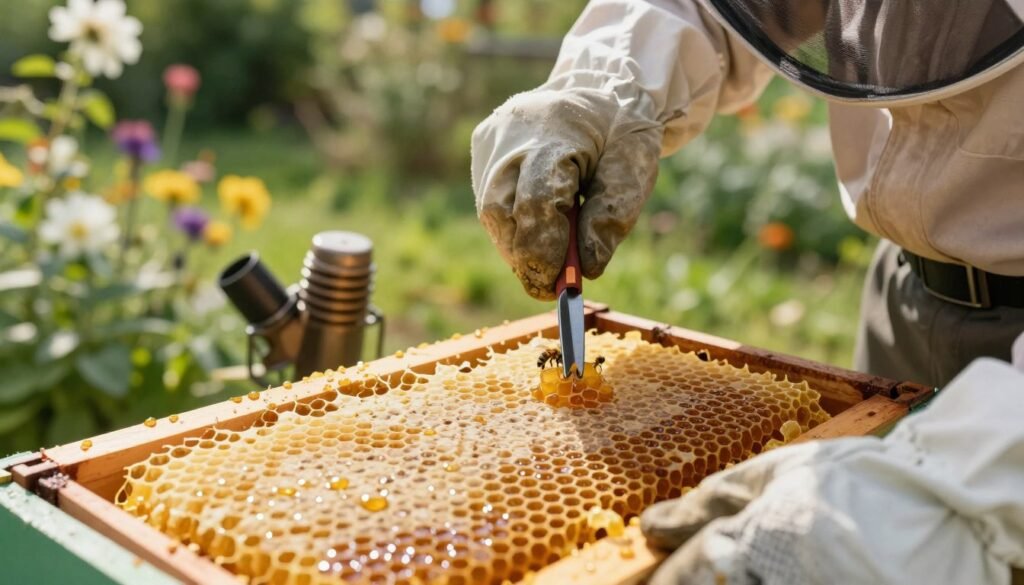
Use a solar wax melter or a double boiler to melt cappings slowly. Filter melted wax through fine mesh or cheesecloth to remove debris and bits of comb.
Purified wax can be molded into blocks for candles, natural balms, or beeswax wraps. Many beekeepers find that recovered wax is high quality and adds value to harvests.
- Sustainability: recovering cappings reduces waste and creates sellable products.
- After draining, let cappings sit so honey runs back into an extractor or jar.
- Store cleaned wax in a cool, dry place to deter pests and preserve scent.
“Clean handling and proper filtering turn cappings into consistent, usable wax.”
| Step | Tool | Outcome |
|---|---|---|
| Drain | Strainer or uncapping tray | Honey recovered for reuse |
| Melt | Solar melter / double boiler | Purified wax liquid |
| Filter | Fine mesh / cheesecloth | Clean wax blocks |
| Store | Sealed container | Long-term quality preserved |
For details on uncapping techniques and safe handling of comb after disease, see this uncapping guide and guidance on keeping or discarding comb at comb disposal advice.
Final Thoughts on Frame Maintenance
Final Thoughts on Frame Maintenance
Small, regular checks and modest repairs pay off over the years. Keep each frame steady during inspections, check the top bar and starter strip, and correct slight misalignments quickly. This simple routine protects comb and preserves your investment in the hive.
Proper care of the brood box and honey supers cuts replacement cost and keeps bees productive. Every beekeeper finds a preferred method; experiment in small steps and record what works.
For tips on restoring wired supports, see this clean and restore wired frames, and for handling cross comb in bar-style setups visit handle cross-comb in top-bar hives. Consistent frame care leads to stronger colonies and better seasons ahead.
FAQ
What is the safest way to remove honeycomb from a frame to protect wax and foundation?
Use a warmed hive tool and an uncapping knife held at a shallow angle. Hold the frame firmly by the top bar and work from one side toward the center, cutting cappings gently. Apply steady, light pressure so drawn comb and wax foundation stay intact. Warm tools reduce sticking and lower the risk of tearing plastic or wax foundation.
Which foundation type requires the gentlest handling during extraction?
Wax foundation and foundationless frames need the most delicate care. Wax softens in warm weather and tears easily. Foundationless comb is fragile until well drawn. Plastic foundation tolerates firmer handling, but you should still support the comb near the bar when removing bees or uncapping.
How should I set up my workspace before starting frame work?
Clear a flat, stable table near the hive entrance and shield from wind. Arrange uncapping tools, a bee brush, smoker, and a warm water source. Wear a veil and gloves if needed. Good lighting and a shallow tub to catch cappings help keep the process controlled and reduce accidental frame bending.
What knife and fork techniques minimize damage to comb and brood?
Use an uncapping fork with short, thin tines for scraping and a heated knife for slicing caps. Move the fork parallel to the top bar, supporting the comb with your other hand. Keep knife strokes smooth and avoid jerky motions. For brood frames, use minimal fork work and consider hand-brushing bees off rather than scraping.
Any special tips for working with deep frames and brood comb?
Support deep frames at the middle and ends when lifting to prevent sagging. Limit pressure on the comb and avoid heavy uncapping near brood areas. When possible, extract honey from supers rather than touching brood frames. If handling drawn brood comb, work quickly and steadily to minimize stress on bees and comb structure.
How can I prevent wax buildup on my uncapping tools and extractor parts?
Keep tools warm and wipe them frequently with a cloth dipped in warm water. Use a dedicated tub for cappings and strain regularly. For extractors, run warm rinse cycles and remove residual wax after each use. Periodic gentle scrubbing with a soft brush prevents thick buildup that can damage comb at future extractions.
What methods recover wax cappings cleanly for reuse?
Collect cappings in a cappings tank or fine mesh strainer over a tub to separate honey and wax. Melt cappings slowly using a solar wax melter or double boiler to avoid scorching. Filter melted wax through cheesecloth to remove debris. Store filtered beeswax in cool, dry containers for foundation making or sale.
When should I choose plastic foundation over wax or foundationless frames?
Choose plastic foundation if you need durable comb support and expect frequent handling or mechanical extracting. Plastic stands up to repeated use and resists sagging. Wax foundation or foundationless frames suit beekeepers focused on natural comb and minimal chemicals, but they demand gentler techniques and careful handling.
How can I minimize damage when removing bees from frames prior to extraction?
Use a gentle bee brush or soft shake to clear bees away from the work area. Employ a gentle puff of smoke at the hive entrance rather than heavy smoking near frames. Work during warm, calm weather when bees are more active away from the hive. Avoid aggressive brushing or banging the frames, which can tear comb or agitate bees.
What are common mistakes that lead to torn comb or broken foundation?
Lifting frames without support, using cold, sticky tools, jerky uncapping motions, and overworking fragile comb are frequent causes. Applying too much force to plastic foundation can warp it. Prevent these problems by warming tools, supporting frames fully, and using steady, controlled movements during uncapping and extraction.