Protecting hive health starts with smart cleaning and careful decisions. Honey bees live in close quarters, so infections spread fast. The National Bee Unit’s July 2024 guidance stresses that disinfecting a hive prevents pathogens moving between colonies.
Spores can persist in wax and comb for decades and pose long-term risks to brood and colony health. Treat frames, hive boxes, and tools as possible sources of contamination and follow proven cleaning methods before putting them back into service.
When sourcing second-hand frames or drawn comb, inspect and sanitize every part. Practical steps include scraping propolis, removing old wax from brood frames, and using a validated disinfectant or heat where appropriate. For deeper guidance on comb management and pathogen risks, consult the detailed review on comb reuse and brood risks at comb and frame management.
Key Takeaways
- Disinfecting hive parts is crucial to limit disease spread among honey bees.
- Spores in wax and comb may remain infectious for decades; handle old comb with caution.
- Clean frames, boxes, and tools before introducing them to a bee colony.
- Follow National Bee Unit guidance and use proper solutions for surface disinfection.
- Prioritize simple, regular cleaning steps to protect hive health and productivity.
Understanding Chalkbrood and Its Impact on Your Apiary
Fungal infections in brood frames often trigger visible losses and weaken colony resilience. Chalkbrood affects larvae and alters hive behavior, making disease control a top priority for beekeeping.
Old comb and capped honey may hide spores, mites, and insects. That increases risk to honey production and to other colonies in the apiary.
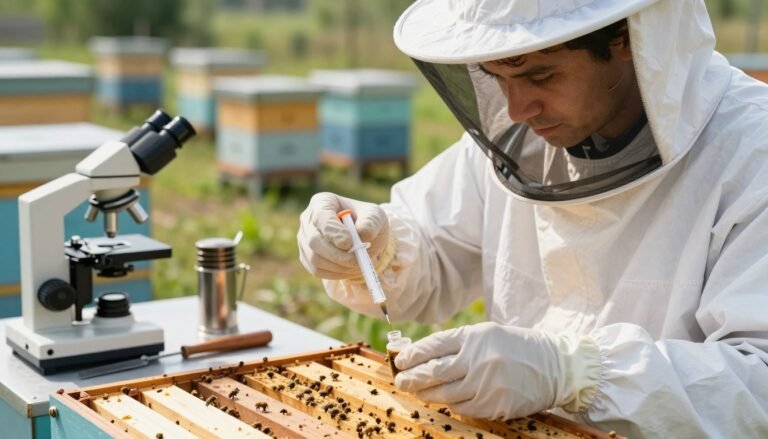
The National Bee Unit warns that diseases spread quickly through shared hive parts and beekeeping equipment. Early inspection of frames, hive boxes, and wax helps limit spread. Inspect regularly and isolate suspect brood promptly.
| Risk | Signs | Immediate Action | Long-term Step |
|---|---|---|---|
| Fungal brood infection | Brown or mummified larvae | Remove affected frames | Sanitize frames or replace foundation |
| Old comb with spores | Hidden contamination | Quarantine comb | Use fresh wax or validated cleaning |
| Varroa and pests | Elevated mite counts | Treat colony promptly | Implement regular mite monitoring |
For plastic surfaces and specific cleaning methods, refer to this guide on clean plastic foundation. Make sure to follow approved solutions such as sodium hypochlorite or heat where appropriate.
Can You Reuse Equipment After Chalkbrood?
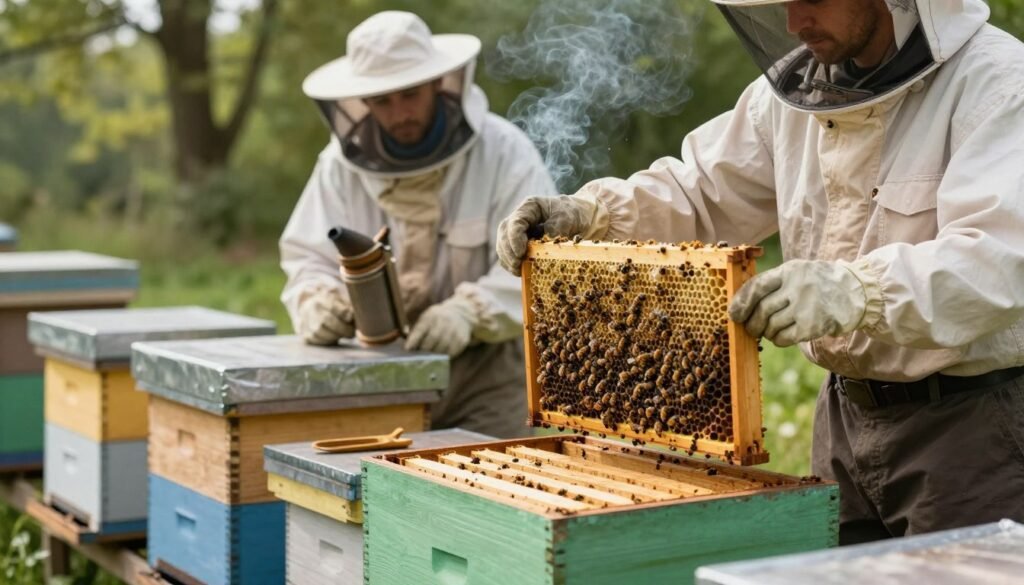
Assessing hive parts carefully prevents spread of disease and protects colony health. Inspect frames, comb, boxes, and tools before making any decision. Look for browned or mummified brood and other clear signs on brood frames.
Distinguishing Chalkbrood from Foulbrood
Not all brood issues need the same response. Acetic acid works against fungal infections like chalkbrood and nosema, but it is ineffective on American foulbrood (AFB) or European foulbrood (EFB).
AFB spores resist heat and humidity and demand rigorous measures. If foulbrood is suspected, follow National Bee Unit advice and treat the incident as serious. For full protocols see hive cleaning guidance.
Assessing Equipment Condition
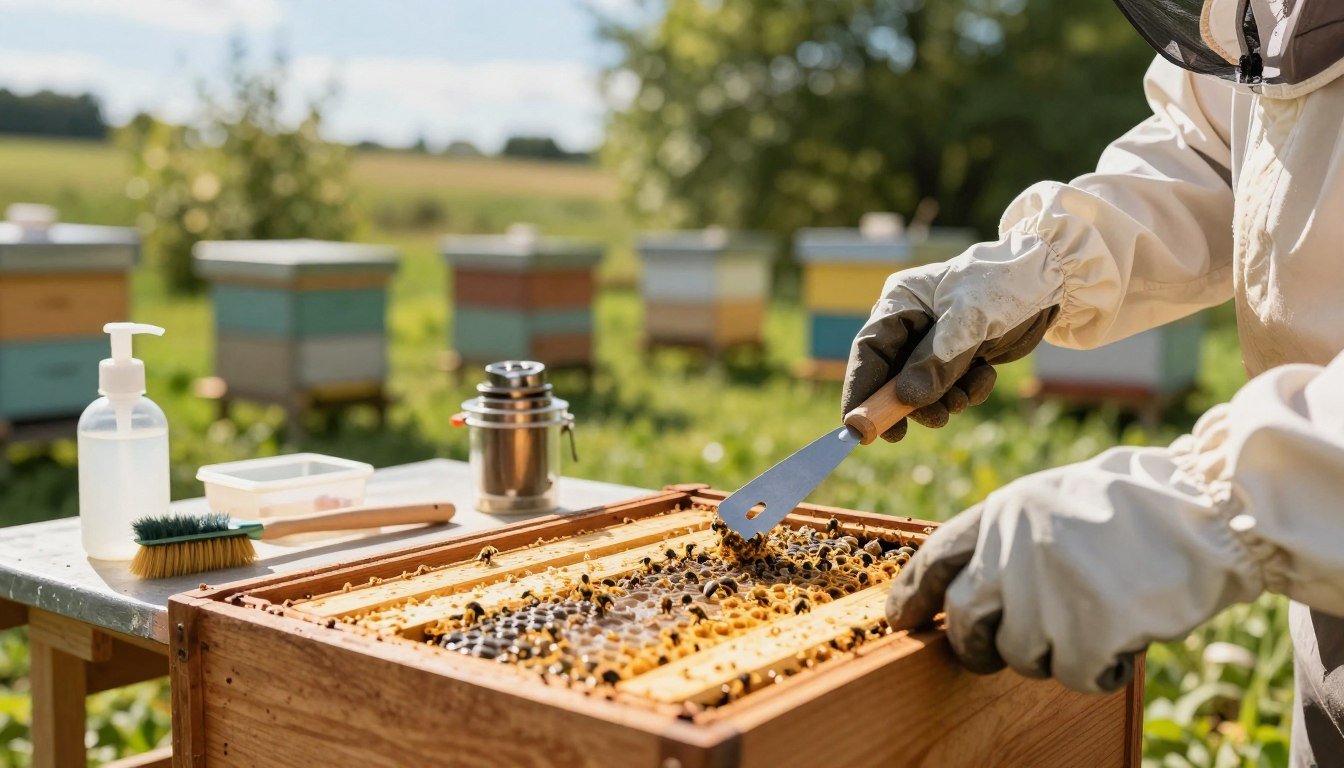
Check wooden hive boxes and plastic components for deep contamination. Use a wire brush to remove wax and propolis from metal parts and queen excluders before disinfection.
| Item | Common Sign | Immediate Action | Final Step |
|---|---|---|---|
| Brood frames | Mummified larvae | Isolate and inspect | Destroy if foulbrood; disinfect or replace if fungal |
| Queen excluders | Wax buildup, debris | Brush and clean | Burn if foulbrood present |
| Plastic foundation | Stained or damaged | Wash with approved solution | Chemical disinfection (avoid bleach on some plastics) |
Initial Cleaning and Debris Removal
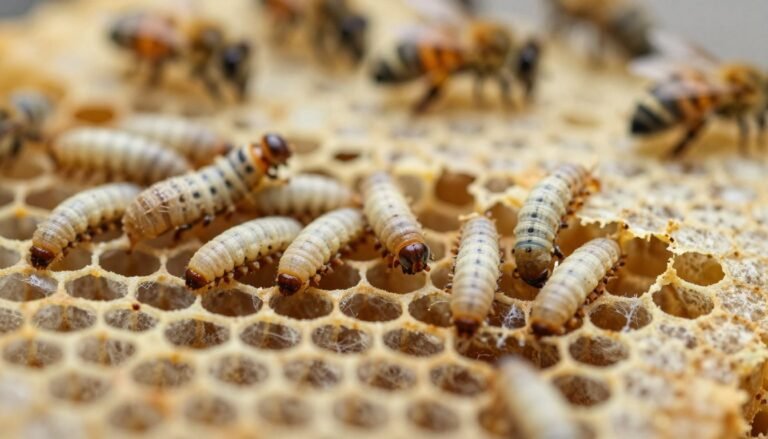
Initial mechanical cleaning removes the bulk of contaminants so chemical or heat treatment works better. Start with visible debris and focus on areas where wax and propolis collect. This reduces hiding spots for spores, wax moth larvae, and mites.
Mechanical Scraping and Freezing
Place hive boxes, frames, and loose comb into a chest freezer at -20°C for at least 48 hours to kill wax moth larvae. Freezing also makes stuck propolis and honey brittle and easier to remove.
Use a paint scraper or a hive tool to clear propolis and old wax from frame runners and internal corners. Collect all scraped debris on cardboard and destroy it by burning to prevent spread of disease to other colonies.
- Freeze first: -20°C for 48 hours to address pests.
- Scrape thoroughly: focus on corners, frame grooves, and the box floor.
- Dispose safely: burn collected wax and propolis; do not compost.
- Rinse next: after freezing, use hot water or a pressure washer to remove stubborn residues from frames and woodenware.
Note: Cleaning removes visible contamination, while sterilization eradicates microbes and fungal spores. For step-by-step protocols on treating hive parts and approved methods, see cleaning and sterilizing beekeeping equipment.
Effective Sterilization Methods for Hive Components
Effective sterilization cuts pathogen load so hives return to safe service.
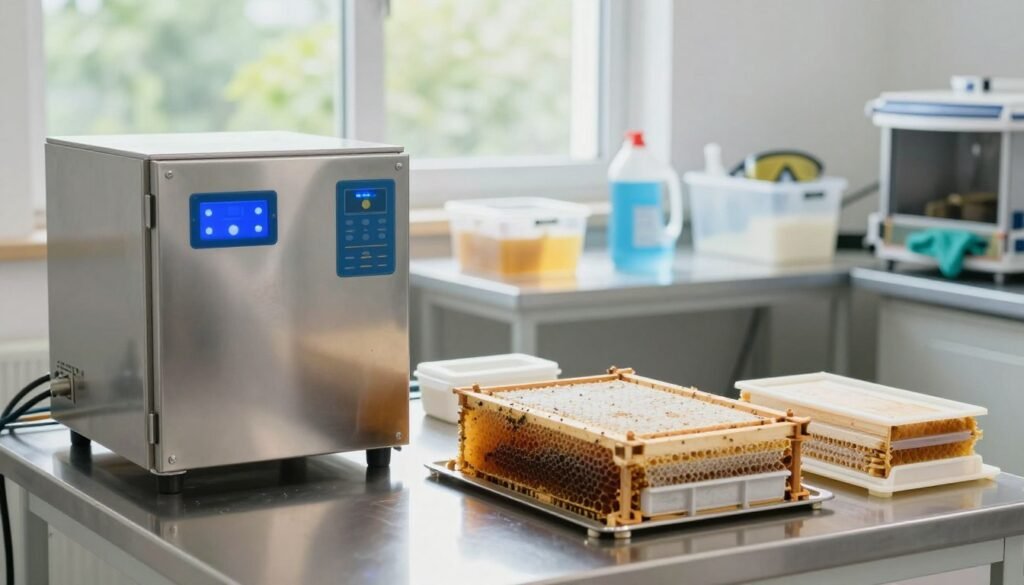
Heat treatment for woodenware
Scorching wooden boxes with a blow torch removes microbes and fungal spores. Hold the flame until surfaces turn a uniform coffee-brown. Work outdoors in a ventilated area and keep a bucket of water nearby to prevent fires.
Chemical disinfection for plastic
Use a 0.5% sodium hypochlorite solution for plastic parts. Immerse plastic components for 30 minutes, then rinse thoroughly with hot water to remove residue.
Managing frames
Clean frames with a hot soda crystal mix (1 kg in 4.5 L hot water) to strip wax and propolis from timber and metal. Rinse well and allow full drying time before returning frames to service.
| Method | Best for | Contact time | Notes |
|---|---|---|---|
| Blow torch heat | Wooden boxes, floors | Short, until uniform color | Kills spores; use outdoors, fire safety essential |
| 0.5% bleach soak | Plastic hives and parts | 30 minutes | Rinse with hot water; avoid mixing with acids |
| Soda crystal wash | Frames, metal tools | Wash and rinse | Effective for wax and propolis; wear gloves and eye protection |
Plan the sterilization process carefully. Allow full drying time and check parts before introducing them back to bees or a new colony. For detailed protocols on hive cleaning and flame sterilizing, see hive cleaning and sterilisation and guidance to flame sterilize tools.
When to Choose Destruction Over Reuse
Serious infections sometimes leave no practical alternative to burning infected woodenware. If American foulbrood (AFB) is suspected, the local Bee Inspector may euthanize the colony and order that infected frames be burnt to stop spore spread.
Wooden hive boxes or frames that show deep contamination should be destroyed. Burn in a pit about 45 cm deep and cover the remains to keep bees and wildlife away from any residual honey or wax.
Plastic hives or badly damaged boxes that are unserviceable should be handled via local recycling rules for plastic. Landfill is not acceptable for infectious material because it risks contaminating the environment and nearby hives.
Practical steps:
- Contact a Bee Inspector for guidance and legal requirements.
- Use a deep burn pit for woodenware to ensure full destruction of comb and propolis.
- Sort plastics by type if sending to specialist firms that accept infected plastic for disposal.
- Never place infected frames or wax in household trash or compost.
If treatment or restoration is possible, follow official cleaning protocols. For formal protocols and sterilisation steps, review the hive cleaning guidance and consider repair advice from how to repair damaged hive boxes when parts are salvageable.
Best Practices for Maintaining Hive Hygiene
Maintain a simple, regular routine to reduce pathogen spread and protect brood and honey stores. Clean habits at the hive and in the shed lower risks to the colony and help preserve drawn comb and frames.
Protective Gear and Tool Maintenance
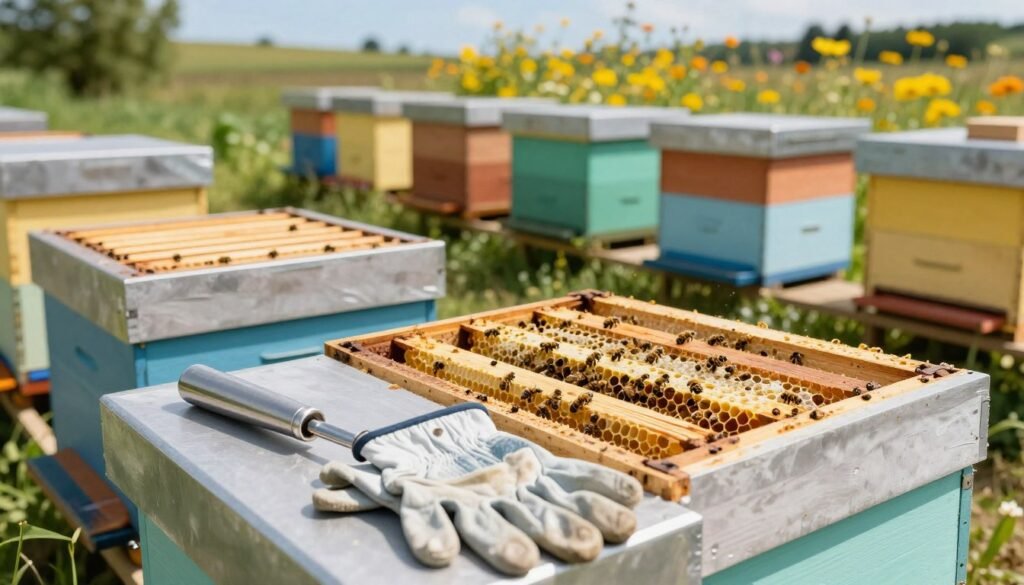
Launder bee suits at high temperatures and add soda crystals to detergent to remove propolis and wax residues. This reduces the chance of moving spores between colonies.
Use nitrile or strong washing-up gloves for inspections. They are simple to clean or to discard if contaminated. Avoid leather gloves because they trap pathogens and are hard to disinfect.
- Clean tools between inspections with a washing soda solution; do not rely on smoke as a sterilizer.
- Keep records of cleaning, sterilization dates, and which hives were serviced to spot trends in disease.
- Store cleaned frames and boxes separately from active hives to prevent accidental contact.
For step-by-step workshop protocols see this guide on clean, scrape and sterilise wooden beekeeping, and review advice on when to discard comb if contamination is severe.
Final Thoughts on Equipment Safety
Protecting colony health requires firm rules for cleaning, inspection, and disposal of contaminated hive parts. A strict routine of mechanical cleaning followed by proper sterilization limits disease reservoirs and keeps colonies productive.
When a persistent pathogen is suspected, choose destruction over salvage for deeply infected wood or frames to stop spore spread. Follow National Bee Unit guidance and local inspector advice for legal and safe disposal.
Keep clear records of inspections, treatments, and storage. Small, consistent steps—scraping, heat or chemical sterilization, and secure storage—preserve long-term apiary health.
For practical fumigation tips and comb handling, see this guide on fumigating combs. For broader disease prevention measures, review how to prevent chalkbrood and protect a productive apiary.
FAQ
What is chalkbrood and how does it affect a honey bee colony?
Chalkbrood is a fungal disease that targets developing brood, turning larvae into hard, chalky mummies. It weakens colony vigor and reduces population growth but rarely kills entire colonies. Signs include scattered white or gray mummified brood in cells, increased cleanup behavior by workers, and reduced honey production. Early detection and good hive hygiene limit spread and long-term impact.
How do I tell chalkbrood apart from American foulbrood or other brood diseases?
Chalkbrood mummies are dry and brittle, often light-colored. American foulbrood produces sticky, ropy larval remains and a foul odor; it is bacterial and far more serious. Use visual inspection, a matchstick roping test for AFB, and consult state labs for confirmation. Correct identification guides proper response and legal steps for foulbrood.
When is it acceptable to reuse hive parts after a chalkbrood outbreak?
Reuse is acceptable if contamination is limited and parts are in good condition. Solid wood boxes, frames with intact comb, and tools that respond to sterilization can be reclaimed. Severely infected comb, porous or heavily soiled wood, and materials that retain spores should be replaced to protect colony health and productivity.
What is the first step in preparing materials for cleaning?
Start by removing all loose debris, propolis, and visible mummies. Separate frames, boxes, and tools. Use a hive tool and brush outdoors to minimize airborne spores. Freezing affected comb for several days helps kill fungal structures, while scraping removes surface contamination before disinfection.
Does freezing kill the fungus and spores effectively?
Freezing aids in killing fungal structures in comb and debris, especially when maintained at sufficiently low temperatures for several days. It is a helpful preliminary step but should be paired with thorough cleaning and a validated sterilization method to ensure safety for reuse.
How should woodenware be treated to ensure safe reuse?
Heat treatment is effective for solid wood boxes and frames. Propane or solar ovens can raise internal temperatures to levels that inactivate fungal elements without warping good timber. Follow temperature and time guidelines from extension services. After heat treatment, apply mechanical cleaning and, when appropriate, a light bleach wash followed by rinsing and thorough drying.
What chemicals work for disinfecting plastic hive components?
Sodium hypochlorite solutions (household bleach) at proper dilutions disinfect plastic surfaces when allowed adequate contact time. Quaternary ammonium and peracetic acid products labeled for apiculture also work. Rinse thoroughly after treatment and allow complete drying before returning parts to service.
How should frames and comb be handled after an outbreak?
Frames with old brood comb often harbor residues and should be evaluated. Replace frames with heavy brood contamination or degraded wax. Salvageable frames can be frozen, scraped, and hot-water washed, then sterilized. Consider foundation replacement to improve hygiene and reduce disease carryover.
When is destruction of hive materials the safest option?
Destroy or permanently discard comb and highly porous wood that resists thorough cleaning. When multiple colonies show severe infection, or when equipment has mixed disease risks such as AFB, disposal prevents recurrence. Follow local regulations for burning or deep burial and report notifiable diseases as required.
What personal protective gear and tool practices reduce disease spread?
Wear gloves and wash hands between hives. Disinfect hive tools and gloves with bleach or alcohol solutions between inspections. Keep dedicated sets of equipment for recovering colonies and new stocks. Clean gloves and tools after use and store gear dry and protected from pests.
How long should treated parts dry before reuse, and why does drying matter?
Allow thorough drying—often 24 to 72 hours—after cleaning and chemical treatment. Drying prevents microbial regrowth and ensures no residual disinfectant harms bees. Sunlight and ventilation accelerate drying and add ultraviolet sterilization benefits.
Are there ways to prevent future outbreaks through hive management?
Maintain strong, well-fed colonies, replace old brood comb routinely, and reduce stressors like Varroa pressure. Practice apiary rotation, minimize robbing, and perform regular hygiene inspections. Healthy colonies resist infections better and recover faster when problems arise.
What resources can help with diagnosis and treatment protocols?
State cooperative extension services, university apiculture programs, and organizations like the Apiary Inspectors of America provide regional guidance. Local beekeeping associations and certified labs offer diagnostic testing and practical advice tailored to prevailing threats and legal requirements.