Reviewed by Thomas B. · How we review
Every beekeeper eventually jolts a hive: a super set down too hard, a hive tool that slips and cracks a frame against the box wall, a boot that catches the stand, or a pothole on the way to a new yard. A honey bee colony reacts to those sudden physical shocks in a fairly predictable way, and understanding that reaction makes you a calmer, safer, and more productive beekeeper.
This guide covers what happens inside a colony when it is bumped or shaken, how researchers have measured colony responses to vibration, why transport is the biggest shock most hives ever experience, and the handling habits that keep the response small.
Key Takeaways
- Honey bees sense vibration through the comb, so a sharp knock on a hive reaches the whole colony at once.
- A sudden jolt typically brings guards to the entrance and puts more bees in the air, and alarm pheromone from alerted bees can escalate the response.
- Researchers have measured colony responses with accelerometers embedded in the comb, including deliberately applied short vibration pulses.
- Moving hives is the largest physical stress most colonies face; secure boxes, ventilation, and timing matter more than speed.
- Slow, deliberate handling during inspections prevents most shock-related defensive behavior.
What Happens Inside a Hive When It Is Jolted
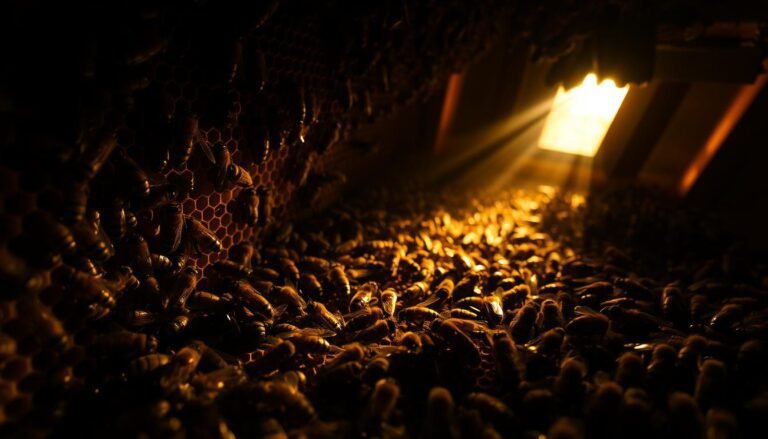
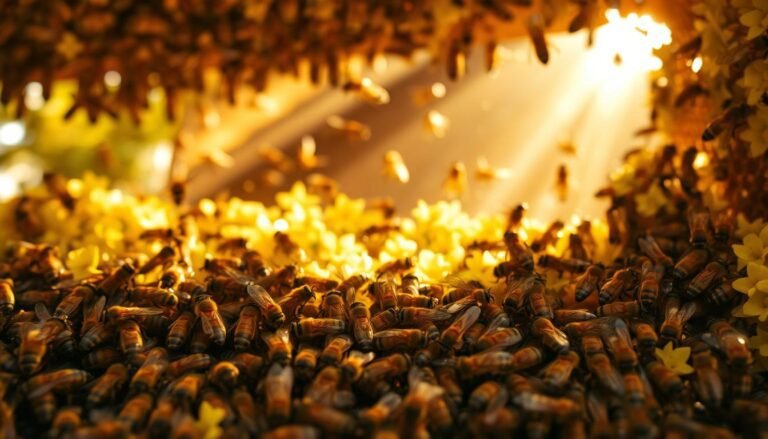
Honey bees live on a shared surface of wax comb, and they are highly sensitive to vibration traveling through it. Vibration-sensing organs in their legs pick up movement in the comb, which is one reason bees use comb vibrations to communicate. When a box is dropped or struck, that impact travels through the frames and reaches bees throughout the nest almost instantly.
The visible response usually unfolds in a few stages:
- A brief pause. Many bees momentarily stop moving right after a sharp jolt. Research on deliberately applied vibration pulses (described below) recorded this short immobilization inside the hive.
- Guards mobilize. Guard bees move to the entrance and to any opening you have created, and more bees take flight around the hive.
- Alarm spreads. Alerted bees release alarm pheromone, whose main component is isopentyl acetate (the “banana” smell beekeepers notice). That odor recruits more defenders and makes the colony quicker to sting for a while afterward.
- Settling. A healthy, gentle colony usually settles back down within minutes once the disturbance stops. A defensive colony may stay agitated much longer and follow you across the yard.
How strong the response is depends on the colony’s temperament and genetics, the season, weather, and whether there is a nectar flow. Africanized honey bees are far more reactive than European stock. University of Florida extension guidance on African bees lists operating heavy machinery, mowing, and “causing any loud noise or heavy vibration” among the common causes of disturbances that set off defensive behavior (UF/IFAS: Living with African Bees in Florida’s Outdoor Workplaces). European colonies are more tolerant, but the same triggers apply.
Common Sources of Shock in the Apiary
Most jolts are avoidable once you know where they come from.
| Source | What the colony experiences | How to avoid it |
|---|---|---|
| Dropping or banging boxes during inspections | A sharp impact through the whole stack | Set boxes down on an upturned lid, edge first, then lower gently |
| Prying frames abruptly | Cracking propolis snaps frames against the box | Loosen both ends of the frame first and lift slowly and straight up |
| Bumping or kicking the stand | A jolt to the whole hive, often from below | Level, solid stands and clear footing around the hive |
| Mowers and string trimmers | Sustained vibration and noise right at the entrance | Mow at a distance, avoid hitting the stand, and do it when fewer foragers are flying |
| Animals, wind, or a tipped hive | Repeated knocks or a full collapse of the stack | Strap hives in windy or animal-prone sites and fence out large predators |
| Transport | Loading impacts, road vibration, braking, and heat | Strap and fix boxes, ventilate, and move at night when bees are home |
Sharp Jolts vs. Steady Vibration
Not all vibration affects bees the same way. A single hard knock is a sudden, unexpected event, and it tends to produce the defensive surge described above. Steady, continuous vibration is different. Staff at the University of Guelph’s Honey Bee Research Centre, describing how they move hives, note that they keep the vehicle running while unloading because the vibration of the vehicle tends to keep the bees calm (Honey Bee Research Centre: Moving Hives).
The practical lesson is that bees cope far better with smooth, predictable handling than with abrupt changes. During an inspection or a move, the jolts you want to avoid are the sudden ones: a dropped box, a slipped tool, a hard stop.
How Researchers Measure a Colony’s Response to Vibration
Because bees communicate through the comb, the comb itself can be used as a sensor. Several research groups have placed accelerometers (small vibration sensors) directly in the frames of living colonies.
Long-term vibration monitoring
In a 2015 study, Bencsik and colleagues embedded accelerometers in the central frame of hives and recorded comb vibrations every three minutes, analyzing night-time data to reduce interference from foraging traffic. They found that vibration levels rose and fell with a period matching the worker brood cycle. The authors point out that opening a hive for inspection is itself a source of stress for the colony, and suggest this kind of monitoring could let beekeepers inspect less often (Honeybee Colony Vibrational Measurements to Highlight the Brood Cycle, PLOS One).
Applying a controlled “shock” on purpose
A 2024 study by the same research group turned the idea around: instead of only listening, they delivered a short, gentle vibration pulse (a 340 Hz tone lasting about a tenth of a second) through a small shaker attached to the outside wall of the hive, then recorded the colony’s response with an accelerometer in the central frame. They described two responses:
- An immediate, brief drop in the colony’s vibration signal, which the authors interpret as the bees being momentarily immobilized by the pulse.
- A longer buzzing response afterward. It was hardly measurable during the active season but became very strong when the colony was clustered for winter. A queenless colony in the study also responded more strongly than the others did during their difficult periods.
The researchers present this as a possible non-invasive way to probe a colony’s overall state (Bencsik et al., Scientific Reports, 2024). It is research equipment, not a product you can buy off the shelf, but it confirms what beekeepers see in the field: how a colony responds to a disturbance says something about its condition.
What you can observe without special equipment
You don’t need sensors to learn from your colonies’ responses. After an unavoidable bump, note how many bees come out, whether they fly at you or just gather at the entrance, and how long the colony takes to settle. Recording this at each inspection gives you a baseline for each hive. If you use commercial monitors, our guide to what smart hive sensors actually tell you explains what weight, temperature, and sound data can and cannot show.
Transport: The Biggest Shock Most Colonies Face
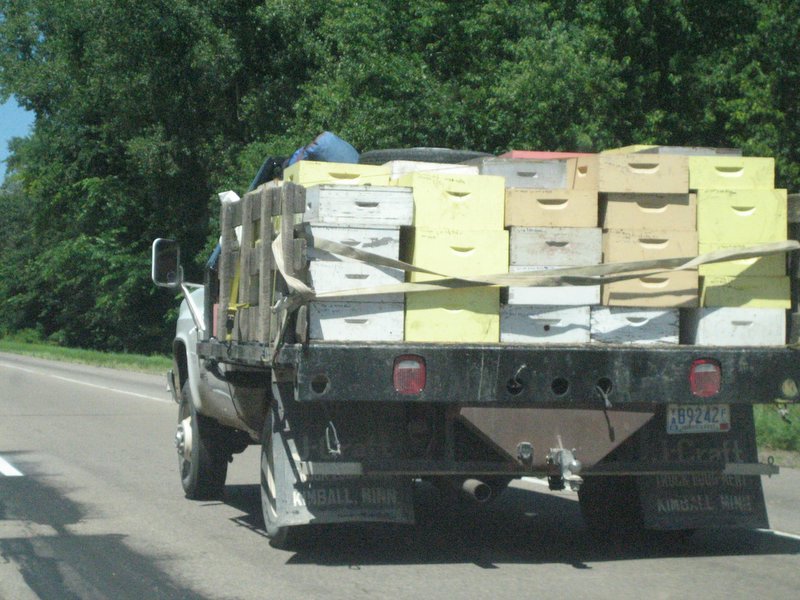
Loading, road vibration, braking, heat, and confinement all come together when a hive is moved. Research on migratory beekeeping has found measurable costs. A 2016 study led by Michael Simone-Finstrom at NC State compared migratory and stationary colonies and found that traveling bees generally lived shorter lives and showed higher oxidative stress, although the stress difference appeared early in the season when stationary colonies had plenty of forage, pointing to nutrition as an important factor (NC State News summary of the Scientific Reports study). The study did not isolate vibration as the cause, so it is best read as evidence that the move as a whole is stressful.
Good moving practice reduces both the physical jolts and the heat stress that comes with them:
- Move at night, or once foragers are home, and close the entrance with 8-mesh screen or foam that still lets air through.
- Fix the hive together. Screw or staple the bottom board in place and strap the boxes so nothing can shift or separate. See our guide to ratchet straps for moving hives.
- Ventilate. Overheating is a major danger during moves. Screened bottoms or top screens let air flow through the confined colony.
- Drive smoothly. Avoid hard braking and take rough roads slowly. Load hives so they cannot slide or tip.
- Unload gently, set hives level on their new stands, and give them time to settle before opening the entrance.
How far you move the colony changes the plan. See moving a beehive short distance vs long distance for the rules on reorientation.
Handling Habits That Minimize Shock During Inspections
- Approach from the side or back of the hive, not across the flight path.
- Crack the lid and inner cover slowly, and give a little smoke a moment to take effect.
- Pry frames apart gently at both ends before lifting, so they don’t snap free and knock the box.
- Lift frames straight up without rolling bees against the neighboring comb.
- Set supers and brood boxes down on an upturned lid instead of dropping them on the ground.
- Keep your movements steady; quick, jerky motions and bumps add up over an inspection.
- Keep inspections short and purposeful, especially during a dearth.
For a full low-disturbance routine, see how to reduce stress during hive inspections.
When a Strong Reaction Means Something Else
A brief flurry after an accidental bump is normal. A colony that stays defensive long after a minor disturbance, or that boils out at the lightest touch, may be telling you something else: a nectar dearth, robbing pressure, queenlessness, a predator harassing the hive at night, or a change in temperament after supersedure. Our guide on why bees are aggressive suddenly walks through those causes.
Conclusion
A hive’s response to shock is a defense system doing its job. Bees feel sudden impacts through the comb, pause, mobilize guards, and use alarm pheromone to recruit help. Researchers have measured these responses with accelerometers in the comb, and some are exploring small controlled vibration pulses as a way to check colony condition without opening the hive. For the working beekeeper, the takeaway is practical: avoid sudden jolts, secure and ventilate hives when moving them, and handle boxes and frames slowly. Colonies handled that way are calmer, easier to inspect, and less stressed.
FAQ
Why do bees get defensive when a hive is bumped?
Bees sense vibration through the comb, so a sudden knock reaches the whole colony at once. Guards respond to what looks like an attack by moving to the entrance and taking flight, and alarm pheromone from alerted bees recruits more defenders.
How long does it take a colony to calm down after a jolt?
A gentle colony usually settles within minutes once the disturbance stops. Defensive colonies, colonies in a nectar dearth, and Africanized bees can stay agitated much longer. If a hive remains aggressive long after a minor bump, look for other causes such as robbing, queenlessness, or predators.
Does road vibration during transport harm bees?
Research on migratory beekeeping has found that traveling bees can have shorter lifespans and higher oxidative stress, but those studies looked at the move as a whole, including nutrition and confinement, rather than vibration alone. Smooth driving, secure strapping, good ventilation, and moving at night all reduce the stress of a move.
Can vibration sensors show how a colony is doing?
Researchers have used accelerometers embedded in the central frame to track the brood cycle and to measure how colonies respond to short, controlled vibration pulses. These methods are mostly research tools for now, but they show that comb vibration carries useful information about colony state.
What is the best way to avoid jolting a hive during inspections?
Work slowly and deliberately: crack the lid gently, loosen frames at both ends before lifting, lift frames straight up, and set boxes down on an upturned lid instead of dropping them. Keep hive stands level and solid so the hive cannot rock or tip.
Further Reading
Image credits: Photo: Wendy Seltzer, CC BY 2.0, via Wikimedia Commons.