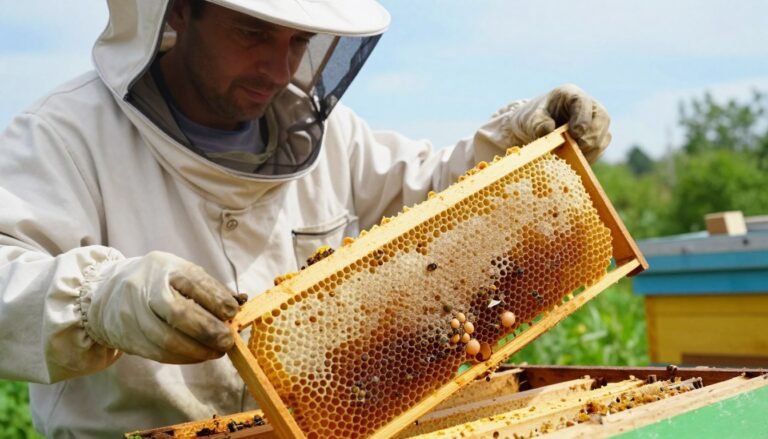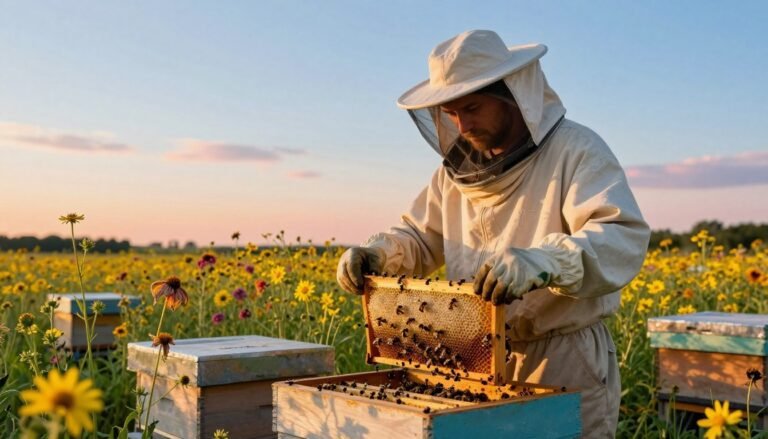
Perforated cappings on a brood frame often signal a serious brood disease in a hive. In many cases, this clinical sign prompts an immediate inspection because it can indicate american foulbrood, a severe bacterial infection that threatens larvae and colony health.
When a beekeeper finds holes in the cell covers, it is essential to examine the affected brood, larvae, and surrounding frames. Early identification helps protect the queen, prevents spread to nearby colonies, and preserves honey production.
Use proper equipment and follow inspection protocols. For details on how american foulbrood affects honey bees, see this disease overview. For practical inspection tips to keep your apiary healthy, consult this inspection guide.
Key Takeaways
- Holes in brood cell covers can be an early symptom of serious brood disease.
- Inspect frames and larvae promptly to protect the queen and colony.
- American foulbrood spreads fast and requires decisive action.
- Use clean equipment and strict hygiene to limit infection risk.
- Regular hive checks help preserve honey quality and colony survival.
Understanding Perforated Cappings What They Mean
Any irregular openings across brood covers can point to colony stress or disease and need checking. Early recognition protects honey yield and the future workforce of the hive.
Act quickly: contact the Customer Service Centre at 136 186 for expert advice if you see unusual holes in the cells. A prompt call can save colonies and reduce spread.
Use proper inspection equipment and clear protocols. Check whether the queen is laying normal brood and whether worker bees show hygienic behavior.
- Uniform seals usually signal healthy brood.
- Breached cells can indicate disease or normal uncapping before emergence.
- Document findings and isolate affected frames when advised.
| Sign | Possible Cause | Immediate Step |
|---|---|---|
| Small holes in sealed cells | Hygienic removal or infection | Inspect brood, note patterns, call 136 186 |
| Uneven cappings | Queen problems or brood stress | Check queen presence and lay pattern |
| Clusters of damaged cells | Contagious disease | Isolate frames and seek expert guidance |
For guidance on chemical controls and treatment choices, see a comparison of common options like formic and oxalic approaches at treatment comparison.
The Anatomy of Healthy Brood Development
A close look at a sealed frame reveals key clues about brood health and future colony strength.
Healthy Capping Characteristics
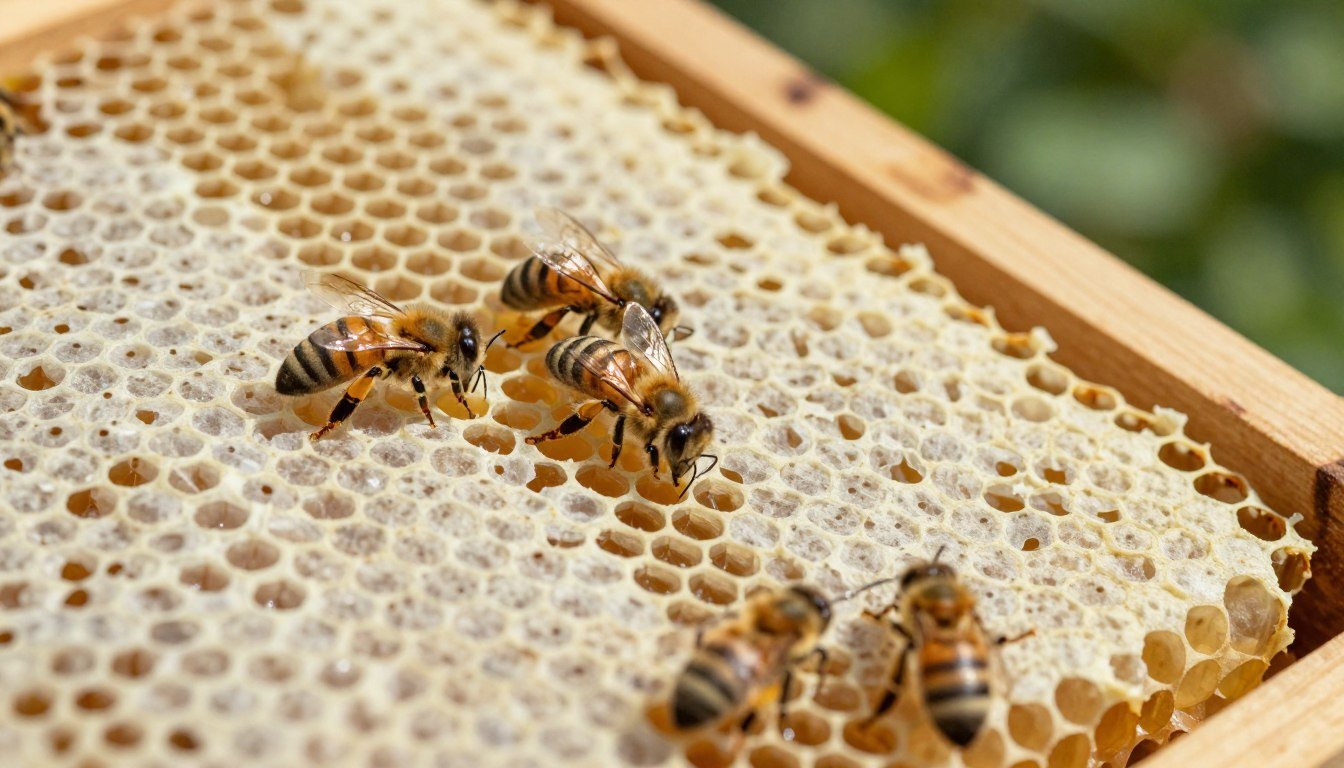
Solid, slightly convex seals in a uniform cream to tan color usually indicate normal development. Healthy cell covers are consistent across a patch of comb and match the overall brood pattern.
When a cell is capped and the larvae inside are healthy, the wax surface looks smooth and unbroken. Use clean equipment to lift frames and note color, shape, and spacing.
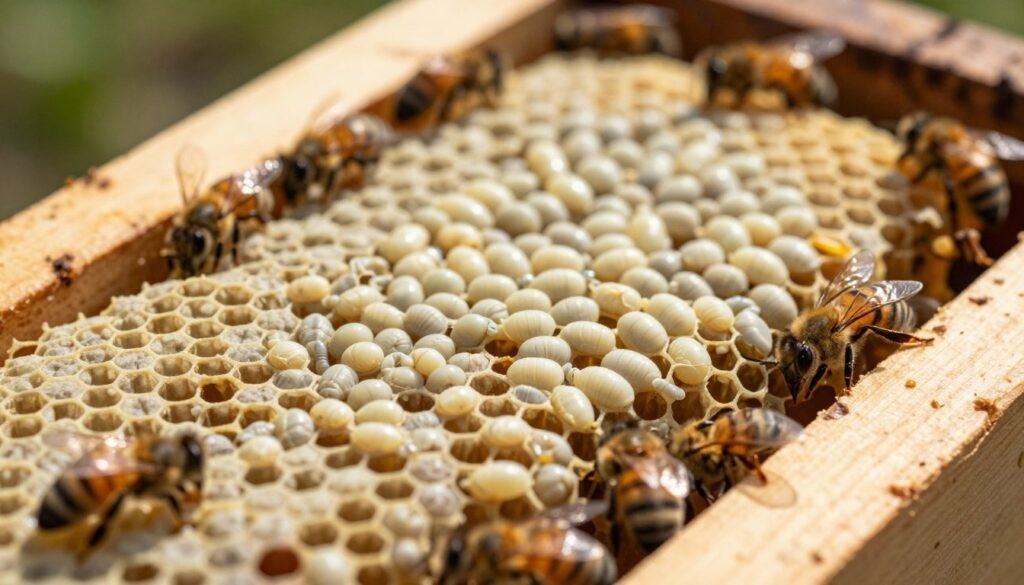
Identifying Emerging Bees
Emergence leaves a ragged edge on the wax as adult bees chew out. This differs from holes caused by infections or pests.
- Pattern check: a dense brood pattern shows the queen is laying well.
- Larvae look: pearly white larvae signal healthy stages.
- Worker activity: healthy worker bees clean and manage cells during emergence.
For more on how honey matures inside the comb and how that process links to brood care, see how honey matures inside the comb.
Recognizing Signs of Brood Disease
Noticing sunken, greasy seals and uneven brood patches should raise immediate concern during inspections. These visual cues often mark severe infections like american foulbrood. A healthy brood pattern is dense and uniform; a spotty layout suggests a problem.
Look for dark, sunken, or greasy cappings and any holes in cell covers. These signs show larvae have died and begun to decay. If several frames show this, the risk to the queen and nearby colonies rises quickly.
“Early detection and rapid response are the beekeeper’s best tools against destructive brood diseases.”
Use professional equipment for close inspection and keep detailed notes. When you suspect infection, quarantine the hive and contact authorities or an experienced beekeeper. Quick action limits spread and protects your apiary.
- Key symptoms: sunken seals, spotty brood pattern, darkened cells.
- Immediate steps: inspect with proper equipment, isolate affected frames, protect the queen.
- When in doubt: treat suspected foulbrood as an urgent case and seek guidance.
Conducting the Field Matchstick Test
A direct, on-frame test helps beekeepers tell if larvae are affected by a contagious pathogen. This simple field method uses a clean twig or toothpick to probe a suspect cell.
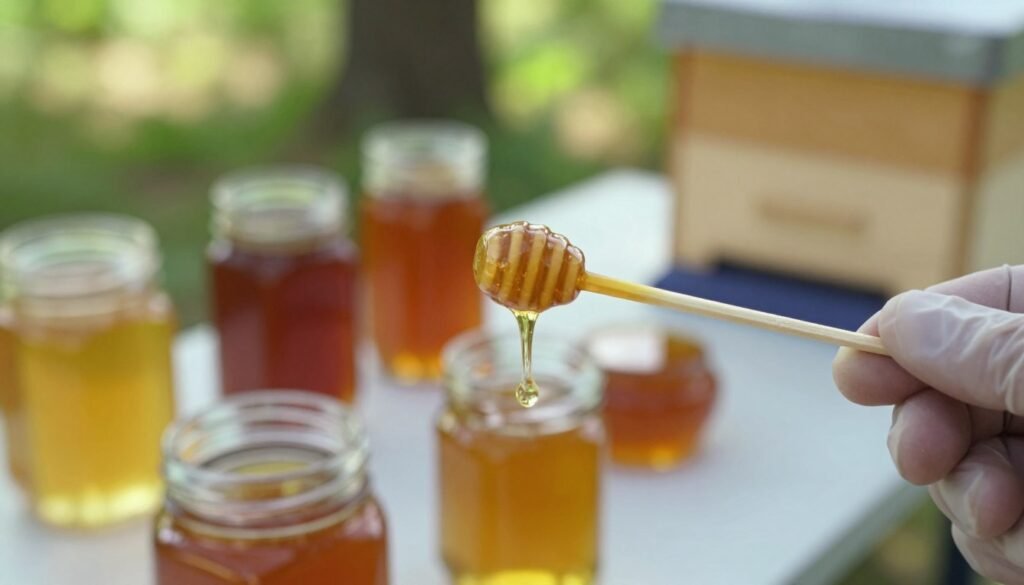
How to perform the test: insert a sterile twig into the affected cell and slowly withdraw it. Watch the remains closely for any stretching or mucus-like thread.
Interpreting Ropiness Results
Ropy result: if the larval remains stretch into a sticky thread up to 25 mm (3/4 inch), this indicates american foulbrood and requires urgent action.
Non-ropy result: dried scales from dead larvae will not rope out and often adhere to the cell wall. Those cannot be removed without damage.
- The matchstick test is a standard method beekeepers use to check brood health in the hive.
- Use clean equipment and test selectively when you see suspicious cell signs or perforated cappings.
- Positive ropiness helps decide whether to treat or isolate affected colonies.
“Prompt, accurate field diagnosis saves colonies and limits spread.”
For step-by-step field guidance, consult the official field diagnosis of honey bee brood resource.
Identifying American Foulbrood Symptoms
A quick frame check that finds coffee-brown larvae or dark scales often signals a serious brood infection. American foulbrood is caused by the bacterium Paenibacillus larvae, which makes hardy spores that resist heat and cold.
Inspect sealed cells for larvae that change color from dull white to light brown, then coffee-brown and finally black as they decompose into a hard scale. A dead larva that forms a dark scale at the bottom of the cell is a strong indicator of foulbrood.
Perform the ropiness test carefully: probe a suspect cell with clean equipment. If remains pull into a sticky thread, treat the result as serious. Use professional beekeeping equipment to avoid spreading spores between frames and colonies.
Watch the brood pattern. Infected hives show an irregular layout as adult bees struggle to remove infected brood and protect the queen. There is no practical cure for american foulbrood in most cases; state rules often require strict management of infected hives.
For related checks on chilled or dead brood, see identifying chilled brood for a step that helps rule out non-infectious causes.
Distinguishing European Foulbrood and Other Pathogens
Close comparison of larval posture, color, and comb location lets you separate fungal, viral, and bacterial cases.
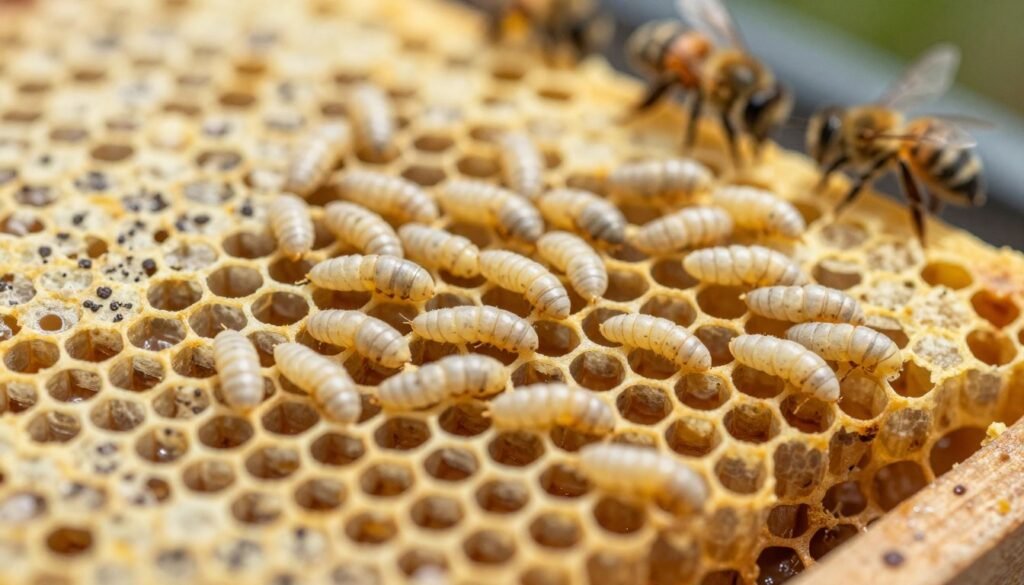
European Foulbrood Indicators
European foulbrood (caused by Melissococcus plutonius) typically affects larvae before the cell is capped. Look for twisted or curled larvae that are discolored and lie low in the cell.
Use professional equipment and check brood pattern and frame placement when you suspect this infection. For detailed guidance, consult European foulbrood guidance.
Chalkbrood Mummies
Chalkbrood is fungal. Infected larvae dry into hard, white or dark mummies.
You may find these mummies on the landing board or near the entrance. Affected combs can show an irregular brood pattern similar to other brood diseases.
Sacbrood Characteristics
Sacbrood virus kills larvae in a characteristic gondola shape with the head up. The remains often turn light brown and may slough off the cell wall.
Tip: keep equipment clean, replace old wax combs, and maintain a strong queen to help your bees resist common brood issues.
“Accurate identification protects colonies and guides the right management choice.”
- Distinguish by larval shape, color, and whether the cell is capped.
- Use targeted inspection methods and clean equipment to avoid spread.
- Strong colonies and good comb hygiene reduce repeated cases.
The Role of Hygienic Behavior in Colonies
A colony that routinely unseals and clears compromised cells reduces pathogen load across the nest and helps keep the brood nest healthy.
Hygienic behavior is a genetic trait where worker bees uncap and remove diseased or mite‑infested pupae from their cell. This removes infected larvae early and preserves a cleaner brood pattern.
Strong colonies with hygienic bees resist the spread of disease and protect the queen and adult bees. Professional beekeepers select queen stock for this trait to strengthen their colonies and support sustainable honey production.
- Natural cleanup: bees will uncap and clear cells that hold dead or sick larvae.
- Monitor regularly: use equipment to record how colonies manage cells and brood.
- Breeding: select for hygienic lines to reduce chemical intervention needs.
- Limitations: a heavy infection can overwhelm even a hygienic colony.
For deeper research, read the hygienic behavior study and this note on predisposition to hygienic behavior to guide queen selection and apiary management.
Common Diagnostic Pitfalls for Beekeepers
Misreading comb damage is a frequent error that sends many beekeepers into unnecessary alarm. A calm, methodical check prevents wrong treatments and lost equipment.
Confusing Wax Moth Damage with Disease
Wax moths tunnel through combs and trigger a behavior called bald brood. Worker bees will uncap rows of cells to remove caterpillars; this is a sign of pest activity, not a brood disease.
Do not assume ragged holes equal infection. Always inspect the cell lining closely and use clean equipment.
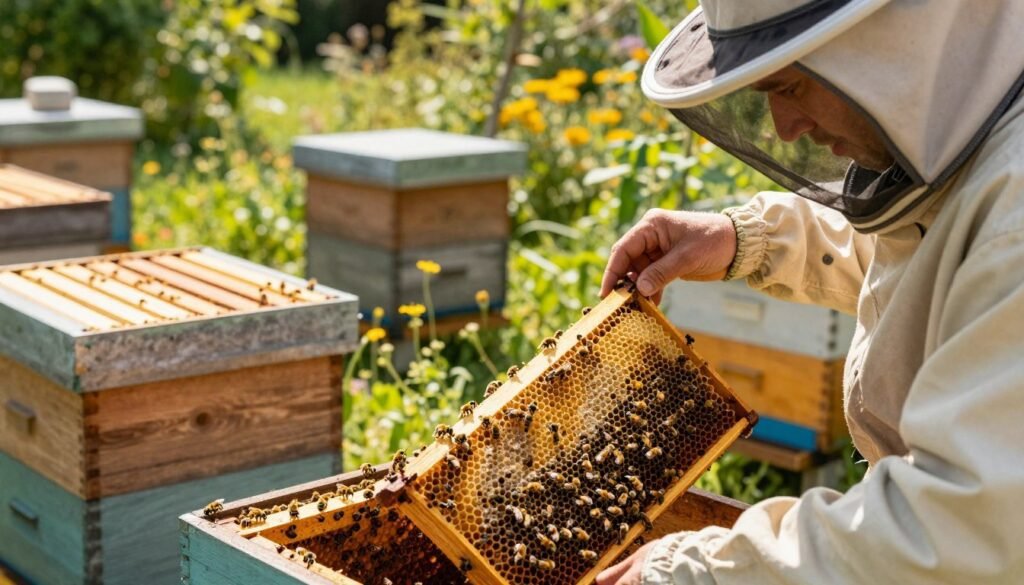
- Check for a living adult in an opened cell before diagnosing a disease.
- Look for straight rows of uncapped cells — classic wax moth activity, not infection.
- Distinguish dark hard scale from other remains to identify true foulbrood cases.
- Consider a shifting queen or a transient brood pattern before reacting.
“A measured inspection saves colonies and prevents unnecessary destruction.”
Tip: inspect entrance debris for mummies or caterpillar signs and examine frames one at a time. Thorough checks protect the queen, the colony, and the long-term health of your hive.
Managing Hive Health and Disease Prevention
A precise inspection routine and reliable tools let beekeepers spot subtle changes in brood and queen performance.
Managing hive health is ongoing. Use quality equipment and keep clear records to track colony trends through the season.
Never mask symptoms with antibiotics. Feeding colonies medicine can hide american foulbrood without curing the infection, and it raises risk across nearby colonies.
At HONESTBEE, professional hive and honey-handling machines help scale an apiary while improving hygiene and workflow. Good gear reduces cross-contamination when you move frames or process honey.
- Inspect regularly and protect the queen to maintain a strong colony.
- Keep ventilation steady and avoid excess moisture in the wax and boxes.
- Have a written plan for swarm control and for a sudden outbreak.
If you find a brood disease, follow statutory protocols. This may include isolating or destroying infected equipment to stop further spread.
“Prevention is better than cure: strong colonies, clean equipment, and timely action protect your honey bee population.”
For detailed condition guides and prevention tips, see resources on common brood conditions and practical steps to prevent chalkbrood.
Conclusion
,Regular, calm inspections are the beekeeper’s first line of defense against destructive brood infections.
Act quickly: spot unusual cell seals, use the matchstick test, and separate suspect frames to limit spread. Mastering simple field checks helps you protect the queen and the workforce.
Invest in professional-grade equipment from trusted suppliers to keep tools clean and workflows efficient. For authoritative diagnostic methods and disease descriptions consult the honey bee brood diseases guide.
Early detection and steady management preserve colony strength and secure a better honey harvest. Stay vigilant during regular inspections and commit to proven, sanitary practices for long-term apiary resilience.
FAQ
How can I tell if brood cells show normal development or a problem?
Inspect capped brood for uniform, slightly domed caps that are light brown to tan. Healthy larva leave a clean, plump appearance under the cap and emerging workers create neat exit holes. Spot irregular capping, sunken or perforated areas, or discolored larval remains as signs needing closer review.
Which features define a healthy brood capping?
Healthy cappings are intact, slightly convex, and consistent across the frame. The wax is smooth, not brittle or perforated, and caps separate cleanly when workers emerge. Even brood pattern and full-sealed cells indicate good queen performance and low disease pressure.
What does the matchstick (field) test check for in a suspect cell?
The matchstick test checks whether dead larval material is viscous and pulls into a string when probed. A syrup-like, ropy strand suggests a bacterial infection that needs immediate attention. Use caution and follow local regulations if foulbrood is suspected.
How should I interpret ropiness during a test?
If the larval remains form a long, sticky thread on the probe, this indicates a bacterial brood disease. Short, crumbly remains usually point to other causes. Document findings and contact your state apiary inspector for confirmation and next steps.
What are hallmark signs of American foulbrood (AFB)?
AFB causes sunken, darkened cappings, peppered brood pattern, and dead larvae that become stringy and brown. You may find hard, dark scales adhered to cell walls. Because AFB spores survive long on equipment, report suspected cases and avoid moving contaminated frames.
How does European foulbrood (EFB) differ from AFB?
EFB usually affects younger larvae and produces twisted or discolored bodies that dry like a rubbery sheet. Cappings may be sunken but less so than AFB, and ropiness is absent. EFB often improves with good nutrition and brood breaks, while AFB requires stricter control.
What should I look for with chalkbrood and sacbrood?
Chalkbrood leaves mummified, white-to-gray larvae that often protrude from cells. Sacbrood causes larvae to die in a fluid-filled sac and turns the brood into a sac-like, brownish shape. Neither produces the ropy threads characteristic of bacterial foulbroods.
Can strong hygienic behavior in a colony prevent brood disease?
Yes. Colonies with hygienic workers detect and remove diseased or dead brood rapidly, reducing pathogen spread. Selecting stock for hygienic traits and maintaining overall colony health lowers disease incidence and helps contain outbreaks.
What common mistakes lead to misdiagnosis of brood disease?
Beekeepers often confuse wax moth damage, chilled brood, and starvation with bacterial disease. Wax moths leave webbing and holes, while nutritional issues produce scattered uncapped brood without the ropy or scaling signs of foulbrood. Always combine visual checks with field tests.
How should I manage a hive with suspected brood disease?
Isolate the colony, avoid moving frames, and contact your state apiary inspector. Follow local rules for testing and disposal. Good sanitation, replacing old comb, providing strong nutrition, and, when allowed, targeted treatments or burning of heavily infected equipment help limit spread.
Are there preventive steps to reduce disease risk in my apiary?
Maintain strong, well-fed colonies, practice regular equipment sanitation, rotate out old comb, and buy stock from reputable breeders. Monitor frames frequently, use hygienic strains when possible, and control stressors like varroa to keep immune defenses strong.
When should I call an apiary inspector or lab for confirmation?
Contact authorities immediately if you observe sunken, perforated cappings with ropy larvae or persistent dead brood that scales on cell walls. Early professional diagnosis prevents wider apiary infection and ensures you follow legal and safe disposal protocols.
Can contaminated equipment infect new colonies and for how long?
Yes. Bacterial spores, especially from AFB, survive years on comb, frames, and tools. Do not transfer suspect equipment between colonies. Sterilize or replace old comb and follow inspector guidance to prevent long-term contamination.
How do I document and monitor brood pattern changes over time?
Photograph frames regularly, keep detailed records of queen age, feeding, treatments, and signs observed. Compare brood pattern density and capping condition across inspections to spot gradual declines or sudden outbreaks early.
Is it safe to harvest honey from hives with brood disease?
Avoid harvesting honey from colonies suspected of foulbrood, since spores can contaminate supers and equipment. Follow local advice; often inspectors require destruction or special handling of contaminated comb and honey to prevent spread between apiaries.