Choosing the right support is a critical choice for any beekeeping operation. A poor base forces work at ground level and can cause chronic back and knee strain for the beekeeper.
Standard pallets are only 150 mm (6 inches) thick, so many beginners end up lifting boxes from a low height. This also raises colony risks from moisture, rot, and pests when the bottom sits on soft ground.
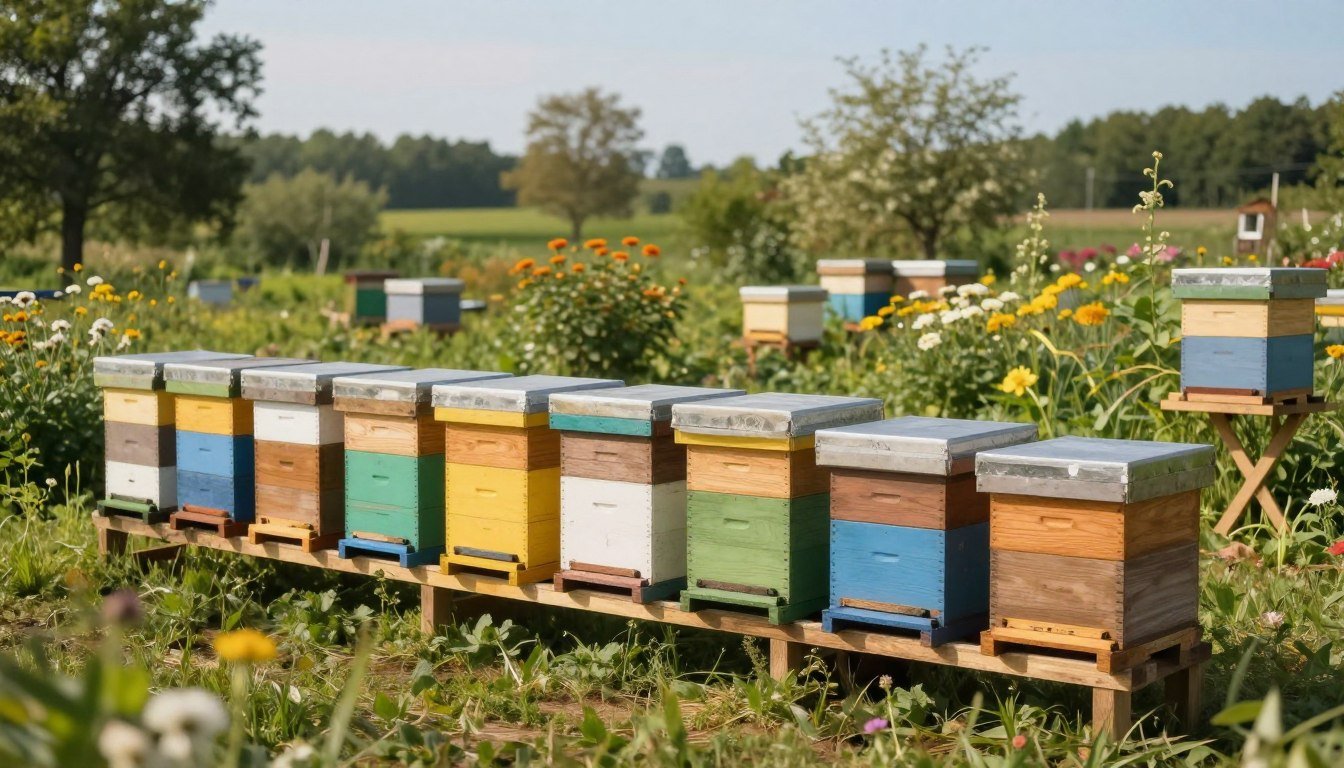
Professional apiarists favor stable hive stands that keep hives elevated 8–16 inches, improve airflow, and protect structural integrity. This makes inspections and honey harvests easier and safer over time.
For more on durable options and build standards, see practical guides like commercial hive stands and tips on noise-reducing solutions.
Key Takeaways
- Support choice affects beekeeper comfort and colony health.
- Low, thin pallets can force work at ground height and invite moisture.
- Elevated stands improve airflow, reduce rot, and limit pests.
- Durable options save time and money over the long term.
- Consider weight capacity, level footing, and weather resistance.
- Match your support to operation size—backyard versus commercial needs differ.
The Importance of Proper Hive Support
A good hive stand provides a solid foundation for any apiary. It keeps the entrance clear of vegetation and lifts the colony above damp soil. This simple step reduces moisture buildup and helps bees stay healthy through wet seasons.
Working at ground level is hard on the body. Without proper supports, inspections create back pain and dirty knees. Elevated hives make lifting honey supers safer and speed up routine checks.
Durable hive stands also bear the load of full boxes during peak nectar flows. Experienced beekeepers rely on stable supports to keep hives level and secure against wind and pests.
Design choices should favor both colony safety and the beekeeper’s comfort. For easier handling of heavy loads, consider tools and straps—see recommendations for the best ratchet straps for moving hives.
Consistent support extends equipment life and creates an ergonomic workspace. That makes managing many colonies more efficient and keeps your bees productive and calm.
Comparing Hive Pallet vs Individual Stand
How you set up your base affects hive health, access, and long-term costs.
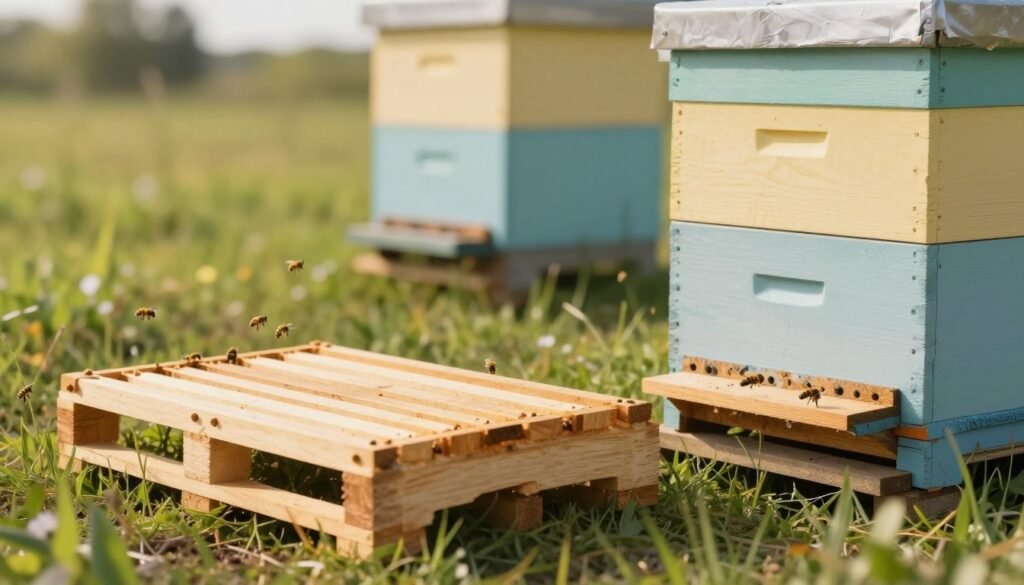
Pros and Cons of Pallets
Low cost makes a pallet attractive for new beekeepers. Many people reuse shipping boards to save money the first year.
However, untreated wood can rot fast. That leads to instability, moisture issues, and extra work to keep colonies level.
Blocks under a pallet help airflow and lift off the ground, but they do not replace a purpose-made solution for long-term durability.
Benefits of Purpose-Built Stands
Aproperly designed base keeps boxes level, which helps bees draw straight frames and eases inspections.
Professional stands often include space for extra frames and boxes, saving time during harvest and routine checks. Metal or treated timber options resist rot and handle heavy colonies better than simple boards.
| Feature | Reused Pallet | Purpose-Built Stand | Plastic Pallet |
|---|---|---|---|
| Initial cost | Low | Higher | Medium |
| Durability | Low (rot risk) | High (treated timber/metal) | High (resists rot) |
| Leveling & access | Variable (needs blocks) | Built to stay level | Works if ground is level |
| Storage for frames | None | Often included | Limited |
For practical recommendations on selecting a hive stand, consider the long-term savings of a good design over repeated repairs.
Ergonomic Considerations for Beekeepers
Working with colonies set close to the ground makes routine checks a physical burden over time. Small changes in setup can protect your body and extend your years of active beekeeping.
Impact on Back and Knee Health
Repeated bending strains the lower back and increases knee pressure during inspections. Handling a full box or two from a low position forces awkward lifts.
Elevating brood boxes to a comfortable working height reduces that strain. Professionals often place entrances at or near knee height to preserve posture.
“Elevating hives for access is one of the easiest ways to avoid repetitive strain and enjoy beekeeping longer.”
| Task | Recommended height | Benefit |
|---|---|---|
| Routine inspection | 12–16 inches | Less bending; faster checks |
| Harvesting honey | 18–24 inches | Safer lifting; reduced back strain |
| Managing multiple brood boxes | At least knee height | Better leverage; protects knees |
- Low platforms force poor posture and chronic pain.
- Proper stands cut knee and back load during long sessions.
- Investing in ergonomic supports helps you manage heavy boxes for years.
Environmental Impact and Moisture Control
Airflow under your hives affects longevity and bee health. A slatted base built from 100 mm boards with 20–25 mm gaps often restricts circulation. That trapped air holds moisture and creates a damp microclimate beneath boxes.
Damp conditions speed wood rot and invite pests. Over time, the hidden cost of frequent replacements outweighs the low initial cost of makeshift platforms.
Raised, well-ventilated supports promote evaporation and stop condensation. Using plastic or treated wood can cut environmental impact by lasting many years. Elevating colonies off the ground is the simplest way to keep floors dry through wet seasons.
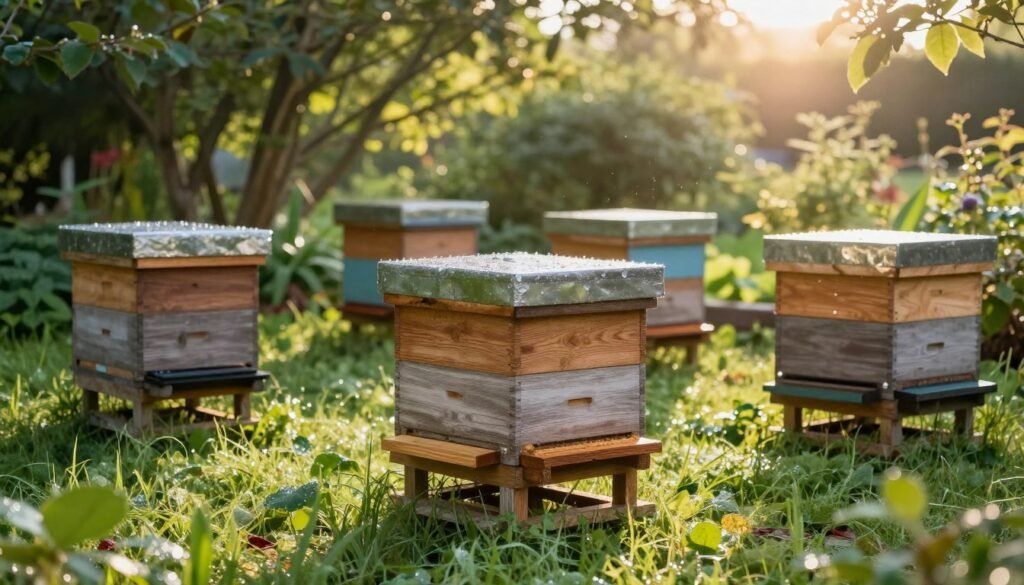
“Good airflow is the single most effective defense against rot and persistent damp in an apiary.”
- Open designs let air circulate freely, preventing trapped moisture.
- Durable materials reduce waste and long-term cost.
- Proper elevation protects bees and preserves honey equipment.
| Feature | Slatted Pallet | Treated Wood / Plastic |
|---|---|---|
| Airflow | Restricted (20–25 mm gaps) | Designed for circulation |
| Longevity | Low (rot risk) | High (years of service) |
| Environmental cost | Higher (frequent replacement) | Lower (durable materials) |
For practical options that balance durability and ventilation, review recommended best hive stand design choices before you upgrade your bases.
Structural Integrity and Material Durability
Materials that withstand damp soil and heavy loads make the difference between occasional fixes and decades of service. Choose components that resist rot and keep colonies level through the seasons.
Wood Rot Risks
Wood exposed to wet ground will break down fast. A simple board in contact with soil can rot within a year in damp climates.
Rot weakens legs and side supports and raises the risk of tipping when boxes are full of honey. Regular inspection and treatment slow decay but do not eliminate the problem.
Metal and Concrete Alternatives
Metal legs and concrete blocks offer long-term stability. Metal resists compression and concrete blocks create a rot-proof base that can last for years.
- Concrete blocks provide a durable, level foundation for hive stands.
- Metal components give superior load capacity for full hives exceeding 100 kg.
- Plastic parts resist moisture and avoid the wood rot cycle.
“Choosing durable materials prevents collapse and protects your bees during heavy seasons.”
For detailed setup options and technical bases, see a guide to a specialized hive base and practical apiary setup tips.
The Role of Hive Entrance Positioning
Setting the opening at the right height prevents weeds and debris from blocking bee movement and reduces stress on the colony.
Keep the entrance clear of vegetation. This lets workers enter and exit easily and helps foragers find the colony without confusion.
A proper hive stand elevates the entrance off the ground. That prevents grass, snow, or ice from blocking flights and cuts pest access to the lower board.
Positioning the entrance also affects ventilation. A well-placed opening aids airflow and waste removal, which supports brood health and reduces moisture near frames.
- Check the entrance angle after setting the base; uneven ground can tilt the opening.
- Keep access paths trimmed so returning bees have a clear flight corridor.
- Inspect the area regularly, especially before winter, to avoid snow or debris build-up.
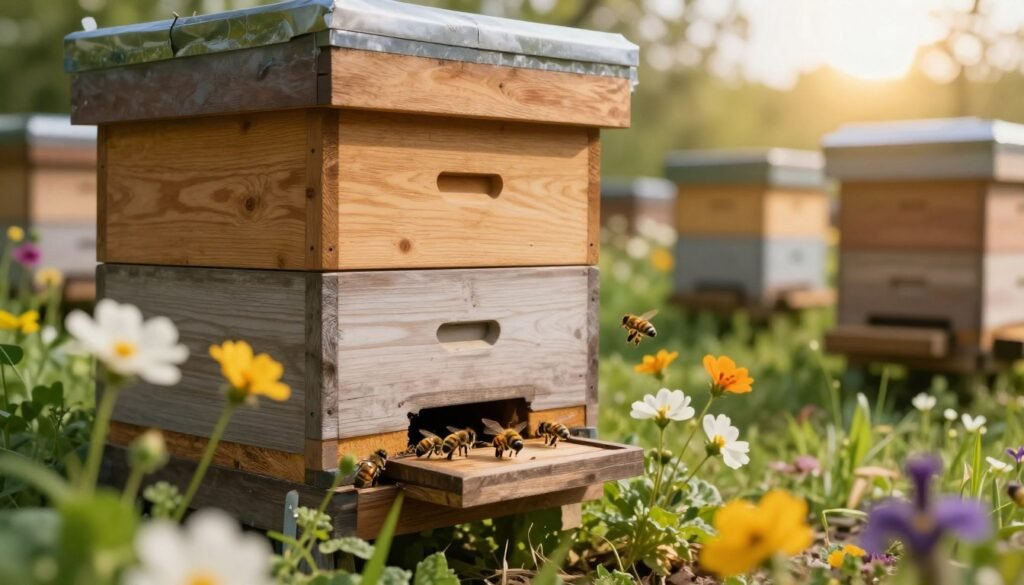
Choose durable commercial hive stands or proven DIY options that keep the entrance stable. For related gear and flow-control tools see a helpful pollen trap guide.
Stability Requirements for Heavy Colonies
Heavy, fully loaded colonies demand a foundation that will not shift under pressure. A full box with multiple honey supers can exceed 100 kg during peak season. That weight concentrates force low on legs and posts, so the base must resist tilt and sinking.
Design for lateral strength as well as vertical capacity. A wide base reduces the chance of toppling in gusts. Side-to-side straps add security and stop the domino effect where one falling hive knocks over its neighbor.
Managing Top-Heavy Supers
- Use adjustable legs: scaffold jacks (600 mm, rated 4 tonnes, ~£12) let you level uneven ground and raise height a couple inches for better stability.
- Wide supports: broader posts and blocks spread load and resist tipping.
- Workspace: allow space to set frames and boxes aside during inspections for a safer workflow.
| Issue | Recommendation | Benefit |
|---|---|---|
| Top-heavy boxes | Wide base + side straps | Prevents tipping in wind |
| Uneven ground | Adjustable scaffold jacks | Quick leveling; stable height |
| Heavy seasonal load | Sturdy posts and concrete blocks | Long-term support for productive colonies |
“A couple of inches of adjustment can make a big difference in stability.”
For a tested solution that balances durability and height, review the ultimate hive stand guide to refine your setup.
Challenges of Working on Uneven Ground
Uneven terrain turns routine apiary work into a balancing act for most beekeepers.
Keeping a hive level on sloped or rocky soil is hard. Unlevel bases make inspections harder and raise the risk of tipping when boxes are full of honey.
Reused pallets are especially troublesome on rough ground. They often need stones or wedges to stay horizontal. That extra fiddling adds time and risk during every visit.
For hillsides and rough plots, adjustable legs on commercial hive stands solve most problems. They let you raise and level each unit quickly and keep the entrance steady so the colony behaves normally.
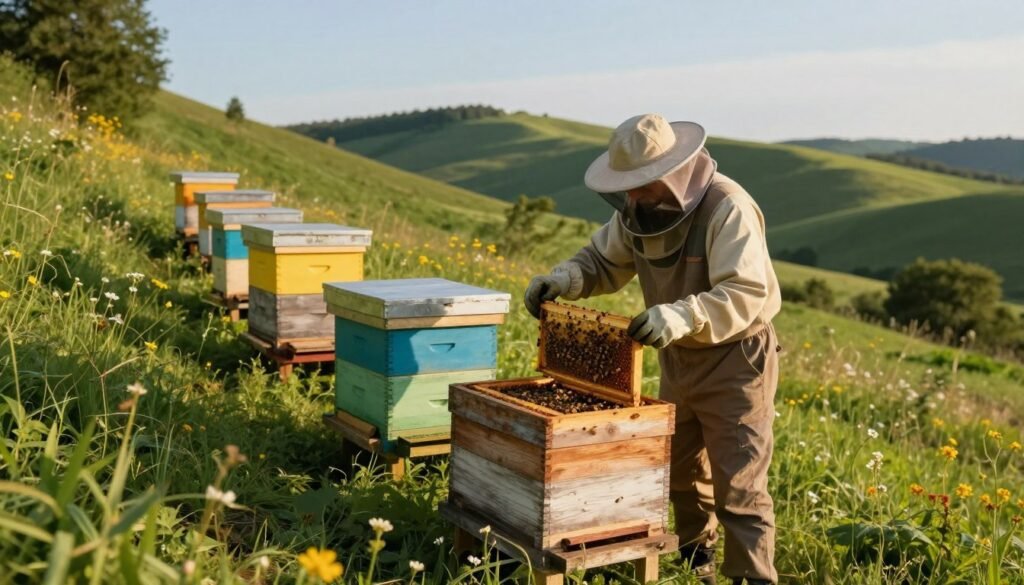
Site choice matters. Pick a spot that can bear the weight of full hives and allow safe access. If you must use a pallet on rough ground, plan to level it often and check load-bearing points.
“Proper site preparation — clearing, compacting, and leveling — prevents many common stability problems.”
- Uneven ground can tilt the entrance and disrupt bee traffic.
- Adjustable stands reduce repeated wedging and save time.
- Stability during inspections protects both bees and the beekeeper.
| Issue | Common fix | Benefit |
|---|---|---|
| Uneven soil | Adjustable legs on stands | Quick leveling; stable hives |
| Soft spots | Compact base or concrete block | Prevents sinking |
| Wedge-dependent pallets | Replace with purpose-built hive stands | Less maintenance; safer inspections |
For more on choosing a reliable support and the primary functions of a hive stand, review practical guidance before you site new colonies.
DIY Versus Commercial Stand Solutions
Whether you build with timber and blocks or buy a factory unit, your choice shapes daily work and long‑term cost. DIY bases using timber, concrete blocks, or reused boards can save money up front. They let people customize height and layout for small apiary plots.
Commercial options often beat makeshift builds for durability and ease of leveling. For example, Thorne’s ready product costs £92.50 while Abelo’s adjustable metal legs run about £125. These ready-made units reduce fiddling with wedges and repeated repairs year after year.
Many keepers bridge the gap by using metal posts and legs in a home build. That approach offers the load capacity needed for heavy boxes and multiple colonies, while keeping customization. Plastic parts and treated timber also extend service life compared with raw boards or simple blocks.
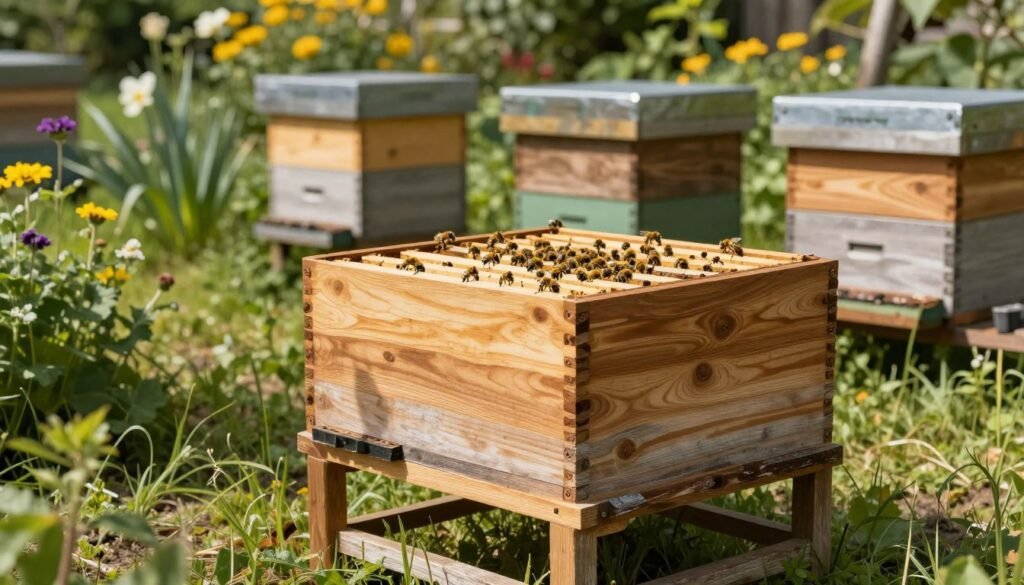
- Durability: Commercial stands resist rot and stay level longer.
- Cost vs value: Consider lifetime repairs when comparing initial cost.
- Custom builds: Metal posts and good fastenings support full hives safely.
“Investing in a quality base protects your bees and reduces strain during inspections.”
For ready solutions that save time, compare options and read about commercial hive stands before you decide.
The Necessity of Leveling Your Hives
A small tilt can make comb build at an angle, complicating inspections and frame removal. That slant forces bees to draw irregular frames and makes lifting a single frame risky.
Keeping each unit level helps bees draw straight, vertical frames. Straight frames speed checks and reduce damage to brood and honey comb.
A proper hive stand that allows fine adjustment prevents moisture pooling inside the bottom board. Moisture control keeps brood healthy and reduces rot in posts, legs, and timber over the year.
Use adjustable legs, scaffold jacks, or blocks to level even on uneven soil. A bit of time spent when you place one hive saves hours later during inspections and harvests.
- Better comb layout: frames stay vertical for easy removal.
- Improved airflow: the hive entrance stays positioned for proper ventilation.
- Stability: leveled boxes reduce tipping risk for heavy boxes of honey.
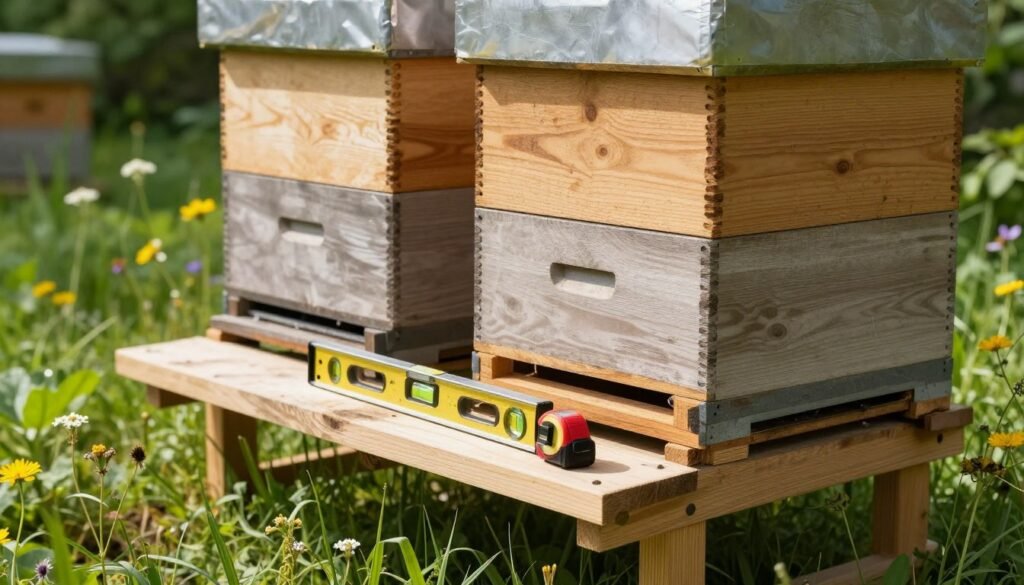
“A perfectly level base is one of the simplest ways to improve colony health and reduce maintenance.”
Protecting Your Apiary from Pests and Rot
Raising colonies off wet soil cuts pest access and slows the wood decay that ruins bases.
Elevating your hives on a sturdy stand is the most effective defence against ground-dwelling insects and moisture-related rot. A raised base keeps the hive entrance clear of soil and prevents bees from getting trapped under the bottom board.
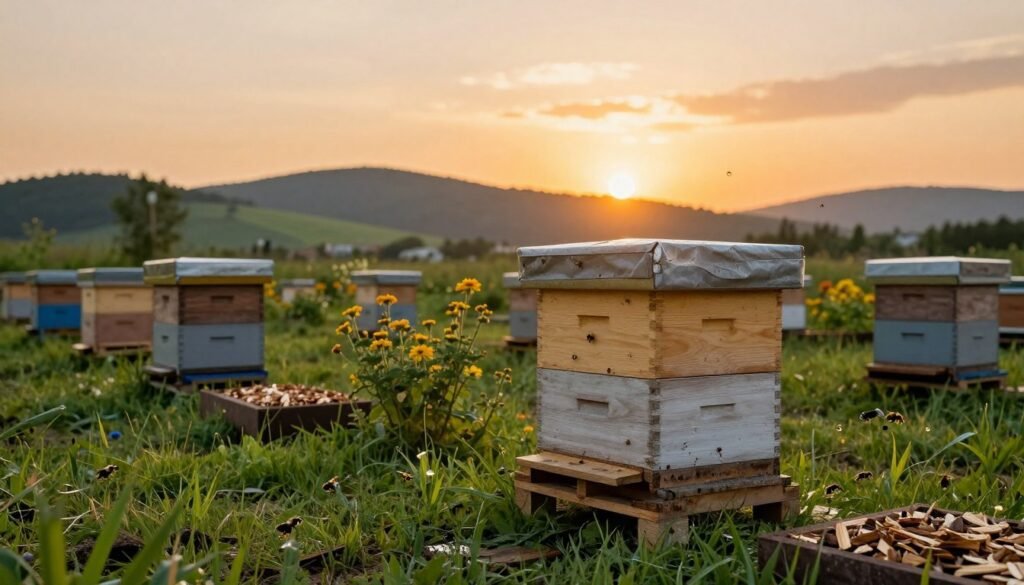
Use rot-resistant materials like plastic or treated wood for legs and side supports. These materials last through a hard year and reduce replacement cycles.
- Inspect supports regularly to spot early decay or pest signs.
- Keep the area around hives clean to deter rodents and beetles.
- Secure boxes and add side straps if needed to stop tipping or skids.
Professional bases create a barrier between the colony and the ground, protecting frames and honey from damp. Investing in quality supports keeps your apiary healthier and lowers long-term repair costs.
“Proactive protection of your apiary starts with choosing the right support.”
Long Term Maintenance and Replacement Costs
Ignoring small cracks in legs or posts often turns a minor repair into a full replacement. A little attention each season prevents rot and costly downtime during harvest.
Regular checks of connection points, side supports, and feet stop moisture from working its way into timber and metal. When you spot loose bolts or soft wood, fix them right away to avoid bigger issues.
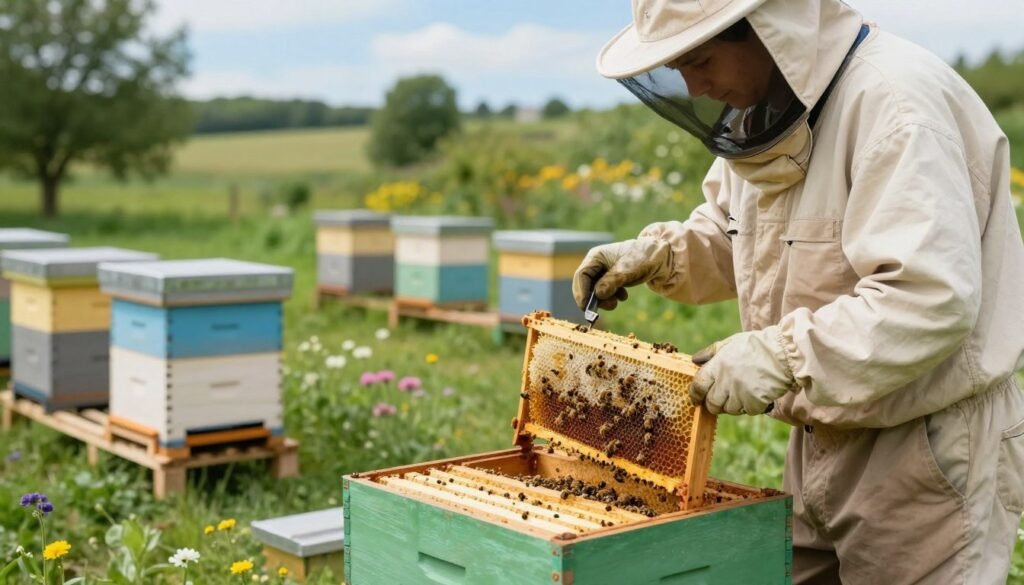
Choosing durable materials lowers the total cost over years. A quality stand may cost more up front, but it often beats replacing rotted boards every couple of years. Keeping hives level also protects brood boxes and frames so colonies stay productive.
- Inspect legs and side supports at least once a year.
- Re-seal exposed wood to cut moisture damage.
- Tighten posts and fastenings before heavy honey flows.
- Replace worn feet or pads to prevent sinking on soft ground.
“Planned maintenance keeps colonies safe and reduces unexpected replacement costs.”
Conclusion
Conclusion
Making the right choice for your apiary base reduces strain and protects colonies. A smart selection improves workflow, extends equipment life, and prevents chronic pain in your back.
HONESTBEE offers professional-grade solutions sized for commercial demands and global distribution. Their products focus on ergonomic design and long-term durability for busy operations.
Investing in a quality hive stand keeps boxes level, dry, and secure. That one decision pays back in easier inspections, fewer repairs, and healthier colonies.
Evaluate your current supports this season and upgrade where needed to protect your investment and preserve your ability to care for bees comfortably for years to come.
FAQ
Which support option is best for small-scale beekeepers?
For one or a couple of colonies, a purpose-built raised stand often works best. It keeps the brood boxes off the ground, improves airflow, and makes lifting frames easier on the back and knees. A low-cost stack of timber or concrete blocks can work short-term, but dedicated stands offer better long-term ergonomics and moisture control.
Do pallets provide adequate airflow and moisture protection?
Wooden pallets give some elevation and ventilation but can trap moisture and rot over a few years, especially on wet sites. Elevation alone isn’t enough; add a waterproof base or plastic feet to reduce direct ground contact and extend service life.
How does support height affect beekeeper comfort?
Higher supports reduce bending and strain when removing heavy honey supers and frames. Aim for a height that brings the top bars close to waist level. Adjustable or legged stands help accommodate different beekeeper heights and reduce injury risk over multiple seasons.
Are metal or concrete options worth the extra cost?
Yes. Galvanized steel and poured concrete resist rot, last longer, and provide superior stability for heavy colonies. They cost more up front but lower replacement and maintenance expenses over several years, making them cost-effective for larger apiaries.
Can improper entrance positioning cause problems?
Yes. Entrances need clear flight paths and should face away from prevailing wind and heavy foot traffic. Low or blocked openings increase moisture buildup and robbing risk. Slight elevation and a landing board help foragers and improve hive hygiene.
How do I stabilize boxes when supers are full of honey?
Wide, solid bases and level surfaces prevent tipping. Use stands with a larger footprint or add anchoring posts on windy sites. For tall stacks, install off-center supports or straps to reduce sway when lifting heavy frames.
What are the risks of placing colonies directly on the ground?
Ground placement invites moisture, mold, and pests like skunks and small rodents. It also accelerates wood rot and makes inspections harder. Even simple elevation—blocks, bricks, or a riser—reduces these risks significantly.
Is a DIY stand acceptable compared to commercial designs?
A well-built DIY stand can perform as well as commercial units if it is level, durable, and raised enough for ventilation. Use treated timber or metal legs, ensure proper drainage, and follow ergonomic principles to avoid future lifting strain.
How important is leveling the colony base?
Extremely important. Level platforms ensure frames hang evenly, reduce comb deformation, and help bees manage temperature and honey flow. Recheck level after heavy rain, frost heave, or ground settling.
What maintenance extends the lifespan of supports?
Regular inspections for rot, rust, and structural looseness are key. Reapply protective coatings to wood, replace degraded blocks, and tighten fasteners. Rotate or replace cheap timbers every few years to avoid sudden failures.
How do stands influence pest control and rot prevention?
Properly elevated supports deter ground pests and reduce moisture contact that leads to rot. Metal or plastic feet, sealed wooden platforms, and cleared vegetation under the base all help keep colonies dry and less attractive to pests.
What is the total cost consideration over several years?
Consider initial purchase, expected lifespan, repair frequency, and labor. Low-cost options may need replacing every 2–4 years. Durable metal or concrete can last a decade or more, lowering lifetime cost per colony despite higher upfront expense.
How do I handle uneven terrain in an apiary?
Use adjustable leg stands, poured pads, or stacked pavers to create level, stable platforms. On slopes, orient entrances to provide safe flight paths and prevent water pooling under boxes.
Will using recycled wood or plastic affect colony health?
Recycled plastic resists moisture and pests well and is low maintenance. Reclaimed wood can be fine if dry and untreated; avoid wood with chemical residues. Ensure materials allow venting and do not trap condensation inside boxes.