Good hygiene stops unseen threats. Effective management keeps colonies healthy and lowers the risk of disease spread. The National Bee Unit stresses that even healthy-looking bees can carry pathogens, so steady attention matters.
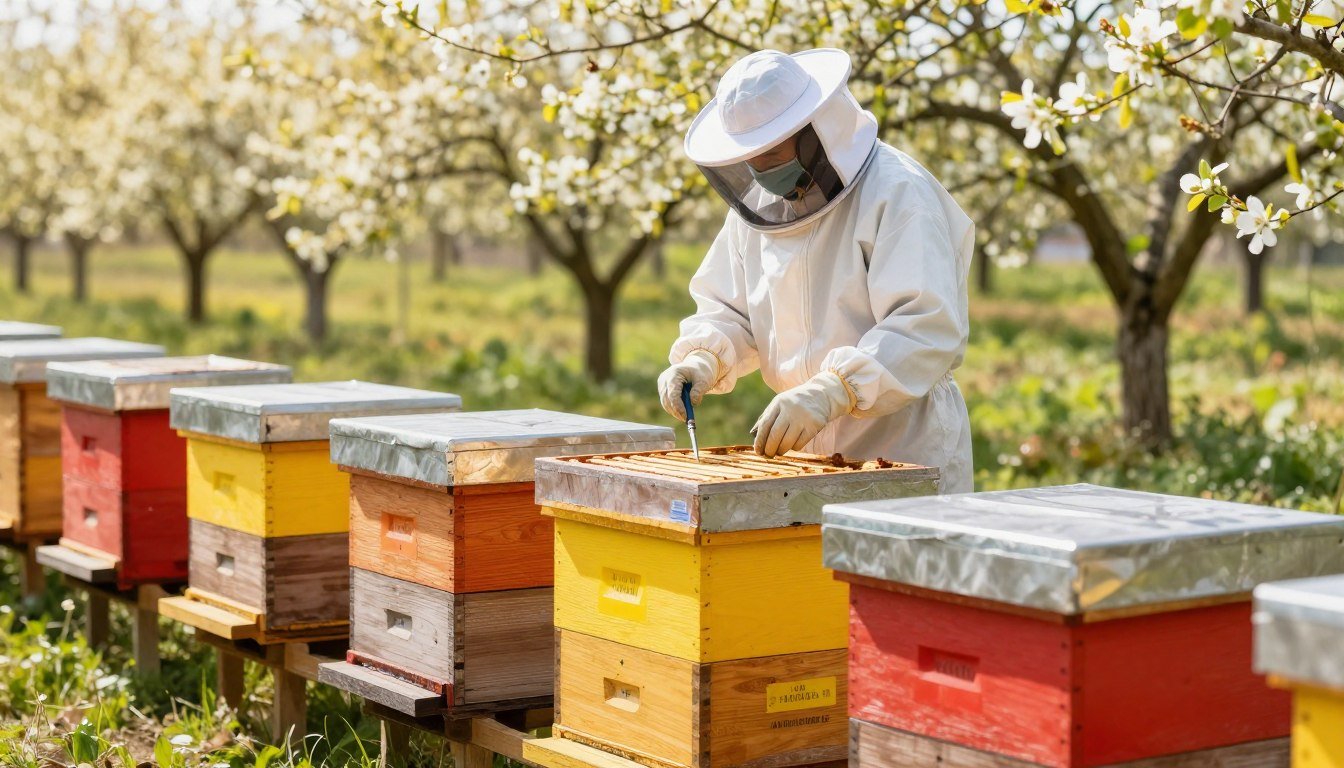
Practical steps include using dedicated equipment for each colony, marking top-bars and supers with a colony number, and keeping boxes, frames, and comb separate. Keep a bucket with 150 ml of 4.5% sodium hypochlorite plus 1 kg soda crystals for routine washing of gloves and tools.
New swarms should be hived on clean foundation and kept under quarantine. After 24 hours they may be fed, then monitored through two brood cycles before joining established apiaries. Record checks for any signs of brood or queen problems.
Key Takeaways
- Use labeled equipment and dedicated tools to limit cross-contamination.
- Maintain a cleaning solution of sodium hypochlorite and soda crystals for washing.
- Monitor brood and queen health during quarantine and keep records.
- Clean propolis and wax from boxes, frames, and the protective suit regularly.
- Follow NBU guidance; see the detailed fact sheet for quarantine and hygiene practices: NBU quarantine guidance.
The Importance of Biosecurity in Your Apiary
Strong biosecurity stops small problems becoming apiary-wide crises. Good placement and routine actions cut the chance that a single infected hive will spread disease across boxes and colonies.
Position entrances so they face different directions to reduce drifting. Reduce entrances after the main honey flow and seal any dead colony immediately. These steps limit robbing, a major route for pathogens between colonies.
- Clean tools: wash hive tools in a soda crystals solution (1 kg soda crystals to 4.5 liters water) to dissolve propolis and kill pathogens.
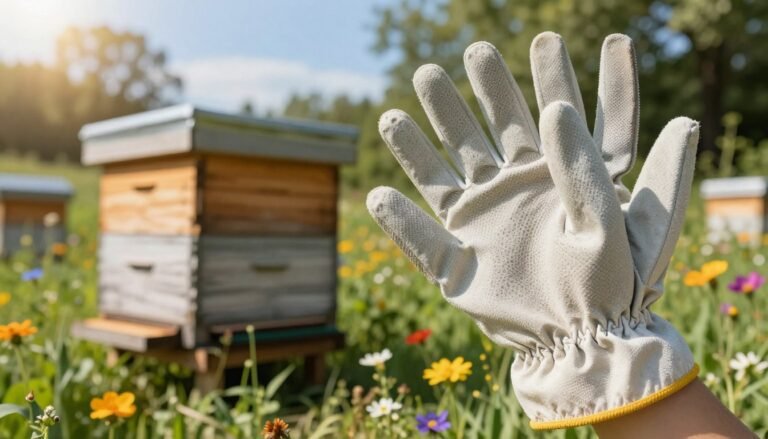
- Barrier practices: use disposable or washing-up gloves rather than leather for easier decontamination.
- Smoker care: barrel heat kills many pathogens; scrub bellows with soda solution.
Launder suits regularly to remove sting pheromones that attract more defensive behavior during inspections.
For detailed protocols and robbing prevention, see the NBU fact sheet and an early-robbing sign guide: biosecurity beeyard guidance and robber behavior signs.
How to Label Quarantined Hives in an Apiary
Clear numbering and strict movement rules are the backbone of good quarantine practices. A simple, consistent system makes it easy for beekeepers to track equipment and spot problems early.
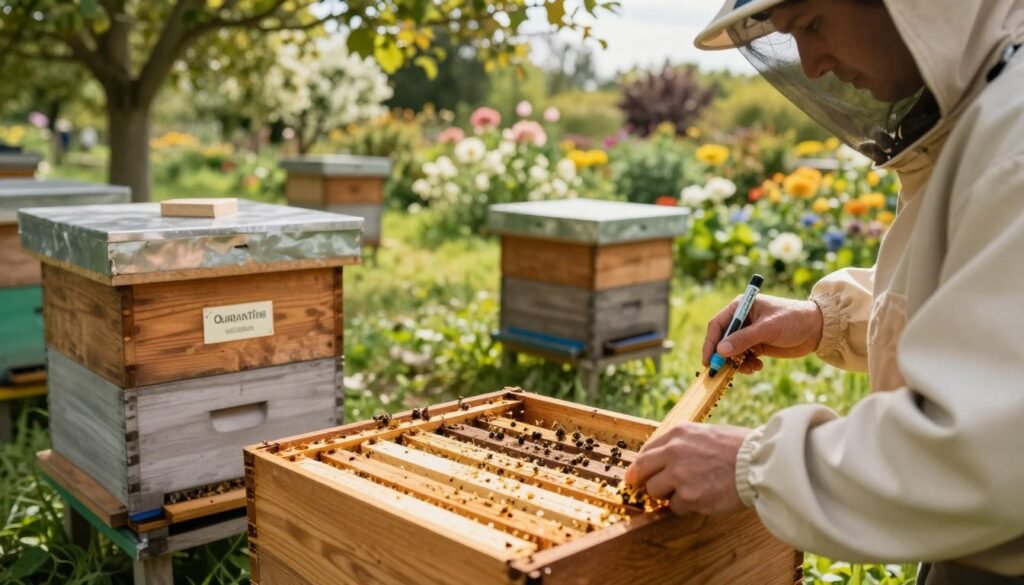
Marking Frames and Supers
Mark top-bars and supers with the colony number using a permanent marker, as the NBU recommends. Keep super comb assigned to one colony only to limit spread of disease.
Record every frame moved. If eggs or brood are shifted to confirm a queen, note date and origin. That log reduces risk if signs of infection appear later.
Managing Colony Movement
Unknown-source swarms belong at a separate quarantine apiaries and must be hived on new foundation in clean boxes. Allow colonies to pass through two brood cycles (about six weeks) before joining established apiaries.
“Restricting equipment to a single site is a proven measure to reduce the occurrence and spread of disease.”
- Avoid moving brood combs between colonies — it carries high risk.
- If foulbrood signs appear, place the site under standstill and contact the NBU immediately.
For full protocol details, see this detailed quarantine guide and the seasonal checklist for routine measures.
Essential Tools for Effective Hive Management
Clean, reliable tools cut the chance that pathogens move between colonies. This reduces spread of disease and keeps bees productive. Keep a simple kit for routine washing and repairs.
Cleaning and Disinfecting Equipment
Follow proven mixes. NBU inspectors use 150 ml of 4.5% sodium hypochlorite plus 1 kg soda crystals in 4.5 liters of water for heavy cleaning. Use eye protection and gloves when handling chemicals.
Scrape propolis and wax from frames and boxes before disinfection. Wooden boxes can be scorched until uniformly dark brown. Submerge polystyrene and plastic parts for 20 minutes in 0.5% sodium hypochlorite.
- Smoker care: scrub bellows with washing soda and sterilize the barrel with heat.
- Old comb: replace with new foundation to cut disease incidence in brood and super comb.
- Honey supers: never place directly on the ground to avoid soil-borne contamination.
| Item | Method | Contact Time / Temp | Safety Notes |
|---|---|---|---|
| Wooden boxes | Scorch interior with blowtorch | Uniform dark brown | Wear gloves and eye protection |
| Plastic / polystyrene | 0.5% sodium hypochlorite soak | 20 minutes | Rinse with clean water |
| Frames & comb | Scrape then disinfect; replace old comb | As needed; replace brood comb regularly | Limits disease spread in colonies |
| Smoker | Wash bellows, heat barrel | After heavy use | Prevents tool-borne pathogens |
For more on disease control, consult a detailed disease management guide. If boxes need repair, see this repair and maintenance guide.
Regulatory Standards and Signage Requirements
Clear signs and accurate records are simple steps that protect neighbors and support inspectors. Durable markers help trace equipment and ownership when colonies move sites. Signs must be readable and remain legible in poor weather.
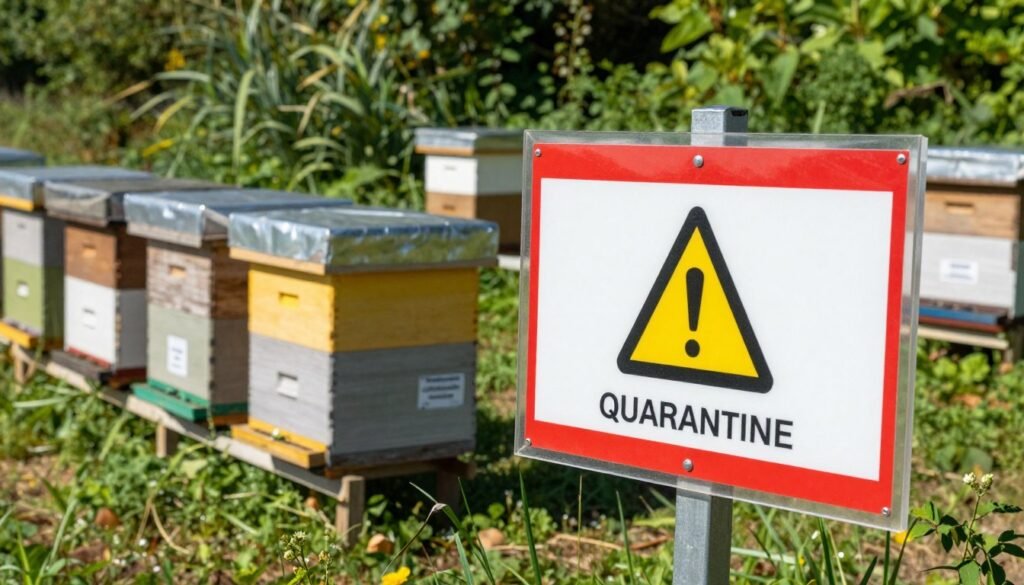
Weatherproof Signage Specifications
Required dimensions: at least 15 cm by 10 cm with 2‑inch dark‑on‑light lettering.
Include owner name, address, and telephone. Use corflute panels with four eyelets for gates or A4 panels for stake mounting to ensure long life.
Placement Strategies for Inspections
- Keep hives at least 20 feet from homes and 50 feet from streets for safety and zoning compliance.
- Carry signage when moving colonies and reposition it at the new site for traceability.
- Install flyway barriers and a water source within 15 feet to reduce nuisance and local complaints.
Maintaining Accurate Records
Log feeding supplements, treatments, and quarantine status. Accurate notes support pest monitoring and reduce spread disease risk. Good records also help new beekeepers learn sound practices; see mentoring resources for guidance.
Conclusion
Consistent cleaning, careful movement, and tight records protect against disease spread. Maintain good washing routines, use gloves, and keep equipment dedicated to individual colonies to cut risk.
The NBU offers clear guidance on using soda crystals and other methods for removing propolis and wax. Replace old comb with new foundation when possible to reduce pathogen load.
Marking each hive and frame keeps equipment with its colony and supports barrier practices. Watch brood and look for early signs; healthy-looking bees can still carry infection.
Follow signage and placement rules for a safer apiary, better honey yields, and fewer complaints. Small, steady measures protect your bees and neighbors over the long term.
FAQ
What are the first steps after identifying a disease risk in a colony?
Isolate the affected unit immediately by moving it to a separate, clearly marked area of the yard or placing a temporary barrier around it. Wear disposable gloves, use dedicated tools, and close the entrance to reduce robbing. Note the colony number and condition on site records and warn nearby beekeepers if there’s a contagious outbreak.
Which markings work best for high-risk colonies and equipment?
Use weatherproof, UV-resistant tags or colored numbered metal plates on hive boxes and frames. Apply bright, durable paint or heavy-duty zip-tie tags to supers and brood boxes. Mark combs with non-toxic, food-grade wax crayon on the top bar or an edge of the frame so the identifier stays visible after inspections.
How should frames and supers be handled to prevent spread?
Keep suspect combs separate and avoid mixing them with healthy foundation. Place old comb in a labeled quarantine container for disposal or sterilization. When moving boxes, use clean gloves and disinfectant between colonies. Replace high-risk foundation with new plastic foundation or certified sterilized wax where appropriate.
What tools and products are essential for effective containment?
Carry a disinfectant approved for beekeeping gear, a brush, spare gloves, a bee suit, zip ties, weatherproof tags, and a portable sprayer. Include a dedicated bag for contaminated equipment. Use bleach solutions or commercial veterinary disinfectants following manufacturer instructions for contact time and dilution.
How do I record and track quarantined colonies for inspections?
Maintain a digital log and a paper backup showing colony ID, symptoms, dates, actions taken, and movement history. Use a consistent numbering system and timestamped photos. Share records with state apiculture inspectors when requested and update entries after each inspection or treatment.
Where should signs be placed for clear communication and safety?
Post durable signage at the apiary entrance and at the specific stand location. Signs should note the restriction, contact information, and any access limits. Place smaller tags on affected boxes and on the hive stand to prevent accidental handling during routine work.
Are there standards for weatherproof signage and materials?
Yes. Choose PVC, aluminum, or laminated plastic signs with UV-resistant ink. Use stainless steel fasteners or heavy-duty zip-ties to secure signs. Ensure labels remain legible under sun, rain, and winter temperatures to comply with inspection requirements.
What movement controls reduce risk of spreading pathogens between yards?
Limit transport of colonies, equipment, and honey from quarantine areas. If movement is necessary, decontaminate gear, replace or sterilize comb, and obtain inspection clearance. Avoid sharing tools or frames with other beekeepers until a clean certification is issued.
When should old comb be removed or replaced?
Remove heavily damaged, disease-suspect, or very old comb that shows chronic brood loss or foul odors. Replace with new foundation or manufactured foundation after thorough cleaning. Dispose of contaminated wax following local regulations or render and sterilize under high heat when permitted.
How can beekeepers reduce robbing and minimize spread during a quarantine?
Reduce hive entrances, place entrance reducers or mesh, and feed with internal feeders to avoid spilling syrup. Keep corpses and exposed honey covered. Use screened bottom boards temporarily if necessary to lessen contact and make hives less attractive to robbers.
What personal protective practices help prevent contamination during inspections?
Wear a clean bee suit and dedicated gloves for quarantined colonies. Change or disinfect gloves and tools after handling. Avoid working across multiple yards in the same day; if unavoidable, clean equipment thoroughly and start with healthy colonies before visiting suspect ones.
Who enforces signage and record standards, and when should inspectors be contacted?
State or provincial apiculture authorities and veterinary services enforce standards. Contact them immediately upon suspecting regulated diseases like American foulbrood or exotic pests. Keep records ready and follow their guidance on quarantine duration and required treatments.
What are recommended disposal or sterilization options for contaminated comb and equipment?
Burn or incinerate heavily contaminated comb where local law permits. For reusable gear, use high-heat treatment, steam, or commercial sterilizers. Clean hive tools with hot water and detergent, then apply an approved disinfectant. Follow local environmental rules for disposal of wax and honey.
How should queen and brood movements be managed during control measures?
Avoid moving queens or brood frames from suspect colonies. If requeening is needed, obtain a queen from a certified clean source and place her only after a full clearance. Mark queen cages and brood frames clearly and keep them separated until tests confirm safety.
What signs indicate a colony may need immediate quarantine measures?
Look for spotty brood patterns, foul odors, sunken and perforated cappings, excessive dead bees, or abnormal behavior. Sudden colony collapse or visible lesions on larvae are urgent indicators. Take photos, note symptoms, and isolate the colony while notifying authorities.