Reviewed by Thomas B. · How we review
A heat emergency in the apiary is different from ordinary summer heat. It is the forecast that shows several days well above normal, the afternoon you find a hive with bees covering the whole front of the box by mid-morning, or the moment you notice honey running out of an entrance. In those situations there is no time to rethink hive placement or rebuild equipment. What helps is a short list of steps that support the colony’s own cooling system without disrupting it.
This guide is the short-notice, emergency-response version. For the season-long approach (site selection, hive color, ventilation hardware and entrance orientation), see the broader guide on protecting beehives from extreme heat.
Key Takeaways
- Water comes first. Bees cool the brood nest by evaporating water, and a colony without a nearby source cannot keep up.
- Shade the lid and the west side of the hive with something that leaves an air gap. Never wrap or enclose the hive.
- Add ventilation only to strong colonies, and only in ways that don’t open the door to robbers.
- Don’t open, move, or spray water into a hive during the hottest part of the day.
- If comb collapses, wait until the cool of evening or early morning, then clean up quickly and protect the colony from robbing.
Is It Normal Heat or a Heat Emergency?
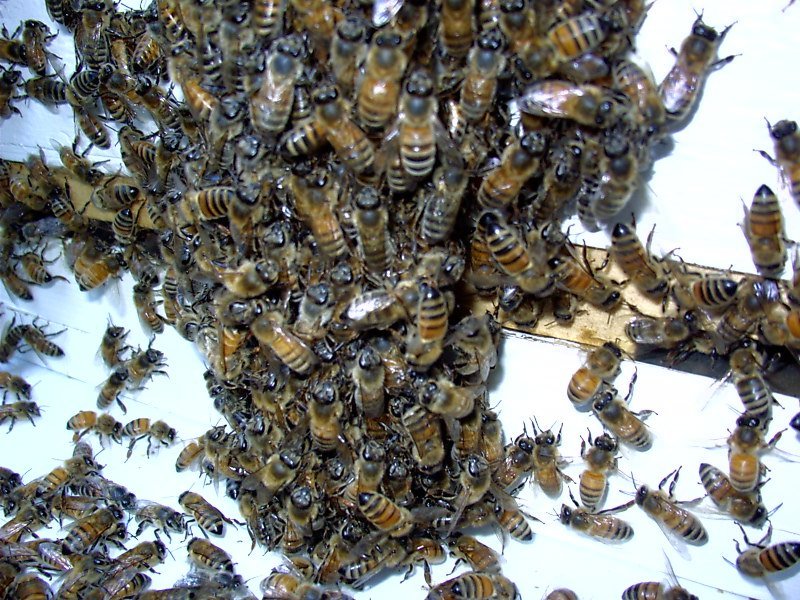
Honey bees hold the brood nest in a narrow band, roughly 93-95°F (34-35°C). When outside air approaches or passes that range, the colony shifts work away from foraging and toward cooling: fanning at the entrance, carrying water, and moving bees out of the box to reduce crowding. Some of this is routine on any hot day. Late-afternoon bearding on a strong colony, for example, usually just means the house is full and warm. The guide to bearding in hot climates explains how to read it.
Treat the situation as an emergency when you see signs like these:
| What you see | What it likely means | Immediate response |
|---|---|---|
| Heavy bearding that starts in the morning and covers the front of the hive | The colony is struggling to shed heat even before peak temperatures | Water, shade and (for strong colonies) extra ventilation now |
| Almost no foragers flying at midday, but many bees at the waterer | Foraging has been sacrificed for cooling | Keep the water source full and add shade |
| Honey or melted wax dripping from the entrance, or a strong honey smell | Comb inside has softened or collapsed | Do not open yet; reduce robbing risk and plan an evening or dawn clean-up |
| Dead or crawling bees in front of the hive during a heat spike | Heat stress, dehydration, or robbing starting on a weakened colony | Check water, watch for robbing, reduce the entrance on weak colonies |
For a fuller list of behavioral and brood-level symptoms, see Signs of Heat Stress in Honeybees.
Emergency Cooling Steps That Are Safe for Bees
Work through these in order. The first two do most of the good, and none of them require opening the hive.
1. Put water within a short flight
Water is the colony’s coolant. Foragers bring it back in their crops, spread it in thin films over comb and brood, and fanning bees move air across it so it evaporates. In a study of heat-stressed colonies, Ostwald, Smith and Seeley (2016) found that when water was withheld, brood nest temperatures climbed to 43-44°C despite fanning and bees leaving the nest. With water available, colonies held the brood nest down.
Set a shallow container close to the hives, with floating wood, cork, or stones so bees can land and drink without drowning. The University of Georgia’s Honey Bees and Beekeeping bulletin recommends exactly this kind of container with floating material. During a heat wave, check and refill it at least daily, and more often if it’s small. If your bees already use a water source, keep that one full rather than moving it, since bees keep returning to sites they know. A permanent setup is covered in How to Build a Bee Waterer.
2. Shade the lid and the afternoon side
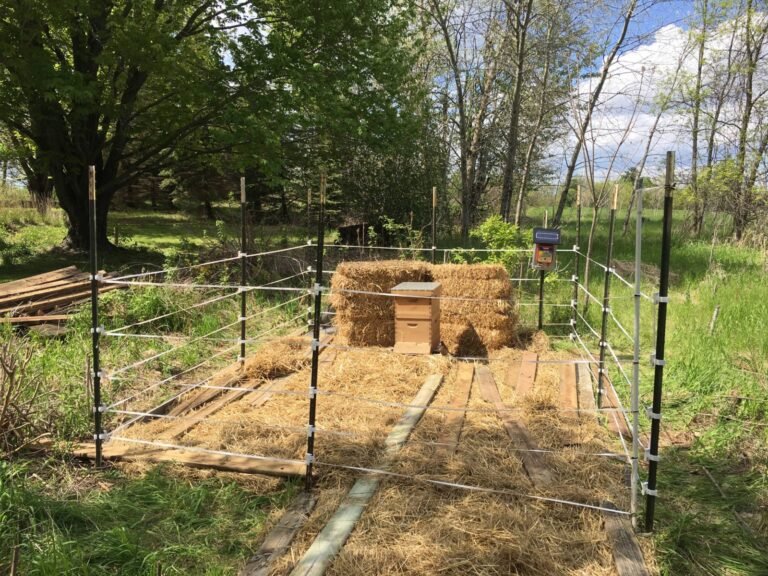
Most of the extra heat load on a hive in a heat wave is direct sun on the outer cover and the west-facing side. Temporary shade can be as simple as:
- A board or sheet of corrugated plastic laid over the outer cover on spacers, so there is an air gap between it and the lid.
- Shade cloth tied between two stakes or to a fence on the west or southwest side of the hive.
- A patio umbrella or pop-up canopy placed so the shade falls on the hive during the afternoon.
Keep the entrance, the flight path and the sides open. Shade should block sun, not airflow. Weigh down or anchor anything you add, because summer storms often follow heat waves.
3. Add ventilation only where the colony can defend it
For a strong, populous colony, remove the entrance reducer and create a small upper exit so hot air can leave at the top. You can prop the outer cover slightly on the inner cover, use an inner cover with a notch, or add a vented shim. If the hive has a screened bottom board, pull out the sticky board or tray. For nucs, new packages and weak colonies, keep openings modest. They have fewer bees to guard extra gaps, and heat waves often coincide with a nectar dearth when robbing and yellowjacket pressure rise.
4. Leave the hive closed during the heat of the day
Opening a hive in the afternoon of a heat wave does more harm than good. Warm comb is soft and heavy with honey, so frames can tear or break when lifted, and you disrupt the air currents the bees have set up. If you must look inside, do it at first light when the wax is firm. Don’t move hives during a heat wave either; confined bees in a closed box overheat very quickly.
5. Remove anything that traps heat
Take off leftover winter wraps or foam insulation, and don’t add new supers of foundation for the bees to draw during the hottest days. A light-colored or shaded outer cover helps more than anything placed inside the hive.
What Not to Do
- Don’t mist or hose water into the entrance or onto frames. It wets and chills bees, can drown bees on the bottom board, and raises humidity inside the hive, which makes evaporative cooling less effective. Give bees water outside and let them place it where it’s needed.
- Don’t point a fan into the entrance. Bees fan in a coordinated direction to pull air through the hive, and blowing air in against them works against that pattern.
- Don’t seal or wrap the hive in tarps, blankets or anything else that touches the box. Wrapped hives hold heat.
- Don’t open every hive fully. Maximum ventilation on a weak colony trades heat stress for a robbing problem.
Some beekeepers lay a damp cloth or burlap on top of a metal outer cover during extreme afternoons. If you do this, keep it on top of the lid only, never inside the hive or over the entrance.
If Comb Collapses
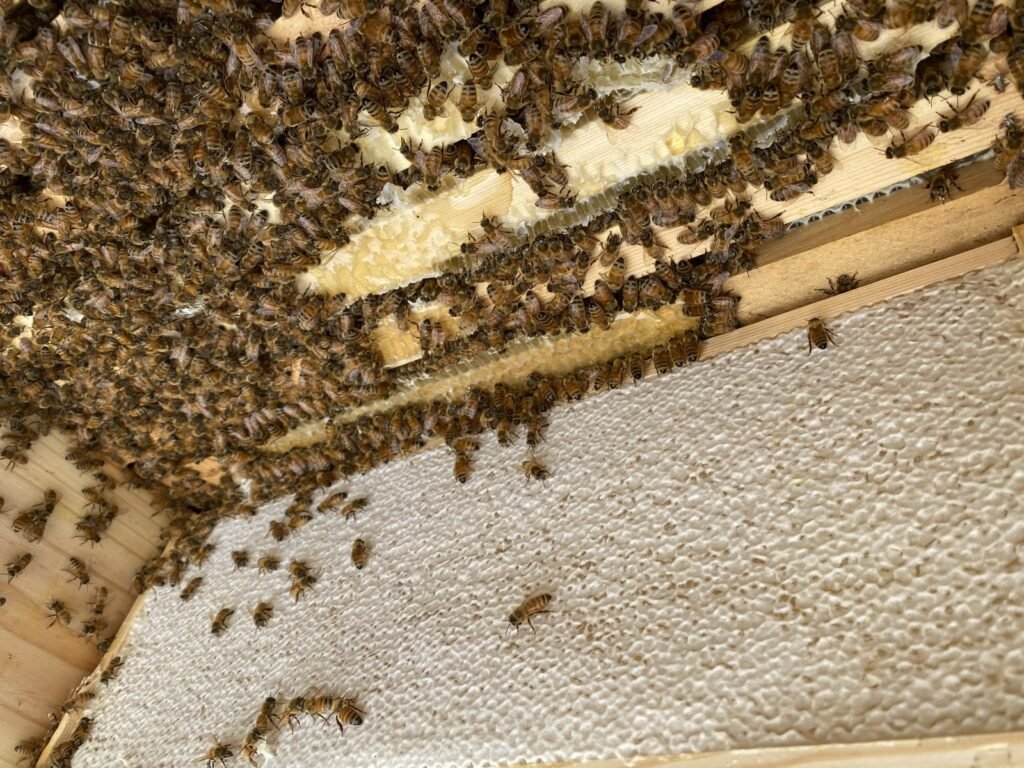
Signs of collapse include honey seeping from the entrance, bees crowding and drinking at spilled honey, and sometimes robbing that starts within the hour. Resist the urge to open the hive while it’s still hot, because the remaining comb is just as soft.
- Reduce the entrance right away so the weakened colony can defend itself from robbers drawn by the smell of honey.
- Wait until evening or early the next morning, when the wax has firmed up.
- Remove collapsed honey comb and wipe or scrape honey from the bottom board, where it can drown bees and attract robbing and small hive beetles.
- Brood comb that is still intact can be saved by trimming it to fit an empty frame and holding it in place with rubber bands or string. The bees will attach it and chew away the bands.
- Check for the queen or fresh eggs before closing up, and look again in about a week.
New, pale comb and foundationless comb are weaker than older brood comb, which is reinforced by layers of cocoons, so recently drawn frames and top-bar combs are the most vulnerable. See Maintaining Comb Integrity During Hive Inspections for handling tips.
After the Heat Breaks
Once temperatures return to normal, do a calm inspection in the morning within a few days. Check for eggs and young brood, look at the brood pattern (a spotty patch can appear where brood overheated), confirm the colony still has stores, and look for damaged comb you missed. Watch entrances for a week or so for robbing, especially if there was a honey spill, and put entrance reducers back on weaker colonies.
Leave the waterer in place. And if a hive needed emergency shade this summer, it will need it next summer too. A permanent shade structure is covered in Shade Structures for Beehives: Benefits for Climate Protection.
Conclusion
In a heat emergency, the most effective help for a colony is simple: keep water close and full, shade the lid and afternoon side without enclosing the hive, open ventilation on strong colonies, and stay out of the hive until it’s cool. Skip anything that puts water or air directly into the box. If comb does collapse, clean up in the cool of the morning and guard the colony against robbing. Then use what you learned to plan permanent shade and water before the next heat wave arrives.
FAQ
What is the first thing to do for a beehive during a heat wave?
Make sure there is a water source within a short flight of the hive and keep it full. Bees cool the brood nest by evaporating water, and research on heat-stressed colonies shows they cannot hold brood temperatures down without it. After water, add shade over the lid and the west side of the hive.
Should I spray or mist water on my bees to cool them?
No. Spraying water into the entrance or onto frames wets and chills bees, can drown them on the bottom board, and raises humidity inside the hive, which reduces evaporative cooling. Provide water outside the hive and let the bees carry it in.
Is it safe to inspect a hive during extreme heat?
Avoid it. Comb is soft in the afternoon heat and can tear or collapse when frames are lifted, and opening the hive disrupts the airflow the bees have set up. If an inspection is necessary, do it at first light when the wax is firm.
How can I tell if comb has collapsed inside the hive?
Look for honey or wax seeping from the entrance, a strong smell of honey, bees crowding around spilled honey, and sudden robbing activity. Reduce the entrance, wait until the evening or early morning, then open the hive to remove collapsed comb and clean the bottom board.
Should I open up all entrances and vents during a heat emergency?
Only on strong colonies. Removing the entrance reducer and adding a small upper exit helps large colonies vent heat, but weak colonies, nucs and new packages may not be able to defend extra openings from robbers and wasps, which are common during summer dearths.