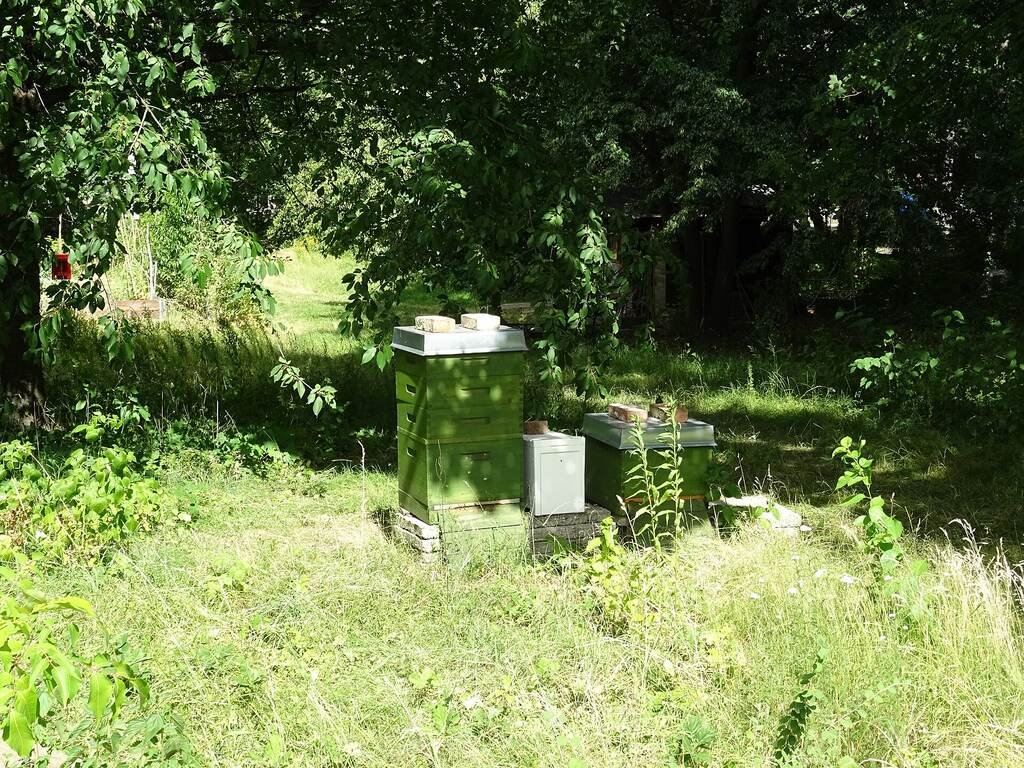
A beehive sitting in open ground takes the full force of the afternoon sun on its lid and west side. In hot regions, that radiant heat load is one of the main reasons colonies spend summer afternoons fanning and hauling water instead of foraging. A shade structure, whether a tree, a strip of shade cloth or a simple lean-to, is one of the few changes that keeps working every hot day without the beekeeper having to do anything.
This guide is about the structures themselves: what types work, how to build and position them, and when shade becomes a problem rather than a benefit. For the wider set of heat strategies (water, ventilation, hive color and entrance orientation), see Protecting Beehives from Extreme Heat.
Key Takeaways
- Afternoon shade with morning sun is the usual goal in hot climates. Deep, all-day shade brings its own problems.
- Good shade structures block sun from above and from the west while leaving the hive’s sides, entrance and flight path open to moving air.
- Shade cloth frames, lid-top shade boards, open-sided lean-tos and deciduous trees all work; each has different costs and trade-offs.
- Small hive beetles do better in shaded, damp sites, so in beetle country a bright, well-drained site with only afternoon shade is the safer compromise.
- In cool northern climates, extra shade is often unnecessary and full sun is preferred.
What Shade Actually Does for a Hive
Honey bees hold their brood nest within a narrow temperature range, roughly 93-95°F (34-35°C). On a hot day the colony has to get rid of both the heat produced by the bees themselves and the heat soaking in through the walls and lid. Shade doesn’t lower the air temperature much, but it removes the direct solar heating of the box, which is often what pushes a colony from managing comfortably to struggling. The bees then need fewer workers on fanning and water duty and can keep more of the force foraging.
Shade is also about protecting the beekeeper’s equipment. Wax softens as it heats, and a heavy frame of honey in a sun-baked box is more likely to slump than the same frame in a shaded one.
The Trade-Off: Afternoon Shade vs Full Sun
Recommendations on hive placement differ, and the differences are mostly about climate and pests. The University of Georgia’s Honey Bees and Beekeeping bulletin advises choosing a site that is sheltered from wind and partially shaded. Mississippi State University Extension’s small hive beetle publication, on the other hand, lists “do not place hives in deep shade” among its beetle-management rules and describes full sunshine as ideal. Wild swarms, left to choose for themselves, often pick shaded cavities, as Honey Bee Suite points out, but they aren’t dealing with a beekeeper’s pest-control priorities.
These positions fit together once you separate afternoon shade from all-day shade:
- Morning sun warms the hive early, gets foragers flying and helps dry out dew and moisture.
- Afternoon shade cuts the heat load during the hottest hours, which is when colonies struggle most.
- Deep, all-day shade keeps hives cooler and damper, and small hive beetles are widely reported to thrive in shaded hives. Beetle larvae pupate in the soil, and cool, damp ground under dense shade suits them. If beetles are a problem where you live, learn to recognize small hive beetle damage and favor brighter sites.
You’ll also hear that hives in full sun carry fewer Varroa mites. That idea is common among beekeepers, but it isn’t well established in published research, so don’t treat sun placement as mite control. Regular mite counts are needed wherever the hive sits. For a site-by-site look at the sun and shade decision, see Optimizing Hive Placement: Shade vs Sun Considerations.
Types of Shade Structures for Beehives
| Structure | Best for | Advantages | Watch out for |
|---|---|---|---|
| Shade cloth on a post frame | Rows of hives, existing apiaries in open ground | Inexpensive, quick to build, lets air and some light through | Wind load; cloth acts like a sail and needs strong anchoring. Replace when UV-damaged |
| Lid-top shade board | Single hives, urgent fixes | Costs almost nothing; a board or corrugated plastic sheet on spacers above the lid | Must have an air gap and be weighted; has to be lifted off for every inspection |
| Open-sided lean-to or roofed shelter | Hot, dry regions; permanent bee yards | Durable shade over several hives; also shades the beekeeper while working | Higher cost; the roof must be high enough to lift supers and open to airflow on all sides |
| Deciduous trees | Long-term apiaries, homesteads | Summer shade, winter sun, no maintenance, sometimes a nectar source | Falling limbs, dripping sap, dense shade and damp ground if the canopy is too heavy |
| Shrubs, hedges or tall plantings to the west | Backyard hives | Blocks low afternoon sun and doubles as a windbreak | Must not block the flight path or trap still, humid air around the hive |
How to Build and Position a Shade Structure
Most successful designs follow the same few rules, whatever the material:
- Shade from above and the west. In the Northern Hemisphere the hottest sun comes from the southwest in the afternoon. Extend the shade on that side rather than directly over the hive only.
- Leave the sides open. A structure should cast shade, not enclose the hive. Walls or tarps draped to the ground trap heat and still air.
- Keep an air gap. Anything laid over a hive lid needs space underneath (spacers, blocks or battens) so heat isn’t conducted straight into the cover.
- Build tall enough to work. For a frame or lean-to over several hives, leave room to stand, remove the outer cover and lift full supers without hitting the roof.
- Keep the entrance and flight path clear. Posts and guy lines should not sit in front of entrances, and the morning sun should still reach the front of the hive where possible.
- Anchor for storms. Summer thunderstorms often follow heat waves. Set posts firmly, tension cloth well and weight any loose boards.
A light-colored outer cover under the shade adds to the effect. Hive Shade Cover Options for Hot Climates compares lid materials and covers in more detail.
Trees and Living Shade
A deciduous tree on the west or southwest side of a hive gives shade in summer and lets sun through in winter, which is close to ideal. Place hives near the edge of the canopy, where they catch morning light, rather than deep underneath it. Some shade trees, such as basswood (linden), tulip poplar and black locust, are also useful nectar sources.
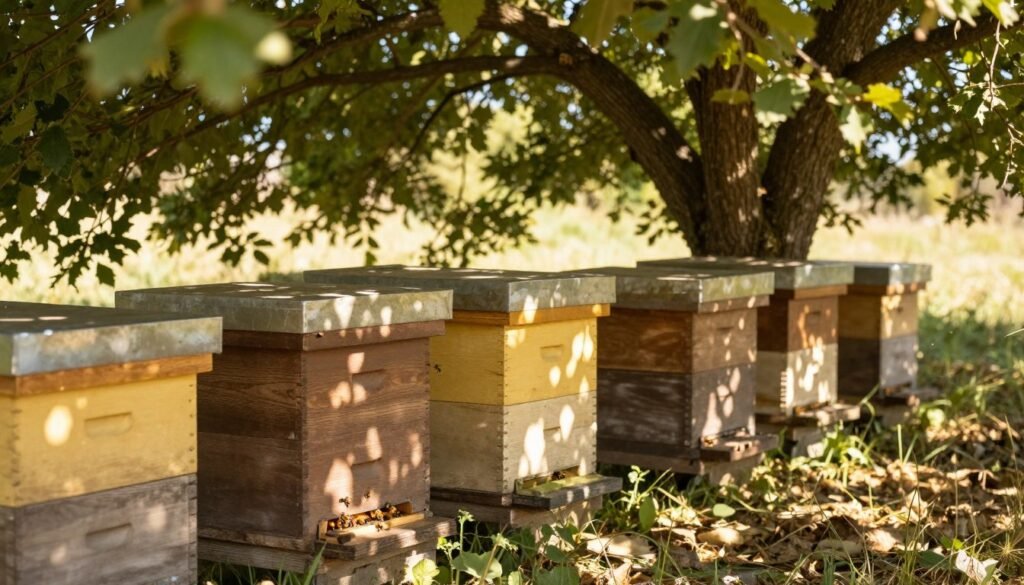
Watch for the downsides. Dead limbs can fall on hives, some trees drip sap or honeydew onto lids, and a dense evergreen canopy can leave hives damp and dark all year. If a site under trees stays wet or never sees sun, a built structure in the open is usually the better choice.
Regional Differences Across the US
- Hot, dry Southwest: Afternoon shade matters most here, and open-sided roofed shelters are common in bee yards. Pair shade with a reliable water source. See Beekeeping in Hot, Arid Climates.
- Humid Southeast: Heat and humidity both run high, and so does small hive beetle pressure. Aim for sunny, well-drained sites with shade only in the late afternoon rather than hives tucked under dense trees. See Beekeeping in the Humid Southeast.
- Northern states and cooler climates: Summers are shorter and cooler, and moisture and winter cold are bigger concerns than heat. Full sun is generally preferred, and permanent shade structures are rarely needed. A temporary shade board is enough for occasional heat waves.
Common Mistakes
- Putting hives in deep, all-day shade to keep them cool, then battling damp boxes and beetles.
- Draping tarps or cloth over the hive itself so it touches the box and traps heat.
- Building a frame so low that you can’t lift a super underneath it.
- Using lightweight cloth or loose boards that blow off in the first storm.
- Shading the hive but not providing water, which remains the colony’s main cooling tool.
Conclusion
Shade structures give beehives lasting protection from summer heat when they are placed with care. Aim for morning sun and afternoon shade, keep the structure open so air moves freely, leave room to work the hives and anchor everything against wind. In hot and humid regions, balance cooling against small hive beetle pressure by avoiding deep shade. In cooler northern areas, full sun remains the default. When a sudden heat wave hits before a permanent structure is in place, the short-term steps in Heat Emergencies in the Hive: Emergency Cooling Steps That Are Safe for Bees will help the colony through it.
FAQ
Do beehives need shade?
It depends on the climate. In hot regions, afternoon shade reduces heat stress and lets colonies spend less effort on cooling. In cooler northern climates, full sun is usually preferred, and shade is only needed during unusual heat waves.
Is full shade bad for beehives?
Deep, all-day shade tends to keep hives cool and damp, and small hive beetles do better in shaded hives. Extension guidance from Mississippi State University advises against placing hives in deep shade. Morning sun with afternoon shade is the usual compromise.
What is the easiest shade structure for a single hive?
A shade board: a piece of plywood or corrugated plastic placed over the outer cover on spacers so there is an air gap, extended toward the west side and weighted down. It costs almost nothing and can be set up in minutes.
Can I use shade cloth over my hives?
Yes. Stretch it on a post frame above and to the west of the hives, not draped on the boxes themselves. Leave the sides open for airflow, build it high enough to lift supers underneath, and anchor it well because shade cloth catches wind.
Are trees good shade for beehives?
Deciduous trees can be ideal because they shade hives in summer and let sun through in winter. Place hives at the canopy edge where they get morning light, and avoid spots under dead limbs or dense evergreens where the ground stays damp.
Further Reading
Image credits: Photo: Christian Gebhardt (Bybbisch94), CC BY-SA 4.0 / Wikimedia Commons.