A real emergency action plan for sudden colony loss means knowing, before it happens, exactly what to do in the first hours after finding a pesticide kill, bear-damaged hives, or vandalism — who to call, what evidence to preserve, and how to protect what’s left — rather than improvising under stress after the fact. This is a genuinely different piece from this site’s existing biosecurity pitfalls guide, which covers ongoing disease-prevention practice, and its coverage of the Wilsonville bee kill, which is incident journalism about someone else’s event — this article is the beekeeper’s own after-the-fact action plan, written to be read and understood before an emergency, not during one.
Key Takeaways
- The first universal steps after any sudden colony loss are the same regardless of cause: don’t disturb the scene before documenting it, photograph everything, and secure any surviving colonies immediately.
- For a suspected pesticide kill, report it to your state’s lead pesticide agency as soon as you notice it — sample collection timing matters, since investigators want dying bees showing abnormal movement, not bees that are already dead or decaying.
- A properly built electric bear fence (5+ wires, bottom wire under 8 inches off the ground, top wire at least 48 inches up, charger rated at least 0.7 joules) is close to 100% effective — but the response after an attack matters too, since a bear that succeeds once will return.
- Vandalism and theft response centers on documentation for police and insurance, not just cleanup — photograph damage before touching anything, and file a police report even if recovery seems unlikely.
- The real point of a written plan isn’t memorizing every fact here — it’s knowing which of these three tracks applies within minutes of discovering a loss, since delay costs evidence, surviving bees, or both.
Table of Contents
- The First Hours: A Universal Checklist
- Pesticide Kill: What to Actually Do
- Bear Damage: Response and Real Deterrent Specs
- Vandalism: Documentation, Reporting, Recovery
- Restocking After a Total Loss
- Quick-Reference Decision Table
- Frequently Asked Questions
The First Hours: A Universal Checklist
Regardless of what caused a sudden loss, the first response is the same: resist the urge to immediately start cleaning up or fixing things before you’ve documented the scene. Photograph the hives, the ground in front of them, and any dead bees exactly as found, from multiple angles — this record matters for an insurance claim, a pesticide investigation, or a police report, and it can’t be recreated once the scene is disturbed. Next, check every remaining colony in the apiary, not just the obviously affected ones, since a partial loss can leave weakened survivors that need immediate protection (reducing entrances, adding a follower board, or moving them if the same threat is still present). Only after documentation and triage of survivors is done should cause-specific response — reporting a pesticide kill, reinforcing against a bear, or filing a police report for vandalism — begin.
Pesticide Kill: What to Actually Do
Speed matters more here than with the other two causes, because the evidence itself degrades. According to pesticide bee-kill reporting guidance, the right sample is bees that are dying or showing abnormal movement in front of the hive — not ones that are already dead or decaying, since those are less useful for lab analysis. Contact your state’s lead pesticide agency as soon as you notice the kill; a trained investigator will typically visit to collect samples, or in some states walk you through collecting them yourself under their direction, before sending them for laboratory analysis, which in some state programs screens for roughly 170 known pesticides through USDA’s Agricultural Marketing Service. Incidents can also be reported directly to the EPA by email at beekill@epa.gov. Once you’ve reported it, protect the hive itself: if brood and nurse bees keep dying after the initial kill, contaminated pollen stores are the likely ongoing source, and combs may need to be removed or replaced rather than left in place.
This training video from North Carolina Agriculture (the North Carolina Department of Agriculture & Consumer Services) walks through how an actual bee kill investigation is conducted, a useful reference for what to expect once you’ve reported an incident.
Bear Damage: Response and Real Deterrent Specs
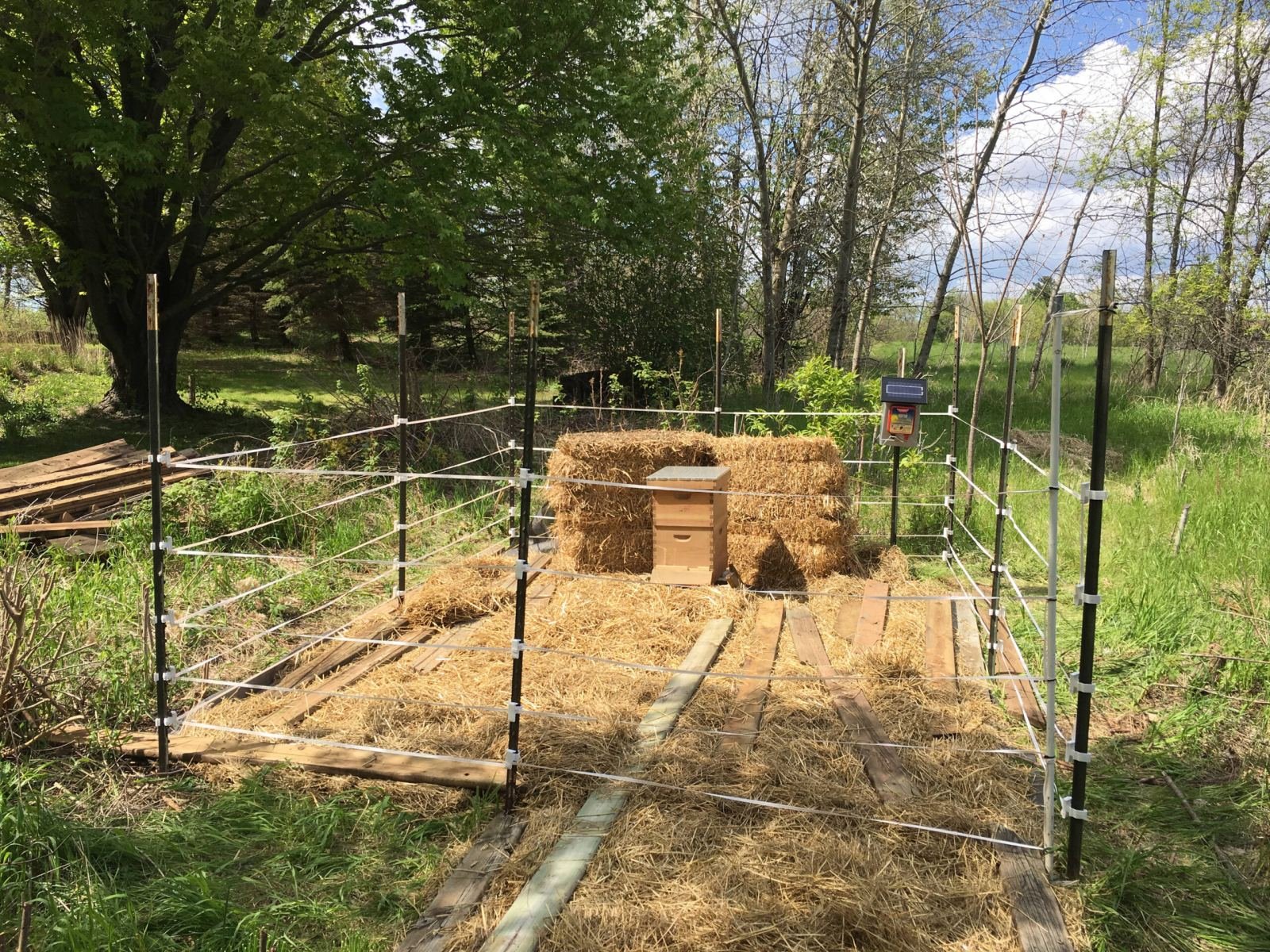
If a bear has already hit an apiary once, the most important fact to plan around is that it will very likely come back — a bear that successfully raids a hive learns the location is a reliable food source. Immediate response means assessing which hives are salvageable versus destroyed (brood nest damage and queen loss are usually the most serious losses, on top of broken woodenware), then securing what’s left the same day with additional deterrents like noise-makers while a proper fence goes up. According to bear-deterrent guidance for beekeepers and corroborated by multiple extension sources, a properly built electric fence — at least five wires, the bottom wire no more than 8 inches off the ground so a bear can’t go under it, the top wire at least 48 inches up so it can’t climb over, and a charger rated at least 0.7 joules — is close to 100% effective when properly installed and maintained. Maintenance matters as much as the initial build: vegetation touching the wires grounds the fence, and a fence that’s stopped delivering a real shock is functionally no fence at all.
Vandalism: Documentation, Reporting, Recovery
Vandalism and theft response is less about technical specifications and more about documentation discipline. Photograph everything before touching or cleaning up damage, exactly as with a pesticide kill, since insurance adjusters and police both work from what you can show them, not just describe. File a police report even when recovery of stolen hives or equipment seems unlikely — beyond the small chance of recovery, a filed report is often a requirement for an insurance claim and creates an official record if the same location is targeted again. For ongoing prevention going forward, this site’s own comparison of hive anti-theft devices covers the GPS-tracker and alarm hardware side in detail — worth installing after a first incident specifically because a location that’s been hit once is a documented target for a repeat visit, the same pattern as a bear that’s succeeded before.
Restocking After a Total Loss
Once the immediate response is handled, replacing lost colonies deserves its own real thought rather than simply ordering a new package as soon as boxes are free. After a pesticide kill, don’t restock the same equipment until you’re confident contaminated pollen and nectar stores have been cleaned out or the frames replaced — new bees moving into comb still holding a lethal residue just repeats the loss. After bear damage, restock only once the fence upgrade is actually complete and tested, not while it’s still in progress, since an empty or freshly rebuilt apiary is exactly what draws a bear back for a second attempt. After vandalism or theft, consider whether the same site location is still defensible at all — if it was targeted because it’s visible from a road or easy to access, moving the apiary, not just replacing the hives, may be the more realistic fix. In all three cases, resist the pressure to replace losses immediately just to “get back to normal” — restocking onto an unresolved underlying problem is how the same loss happens twice.
Quick-Reference Decision Table
| Cause | First call | Evidence to preserve | Recovery consideration |
|---|---|---|---|
| Pesticide kill | State lead pesticide agency; EPA (beekill@epa.gov) | Dying (not decaying) bees from outside the hive entrance | Watch for continued brood/nurse-bee death from contaminated stores |
| Bear damage | No agency call required; assess and secure same day | Photos of damage, hive placement, entry point | Assume a repeat visit; upgrade fence before restocking |
| Vandalism/theft | Local police (report even if recovery is unlikely) | Photos before cleanup; any witness information | File for insurance; add anti-theft hardware before restocking |
Frequently Asked Questions
What’s the very first thing I should do after finding a sudden colony loss?
Document the scene with photos before disturbing anything, then check and secure any surviving colonies — cause-specific steps (reporting, fencing, filing a police report) come after that, not instead of it.
How do I know if a colony loss was caused by pesticides?
Classic signs include a sudden pile of dead or twitching bees in front of the hive and a sharp drop in the field force; if you suspect it, report to your state’s lead pesticide agency quickly, since sample freshness affects what investigators can determine.
Will an electric fence really stop a bear?
Yes, when built to spec (5+ wires, bottom under 8 inches, top at least 48 inches, charger at least 0.7 joules) and properly maintained — most bear-related apiary losses trace back to a fence that was missing, undersized, or not actually delivering a strong shock.
Should I file a police report for vandalism even if I don’t expect to recover anything?
Yes — beyond the outside chance of recovery, most insurance claims for vandalism or theft require a police report, and it creates an official record if the location is targeted again.
Can I get insurance to cover a bear attack or vandalism?
It depends on your specific policy; this site’s own coverage of beekeeping insurance claims and homeowners-policy coverage for bee-related damage is worth checking against your actual policy language before assuming either way.